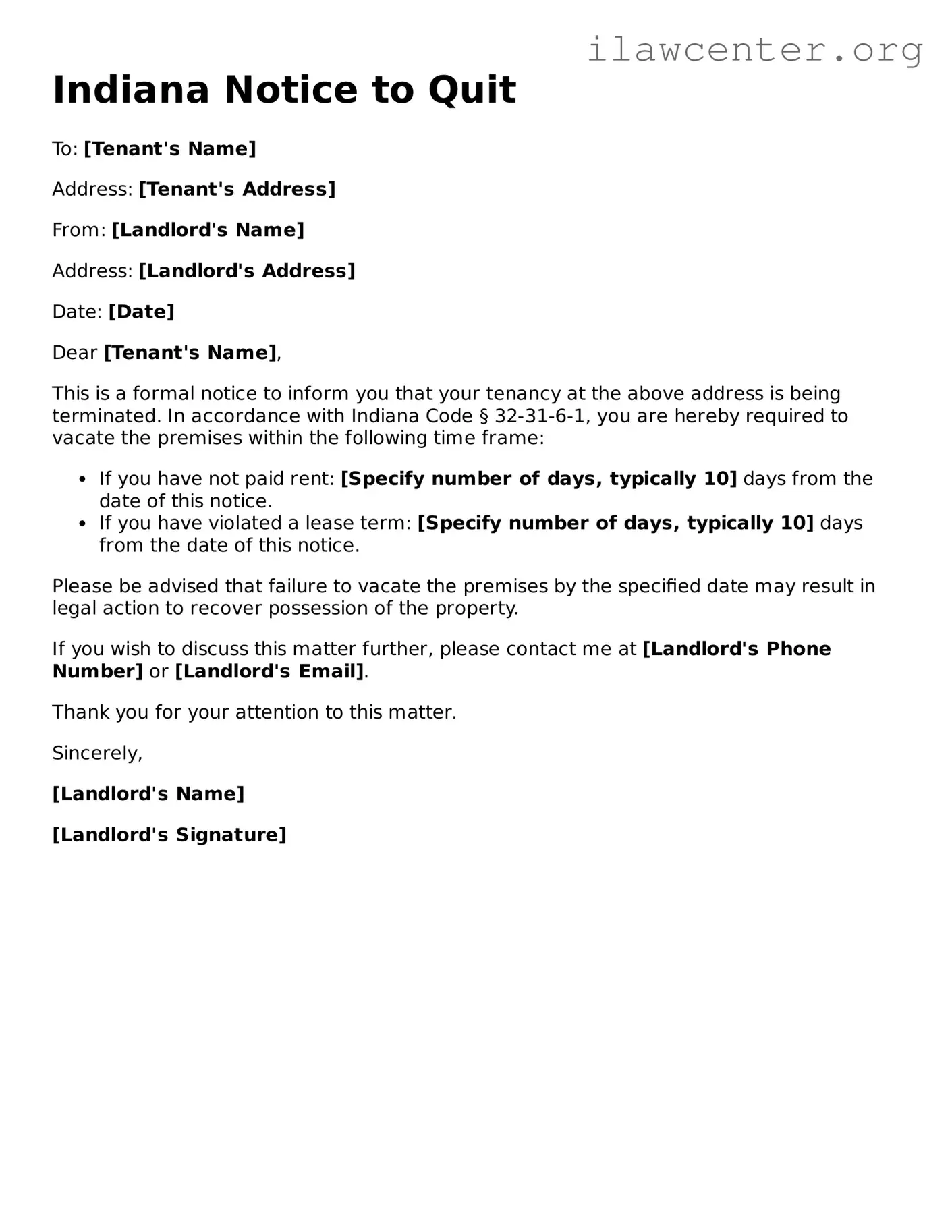
What is the Indiana Notice to Quit form?
The Indiana Notice to Quit form is a legal document used by landlords to formally notify tenants that they must vacate the rental property. This notice is typically issued when a tenant has violated the terms of the lease agreement or has failed to pay rent. The form serves as a preliminary step before any eviction proceedings can take place.
When should a landlord use the Notice to Quit?
A landlord should use the Notice to Quit when they have a valid reason to terminate a tenant's lease. Common reasons include non-payment of rent, lease violations, or the expiration of a lease agreement. It is important for landlords to provide this notice to ensure they are following the legal process required in Indiana for eviction.
How much notice must be given to the tenant?
The amount of notice required can vary depending on the reason for the eviction. For non-payment of rent, a landlord must typically provide a 10-day notice. For lease violations, a 14-day notice may be required. If the lease has expired, a 30-day notice is usually sufficient. Always check the specific circumstances and legal requirements to ensure compliance.
Can a tenant contest a Notice to Quit?
Yes, a tenant has the right to contest a Notice to Quit. If a tenant believes the notice was issued unfairly or that they have rectified the issue (like paying overdue rent), they can communicate this to the landlord. If the situation escalates to court, the tenant can present their case during the eviction proceedings.
What happens if the tenant does not leave after receiving the Notice to Quit?
If the tenant does not vacate the property by the deadline specified in the Notice to Quit, the landlord can initiate eviction proceedings in court. This involves filing a formal eviction lawsuit, where both parties can present their arguments. If the court rules in favor of the landlord, a judge may issue an order for the tenant to vacate the property.
Is the Notice to Quit form available online?
Yes, the Indiana Notice to Quit form is available online through various legal resources and websites that provide legal forms. Landlords should ensure they are using the most current version of the form and that it complies with Indiana laws. It’s advisable to consult with a legal professional if there are any uncertainties regarding its use.