Attorney-Verified  Real Estate Purchase Agreement Document for Indiana

Attorney-Verified Real Estate Purchase Agreement Document for Indiana

The Indiana Real Estate Purchase Agreement is a legally binding document used by buyers and sellers to outline the terms of a real estate transaction in Indiana. This form details essential elements such as the purchase price, property description, and contingencies that must be met for the sale to proceed. To initiate the process, consider filling out the form by clicking the button below.

Article Guide

The Indiana Real Estate Purchase Agreement form serves as a crucial document in the process of buying or selling property within the state. It outlines the essential terms and conditions agreed upon by both the buyer and seller, ensuring that each party understands their rights and obligations. Key aspects of the form include the purchase price, financing details, and contingencies, which may cover inspections, appraisals, and the sale of the buyer’s current home. Additionally, it specifies the closing date and any earnest money deposits required to secure the agreement. By clearly detailing these elements, the form helps to minimize misunderstandings and provides a framework for the transaction. This agreement is not only a binding contract but also a vital tool for facilitating a smooth transfer of ownership, making it indispensable for anyone involved in real estate transactions in Indiana.

Indiana Real Estate Purchase Agreement Preview

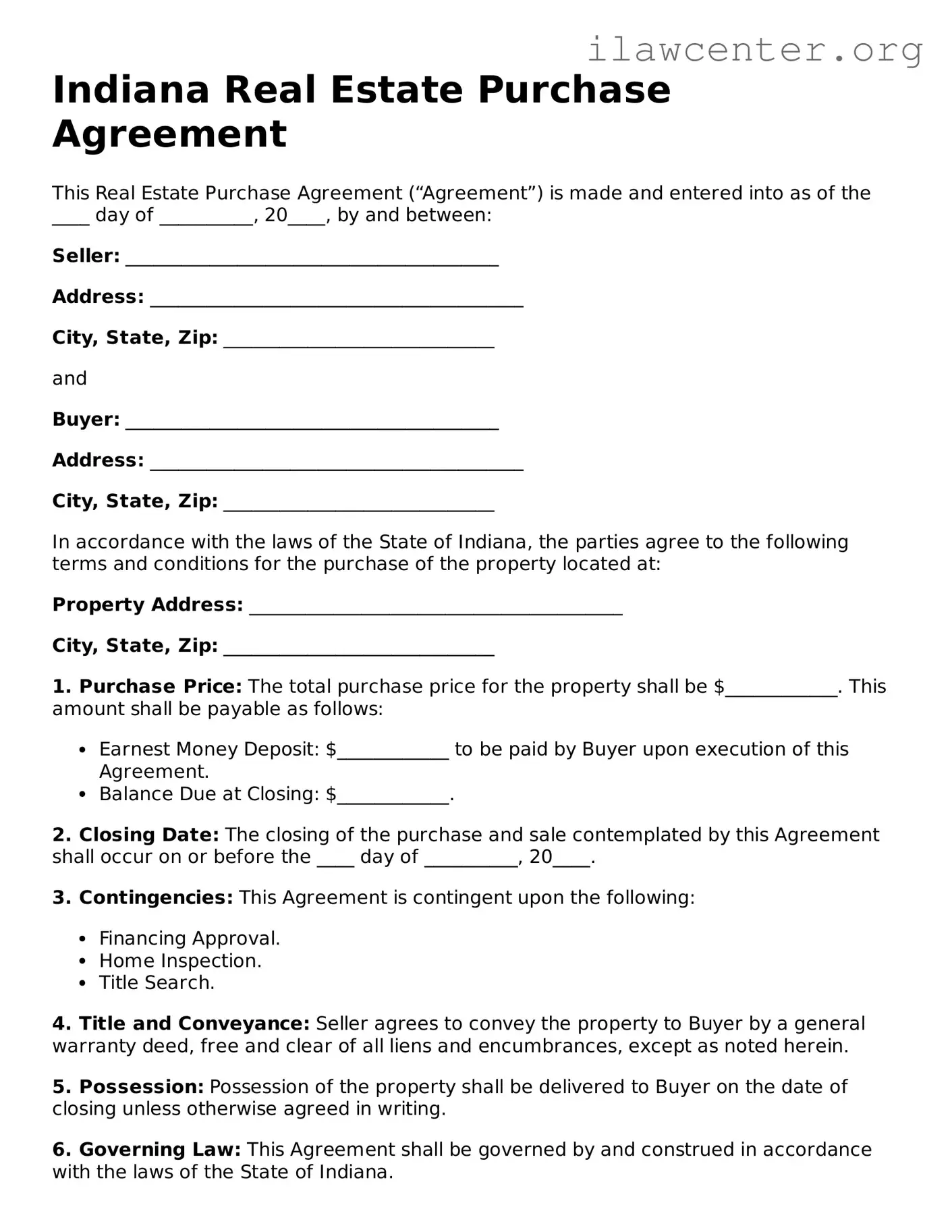
Indiana Real Estate Purchase Agreement

This Real Estate Purchase Agreement (“Agreement”) is made and entered into as of the ____ day of __________, 20____, by and between:

Seller: ________________________________________

Address: ________________________________________

City, State, Zip: _____________________________

and

Buyer: ________________________________________

Address: ________________________________________

City, State, Zip: _____________________________

In accordance with the laws of the State of Indiana, the parties agree to the following terms and conditions for the purchase of the property located at:

Property Address: ________________________________________

City, State, Zip: _____________________________

1. Purchase Price: The total purchase price for the property shall be $____________. This amount shall be payable as follows:

  • Earnest Money Deposit: $____________ to be paid by Buyer upon execution of this Agreement.
  • Balance Due at Closing: $____________.

2. Closing Date: The closing of the purchase and sale contemplated by this Agreement shall occur on or before the ____ day of __________, 20____.

3. Contingencies: This Agreement is contingent upon the following:

  • Financing Approval.
  • Home Inspection.
  • Title Search.

4. Title and Conveyance: Seller agrees to convey the property to Buyer by a general warranty deed, free and clear of all liens and encumbrances, except as noted herein.

5. Possession: Possession of the property shall be delivered to Buyer on the date of closing unless otherwise agreed in writing.

6. Governing Law: This Agreement shall be governed by and construed in accordance with the laws of the State of Indiana.

7. Signatures: This Agreement may be executed in counterparts and may be delivered electronically. The parties hereby agree to the terms and conditions set forth above.

Seller Signature: _______________________________ Date: _______________

Buyer Signature: _______________________________ Date: _______________

Witness Signature: _____________________________ Date: _______________

PDF Form Characteristics

Fact Name Description
Purpose The Indiana Real Estate Purchase Agreement is used to outline the terms and conditions of a property sale between a buyer and a seller.
Governing Law This agreement is governed by the laws of the State of Indiana, ensuring compliance with state regulations regarding real estate transactions.
Offer and Acceptance The document serves as an offer from the buyer, which the seller can accept, reject, or counteroffer.
Property Description A detailed description of the property being sold must be included, covering its address and legal description.
Purchase Price The agreement specifies the purchase price, which is the amount the buyer agrees to pay for the property.
Earnest Money It typically requires the buyer to submit earnest money, demonstrating their serious intent to purchase the property.
Contingencies Buyers often include contingencies, such as financing or inspection, which must be met for the sale to proceed.
Closing Date The agreement outlines a proposed closing date, which is when the ownership of the property will officially transfer.
Disclosures Sellers are required to disclose any known issues with the property, ensuring transparency in the transaction.
Signatures The agreement must be signed by both parties to be legally binding, indicating their acceptance of the terms.

Instructions on Utilizing Indiana Real Estate Purchase Agreement

Once you have the Indiana Real Estate Purchase Agreement form in front of you, it’s time to fill it out carefully. This form is essential for formalizing the agreement between the buyer and seller regarding the property. Make sure to have all necessary information on hand before you start.

  1. Begin by entering the date at the top of the form. This is important for establishing the timeline of the agreement.
  2. Next, fill in the names of the buyer(s) and seller(s). Make sure to use full legal names as they appear on identification documents.
  3. Provide the property address. This should include the street address, city, state, and zip code.
  4. Specify the purchase price. Clearly state the amount the buyer is offering for the property.
  5. Indicate the amount of earnest money. This is a deposit made to demonstrate the buyer's commitment.
  6. Fill in the closing date. This is when the transaction will be finalized and ownership will be transferred.
  7. Include any contingencies, such as financing or inspection requirements. These are conditions that must be met for the sale to proceed.
  8. Sign and date the form. Both the buyer and seller must sign to indicate their agreement to the terms.

After completing the form, review it carefully for any errors or missing information. Once everything looks good, both parties should retain a copy for their records. This ensures that everyone is on the same page as the transaction moves forward.

Important Facts about Indiana Real Estate Purchase Agreement

What is the Indiana Real Estate Purchase Agreement form?

The Indiana Real Estate Purchase Agreement form is a legal document that outlines the terms and conditions under which a buyer agrees to purchase a property from a seller. This agreement serves as a binding contract once both parties have signed it, detailing important aspects such as the purchase price, property description, and any contingencies that must be met before the sale is finalized.

Why is the Real Estate Purchase Agreement important?

This agreement is crucial because it protects the interests of both the buyer and the seller. It clearly defines the obligations and expectations of each party, reducing the potential for misunderstandings or disputes later on. By outlining specific terms, such as financing conditions and closing dates, it helps ensure a smoother transaction process.

What key elements should be included in the agreement?

A comprehensive Indiana Real Estate Purchase Agreement should include several key elements. These typically encompass the names of the buyer and seller, a legal description of the property, the agreed-upon purchase price, earnest money details, contingencies (such as financing or inspection), and the closing date. It may also address any personal property included in the sale, as well as any disclosures required by law.

What are contingencies, and why are they important?

Contingencies are specific conditions that must be met for the sale to proceed. They are important because they provide buyers with an opportunity to back out of the agreement without penalty if certain conditions are not satisfied. Common contingencies include obtaining financing, passing a home inspection, or selling an existing property. These provisions help protect the buyer's interests and ensure they are making a sound investment.

Can the agreement be modified after it is signed?

Yes, the agreement can be modified after it is signed, but both parties must agree to any changes. Modifications should be documented in writing and signed by both the buyer and the seller to ensure clarity and enforceability. Verbal agreements or informal changes are generally not recognized in legal terms, so it is essential to formalize any adjustments made to the original agreement.

What happens if either party fails to fulfill their obligations?

If either party fails to meet their obligations as outlined in the agreement, it may constitute a breach of contract. The non-breaching party may have several options, including seeking damages, enforcing the contract, or canceling the agreement altogether. The specific remedies available can depend on the nature of the breach and the terms outlined in the agreement itself.

Is it necessary to have a lawyer review the agreement?

While it is not legally required to have a lawyer review the Indiana Real Estate Purchase Agreement, doing so is highly advisable. A legal professional can help ensure that the document is complete, accurate, and compliant with state laws. They can also provide valuable insights into the implications of the terms and conditions, helping both parties make informed decisions.

Where can I obtain the Indiana Real Estate Purchase Agreement form?

The Indiana Real Estate Purchase Agreement form can typically be obtained from various sources, including real estate agents, legal professionals, or online legal document providers. It is important to ensure that the form you are using is the most current version and complies with Indiana state laws. Local real estate associations may also provide resources or templates for this agreement.
Common mistakes

Filling out the Indiana Real Estate Purchase Agreement form can be a daunting task. Many individuals make common mistakes that can lead to confusion or even legal issues down the line. One frequent error is neglecting to include all necessary parties in the agreement. Buyers and sellers must ensure that all individuals involved in the transaction are named. Omitting a party can create complications, especially if that party has a legal interest in the property.

Another mistake often made is failing to provide accurate property descriptions. The agreement should clearly define the property being sold, including its address and any relevant legal descriptions. Inaccuracies can lead to disputes or misunderstandings later. Always double-check the property details to avoid these pitfalls.

Many people also overlook the importance of specifying the purchase price and payment terms. It is crucial to clearly state the agreed-upon price and how the buyer intends to pay. Whether through financing, cash, or other means, clarity in this section helps prevent future disagreements.

Additionally, individuals sometimes forget to address contingencies in the agreement. Contingencies are conditions that must be met for the sale to proceed, such as financing approval or home inspections. Not including these can leave buyers vulnerable if issues arise during the process.

Lastly, some people neglect to sign and date the agreement properly. A valid contract requires signatures from all parties involved. Without proper signatures, the agreement may not be enforceable. Therefore, it is essential to ensure that all necessary signatures are obtained and that the document is dated correctly.

Documents used along the form

When engaging in real estate transactions in Indiana, several forms and documents accompany the Indiana Real Estate Purchase Agreement. Each document plays a specific role in ensuring that the transaction is smooth and legally binding. Below is a list of commonly used forms that complement the purchase agreement.

  • Property Disclosure Statement: This document provides potential buyers with important information about the property's condition, including any known issues or repairs that have been made.
  • Lead-Based Paint Disclosure: Required for homes built before 1978, this form informs buyers about the potential risks of lead-based paint and outlines the seller's responsibilities regarding disclosure.
  • Earnest Money Agreement: This document outlines the amount of money a buyer will deposit as a show of good faith when making an offer on a property, which is typically held in escrow until closing.
  • Title Commitment: A title commitment is a document issued by a title company that outlines the terms under which it will issue a title insurance policy, ensuring that the buyer receives clear ownership of the property.
  • Closing Statement: Also known as a HUD-1 Settlement Statement, this document itemizes all the costs associated with the closing of the real estate transaction, including fees, taxes, and adjustments.
  • Bill of Sale: This document is used to transfer ownership of personal property included in the sale, such as appliances or furniture, from the seller to the buyer.
  • Deed: The deed is the legal document that officially transfers ownership of the property from the seller to the buyer once the sale is finalized.
  • Affidavit of Title: This sworn statement from the seller confirms their ownership of the property and discloses any liens or claims against it, providing assurance to the buyer.
  • Inspection Reports: These reports provide detailed findings from a professional inspection of the property, highlighting any issues that may need to be addressed before or after the sale.

Understanding these documents can significantly enhance the experience of buying or selling real estate in Indiana. Each form serves to protect the interests of both buyers and sellers, ensuring transparency and clarity throughout the transaction process.

Similar forms

  • Lease Agreement: This document outlines the terms under which a tenant may occupy a property. Similar to a Real Estate Purchase Agreement, it specifies the parties involved, the property details, and the obligations of each party.
  • Option to Purchase Agreement: This agreement grants a potential buyer the right to purchase a property at a predetermined price within a specified timeframe. It shares similarities in structure and intent with a Real Estate Purchase Agreement.
  • Real Estate Listing Agreement: This document is used between a property owner and a real estate agent. It details the agent's responsibilities and the terms of the sale, resembling the purchase agreement in its focus on property transfer.
  • Sales Contract: Often used in various types of transactions, this document outlines the terms of sale for goods or services. Its structure and purpose are akin to those of a Real Estate Purchase Agreement.
  • Seller Financing Agreement: This document outlines the terms under which a seller finances the buyer's purchase of the property. It is similar in that it establishes the financial obligations of the buyer and the seller.
  • Closing Disclosure: This document provides details about the final costs and terms of a mortgage. It is related to the Real Estate Purchase Agreement as it summarizes the financial aspects of the transaction.
  • Escrow Agreement: This agreement defines the terms under which a third party holds funds or documents until certain conditions are met. It parallels the purchase agreement in its role in facilitating the transaction.
  • Title Transfer Document: This document is essential for officially transferring ownership of a property. It shares a common goal with the Real Estate Purchase Agreement, which is to formalize the change in ownership.
  • Property Disclosure Statement: This document informs potential buyers of any known issues with the property. It complements the Real Estate Purchase Agreement by ensuring transparency between the seller and buyer.

Dos and Don'ts

When filling out the Indiana Real Estate Purchase Agreement form, it's important to approach the task with care. Here are five things you should do and five things you shouldn't do.

Things You Should Do:

  • Read the entire agreement carefully before filling it out.
  • Provide accurate information about the property and parties involved.
  • Use clear and concise language to avoid misunderstandings.
  • Sign and date the agreement where required.
  • Consult a real estate professional if you have questions.

Things You Shouldn't Do:

  • Don't rush through the form; take your time to ensure accuracy.
  • Avoid using vague terms that could lead to confusion.
  • Do not leave any required fields blank.
  • Never sign the agreement without fully understanding its terms.
  • Don't ignore local laws and regulations that may apply.

Misconceptions

The Indiana Real Estate Purchase Agreement form is a crucial document for anyone involved in buying or selling property in the state. However, several misconceptions can lead to confusion. Below is a list of common misunderstandings regarding this important agreement.

  1. Misconception: The form is the same for all real estate transactions.

    In reality, the Indiana Real Estate Purchase Agreement can vary based on the specifics of the transaction, including the type of property and the terms negotiated between the parties.

  2. Misconception: You do not need a real estate agent to complete the form.

    While it is possible to fill out the form without an agent, having a knowledgeable real estate professional can help ensure that all necessary details are correctly addressed.

  3. Misconception: The agreement is not legally binding until signed by both parties.

    Although signatures are essential, the agreement can be considered binding once both parties agree to the terms, even if the document is not yet signed.

  4. Misconception: All contingencies are automatically included in the agreement.

    Contingencies must be explicitly stated in the agreement. Buyers and sellers should carefully outline any conditions that must be met for the sale to proceed.

  5. Misconception: The purchase agreement does not need to be reviewed by an attorney.

    While it is not legally required, having an attorney review the agreement can help identify potential issues and protect your interests.

  6. Misconception: You can change the terms of the agreement after it is signed.

    Changes can be made, but they require mutual consent from both parties and should be documented in writing to avoid misunderstandings.

  7. Misconception: The agreement is only important for the buyer.

    Both buyers and sellers should take the agreement seriously, as it outlines the responsibilities and rights of each party in the transaction.

  8. Misconception: The Indiana Real Estate Purchase Agreement is a one-size-fits-all document.

    This form can be customized to fit the unique circumstances of each transaction, allowing for specific terms and conditions to be added.

  9. Misconception: Once the agreement is signed, there is no way to back out.

    There are certain situations, such as contingencies not being met, that may allow a party to withdraw from the agreement legally.

  10. Misconception: The purchase price is the only important detail in the agreement.

    While the purchase price is significant, other details like closing dates, contingencies, and repairs are equally important and should not be overlooked.

Understanding these misconceptions can help buyers and sellers navigate the Indiana Real Estate Purchase Agreement more effectively. Being informed is essential for a successful transaction.

Key takeaways

When dealing with the Indiana Real Estate Purchase Agreement form, there are several important points to keep in mind. Here are ten key takeaways:

  1. Understand the Basics: Familiarize yourself with the purpose of the agreement. It outlines the terms between the buyer and seller for a real estate transaction.
  2. Complete Information: Ensure all parties' names, addresses, and contact details are accurately filled out. This helps avoid confusion later.
  3. Property Description: Clearly describe the property being sold. Include the address and any relevant details that define the property.
  4. Purchase Price: Specify the total purchase price. This is a critical element that both parties must agree upon.
  5. Earnest Money: Indicate the amount of earnest money being offered. This shows the buyer's serious intent to purchase.
  6. Contingencies: Identify any contingencies that must be met for the sale to proceed, such as financing or inspections.
  7. Closing Date: Establish a timeline for closing the sale. This date is crucial for both parties to plan accordingly.
  8. Disclosures: Be aware of any required disclosures. Sellers must inform buyers of any known issues with the property.
  9. Signatures: Ensure all parties sign the agreement. Without signatures, the document is not legally binding.
  10. Consult Professionals: Consider seeking legal or real estate advice. Professionals can provide valuable insights and ensure compliance with local laws.

By keeping these takeaways in mind, both buyers and sellers can navigate the Indiana Real Estate Purchase Agreement more effectively.