Attorney-Verified  Tractor Bill of Sale Document for Indiana

Attorney-Verified Tractor Bill of Sale Document for Indiana

The Indiana Tractor Bill of Sale form is a legal document that records the transfer of ownership of a tractor from one party to another in the state of Indiana. This form serves as proof of the transaction and includes essential details such as the buyer's and seller's information, the tractor's description, and the sale price. To ensure a smooth transfer of ownership, it is important to fill out this form accurately; click the button below to get started.

Article Guide

The Indiana Tractor Bill of Sale form serves as a vital document for individuals and businesses engaged in the buying and selling of tractors within the state. This form captures essential information about the transaction, including the names and addresses of both the buyer and seller, the make and model of the tractor, and its Vehicle Identification Number (VIN). Additionally, the form outlines the sale price and any terms related to the sale, such as warranties or conditions of the sale. By providing a clear record of the transaction, this form helps protect the interests of both parties, ensuring that ownership is legally transferred and that any pertinent details are documented. Furthermore, the Indiana Tractor Bill of Sale is often required for registration purposes and can serve as proof of ownership in case of disputes. Understanding the importance of this form is crucial for anyone involved in the agricultural machinery market in Indiana, as it lays the groundwork for a smooth and legally sound transaction.

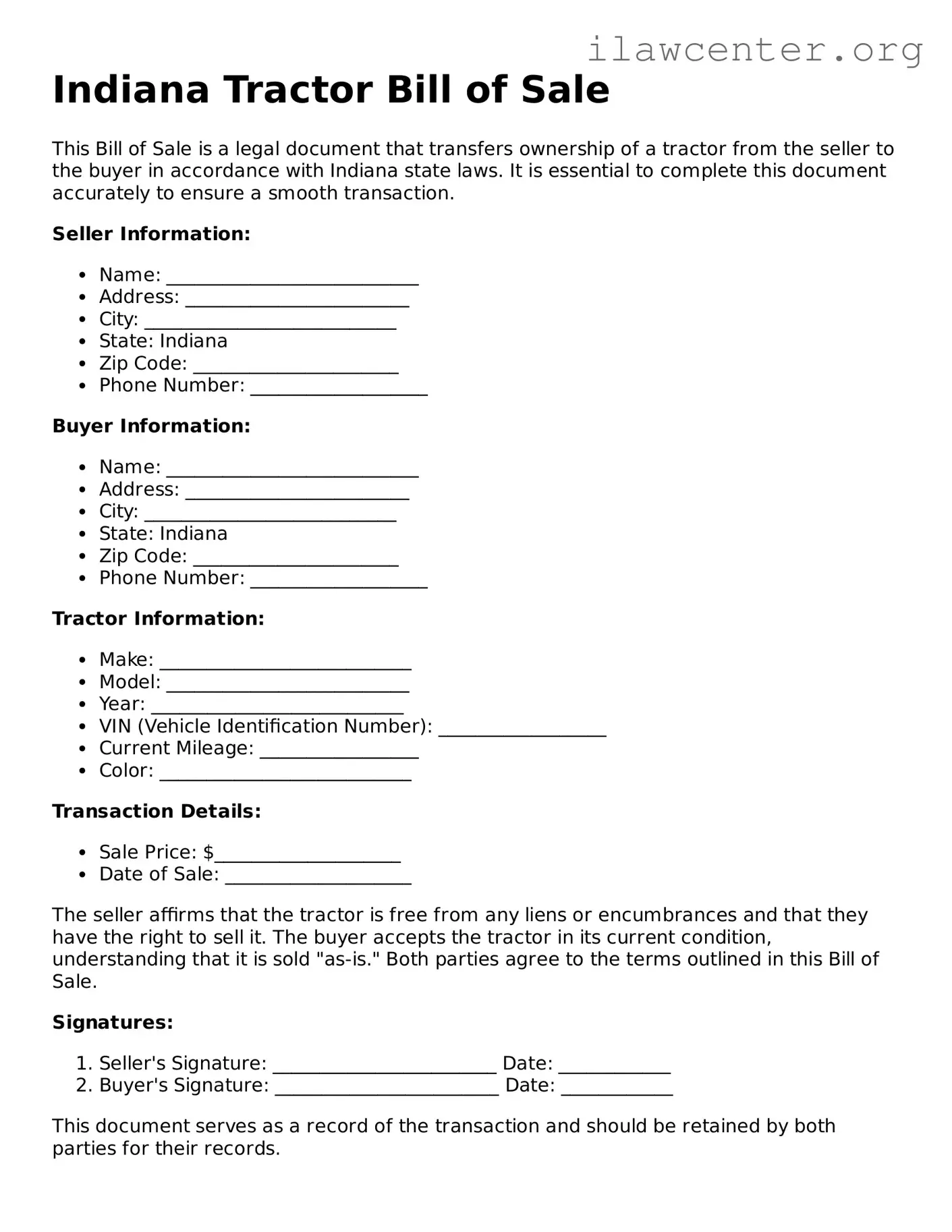
Indiana Tractor Bill of Sale Preview

Indiana Tractor Bill of Sale

This Bill of Sale is a legal document that transfers ownership of a tractor from the seller to the buyer in accordance with Indiana state laws. It is essential to complete this document accurately to ensure a smooth transaction.

Seller Information:

  • Name: ___________________________
  • Address: ________________________
  • City: ___________________________
  • State: Indiana
  • Zip Code: ______________________
  • Phone Number: ___________________

Buyer Information:

  • Name: ___________________________
  • Address: ________________________
  • City: ___________________________
  • State: Indiana
  • Zip Code: ______________________
  • Phone Number: ___________________

Tractor Information:

  • Make: ___________________________
  • Model: __________________________
  • Year: ___________________________
  • VIN (Vehicle Identification Number): __________________
  • Current Mileage: _________________
  • Color: ___________________________

Transaction Details:

  • Sale Price: $____________________
  • Date of Sale: ____________________

The seller affirms that the tractor is free from any liens or encumbrances and that they have the right to sell it. The buyer accepts the tractor in its current condition, understanding that it is sold "as-is." Both parties agree to the terms outlined in this Bill of Sale.

Signatures:

  1. Seller's Signature: ________________________ Date: ____________
  2. Buyer's Signature: ________________________ Date: ____________

This document serves as a record of the transaction and should be retained by both parties for their records.

PDF Form Characteristics

Fact Name Description
Purpose The Indiana Tractor Bill of Sale form serves as a legal document to transfer ownership of a tractor from one party to another.
Governing Law This form is governed by Indiana state law, particularly the Uniform Commercial Code (UCC) as it pertains to the sale of goods.
Parties Involved The form requires the names and addresses of both the seller and the buyer, ensuring clear identification of the parties involved.
Tractor Details Specific information about the tractor, such as make, model, year, and Vehicle Identification Number (VIN), must be included for clarity.
Purchase Price The agreed purchase price must be stated in the document, providing a clear understanding of the transaction's financial terms.
Date of Sale The date on which the sale occurs should be recorded, marking the official transfer of ownership.
Signatures Both the seller and buyer must sign the form to validate the transaction and confirm their agreement to the terms.
Notarization While notarization is not required, it is recommended to enhance the document's credibility and prevent disputes.
Record Keeping Both parties should keep a copy of the completed bill of sale for their records, which can be useful for future reference.
Legal Protection This form provides legal protection for both parties by documenting the transaction and the condition of the tractor at the time of sale.

Instructions on Utilizing Indiana Tractor Bill of Sale

After obtaining the Indiana Tractor Bill of Sale form, it is essential to complete it accurately to ensure a smooth transaction. This form serves as a record of the sale and provides necessary details about the tractor and the parties involved. Follow these steps to fill out the form correctly.

  1. Obtain the Form: Download or print the Indiana Tractor Bill of Sale form from an official source.
  2. Enter Seller Information: Fill in the seller's full name, address, and contact information in the designated fields.
  3. Enter Buyer Information: Provide the buyer's full name, address, and contact information in the appropriate sections.
  4. Describe the Tractor: Include details such as the make, model, year, Vehicle Identification Number (VIN), and any other relevant specifications.
  5. State the Sale Price: Clearly write the agreed-upon sale price of the tractor in the designated area.
  6. Include Date of Sale: Enter the date when the transaction takes place.
  7. Signatures: Both the seller and buyer must sign and date the form to validate the transaction.
  8. Make Copies: After completing the form, make copies for both the seller and buyer for their records.

Important Facts about Indiana Tractor Bill of Sale

What is the Indiana Tractor Bill of Sale form?

The Indiana Tractor Bill of Sale form is a legal document that serves as proof of the sale and transfer of ownership of a tractor in the state of Indiana. This form outlines the details of the transaction, including information about the buyer, the seller, and the tractor itself. It is an important document for both parties involved, ensuring that the sale is documented properly and can be referenced in the future if needed.

Why is a Bill of Sale necessary for a tractor transaction?

A Bill of Sale is necessary for several reasons. First, it provides legal protection for both the buyer and the seller. For the buyer, it serves as proof of ownership, which is crucial when registering the tractor with the state or obtaining insurance. For the seller, it protects against any future claims of ownership or disputes regarding the sale. Additionally, having a written record can help prevent misunderstandings about the terms of the sale.

What information is typically included in the Indiana Tractor Bill of Sale?

The Indiana Tractor Bill of Sale typically includes essential details such as the names and addresses of both the buyer and the seller, the date of the sale, a description of the tractor (including make, model, year, and Vehicle Identification Number or VIN), the sale price, and any terms or conditions associated with the sale. This information ensures clarity and helps to avoid any potential disputes later on.

Do I need to have the Bill of Sale notarized?

In Indiana, notarization is not a strict requirement for a Bill of Sale to be valid. However, having the document notarized can add an extra layer of security and authenticity to the transaction. It can be particularly beneficial if there are any disputes in the future, as a notarized document is often viewed as more credible in legal situations.

Is there a specific format for the Indiana Tractor Bill of Sale?

While there is no mandated format for the Indiana Tractor Bill of Sale, it is important that the document contains all the necessary information to be considered valid. Many templates are available online that can guide you in creating a comprehensive Bill of Sale. It is advisable to ensure that the template you use includes all required details to avoid any issues down the line.

What should I do after completing the Bill of Sale?

After completing the Bill of Sale, both the buyer and the seller should keep a copy for their records. The buyer will need to present this document when registering the tractor with the Indiana Bureau of Motor Vehicles (BMV). It is also wise for both parties to confirm that all terms of the sale have been fulfilled before finalizing the transaction.

Can I use the Indiana Tractor Bill of Sale for other types of vehicles?

The Indiana Tractor Bill of Sale is specifically designed for the sale of tractors. However, similar forms can be used for other types of vehicles, such as cars, motorcycles, or trailers. Each type of vehicle may have specific requirements or additional information that should be included in the Bill of Sale, so it is important to ensure that the correct form is used for each transaction.

What happens if there is a dispute after the sale?

If a dispute arises after the sale, the Bill of Sale serves as a crucial piece of evidence. It can help clarify the terms of the agreement and provide proof of ownership. In such cases, it may be advisable to seek legal advice to navigate the dispute effectively. Having a well-documented Bill of Sale can often help resolve issues more amicably.

Where can I obtain an Indiana Tractor Bill of Sale form?

Indiana Tractor Bill of Sale forms can be obtained from various sources. Many online legal document services offer templates that can be downloaded and customized. Additionally, local government offices, such as the Bureau of Motor Vehicles, may provide forms or guidance on creating a Bill of Sale. It is important to ensure that the form you choose is compliant with Indiana state laws.
Common mistakes

Filling out the Indiana Tractor Bill of Sale form can seem straightforward, but many people make common mistakes that can lead to complications later on. One frequent error is not including all necessary information. Buyers and sellers should ensure that all required fields are filled out completely. Missing information can delay the transfer process or create legal issues.

Another mistake involves incorrect vehicle identification numbers (VIN). The VIN must match the tractor being sold. Double-checking this number is crucial, as even a small error can cause confusion and potential disputes down the line.

Some individuals forget to include the sale price. This detail is essential for tax purposes and for establishing the value of the transaction. Without a clear sale price, both parties may face challenges when it comes to registration or taxation.

Not having the form signed by both parties is another common oversight. Both the buyer and seller must sign the document to validate the sale. A lack of signatures can render the bill of sale ineffective, leading to complications in ownership transfer.

People also often neglect to date the form. The date of the sale is important for record-keeping and for establishing when the transaction took place. This can impact warranty claims or other legal matters related to the sale.

Using incorrect or outdated forms can lead to issues as well. Always ensure that you are using the most current version of the Indiana Tractor Bill of Sale form. Outdated forms may not comply with current state regulations, which can complicate the sale.

Finally, some individuals fail to keep a copy of the completed form. It’s vital for both parties to retain a copy for their records. Having documentation of the transaction can protect against future disputes and provide a clear record of ownership.

Documents used along the form

When completing a transaction involving a tractor in Indiana, several important documents may accompany the Tractor Bill of Sale. Each of these forms serves a unique purpose, ensuring that the transfer of ownership is clear and legally binding. Below is a list of four commonly used documents that complement the Tractor Bill of Sale.

  • Title Transfer Form: This document is essential for officially transferring ownership of the tractor from the seller to the buyer. It includes details such as the vehicle identification number (VIN), the names and addresses of both parties, and the date of sale. Proper completion of this form is crucial for the buyer to register the tractor in their name.
  • Affidavit of Ownership: In cases where the original title is lost or unavailable, an Affidavit of Ownership may be used. This sworn statement declares that the seller is the rightful owner of the tractor and outlines the circumstances surrounding the absence of the title. It provides additional assurance to the buyer regarding the legitimacy of the sale.
  • Bill of Sale for Personal Property: While the Tractor Bill of Sale specifically pertains to the sale of a tractor, a general Bill of Sale for Personal Property can also be utilized. This document serves to outline the terms of the sale, including the purchase price and any warranties or guarantees provided by the seller. It can be beneficial in documenting other items included in the transaction.
  • Sales Tax Exemption Certificate: If the buyer qualifies for a sales tax exemption, this certificate may be necessary. It allows the buyer to purchase the tractor without paying sales tax, provided they meet specific criteria set by the state. This form must be completed and presented at the time of sale to ensure compliance with tax regulations.

Having these documents prepared and properly filled out can streamline the buying and selling process. They not only protect both parties but also help avoid potential disputes in the future. Ensuring that all paperwork is in order is a crucial step in any successful transaction involving a tractor in Indiana.

Similar forms

The Tractor Bill of Sale form serves a specific purpose in the sale and transfer of ownership of a tractor. However, it shares similarities with several other documents used in various transactions. Here’s a look at six documents that are comparable to the Tractor Bill of Sale:

  • Vehicle Bill of Sale: This document is used for the sale of motor vehicles, including cars and trucks. Like the Tractor Bill of Sale, it outlines the details of the transaction, including the purchase price, the buyer and seller's information, and vehicle identification details.
  • Boat Bill of Sale: Similar to the Tractor Bill of Sale, this form is utilized when transferring ownership of a boat. It contains essential information about the boat, such as its make, model, and hull identification number, along with the terms of the sale.
  • Equipment Bill of Sale: This document applies to the sale of various types of equipment, including heavy machinery and tools. It details the equipment's specifications and condition, ensuring both parties understand what is being sold, much like a Tractor Bill of Sale.
  • Real Estate Purchase Agreement: While this document pertains to property rather than vehicles, it similarly outlines the terms of sale, including the purchase price and property details. Both documents serve to formalize an agreement between buyer and seller.
  • Personal Property Bill of Sale: This form is used for the sale of personal items, such as furniture or collectibles. It functions similarly to the Tractor Bill of Sale by providing a record of the transaction and transferring ownership from one party to another.
  • Motorcycle Bill of Sale: This document is specifically for the sale of motorcycles. It includes the buyer and seller's information, motorcycle details, and the sale price, paralleling the structure and purpose of the Tractor Bill of Sale.

Each of these documents plays a crucial role in facilitating transactions, ensuring that both parties have a clear understanding of the agreement and protecting their interests.

Dos and Don'ts

When filling out the Indiana Tractor Bill of Sale form, it's important to follow specific guidelines to ensure the process goes smoothly. Here are five things to do and five things to avoid.

  • Do include accurate information. Make sure that all details about the tractor, such as the make, model, year, and Vehicle Identification Number (VIN), are correct.
  • Do provide both parties' information. Include the names and addresses of both the buyer and the seller to establish clear ownership transfer.
  • Do sign the document. Both the buyer and the seller should sign the form to make it legally binding.
  • Do keep a copy. After completing the form, retain a copy for your records. This can help resolve any future disputes.
  • Do check for additional requirements. Verify if there are any additional documents or fees required by your local DMV.
  • Don't leave fields blank. Ensure that every section of the form is filled out completely to avoid delays or complications.
  • Don't use incorrect terminology. Avoid using slang or informal language. Stick to the terms provided in the form.
  • Don't forget to date the form. Including the date is crucial for the record-keeping process.
  • Don't rush the process. Take your time to review the form before submitting it to prevent errors.
  • Don't ignore state laws. Familiarize yourself with Indiana's specific requirements regarding the sale of agricultural equipment.

Misconceptions

There are several misconceptions regarding the Indiana Tractor Bill of Sale form. Understanding these can help ensure that individuals navigate the process correctly and avoid potential issues.

  • The form is only necessary for new tractors. Many believe that a bill of sale is only required for new tractor purchases. In reality, it is important for both new and used tractors to establish ownership and provide a record of the transaction.
  • Only the seller needs to sign the bill of sale. Some individuals think that only the seller's signature is required on the bill of sale. However, both the buyer and seller should sign the document to validate the transaction.
  • The bill of sale is not legally binding. There is a common misconception that a bill of sale is merely a formality and lacks legal weight. In fact, it serves as a legal document that can protect both parties in case of disputes.
  • It is not necessary to include the tractor's identification number. Some may overlook the importance of including the tractor's identification number on the bill of sale. This information is crucial for accurately identifying the vehicle and preventing potential fraud.
  • Once the bill of sale is signed, the transaction is complete. Many believe that signing the bill of sale concludes the transaction. However, it is essential to ensure that all required paperwork, such as title transfers and registration, is completed to finalize the sale legally.

Key takeaways

When filling out and using the Indiana Tractor Bill of Sale form, there are several important considerations to keep in mind. This document serves as a legal record of the transaction between the buyer and the seller, ensuring that both parties are protected. Here are some key takeaways:

  • Accurate Information: It is crucial to provide complete and accurate information about the tractor, including its make, model, year, and Vehicle Identification Number (VIN). This helps to avoid any disputes regarding the ownership and specifications of the vehicle.
  • Signatures Required: Both the buyer and the seller must sign the bill of sale. This signature indicates that both parties agree to the terms of the sale and acknowledges the transfer of ownership.
  • Consideration Amount: Clearly state the sale price of the tractor in the document. This amount represents the consideration exchanged between the parties and is important for tax purposes.
  • Notarization: While notarization is not always required, having the bill of sale notarized can provide an additional layer of authenticity and may be beneficial in case of future disputes.

By paying attention to these key points, individuals can ensure a smooth transaction when buying or selling a tractor in Indiana.