Fillable Inspection Contingency Addendum Document

Fillable Inspection Contingency Addendum Document

The Inspection Contingency Addendum is a crucial document in real estate transactions, allowing buyers to request inspections of a property before finalizing their purchase. This form provides the opportunity to address any concerns that may arise from the inspection findings, ensuring that buyers can make informed decisions. Ready to take the next step? Fill out the form by clicking the button below.

Article Guide

The Inspection Contingency Addendum is an essential tool for homebuyers and sellers, providing a layer of protection during real estate transactions. This form allows buyers to conduct inspections on the property before finalizing the purchase, ensuring they are fully aware of any potential issues. It outlines the timeframe for inspections, typically ranging from a few days to a couple of weeks, giving buyers ample opportunity to assess the condition of the home. Additionally, the addendum specifies what happens if significant problems are discovered. Buyers can request repairs, negotiate credits, or even withdraw from the deal without penalties. This form not only safeguards the buyer’s interests but also sets clear expectations for the seller, creating a transparent process for both parties. Understanding the nuances of this addendum can help ensure a smoother transaction and peace of mind for everyone involved.

Inspection Contingency Addendum Preview

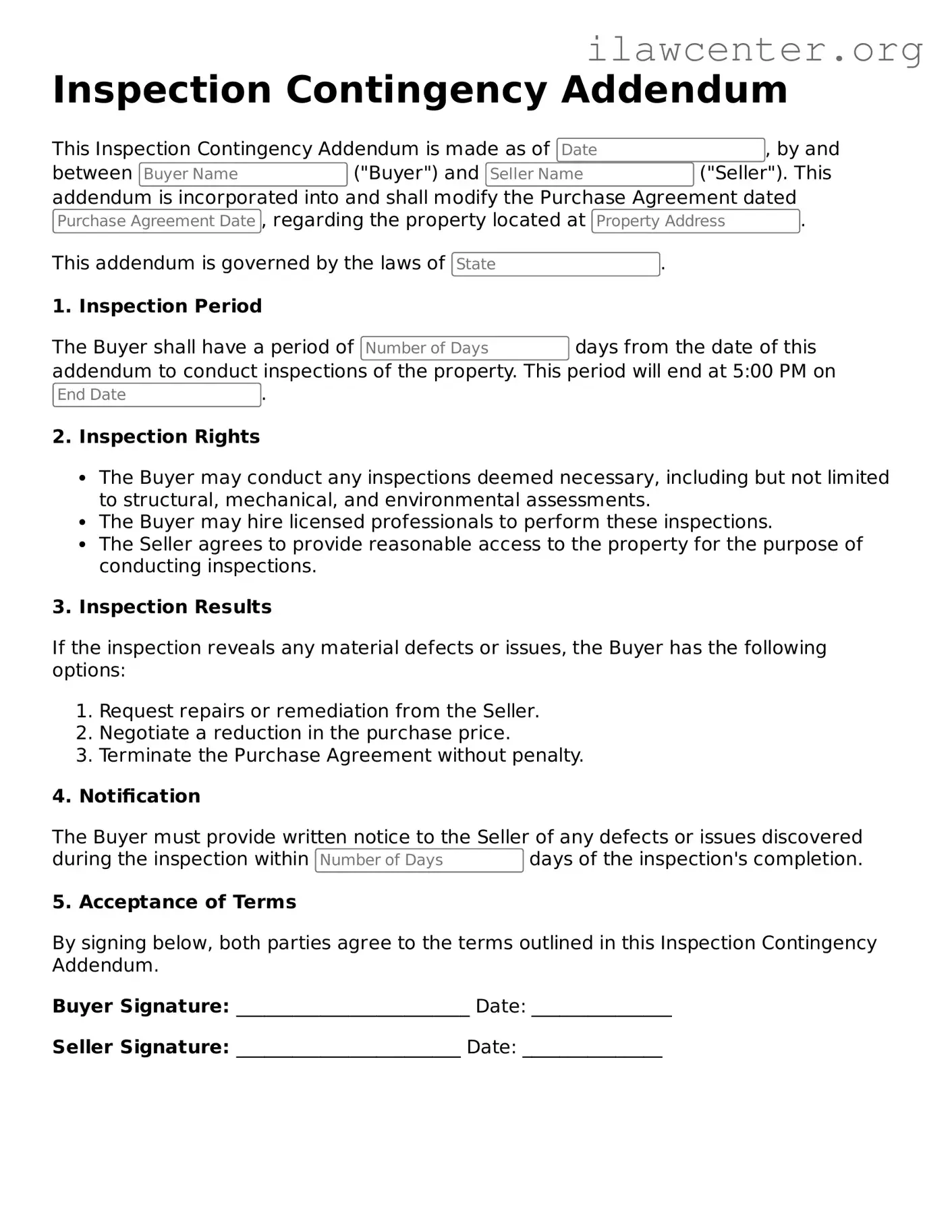
Inspection Contingency Addendum

This Inspection Contingency Addendum is made as of , by and between ("Buyer") and ("Seller"). This addendum is incorporated into and shall modify the Purchase Agreement dated , regarding the property located at .

This addendum is governed by the laws of .

1. Inspection Period

The Buyer shall have a period of days from the date of this addendum to conduct inspections of the property. This period will end at 5:00 PM on .

2. Inspection Rights

  • The Buyer may conduct any inspections deemed necessary, including but not limited to structural, mechanical, and environmental assessments.
  • The Buyer may hire licensed professionals to perform these inspections.
  • The Seller agrees to provide reasonable access to the property for the purpose of conducting inspections.

3. Inspection Results

If the inspection reveals any material defects or issues, the Buyer has the following options:

  1. Request repairs or remediation from the Seller.
  2. Negotiate a reduction in the purchase price.
  3. Terminate the Purchase Agreement without penalty.

4. Notification

The Buyer must provide written notice to the Seller of any defects or issues discovered during the inspection within days of the inspection's completion.

5. Acceptance of Terms

By signing below, both parties agree to the terms outlined in this Inspection Contingency Addendum.

Buyer Signature: _________________________ Date: _______________

Seller Signature: ________________________ Date: _______________

PDF Form Characteristics

Fact Name Description
Purpose The Inspection Contingency Addendum is used to outline the conditions under which a buyer can conduct inspections on a property before finalizing a purchase.
Timing Typically, buyers have a specified period, often 7 to 14 days, to complete inspections after the contract is signed.
Inspection Types Buyers can choose various types of inspections, including general home inspections, pest inspections, and specialized inspections for issues like mold or radon.
Negotiation If issues are discovered during the inspection, buyers can negotiate repairs or request concessions from the seller.
State-Specific Forms Different states may have their own versions of the Inspection Contingency Addendum, governed by local real estate laws.
Seller's Obligations Sellers are typically required to provide access to the property for inspections and disclose known issues.
Contingency Removal Once inspections are completed and any negotiations are settled, buyers must formally remove the contingency in writing.
Legal Implications Failing to adhere to the terms outlined in the addendum can result in legal disputes or potential loss of earnest money.
Governing Laws In California, for example, the form is governed by the California Civil Code, while in Texas, it is regulated under the Texas Real Estate License Act.

Instructions on Utilizing Inspection Contingency Addendum

Completing the Inspection Contingency Addendum form is a straightforward process. This form is essential in real estate transactions, particularly when buyers want to ensure that a property meets their expectations after an inspection. Follow these steps carefully to ensure accuracy.

  1. Begin by entering the date at the top of the form.
  2. Fill in the names of all parties involved in the transaction, including the buyer(s) and seller(s).
  3. Provide the property address in the designated space.
  4. Specify the timeframe for the inspection period. Clearly indicate the start and end dates.
  5. Detail any specific conditions or items that the buyer wishes to inspect.
  6. Include any contingencies that must be met before the sale can proceed.
  7. Sign and date the form at the bottom to indicate agreement from all parties.

Once you have completed the form, ensure that all parties receive a copy for their records. This will help facilitate communication and keep everyone informed as the process moves forward.

Important Facts about Inspection Contingency Addendum

What is an Inspection Contingency Addendum?

An Inspection Contingency Addendum is a document that allows a buyer to have a property inspected before finalizing the purchase. It outlines the conditions under which the buyer can negotiate repairs or even back out of the deal based on the inspection results. This addendum provides protection for buyers by ensuring they are aware of any potential issues with the property before closing the sale.

Why is an Inspection Contingency important?

This contingency is crucial because it helps buyers make informed decisions. If the inspection reveals significant problems, the buyer can request repairs, negotiate a price reduction, or withdraw their offer without penalty. Without this addendum, buyers might end up purchasing a property with hidden defects that could lead to costly repairs later.

What should be included in the Inspection Contingency Addendum?

The addendum should specify the time frame for the inspection, the type of inspections to be conducted, and the process for addressing any issues found. It may also include details about who will pay for the inspections and any deadlines for the buyer to respond to the findings. Clear terms help prevent misunderstandings between buyers and sellers.

How long does a buyer have to complete the inspection?

What happens if the inspection uncovers issues?

If the inspection reveals problems, the buyer has several options. They can request that the seller make repairs, negotiate a lower purchase price, or, if the issues are severe, choose to withdraw their offer entirely. The addendum typically outlines the steps to take in these situations, ensuring both parties understand their rights and responsibilities.

Can a seller refuse to make repairs after an inspection?

Common mistakes

Filling out the Inspection Contingency Addendum form can be straightforward, but many people make common mistakes that can lead to complications later on. One frequent error is failing to specify the time frame for the inspection. Without a clear deadline, both buyers and sellers may have different expectations, which can lead to misunderstandings.

Another mistake is not being thorough in describing the scope of the inspection. Buyers should clearly outline what they want inspected, such as the roof, plumbing, or electrical systems. If this is vague, the inspector may not cover all necessary areas, potentially leaving the buyer unaware of significant issues.

Additionally, some people neglect to include the necessary contingencies. For example, if the inspection reveals major defects, buyers should specify how they want to proceed—whether they want repairs made, a price reduction, or the option to back out of the deal. Omitting these details can limit options later.

Miscommunication about who pays for the inspection is also a common issue. Buyers often assume that the seller will cover this cost, but that is not always the case. Clearly stating who is responsible for the inspection fee in the addendum can prevent disputes.

Finally, many individuals forget to sign and date the form properly. This may seem minor, but an unsigned document can be considered invalid. Ensuring that all parties involved have completed their signatures is crucial for the addendum to hold up in any future discussions.

Documents used along the form

The Inspection Contingency Addendum form is a crucial part of real estate transactions, allowing buyers to negotiate repairs or request credits based on the findings of a property inspection. However, it often works in conjunction with several other important documents. Below is a list of common forms that may accompany the Inspection Contingency Addendum.

  • Purchase Agreement: This is the main contract between the buyer and seller outlining the terms of the sale, including price, contingencies, and closing date.
  • Property Disclosure Statement: Sellers typically provide this document, revealing known issues with the property. It helps buyers understand potential problems before inspection.
  • Inspection Report: After the property inspection, this report details the condition of the home, including any repairs needed. It serves as a basis for negotiations.
  • Repair Request Form: If the inspection reveals issues, buyers can use this form to formally request repairs or credits from the seller.
  • Amendment to Purchase Agreement: If both parties agree to changes based on inspection findings, this document modifies the original purchase agreement accordingly.
  • Lead-Based Paint Disclosure: For homes built before 1978, this form informs buyers of potential lead hazards, which is a federal requirement.
  • Final Walkthrough Checklist: This document allows buyers to ensure that agreed-upon repairs have been completed before closing the deal.

Understanding these documents will help you navigate the inspection process more effectively. Each form plays a role in protecting your interests and ensuring a smooth transaction.

Similar forms

The Inspection Contingency Addendum form serves a specific purpose in real estate transactions, primarily to protect buyers during the inspection phase. There are several other documents that share similarities with this addendum. Each of these documents addresses different aspects of the home-buying process but ultimately aim to safeguard the interests of the parties involved. Here are nine documents that are similar to the Inspection Contingency Addendum:

  • Purchase Agreement: This document outlines the terms and conditions of the sale, including price and contingencies. Like the Inspection Contingency Addendum, it protects the buyer by specifying conditions that must be met before the sale is finalized.
  • Financing Contingency Addendum: This addendum ensures that the buyer can secure financing for the purchase. Similar to the Inspection Contingency, it allows buyers to back out if they cannot obtain a loan under agreed terms.
  • Appraisal Contingency Addendum: This document protects buyers by requiring an appraisal of the property. If the appraisal comes in lower than the purchase price, buyers can negotiate or withdraw, akin to the inspection process.
  • Title Contingency Addendum: This addendum ensures that the property title is clear of liens or disputes. Like the Inspection Contingency, it allows buyers to cancel the agreement if issues arise.
  • Home Sale Contingency Addendum: This document allows buyers to make their purchase contingent upon selling their current home. It provides a safety net similar to that of the Inspection Contingency.
  • Repair Addendum: This form outlines any repairs that the seller agrees to make before closing. It is similar to the Inspection Contingency in that it addresses issues found during inspections.
  • Disclosure Statement: Sellers are often required to provide a disclosure statement detailing the property's condition. This document complements the Inspection Contingency by ensuring buyers are informed about potential issues.
  • Lead-Based Paint Disclosure: For homes built before 1978, this document informs buyers of potential lead hazards. It parallels the Inspection Contingency by addressing specific concerns that may affect buyer safety.
  • Home Warranty Addendum: This addendum can provide coverage for repairs after purchase. It shares similarities with the Inspection Contingency by offering additional protection against unforeseen issues.

Understanding these documents can help buyers navigate the complexities of real estate transactions more effectively. Each one plays a role in ensuring that the interests of the buyer are adequately protected throughout the buying process.

Dos and Don'ts

When filling out the Inspection Contingency Addendum form, it's essential to approach the task with care and attention. Here’s a list of six important dos and don’ts to guide you through the process:

  • Do read the entire form carefully before you begin. Understanding the terms and conditions is crucial.
  • Do provide accurate information regarding the property and inspection details. Precision is key.
  • Do specify the timeline for the inspection clearly. This helps all parties stay on the same page.
  • Do consult with your real estate agent if you have questions. They can offer valuable insights.
  • Don't rush through the form. Take your time to ensure every section is filled out correctly.
  • Don't omit any required signatures or dates. Missing information can delay the process.

By following these guidelines, you can navigate the Inspection Contingency Addendum form with confidence and clarity. Remember, attention to detail can make a significant difference in your real estate transaction.

Misconceptions

The Inspection Contingency Addendum is an important document in real estate transactions, yet many misconceptions surround it. Understanding these misconceptions can help buyers and sellers navigate the process more effectively. Here are seven common misunderstandings:

  1. It guarantees repairs will be made. Many believe that once an inspection reveals issues, the seller is obligated to make all repairs. In reality, the addendum outlines the buyer's right to request repairs, but it does not guarantee that the seller will comply.
  2. It only benefits the buyer. Some think that the Inspection Contingency Addendum is solely for the buyer's advantage. However, it also protects sellers by allowing them to address issues before the sale falls through.
  3. All inspections are the same. People often assume that any inspection will suffice. Different types of inspections exist, such as general, pest, or roof inspections, and each serves a specific purpose. Buyers should choose the right type based on their needs.
  4. Buyers can back out for any reason. There is a belief that buyers can simply walk away from the deal if they find any issues during the inspection. While they can back out, they must have valid reasons outlined in the contingency to avoid losing their earnest money.
  5. Only major issues need to be reported. Some buyers think they should only focus on significant problems. However, even minor issues can impact negotiations and should be documented in the addendum.
  6. The inspection process is quick and easy. Many underestimate the time and effort required for a thorough inspection. It often involves scheduling, waiting for reports, and reviewing findings, which can take longer than expected.
  7. Once signed, the addendum cannot be changed. People may believe that the terms of the addendum are set in stone once signed. In fact, both parties can negotiate changes to the addendum as long as they mutually agree.

By dispelling these misconceptions, both buyers and sellers can approach the Inspection Contingency Addendum with a clearer understanding, leading to a smoother transaction process.

Key takeaways

When dealing with the Inspection Contingency Addendum form, there are several important points to keep in mind. This form is crucial for both buyers and sellers in a real estate transaction. Here are some key takeaways:

  • The form allows buyers to request a home inspection before finalizing the purchase.
  • Buyers can specify the timeframe within which the inspection must be completed.
  • It is essential to clearly outline what happens if the inspection reveals issues.
  • Buyers should consider including a clause for negotiating repairs or credits based on inspection findings.
  • The addendum should be signed by both parties to ensure mutual agreement.
  • Failure to complete the inspection within the agreed timeframe can lead to losing the right to negotiate repairs.
  • Consulting with a real estate agent or attorney can help clarify any uncertainties related to the form.
  • Keep a copy of the completed addendum for your records, as it is part of the purchase agreement.