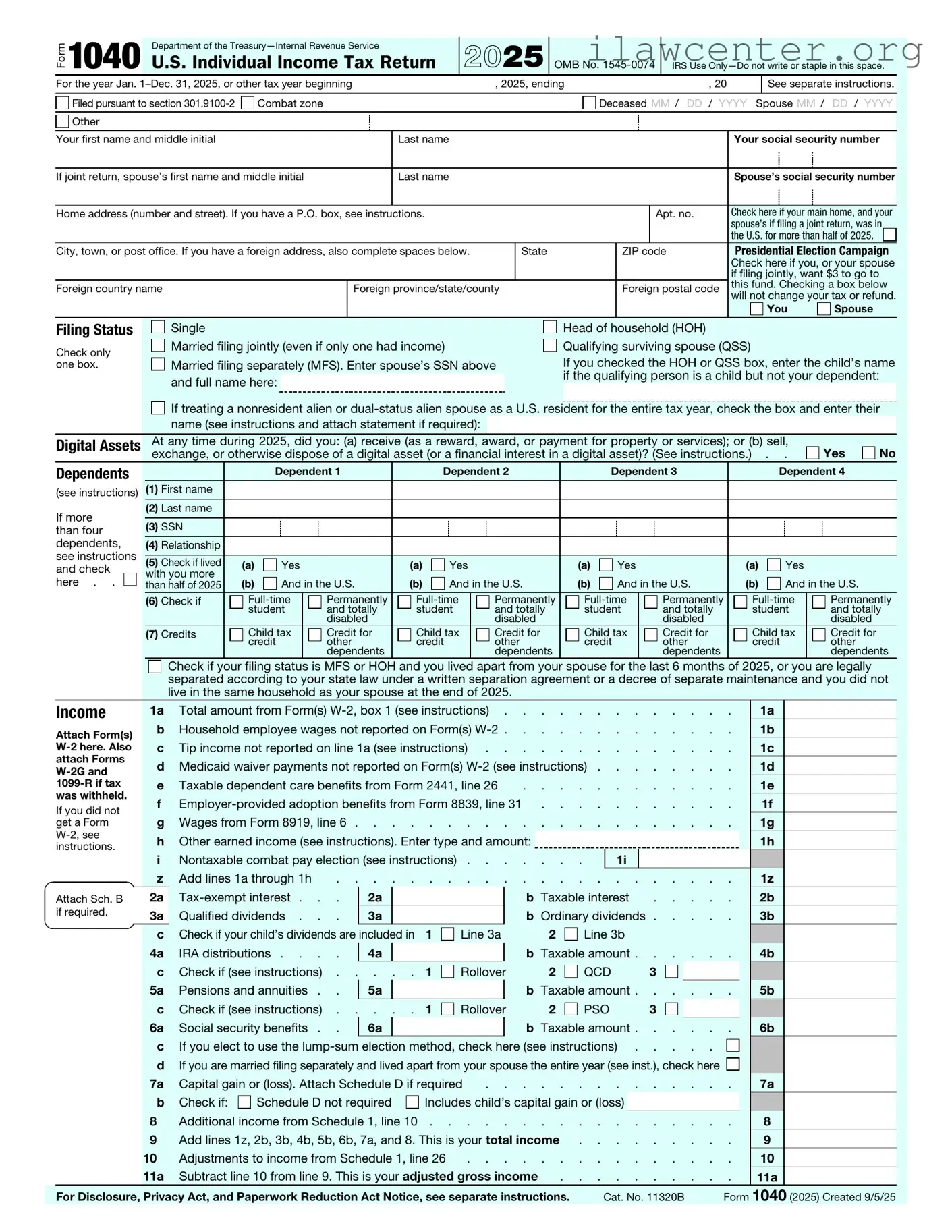

Instructions on Utilizing IRS 1040
After gathering all necessary financial documents, you can begin filling out the IRS 1040 form. This form is essential for reporting your annual income and calculating your tax liability. Follow these steps to ensure accurate completion.
- Start with your personal information. Fill in your name, address, and Social Security number at the top of the form.
- Indicate your filing status. Choose from options like single, married filing jointly, or head of household.
- Report your income. Include wages, dividends, and any other sources of income on the designated lines.
- Calculate your adjusted gross income (AGI). This involves subtracting any adjustments, such as student loan interest or retirement contributions, from your total income.
- Determine your taxable income. Subtract the standard deduction or itemized deductions from your AGI.
- Compute your tax. Use the tax tables provided in the IRS instructions to find your tax based on your taxable income.
- Account for any tax credits. Fill in any applicable credits that may reduce your tax liability.
- Calculate your total tax. Add any additional taxes, such as self-employment tax, to your computed tax.
- Report your payments. Include any withholding from your paycheck, estimated tax payments, or other credits.
- Determine if you owe additional taxes or if you will receive a refund. Subtract your total payments from your total tax.
- Sign and date the form. If filing jointly, both spouses must sign.
Once the form is completed, review it for accuracy. Keep a copy for your records and submit it by the tax deadline.