What is the IRS Form 8300?
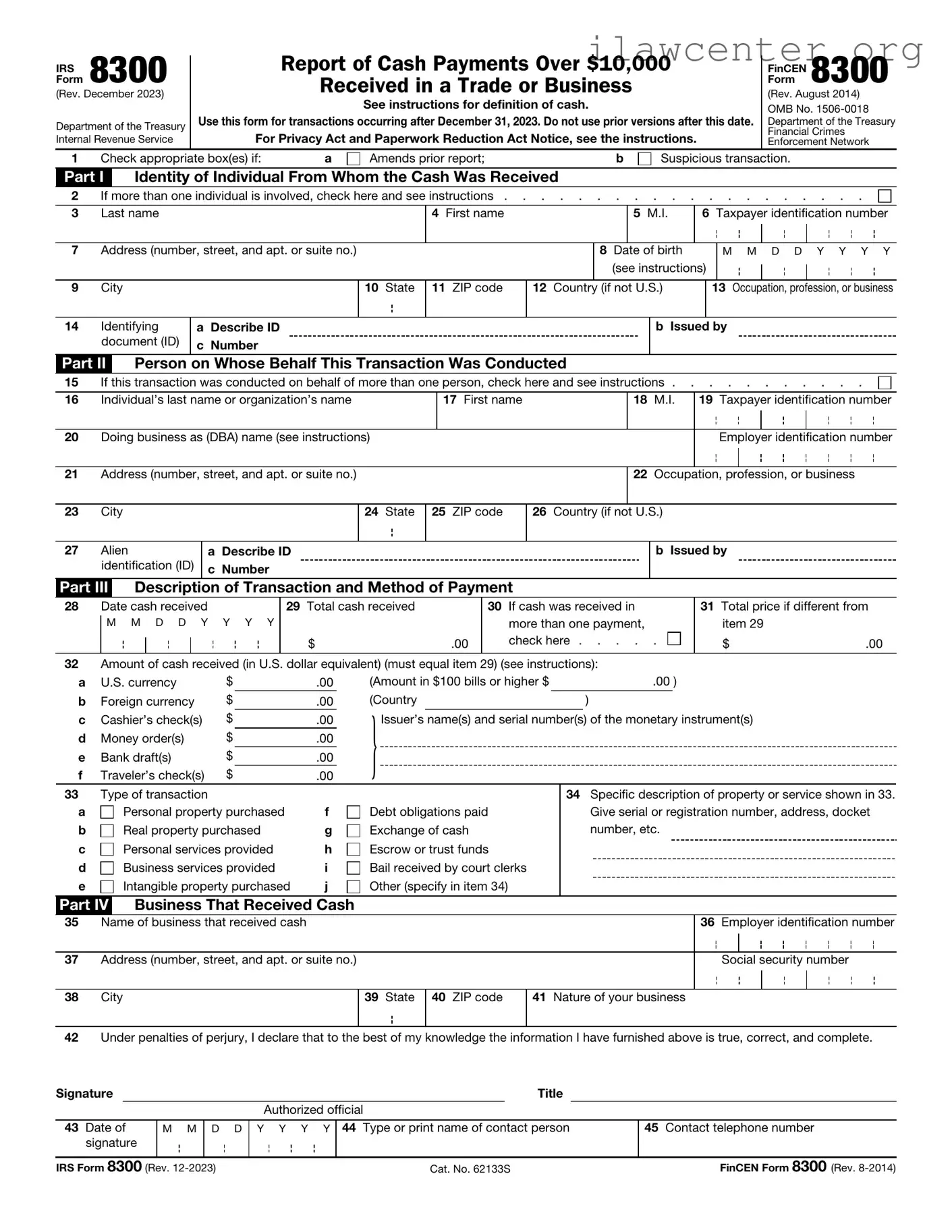
The IRS Form 8300 is a document that businesses must file to report cash payments exceeding $10,000 received in a single transaction or related transactions. This form helps the government track large cash transactions and combat money laundering and other illegal activities. It is important for businesses to understand their obligations regarding this form to ensure compliance with federal regulations.
Who is required to file Form 8300?
Any business that receives more than $10,000 in cash in a single transaction or related transactions must file Form 8300. This requirement applies to a wide range of businesses, including retail establishments, car dealerships, and service providers. If a business regularly deals in cash, it is crucial to be aware of the reporting requirements to avoid potential penalties.
What constitutes "cash" for the purposes of Form 8300?
For Form 8300, "cash" includes not only physical currency but also certain monetary instruments. This means that payments made in the form of coins and paper money are considered cash. Additionally, cashier's checks, bank drafts, traveler's checks, and money orders are also classified as cash if they are received in amounts exceeding $10,000. Understanding what qualifies as cash is essential for accurate reporting.
When is Form 8300 due?
Form 8300 must be filed within 15 days of receiving cash payments that exceed the $10,000 threshold. This timely submission is crucial to avoid penalties. If a business receives multiple payments that are related and collectively exceed $10,000, the business must report these transactions as well. Keeping accurate records can help ensure that filings are made promptly.
What happens if a business fails to file Form 8300?
Failing to file Form 8300 when required can lead to significant penalties. The IRS may impose fines for late filings, and in some cases, criminal charges could be pursued if the failure to file is deemed willful. Businesses should take their reporting obligations seriously and seek guidance if they are unsure about their requirements.
Can a business file Form 8300 electronically?
Yes, businesses can file Form 8300 electronically through the IRS e-file system. Electronic filing can simplify the process and help ensure that the form is submitted on time. The IRS provides resources to assist businesses with electronic filing, making it a convenient option for many. However, if a business prefers to file by mail, that option is still available.
What information is required on Form 8300?
Form 8300 requires several pieces of information, including the name, address, and taxpayer identification number of the business receiving the cash. Additionally, details about the person making the cash payment, such as their name and address, must be included. The form also asks for information about the transaction itself, including the amount of cash received and the date of the transaction. Accurate and complete information is essential for compliance.