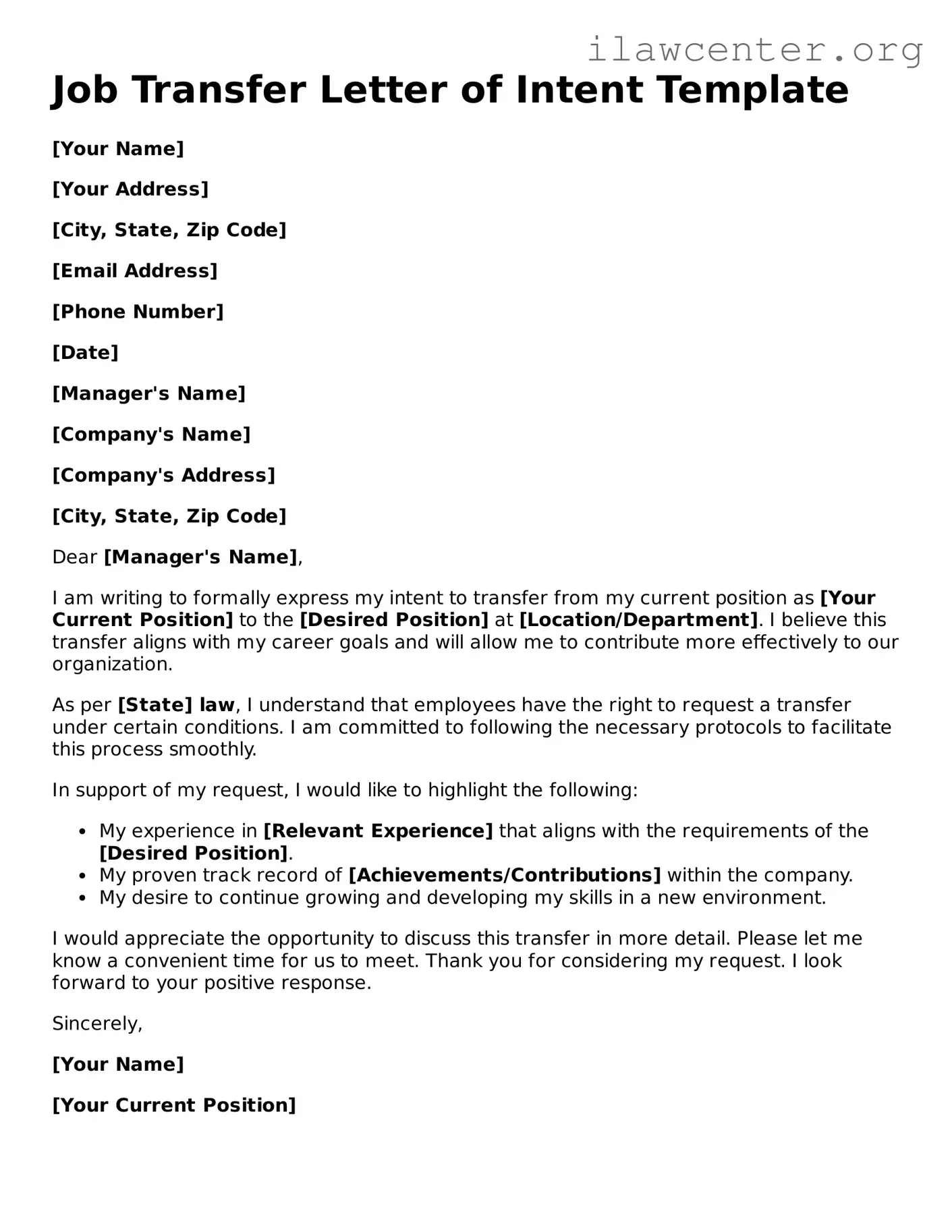
What is a Job Transfer Letter of Intent?
A Job Transfer Letter of Intent is a formal document expressing an employee's desire to transfer from their current position to another within the same organization. It serves as an initial communication to management about the employee's interest in exploring new opportunities within the company.
Why is a Job Transfer Letter of Intent important?
This letter is important because it clearly outlines the employee's intentions and reasons for seeking a transfer. It helps management understand the employee's motivations and can facilitate discussions about potential openings that may align with the employee's skills and career goals.
What should be included in the Job Transfer Letter of Intent?
The letter should include the employee's current position, the desired position they wish to transfer to, and a brief explanation of why they are seeking the transfer. Additionally, it can be beneficial to mention any relevant skills or experiences that make the employee a suitable candidate for the new role.
Who should receive the Job Transfer Letter of Intent?
The letter should typically be addressed to the employee's immediate supervisor or manager. Depending on the company's policies, it may also be appropriate to send a copy to the human resources department or the hiring manager for the position being sought.
Is a Job Transfer Letter of Intent legally binding?
No, a Job Transfer Letter of Intent is not legally binding. It is simply a way for an employee to express their interest in transferring within the company. The final decision regarding the transfer rests with the employer and is subject to company policies and procedures.
How should the letter be formatted?
The letter should be formatted like a standard business letter. This includes using a professional tone, including the date, the recipient's name and title, and a proper closing. Keeping the letter concise and to the point is also advisable.
When should I submit a Job Transfer Letter of Intent?
It is best to submit the letter as soon as the employee has identified a position they are interested in. Waiting too long may result in missed opportunities, especially if the desired position is in high demand or has a quick hiring process.
Can I withdraw my Job Transfer Letter of Intent?
Yes, an employee can withdraw their Job Transfer Letter of Intent at any time before the transfer is finalized. If circumstances change or if the employee decides not to pursue the transfer, they should communicate this decision to their supervisor or HR promptly.
What happens after I submit my Job Transfer Letter of Intent?
After submission, the employee should expect to have a discussion with their supervisor or HR about the request. This may involve a review of the employee's qualifications for the new position, potential interviews, and discussions about the transition process if the transfer is approved.
Are there any risks associated with submitting a Job Transfer Letter of Intent?
While submitting a Job Transfer Letter of Intent is generally a positive step, there may be some risks. For instance, the employee's current supervisor may have concerns about the transfer affecting their team. Open communication can help mitigate these risks and ensure a smoother process.