

Jsa PDF Template

Jsa PDF Template

The Job Safety Analysis (JSA) form is a crucial tool designed to identify and mitigate potential hazards associated with specific work activities. By systematically assessing risks and implementing control measures, this form helps ensure a safer work environment for everyone involved. Take the first step towards workplace safety by filling out the JSA form below.

Article Guide

The Job Safety Analysis (JSA) form is an essential tool for ensuring workplace safety and health. It captures critical information about the work activity being performed, including the business details such as name, contact information, and location. The JSA outlines who is involved in the activity and identifies the plant, equipment, tools, and materials that will be used. It also emphasizes the importance of personal protective equipment (PPE) and any necessary certificates, permits, or approvals required for compliance with relevant legislation and standards. Risk assessment is a key component of the JSA, utilizing a risk rating table to evaluate the likelihood and consequences of potential hazards associated with each job step. This assessment helps determine the appropriate risk controls needed to mitigate dangers, ranging from elimination and substitution to engineering controls and administrative measures. By documenting these elements, the JSA not only provides a structured approach to managing safety but also fosters a culture of awareness and accountability among all team members involved in the work process.

Jsa Preview

Page 1 of 6
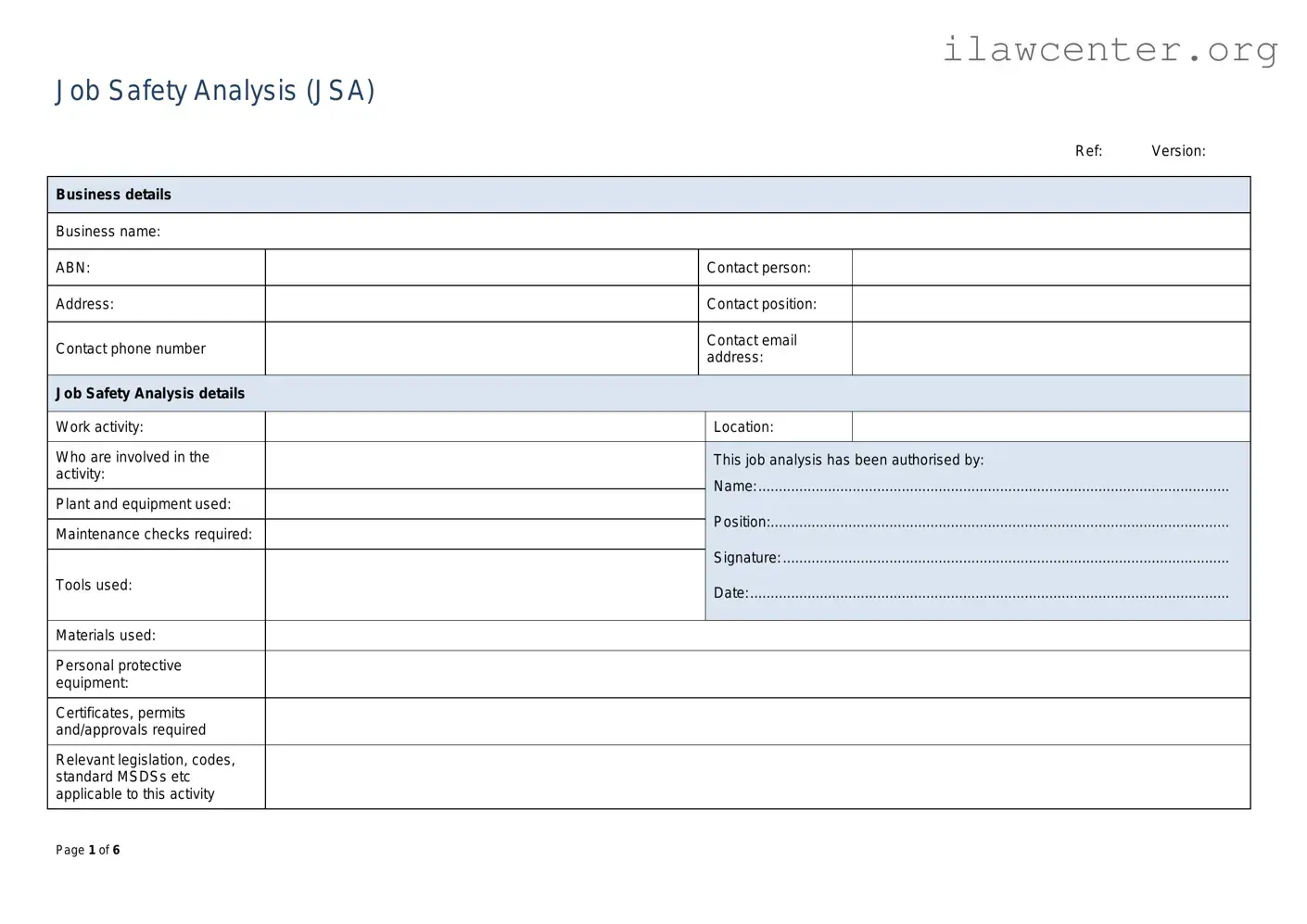
Job Safety Analysis (JSA)
Ref: Version:
Organisation Details
Business details
Business name:
ABN:
Contact person:
Address:
Contact position:
Contact phone number
Contact email
address:
Job Safety Analysis details
Work activity:
Location:
Who are involved in the
activity:
This job analysis has been authorised by:
Name: ...................................................................................................................
Position:................................................................................................................
Signature: .............................................................................................................
Date: .....................................................................................................................
Plant and equipment used:
Maintenance checks required:
Tools used:
Materials used:
Personal protective
equipment:
Certificates, permits
and/approvals required
Relevant legislation, codes,
standard MSDSs etc
applicable to this activity
Page 2 of 6
Risk assessment
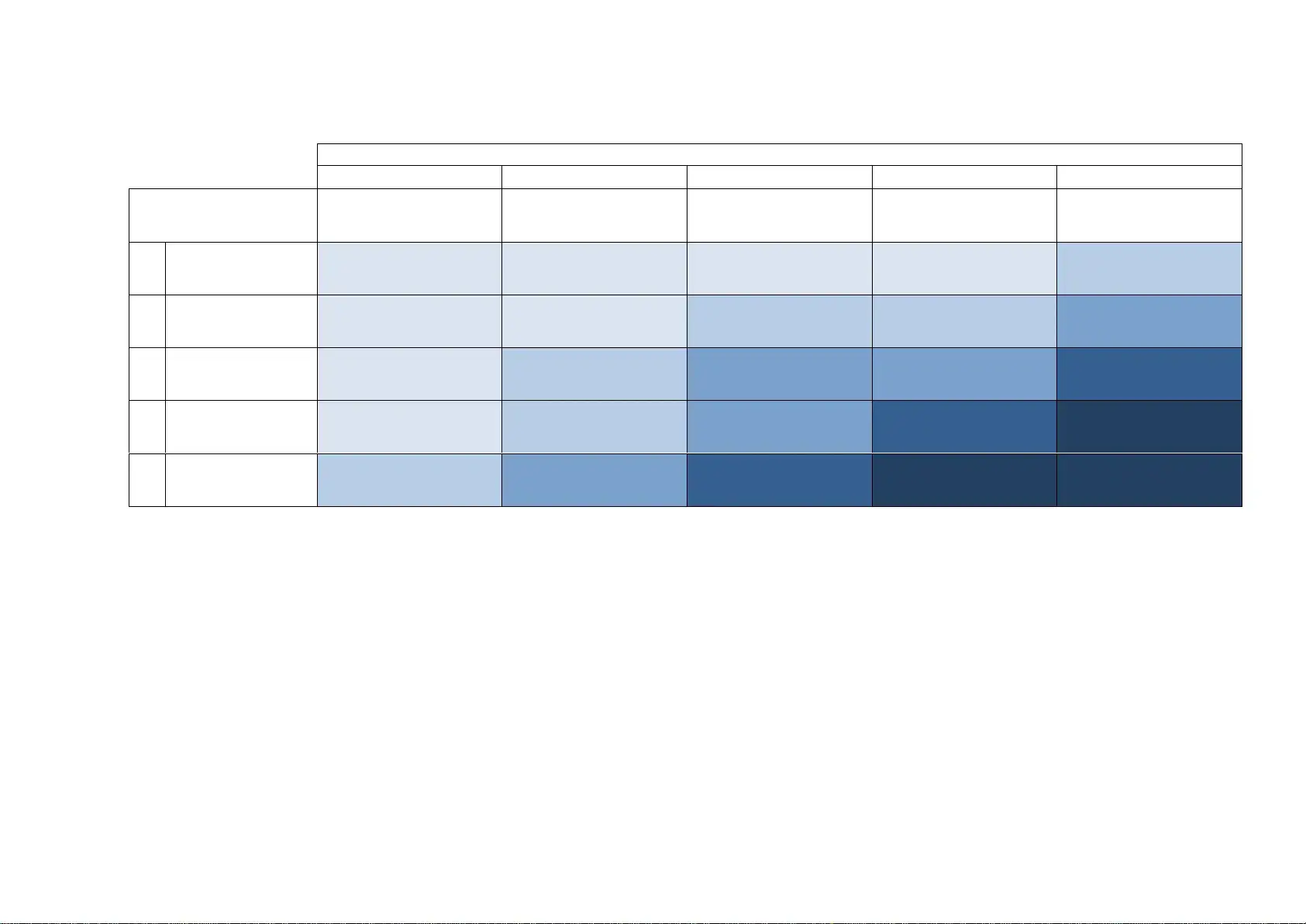
**Use the risk rating table to assess the level of risk for each job step.
Likelihood
1
2
3
4
5
Consequence
Rare
The event may occur in
exceptional circumstances
Unlikely
The event could occur
sometimes
Moderate
The event should occur
sometimes
Likely
The event will probably occur
in most circumstances
Almost Certain
The event is expected to
occur in most circumstances
1
Insignificant
No injuries or health
issues
LOW
LOW
LOW
LOW
MODERATE
2
Minor
First aid treatment
LOW
LOW
MODERATE
MODERATE
HIGH
3
Moderate
Medical treatment,
potential LTI
LOW
MODERATE
HIGH
HIGH
CRITICAL
4
Major
Permanent disability or
disease
LOW
MODERATE
HIGH
CRITICAL
CATASTROPHIC
5
Extreme
Death
MODERATE
HIGH
CRITICAL
CATASTROPHIC
CATASTROPHIC
Risk rating:
Low risk: Acceptable risk and no further action required as long as risk has been minimised as possible. Risk needs to be reviewed periodically.
Moderate risk: Tolerable with further action required to minimise risk. Risk needs to be reviewed periodically.
High risk: Tolerable with further action required to minimise risk. Risk needs to be reviewed continuously.
Critical risk: Unacceptable risk and further action required immediately to minimise risk.
Catastrophic: Unacceptable risk and urgent action required to minimise risk.
Page 3 of 6
Risk controls
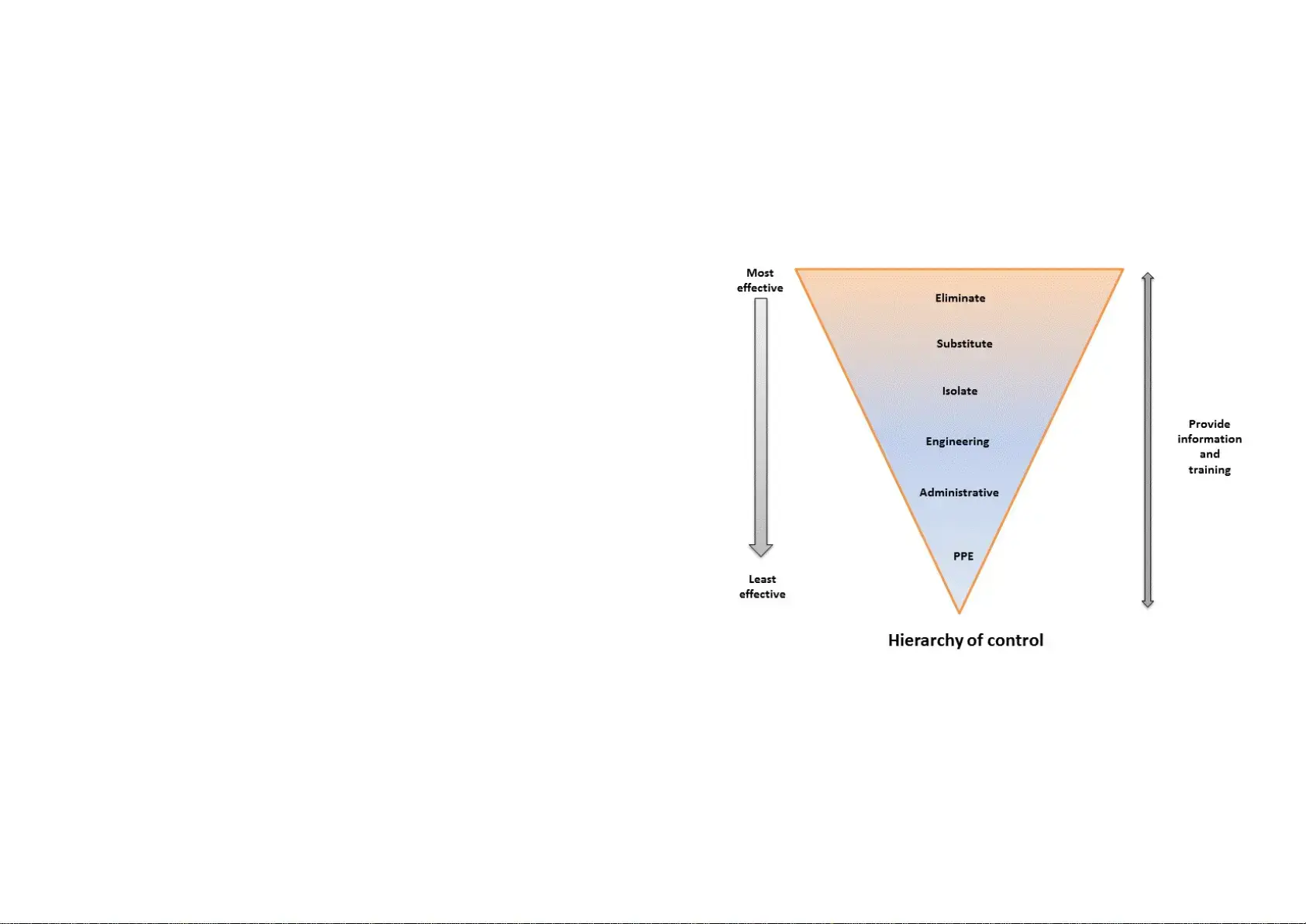
The hierarchy of control can be used as an effective tool to deal with health and safety issues at work. Use the type of control suggested as measures to deal
with the hazard. Aim to use control measures from as high on the hierarchy of control list as possible. If that is not possible the next option down the list or a
combination of the measures should be implemented. The least effective control measure is the use of personal protective equipment (PPE) and it should be
used as a last resort or a support to other control measures. Information and training should be integrated with all levels of control to explain how controls
work.
1. Eliminate if it is possible, the hazard should be removed completely.
For example, get rid of dangerous machines.
2. Substitute replace something that produces the hazard with something
that does not produce a hazard. For example, replacing solvent based
paint with water based paint. Risk assessment on the substitution must be
conducted to ensure that it will not pose another hazard.
3. Engineering control isolate a person from the hazard by creating
physical barrier or making changes to process, equipment or plant to
reduce the hazard. For example, install ventilation systems.
4. Administrative control change the way a person works by establishing
policies and procedures to minimise the risks. For example, job
scheduling to limit exposure and posting hazard signs.
5. Use personal protective equipment (PPE) protect a person from the
hazard by wearing PPE. For example, wearing gloves, safety glasses,
hard hats and high-visibility clothing. PPE must be correctly fitted, used
and maintained to provide protection.
Page 4 of 6
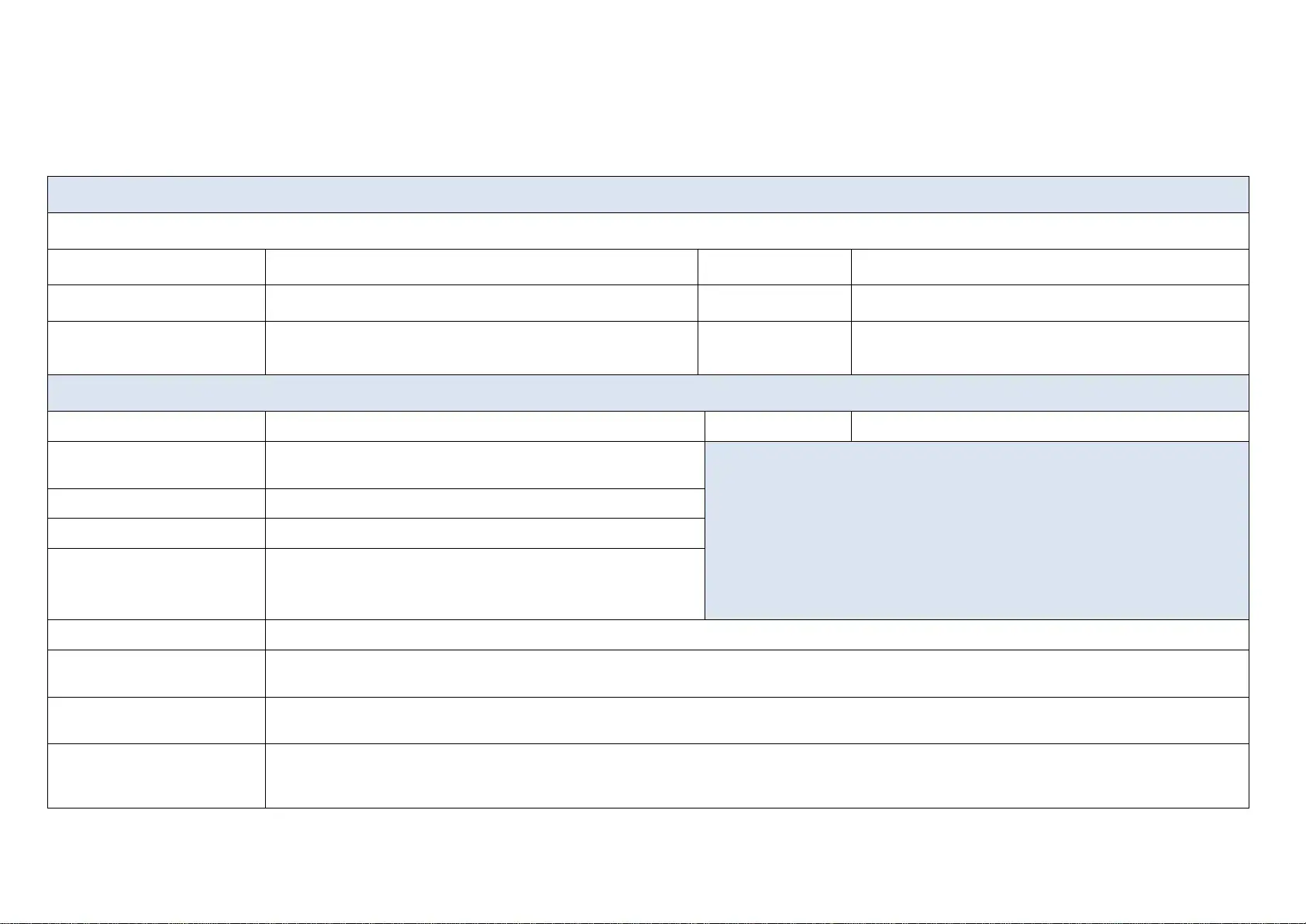
JSA Action steps
Step No
Job step details
Potential hazards
Risk
rating**
How to control risks***
Name of persons responsible for
work
Review number: Version:
Page 5 of 6
Step No
Job step details
Potential hazards
Risk
rating**
How to control risks***
Name of persons responsible for
work
Review number: Version:
Page 6 of 6
This job safety analysis has been developed through consultation with our employees and has been read, understood and signed by all employees undertaking the works:
Print Names:
Signatures:
Dates:
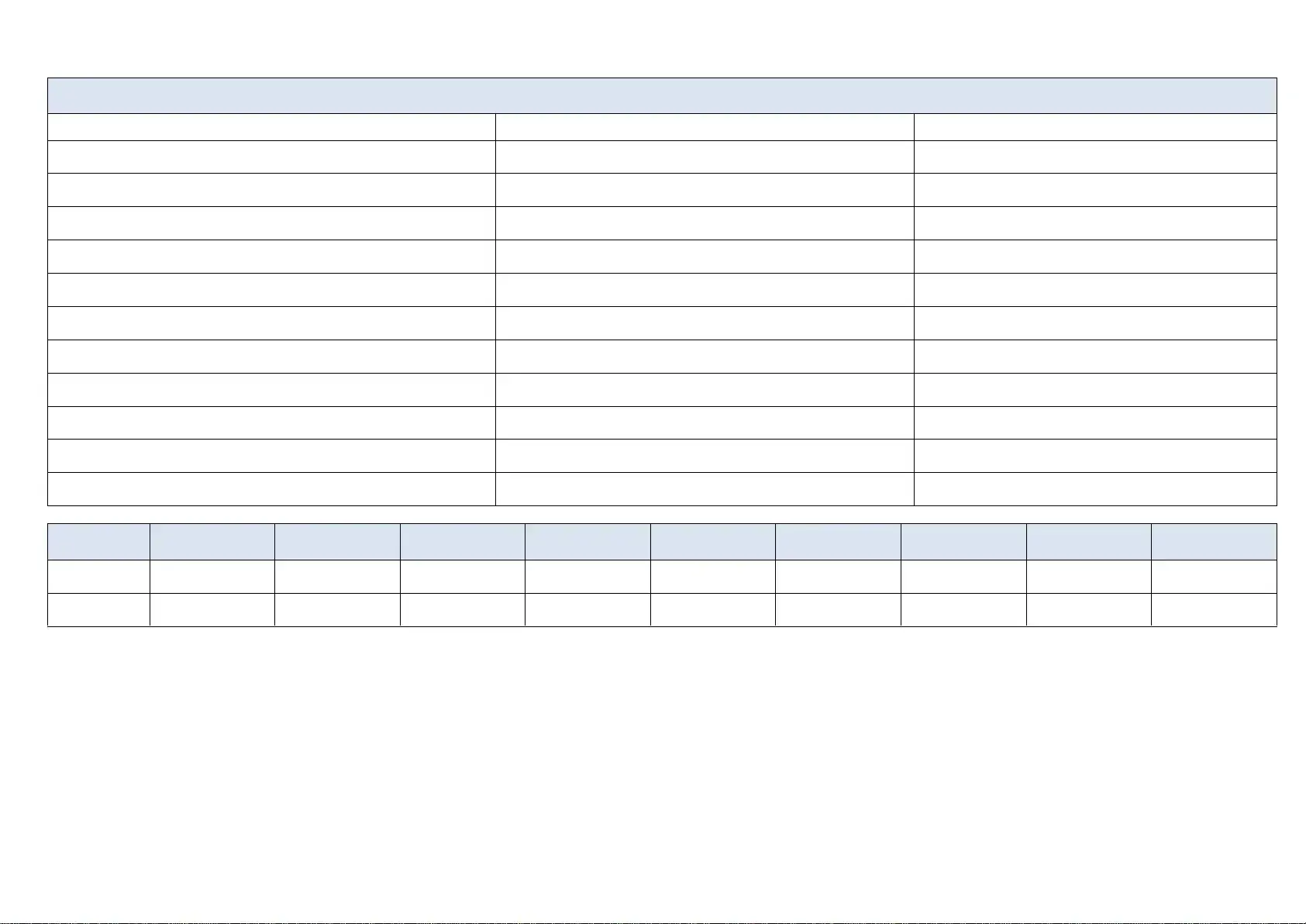
Review No
01
02
03
04
05
06
07
08
09
Initial:
Date:
A10592057

File Properties

Fact Name Description
Purpose The Job Safety Analysis (JSA) form is designed to identify hazards associated with specific work activities and to implement safety measures.
Components This form includes details such as business information, work activity, risk assessment, and required safety controls.
Risk Assessment It uses a risk rating table to evaluate potential hazards, classifying them from low to catastrophic risk levels.
Governing Laws In the U.S., the Occupational Safety and Health Administration (OSHA) regulations govern the use of JSAs to ensure workplace safety.

Instructions on Utilizing Jsa

Completing the Job Safety Analysis (JSA) form is an important step in ensuring workplace safety. This process involves gathering relevant information about the work activity, assessing risks, and determining appropriate control measures. Below are the steps to guide you through filling out the JSA form effectively.

  1. Begin with the Business details section. Fill in the following fields:
    • Business name
    • ABN
    • Contact person
    • Address
    • Contact position
    • Contact phone number
    • Contact email address
  2. Move to the Job Safety Analysis details section. Complete the following:
    • Work activity
    • Location
    • Who is involved in the activity
    • Name of the person authorizing the job analysis
    • Position of the authorizing person
    • Signature of the authorizing person
    • Date
  3. Document the Plant and equipment used, Tools used, Materials used, and Personal protective equipment required for the job.
  4. List any Certificates, permits, and approvals required for the activity.
  5. Refer to relevant legislation, codes, standards, and MSDSs applicable to the activity.
  6. Conduct a Risk assessment by using the risk rating table provided in the form. Assess the level of risk for each job step based on likelihood and consequence.
  7. Document the Risk rating for each identified hazard:
    • Low risk
    • Moderate risk
    • High risk
    • Critical risk
    • Catastrophic
  8. Identify Risk controls using the hierarchy of control. Select appropriate measures to mitigate the risks identified.
  9. Complete the JSA – Action steps section by detailing:
    • Step number
    • Job step details
    • Potential hazards
    • Risk rating
    • How to control risks
    • Name of persons responsible for work
  10. Finally, review the form for completeness and accuracy. Ensure all necessary signatures are obtained.

Important Facts about Jsa

What is a Job Safety Analysis (JSA) form?

A Job Safety Analysis (JSA) form is a tool used to identify and assess potential hazards associated with a specific job or task. It helps in planning safety measures and ensures that all employees understand the risks involved. The form typically includes details about the work activity, location, equipment used, and the necessary personal protective equipment (PPE).

Who should complete the JSA form?

The JSA form should be completed by the person responsible for overseeing the job, often referred to as the contact person. This individual is typically in a supervisory or managerial position and has a thorough understanding of the task and its associated risks. Input from all team members involved in the activity is also valuable for a comprehensive analysis.

What information is required on the JSA form?

The JSA form requires various details, including the business name, contact information, job activity, location, and names of individuals involved. It also includes sections for identifying potential hazards, assessing risks, and outlining necessary controls and PPE. Additionally, it should be signed by the authorized person to confirm that the analysis has been reviewed and approved.

How do I assess risks on the JSA form?

To assess risks, you will use the risk rating table provided within the JSA form. Each job step is evaluated based on two factors: the likelihood of an incident occurring and the potential consequences. By combining these factors, you can determine the overall risk rating, which helps in deciding the necessary control measures.

What are the different risk ratings, and what do they mean?

The risk ratings range from low to catastrophic. A low risk indicates that the hazard is acceptable with no further action required, while a moderate risk means further action is needed to minimize the risk. High and critical risks require continuous and immediate action, respectively. Catastrophic risks indicate an unacceptable level of risk that requires urgent measures to be taken.

What are the hierarchy of controls?

The hierarchy of controls is a system used to minimize or eliminate exposure to hazards. It includes five levels: elimination, substitution, engineering controls, administrative controls, and personal protective equipment (PPE). The goal is to implement the highest level of control feasible to protect workers from risks.

How often should the JSA be reviewed?

The JSA should be reviewed periodically, especially when there are changes to the job, equipment, or procedures. Additionally, if a near-miss or incident occurs, a review is necessary to ensure that the analysis remains relevant and effective in managing risks.

What happens if a risk is identified as critical or catastrophic?

If a risk is identified as critical or catastrophic, immediate action is required to minimize the risk. This may involve stopping the job until appropriate control measures are implemented. It is crucial to address these risks promptly to ensure the safety of all employees involved.

Can the JSA form be modified for different jobs?

Yes, the JSA form can and should be modified to fit the specific requirements of different jobs or tasks. Each job has unique hazards and risks, so tailoring the JSA to reflect those differences is essential for effective risk management and worker safety.

Common mistakes

Filling out a Job Safety Analysis (JSA) form is crucial for ensuring workplace safety. However, individuals often make mistakes that can undermine the effectiveness of this important document. One common error is failing to provide complete business details. This includes missing information such as the business name, ABN, or contact details. Incomplete information can lead to confusion and hinder communication in case of emergencies or safety audits.

Another frequent mistake is neglecting to identify all individuals involved in the work activity. Omitting names or roles can result in a lack of accountability and oversight. Everyone who plays a part in the job should be listed to ensure that all team members understand their responsibilities and the associated risks. Clear identification of roles fosters a culture of safety and encourages proactive engagement.

People also often underestimate the importance of accurately assessing risks. Misjudging the likelihood and consequence of potential hazards can lead to inadequate risk ratings. For example, if a job step is rated as low risk when it is actually high risk, necessary precautions may not be taken. This oversight can have serious consequences, as it may leave workers unprotected against significant dangers.

Another common oversight is failing to implement appropriate risk controls. The JSA form provides a hierarchy of controls that should be followed. When individuals skip this step or choose ineffective measures, they may expose workers to unnecessary hazards. It is essential to select the most effective control measures available and document them clearly on the form.

Lastly, individuals sometimes forget to review and update the JSA regularly. A stagnant analysis can become irrelevant as work conditions or processes change. Regular reviews ensure that the JSA remains a living document that accurately reflects current risks and control measures. Consistent updates are vital for maintaining workplace safety and compliance with regulations.

Documents used along the form

The Job Safety Analysis (JSA) form is a crucial document that helps identify potential hazards associated with specific job tasks. Alongside the JSA, several other forms and documents are often utilized to ensure a comprehensive approach to workplace safety. Below is a list of these documents, each accompanied by a brief description.

  • Risk Assessment Form: This document evaluates the likelihood and consequences of identified hazards. It helps in determining the level of risk and the necessary control measures to mitigate those risks.
  • Permit to Work: A formal authorization that ensures specific safety measures are in place before work begins. It is particularly important for high-risk activities and helps ensure that all safety protocols are followed.
  • Safety Data Sheet (SDS): This document provides detailed information about hazardous materials used in the workplace. It includes data on handling, storage, and emergency measures related to the materials.
  • Training Records: These records document the training provided to employees regarding safety procedures and equipment. They ensure that all personnel are adequately informed and prepared to handle safety issues.
  • Incident Report Form: Used to document any accidents or near misses that occur in the workplace. This form helps identify trends and areas for improvement in safety practices.
  • Personal Protective Equipment (PPE) Assessment: This document outlines the necessary PPE required for specific tasks and ensures that employees are equipped to protect themselves from identified hazards.
  • Emergency Response Plan: A comprehensive plan detailing the procedures to follow in case of an emergency. This includes evacuation routes, emergency contacts, and responsibilities of personnel during an incident.
  • Job Hazard Analysis (JHA): Similar to the JSA, this document focuses on analyzing job tasks to identify hazards and implement controls. It provides a more detailed examination of specific jobs within a broader context.

Utilizing these documents alongside the JSA enhances workplace safety and ensures that potential hazards are effectively managed. A thorough approach to safety not only protects employees but also promotes a culture of safety within the organization.

Similar forms

  • Risk Assessment Form: Like the JSA form, a risk assessment form identifies potential hazards associated with a specific task. It evaluates the likelihood and consequences of those hazards, helping to determine the level of risk involved.
  • Method Statement: A method statement outlines how a task will be performed safely. Similar to the JSA, it includes details about the work activity, the risks involved, and the measures taken to mitigate those risks.
  • Safety Data Sheet (SDS): An SDS provides information about the properties of a chemical substance. Just as the JSA includes details on materials used, the SDS highlights potential hazards and safety precautions related to those materials.
  • Permit to Work: A permit to work is a formal authorization to carry out specific tasks. It shares similarities with the JSA by requiring an assessment of risks and the implementation of control measures before work begins.
  • Incident Report Form: An incident report form documents accidents or near misses. Like the JSA, it focuses on identifying hazards and assessing risks, aiming to prevent future incidents by analyzing what went wrong.

Dos and Don'ts

When filling out the Job Safety Analysis (JSA) form, it is essential to adhere to best practices to ensure clarity and compliance. Below is a list of things you should and shouldn't do:

  • Do provide accurate business details, including the business name, ABN, and contact information.
  • Do clearly identify the work activity and location where the job will take place.
  • Do assess the risks associated with each job step using the risk rating table.
  • Do specify the personal protective equipment (PPE) required for the job.
  • Don't leave any sections of the form incomplete; all fields must be filled out.
  • Don't underestimate potential hazards; assess risks realistically.
  • Don't ignore the hierarchy of controls when determining risk management strategies.
  • Don't forget to obtain the necessary signatures for authorization.

Misconceptions

  • JSA forms are only for large companies. Many people think that only big businesses need to fill out a JSA form. In reality, any workplace that involves risks should use one, regardless of size.
  • Completing a JSA is a one-time task. Some believe that once a JSA is completed, it doesn’t need to be updated. However, it should be reviewed regularly and whenever there are changes in the work process or environment.
  • JSAs are only about compliance. While compliance is important, the primary purpose of a JSA is to improve safety and prevent accidents. It helps identify hazards and implement controls.
  • Only management needs to fill out the JSA. This is a common misconception. Everyone involved in the job should contribute to the JSA to ensure all perspectives on potential hazards are considered.
  • PPE is the only safety measure needed. Many think that wearing personal protective equipment is enough. However, a JSA emphasizes a hierarchy of controls, and PPE should be the last line of defense.
  • JSAs are too complicated to use. While they may seem complex, JSAs are designed to be straightforward. They provide a clear structure for identifying risks and planning safety measures.
  • Once risks are identified, they can be ignored. Some believe that identifying risks is sufficient. In fact, it’s crucial to implement control measures to address those risks effectively.
  • All risks can be eliminated. People often think that every risk can be completely removed. In reality, some risks can only be minimized, and ongoing monitoring is essential.

Key takeaways

Filling out and using the Job Safety Analysis (JSA) form is essential for ensuring workplace safety. Here are some key takeaways to keep in mind:

  • Thoroughness is key: Complete all sections of the JSA form, including business details, work activity, and risk assessments. Each detail contributes to a comprehensive understanding of the job at hand.
  • Risk assessment is crucial: Use the risk rating table to evaluate potential hazards. Assigning the correct risk level helps prioritize safety measures effectively.
  • Implement controls: Follow the hierarchy of controls when addressing hazards. Strive to eliminate risks first, then consider substitution, engineering controls, administrative changes, and lastly, personal protective equipment (PPE).
  • Regular reviews are necessary: Continuously assess and update the JSA. Regular reviews ensure that the risk assessments remain relevant and effective as conditions change.