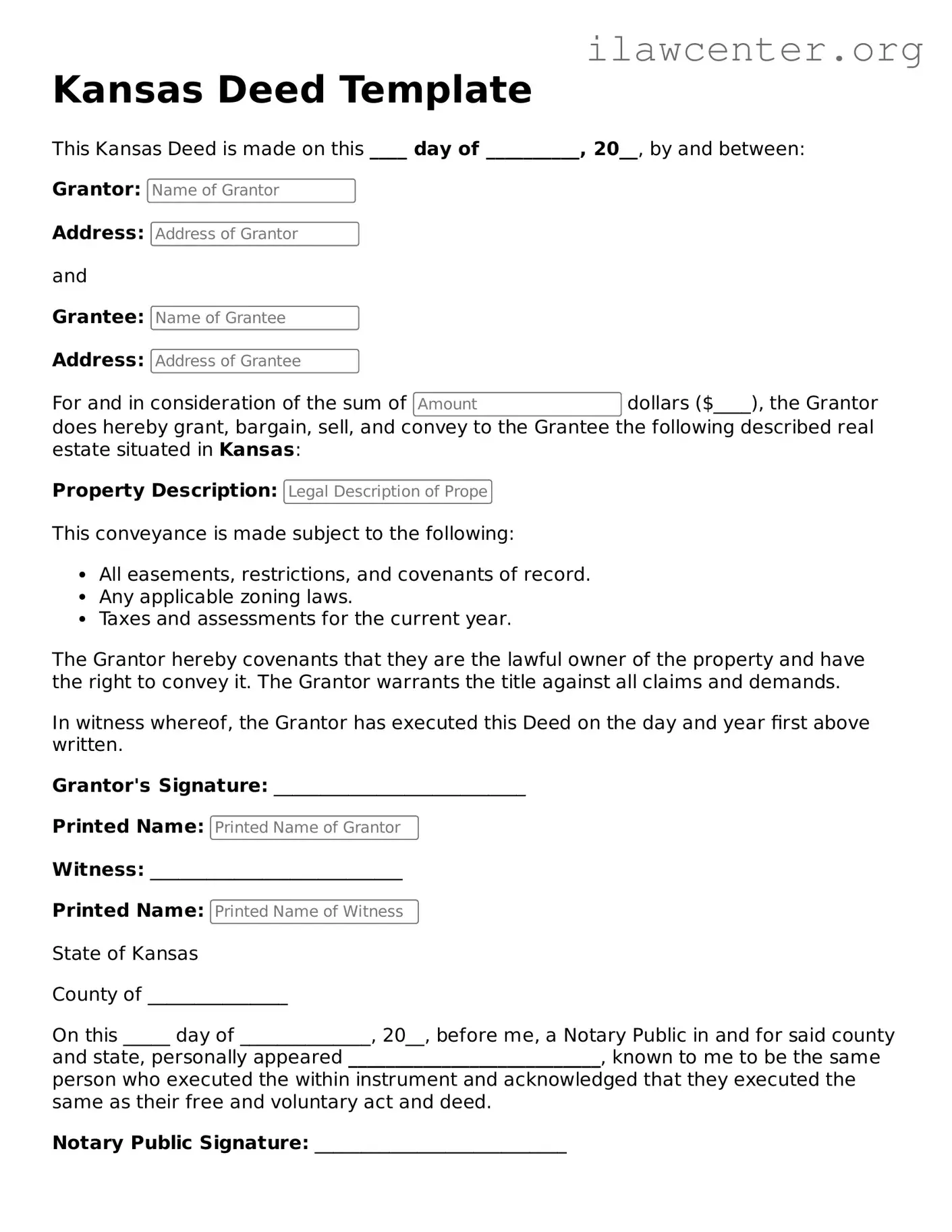
What is a Kansas Deed form?
A Kansas Deed form is a legal document used to transfer ownership of real estate in the state of Kansas. This form outlines the details of the transaction, including the names of the parties involved, the property description, and any conditions of the transfer. It serves as proof of ownership once recorded with the appropriate county office.
What types of Deeds are available in Kansas?
Kansas offers several types of deeds, including Warranty Deeds, Quitclaim Deeds, and Special Warranty Deeds. A Warranty Deed provides the highest level of protection to the buyer, ensuring that the seller has clear title to the property. A Quitclaim Deed, on the other hand, transfers whatever interest the seller has without any guarantees. Special Warranty Deeds offer a middle ground, providing some assurances about the title but only for the period the seller owned the property.
Do I need a lawyer to complete a Kansas Deed form?
How do I fill out a Kansas Deed form?
Filling out a Kansas Deed form involves providing specific information, such as the names of the grantor (seller) and grantee (buyer), the legal description of the property, and any relevant terms of the transfer. It's important to be accurate and clear in this information to avoid complications. Many forms are available online, or you can obtain them from local government offices.
What is the process for recording a Kansas Deed?
To record a Kansas Deed, you must submit the completed form to the Register of Deeds in the county where the property is located. There may be a small fee for recording the deed. Once recorded, the deed becomes part of the public record, providing official notice of the change in ownership.
Are there any taxes or fees associated with a Kansas Deed transfer?
Yes, transferring property in Kansas may involve certain fees and taxes. The most common is the Kansas Real Estate Transfer Tax, which is typically calculated based on the sale price of the property. Additionally, there may be recording fees charged by the county. It's advisable to check with local authorities for specific rates and requirements.
Can I revoke a Kansas Deed after it has been executed?
Once a Kansas Deed has been executed and recorded, it generally cannot be revoked unilaterally. However, if both parties agree, a new deed can be drafted to reverse the transaction or transfer ownership again. Legal advice may be necessary to navigate this process effectively.