Attorney-Verified  Do Not Resuscitate Order Document for Kansas

Attorney-Verified Do Not Resuscitate Order Document for Kansas

A Kansas Do Not Resuscitate (DNR) Order form is a legal document that allows individuals to specify their wishes regarding resuscitation efforts in the event of a medical emergency. By completing this form, patients can communicate their desire not to receive cardiopulmonary resuscitation (CPR) or other life-saving measures. If you want to ensure your healthcare preferences are honored, consider filling out the form by clicking the button below.

Article Guide

The Kansas Do Not Resuscitate (DNR) Order form is a crucial document that empowers individuals to express their wishes regarding medical interventions in the event of a life-threatening situation. This form allows patients to communicate their desire not to receive cardiopulmonary resuscitation (CPR) or other life-sustaining treatments if their heart stops or they stop breathing. It is essential for patients, particularly those with terminal illnesses or advanced age, to have this form in place to ensure that their preferences are respected during critical moments. The DNR Order must be completed and signed by a physician, and it should be readily available to healthcare providers in emergencies. Additionally, the form includes specific instructions and must be presented in a manner that is easily recognizable by medical personnel. Understanding the implications and requirements of the Kansas DNR Order is vital for both patients and their families, as it fosters informed decision-making and promotes peace of mind in the face of difficult healthcare choices.

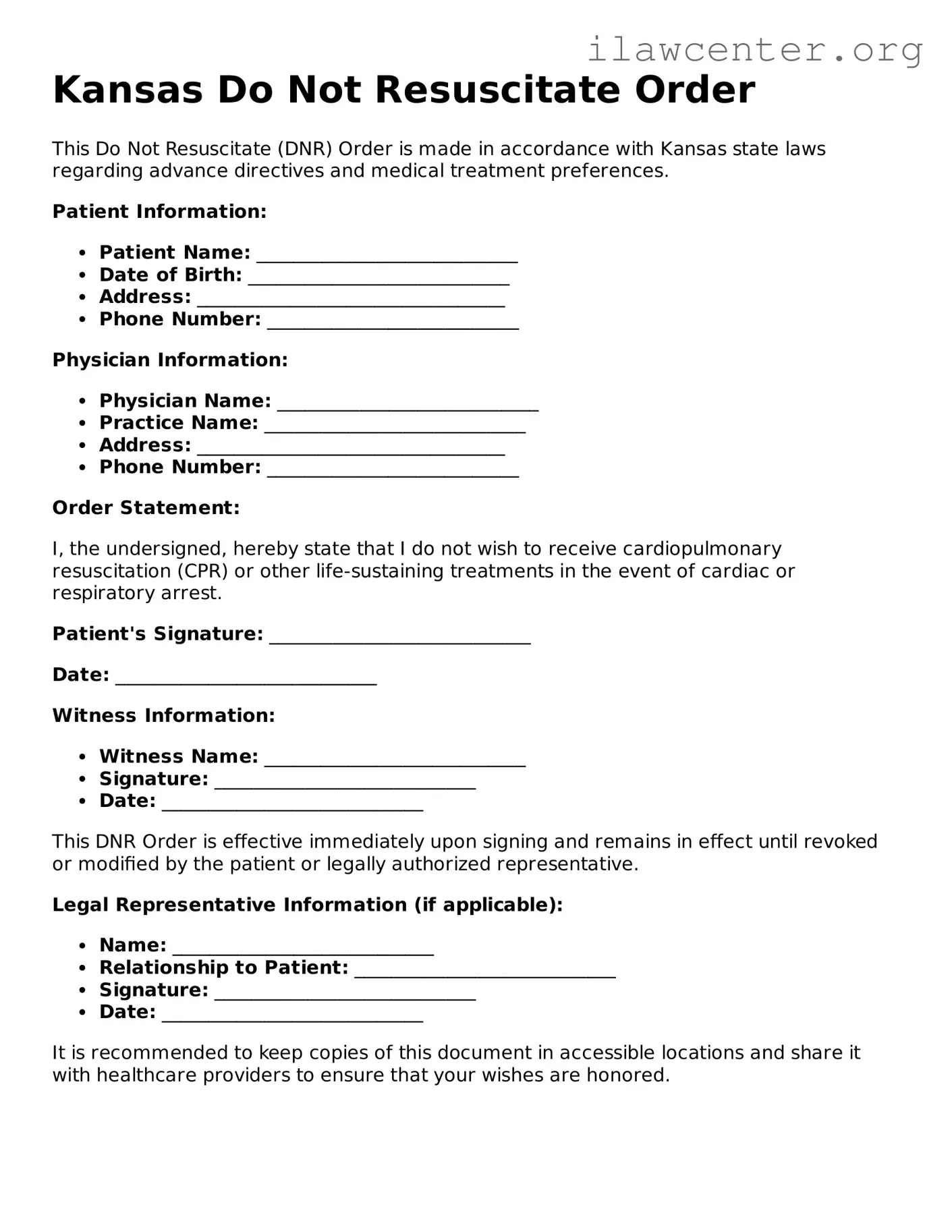
Kansas Do Not Resuscitate Order Preview

Kansas Do Not Resuscitate Order

This Do Not Resuscitate (DNR) Order is made in accordance with Kansas state laws regarding advance directives and medical treatment preferences.

Patient Information:

  • Patient Name: ____________________________
  • Date of Birth: ____________________________
  • Address: _________________________________
  • Phone Number: ___________________________

Physician Information:

  • Physician Name: ____________________________
  • Practice Name: ____________________________
  • Address: _________________________________
  • Phone Number: ___________________________

Order Statement:

I, the undersigned, hereby state that I do not wish to receive cardiopulmonary resuscitation (CPR) or other life-sustaining treatments in the event of cardiac or respiratory arrest.

Patient's Signature: ____________________________

Date: ____________________________

Witness Information:

  • Witness Name: ____________________________
  • Signature: ____________________________
  • Date: ____________________________

This DNR Order is effective immediately upon signing and remains in effect until revoked or modified by the patient or legally authorized representative.

Legal Representative Information (if applicable):

  • Name: ____________________________
  • Relationship to Patient: ____________________________
  • Signature: ____________________________
  • Date: ____________________________

It is recommended to keep copies of this document in accessible locations and share it with healthcare providers to ensure that your wishes are honored.

PDF Form Characteristics

Fact Name Details
Purpose The Kansas Do Not Resuscitate Order (DNR) form is used to indicate a person's wish not to receive cardiopulmonary resuscitation (CPR) in the event of cardiac or respiratory arrest.
Eligibility Any adult can complete a DNR order, but it is typically used by individuals with terminal illnesses or those who wish to avoid aggressive medical interventions.
Governing Law The Kansas DNR order is governed by the Kansas Statutes Annotated, specifically K.S.A. 65-4941 through 65-4945.
Signature Requirement The form must be signed by the individual or their legal representative, and it should be presented to healthcare providers to be honored.

Instructions on Utilizing Kansas Do Not Resuscitate Order

Completing the Kansas Do Not Resuscitate Order form is an important step in expressing your healthcare preferences. After filling out the form, it should be signed and dated, and a copy should be provided to your healthcare provider. This ensures that your wishes are clearly communicated and respected in medical situations.

  1. Obtain the Kansas Do Not Resuscitate Order form. This can typically be found online or through healthcare facilities.
  2. Fill in your full name, date of birth, and any other identifying information requested on the form.
  3. Specify the name of your attending physician. This is the doctor who is primarily responsible for your care.
  4. Indicate your wishes regarding resuscitation by selecting the appropriate option provided on the form.
  5. Sign and date the form to validate it. Ensure that your signature is clear and legible.
  6. Have a witness sign the form if required. This may vary based on specific guidelines.
  7. Make copies of the completed form for your records and for your healthcare provider.

Important Facts about Kansas Do Not Resuscitate Order

What is a Kansas Do Not Resuscitate Order (DNR) form?

A Kansas Do Not Resuscitate Order (DNR) form is a legal document that allows individuals to express their wishes regarding resuscitation efforts in the event of a medical emergency. This form indicates that a person does not want cardiopulmonary resuscitation (CPR) or other life-saving measures if their heart stops beating or they stop breathing. It is important for individuals to discuss their wishes with family and healthcare providers before completing this form.

Who can complete a DNR form in Kansas?

In Kansas, any adult who is capable of making their own healthcare decisions can complete a DNR form. This includes individuals who are 18 years or older and are of sound mind. Additionally, a legal guardian or a healthcare proxy can complete the form on behalf of someone who is unable to do so due to medical conditions.

How do I obtain a Kansas DNR form?

The Kansas DNR form can be obtained from various sources, including hospitals, healthcare providers, and online resources. Many healthcare facilities have copies available for patients. It is also possible to find the form on the Kansas Department of Health and Environment's website. Ensure that you use the most current version of the form.

What should I do after completing the DNR form?

Once you have completed the DNR form, it is crucial to share copies with your healthcare providers, family members, and anyone involved in your care. Keep a copy in a visible location at home, such as on the refrigerator or near your bedside. This will ensure that emergency personnel are aware of your wishes in case of a medical emergency.

Can I change or revoke my DNR order?

Yes, you can change or revoke your DNR order at any time. To do so, you should complete a new DNR form or clearly communicate your decision to your healthcare provider and family members. It is important to ensure that everyone involved in your care is aware of your updated wishes.

What if I am traveling outside of Kansas?

If you are traveling outside of Kansas, it is advisable to carry a copy of your DNR form with you. While some states may recognize Kansas DNR orders, laws can vary by state. It is best to check the regulations in the state you are visiting to ensure that your wishes are respected. Consider discussing your DNR status with your healthcare provider before traveling.
Common mistakes

Filling out a Kansas Do Not Resuscitate (DNR) Order form can be a critical task for individuals who wish to express their healthcare preferences. However, mistakes can occur during this process, leading to potential misunderstandings about a person's wishes. One common error is failing to provide the required signatures. Both the patient and a witness must sign the form to ensure its validity. Omitting these signatures can render the document ineffective.

Another frequent mistake is not clearly stating the patient's wishes. The DNR form should explicitly indicate the desire not to receive resuscitation in the event of cardiac or respiratory arrest. If the language is ambiguous or unclear, healthcare providers may be uncertain about how to proceed, which could lead to unwanted interventions.

Additionally, people often overlook the importance of including accurate personal information. This includes the patient's full name, date of birth, and contact information. Inaccurate or incomplete information can create confusion and may delay the implementation of the DNR order when it is needed most.

Some individuals may forget to review the form after it has been filled out. It is essential to double-check for any errors or omissions before submitting the document. Simple mistakes, such as typos or incorrect dates, can lead to complications in enforcing the DNR order.

Another mistake involves not discussing the DNR order with family members or healthcare providers. Open communication can help ensure that everyone understands the patient's wishes and can advocate for them if necessary. Without this discussion, family members may be caught off guard during a medical emergency, leading to confusion and potential conflicts.

Lastly, people sometimes neglect to keep the DNR order in an accessible location. It is crucial to store the document in a place where it can be easily found by medical personnel, such as a medical binder or with other important documents. If the form is not readily available, it may not be honored, regardless of the patient's wishes.

Documents used along the form

The Kansas Do Not Resuscitate Order form is an important document that outlines a person's wishes regarding resuscitation efforts in the event of a medical emergency. However, it is often accompanied by several other forms and documents that can provide additional context or support for healthcare decisions. Below is a list of commonly used documents that may be relevant in conjunction with the Kansas Do Not Resuscitate Order form.

  • Advance Directive: This document allows individuals to specify their preferences for medical treatment and appoint a healthcare proxy to make decisions on their behalf if they become unable to communicate their wishes.
  • Living Will: A type of advance directive, a living will details a person's preferences regarding life-sustaining treatments in situations where they are terminally ill or in a persistent vegetative state.
  • Healthcare Power of Attorney: This legal document designates a specific person to make healthcare decisions for an individual if they are incapacitated, ensuring that their medical preferences are honored.
  • Physician Orders for Life-Sustaining Treatment (POLST): POLST forms provide specific medical orders based on a patient’s preferences regarding treatment options, and they are typically used for individuals with serious health conditions.
  • Do Not Intubate (DNI) Order: This order specifically instructs healthcare providers not to perform intubation, which is the insertion of a tube into the airway to assist with breathing, in the event of respiratory failure.
  • Medical History Record: A comprehensive medical history can provide healthcare providers with essential background information, including past treatments and existing conditions, which can inform decisions in emergencies.
  • Patient Identification Card: This card can serve as a quick reference for healthcare providers to identify the patient’s wishes regarding resuscitation and other medical interventions, especially in emergency situations.

Understanding these documents and how they interact with the Kansas Do Not Resuscitate Order form can help individuals and their families make informed decisions about medical care. It is essential to ensure that all relevant forms are completed and accessible to provide clarity and guidance in critical situations.

Similar forms

The Do Not Resuscitate (DNR) Order form is an important document in healthcare, particularly for patients who wish to refuse certain medical interventions in specific situations. Several other documents serve similar purposes in guiding medical decisions and reflecting patient preferences. Here are nine documents that share similarities with the DNR Order form:

  • Living Will: This document outlines an individual's preferences regarding medical treatment in situations where they may be unable to communicate their wishes, particularly at the end of life.
  • Healthcare Proxy: A healthcare proxy appoints someone to make medical decisions on behalf of an individual if they become incapacitated. This is similar to a DNR in that it can guide end-of-life care decisions.
  • Advance Directive: This is a broader term that encompasses both living wills and healthcare proxies, allowing individuals to express their healthcare preferences in advance.
  • POLST (Physician Orders for Life-Sustaining Treatment): This document translates patient preferences into medical orders, providing clear instructions for emergency personnel regarding life-sustaining treatments.
  • Do Not Intubate Order: Similar to a DNR, this order specifically instructs healthcare providers not to perform intubation, reflecting a patient's wishes regarding respiratory support.
  • Do Not Hospitalize Order: This order indicates a patient’s preference to avoid hospitalization in certain circumstances, often aligning with their end-of-life care choices.
  • Comfort Care Order: This document emphasizes the provision of comfort measures rather than curative treatments, aligning closely with the intentions behind a DNR.
  • Patient's Bill of Rights: While broader in scope, this document emphasizes a patient's right to make decisions about their own healthcare, including the right to refuse resuscitation.
  • End-of-Life Care Plan: This comprehensive plan includes various preferences regarding treatment, including decisions about resuscitation, pain management, and emotional support.

Each of these documents plays a crucial role in ensuring that patient preferences are respected and that healthcare providers have clear guidance on how to proceed in various medical situations.

Dos and Don'ts

When filling out the Kansas Do Not Resuscitate Order form, it’s important to approach the process with care and consideration. Here are some guidelines to help you navigate this sensitive task.

  • Do discuss your wishes with your healthcare provider to ensure clarity.
  • Do involve your family members in the conversation to promote understanding and support.
  • Do read the instructions on the form carefully before filling it out.
  • Do keep a copy of the completed form in a safe place and share it with your healthcare team.
  • Don't rush through the form; take your time to think about your decisions.
  • Don't assume that verbal instructions are enough; written documentation is essential.
  • Don't forget to update the form if your wishes change over time.
  • Don't hesitate to seek legal advice if you have questions about the implications of the order.

These steps can help ensure that your wishes are respected and understood. Taking the time to carefully complete this form can provide peace of mind for you and your loved ones.

Misconceptions

Understanding the Kansas Do Not Resuscitate (DNR) Order form is crucial for both patients and healthcare providers. Here are five common misconceptions about this important document:

  1. A DNR order means no medical care at all.

    This is incorrect. A DNR order specifically addresses resuscitation efforts in the event of cardiac or respiratory arrest. Patients with a DNR can still receive other medical treatments and interventions.

  2. Only terminally ill patients can have a DNR order.

    This misconception is misleading. Any patient, regardless of their illness stage, can request a DNR order if they wish to forgo resuscitation in specific situations.

  3. A DNR order is permanent and cannot be changed.

    This is false. Patients can modify or revoke their DNR orders at any time, as long as they are competent to make such decisions.

  4. Healthcare providers must follow a DNR order in all situations.

    While healthcare providers generally respect DNR orders, they may not apply in certain emergency situations where the patient's wishes are unclear or if the order is not readily available.

  5. A DNR order only applies in hospitals.

    This is not true. A DNR order can be honored in various settings, including at home or in long-term care facilities, as long as the order is properly documented.

Clarifying these misconceptions helps ensure that patients' wishes are respected and that they receive appropriate care aligned with their preferences.

Key takeaways

When considering a Do Not Resuscitate (DNR) Order in Kansas, it is crucial to understand its implications and the proper steps to follow. Here are nine key takeaways to guide you through the process:

  1. Understand the Purpose: A DNR Order is a legal document that indicates a person's wish not to receive cardiopulmonary resuscitation (CPR) in the event of cardiac arrest.
  2. Eligibility: Any adult who is capable of making medical decisions can fill out a DNR Order. This includes individuals with terminal illnesses or those who wish to avoid aggressive life-saving measures.
  3. Consult with Healthcare Providers: Before completing the form, it is advisable to discuss your wishes with a doctor or healthcare provider. They can help clarify your medical condition and the implications of a DNR.
  4. Complete the Form Accurately: Ensure that all required fields on the DNR Order form are filled out correctly. This includes personal information and signatures from both the patient and a physician.
  5. Keep Copies Accessible: Once the DNR Order is completed, make multiple copies. Keep one in a prominent place at home and provide copies to your healthcare providers and family members.
  6. Review Regularly: Life circumstances and health conditions can change. It is important to review and update your DNR Order periodically to ensure it reflects your current wishes.
  7. Inform Family and Friends: Discuss your decision with family members and close friends. Clear communication can help prevent confusion during critical moments.
  8. Legal Recognition: In Kansas, a properly completed DNR Order is legally recognized by emergency medical services and healthcare facilities, ensuring your wishes are honored.
  9. Consider Other Advanced Directives: A DNR Order is just one part of advance care planning. Consider creating additional documents, such as a living will or a healthcare power of attorney, to further clarify your healthcare preferences.

By understanding these key points, individuals can navigate the DNR process with greater confidence and ensure their healthcare preferences are respected.