Attorney-Verified  Employee Handbook Document for Kansas

Attorney-Verified Employee Handbook Document for Kansas

The Kansas Employee Handbook form serves as a vital document that outlines workplace policies, procedures, and employee rights within a Kansas-based organization. This handbook not only helps ensure compliance with state laws but also fosters a clear understanding between employers and employees. To get started on creating your own handbook, fill out the form by clicking the button below.

Article Guide

In the state of Kansas, an Employee Handbook serves as a vital resource for both employers and employees, outlining workplace policies, expectations, and rights. This comprehensive document typically includes essential topics such as employee conduct, workplace safety, benefits, and disciplinary procedures. By providing clear guidelines, the handbook fosters a transparent work environment, helping to prevent misunderstandings and potential disputes. Additionally, it often addresses legal obligations, ensuring compliance with state and federal regulations. Employers must take care to customize their handbooks to reflect their unique workplace culture while adhering to applicable laws. As such, the Kansas Employee Handbook form becomes an indispensable tool in promoting a harmonious and productive workplace.

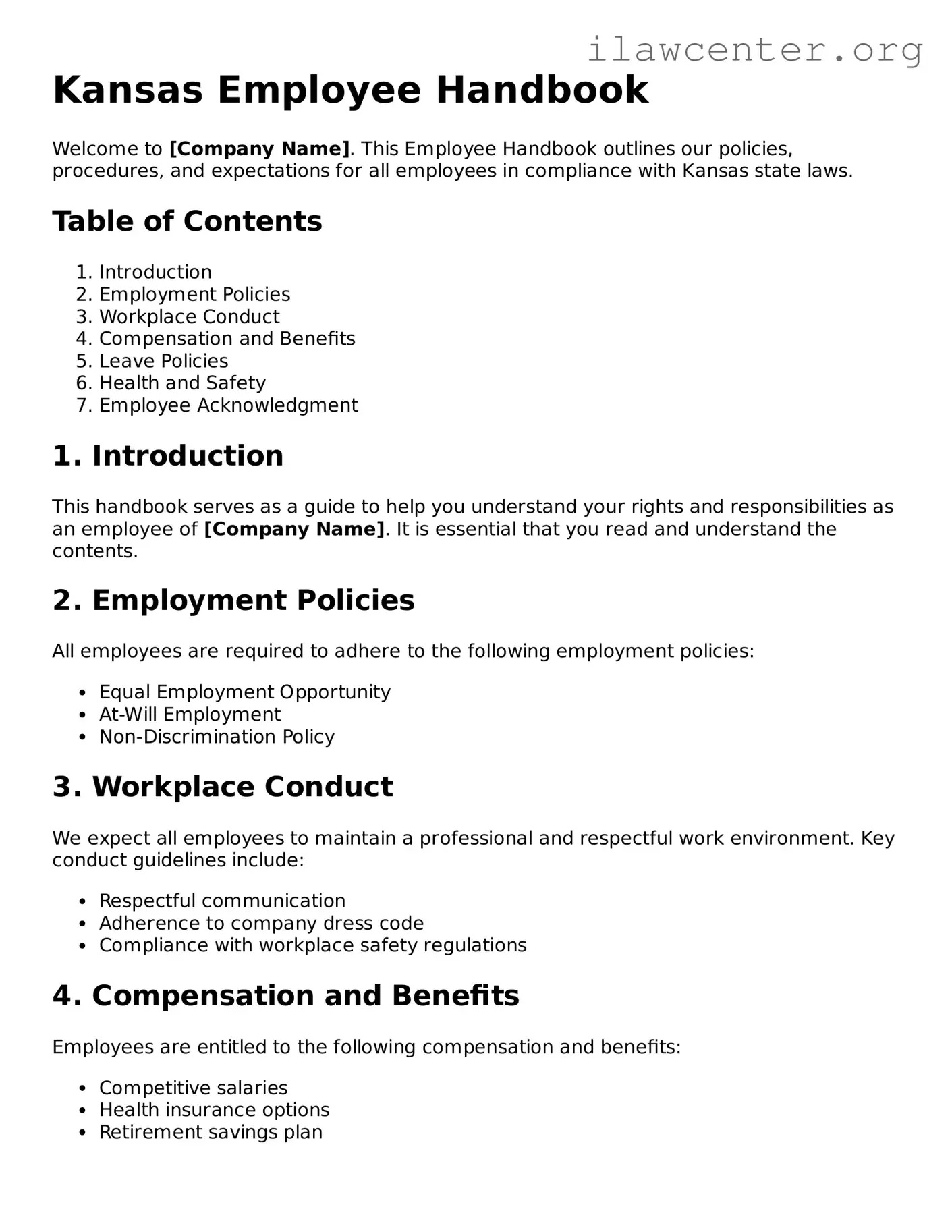
Kansas Employee Handbook Preview

Kansas Employee Handbook

Welcome to [Company Name]. This Employee Handbook outlines our policies, procedures, and expectations for all employees in compliance with Kansas state laws.

Table of Contents

  1. Introduction
  2. Employment Policies
  3. Workplace Conduct
  4. Compensation and Benefits
  5. Leave Policies
  6. Health and Safety
  7. Employee Acknowledgment

1. Introduction

This handbook serves as a guide to help you understand your rights and responsibilities as an employee of [Company Name]. It is essential that you read and understand the contents.

2. Employment Policies

All employees are required to adhere to the following employment policies:

  • Equal Employment Opportunity
  • At-Will Employment
  • Non-Discrimination Policy

3. Workplace Conduct

We expect all employees to maintain a professional and respectful work environment. Key conduct guidelines include:

  • Respectful communication
  • Adherence to company dress code
  • Compliance with workplace safety regulations

4. Compensation and Benefits

Employees are entitled to the following compensation and benefits:

  • Competitive salaries
  • Health insurance options
  • Retirement savings plan

5. Leave Policies

Employees may request leave under the following conditions:

  • Family and Medical Leave Act (FMLA)
  • Paid Time Off (PTO)
  • Holidays

6. Health and Safety

Your safety is our priority. Please report any unsafe conditions or incidents to your supervisor immediately. Regular safety training will be provided.

7. Employee Acknowledgment

By signing below, you acknowledge that you have received, read, and understood the policies outlined in this handbook.

Employee Name: [Employee Name]

Date: [Date]

For any questions regarding this handbook, please contact [HR Contact Name] at [HR Contact Information].

PDF Form Characteristics

Fact Name Details
Purpose The Kansas Employee Handbook serves as a guide for employees, outlining company policies, procedures, and expectations.
Legal Requirements While not legally required, having an employee handbook can help protect employers by clearly communicating workplace rules and policies.
Governing Laws The Kansas Wage Payment Act and other state labor laws govern employment practices and policies outlined in the handbook.
Content Essentials Key sections typically include workplace conduct, benefits, leave policies, and safety procedures.
Distribution Employers should provide the handbook to all employees and obtain acknowledgment of receipt to ensure understanding.

Instructions on Utilizing Kansas Employee Handbook

Completing the Kansas Employee Handbook form is an important step in ensuring that you are familiar with the policies and procedures of your workplace. After you fill out the form, it will be submitted to your HR department for review. This will help facilitate a smoother onboarding process and clarify expectations.

  1. Begin by gathering all necessary personal information, including your full name, address, and contact details.
  2. Locate the section that requires your job title and department. Fill in this information accurately.
  3. Review the section related to your start date and ensure that you provide the correct date of employment.
  4. Read through any acknowledgments or agreements included in the form. Make sure you understand each point before proceeding.
  5. Sign and date the form at the designated area to confirm your agreement with the policies outlined in the handbook.
  6. Submit the completed form to your HR representative or follow the submission instructions provided.

Important Facts about Kansas Employee Handbook

What is the Kansas Employee Handbook form?

The Kansas Employee Handbook form is a document designed to provide essential information about workplace policies, procedures, and employee rights within a Kansas-based organization. This handbook serves as a guide for employees, outlining expectations regarding behavior, attendance, and other workplace standards. It is a valuable resource for both employers and employees, ensuring that everyone is on the same page regarding workplace norms and legal obligations.

Why is it important for employers to have an Employee Handbook?

An Employee Handbook is crucial for employers as it helps establish clear guidelines and expectations for employees. By having a formalized document, employers can reduce misunderstandings and miscommunications. Additionally, a well-crafted handbook can protect the organization from potential legal issues by demonstrating that the employer has communicated policies effectively. It also serves as a reference point for employees, helping them understand their rights and responsibilities within the workplace.

What should be included in the Kansas Employee Handbook?

A comprehensive Kansas Employee Handbook should include several key components. First, it should outline the organization’s mission and values, providing context for the workplace culture. Next, it should detail employment policies, including hiring practices, compensation, and benefits. Additionally, sections on workplace conduct, anti-discrimination policies, and procedures for reporting grievances are essential. Finally, including information on safety procedures and compliance with state and federal laws is vital for ensuring a safe and lawful work environment.

How often should the Employee Handbook be updated?

Common mistakes

Completing the Kansas Employee Handbook form is an important step for both employees and employers. However, there are common mistakes that can lead to confusion or issues down the line. Awareness of these pitfalls can help ensure that the form is filled out correctly and efficiently.

One frequent mistake is not reading the instructions carefully. Many individuals rush through the process, skipping over essential details that guide them on how to complete the form. This can result in missing important sections or providing incomplete information. Taking the time to thoroughly understand the instructions can save a lot of time and trouble later.

Another common error is providing inaccurate personal information. Employees sometimes forget to double-check their name, address, or contact details. Even small typos can lead to significant issues, such as miscommunication or delays in processing. Ensuring that all personal information is correct and up-to-date is crucial for smooth operations.

Additionally, failing to sign and date the form is a mistake that can easily go unnoticed. Without a signature, the form may be considered invalid, which can create complications for both the employee and employer. Always remember to review the form one last time before submitting it to confirm that all required signatures are in place.

Finally, neglecting to ask questions when unsure can lead to misunderstandings. If any part of the form is unclear, seeking clarification is essential. Employers are there to help, and addressing uncertainties upfront can prevent mistakes that may affect employment status or benefits later on.

Documents used along the form

When developing a comprehensive employee handbook, it's essential to consider several supporting documents that can enhance clarity and compliance. Below is a list of key forms and documents often used alongside the Kansas Employee Handbook. Each one plays a vital role in establishing workplace policies and ensuring a smooth onboarding process.

  • Job Description Template: This document outlines the responsibilities, qualifications, and expectations for each position within the organization. It helps employees understand their roles and assists managers in evaluating performance.
  • Employee Acknowledgment Form: This form is used to confirm that employees have received, read, and understood the employee handbook. It serves as a record that employees are aware of company policies.
  • Non-Disclosure Agreement (NDA): An NDA protects sensitive company information by requiring employees to keep specific details confidential. This is crucial for safeguarding trade secrets and proprietary data.
  • Conflict Resolution Policy: This document outlines the procedures for addressing workplace disputes. It provides employees with a clear process for reporting issues and seeking resolutions.
  • Leave of Absence Request Form: Employees use this form to formally request time off for various reasons, such as medical leave or personal matters. It ensures that requests are documented and handled appropriately.
  • Performance Review Template: This template guides managers in evaluating employee performance. It includes criteria for assessment and helps facilitate constructive feedback and goal-setting discussions.
  • Workplace Safety Policy: This document details safety protocols and procedures to ensure a safe working environment. It informs employees of their rights and responsibilities regarding health and safety.

Incorporating these documents alongside the Kansas Employee Handbook can help create a structured and supportive workplace. Each form contributes to a clear understanding of policies and expectations, fostering a positive employee experience.

Similar forms

  • Company Policy Manual: Similar to an employee handbook, a company policy manual outlines the rules and expectations for employees. It provides detailed guidelines on conduct, dress code, and workplace behavior.

  • Onboarding Checklist: An onboarding checklist helps new employees understand their responsibilities and tasks during their first days. Like an employee handbook, it ensures that all necessary information is communicated effectively.

  • Code of Conduct: A code of conduct sets forth the ethical standards and behaviors expected from employees. This document is similar to an employee handbook in that it establishes a framework for acceptable behavior in the workplace.

  • Employee Manual: An employee manual often overlaps with an employee handbook. It serves as a comprehensive guide to the company’s policies, procedures, and benefits.

  • Safety Guidelines: Safety guidelines outline the protocols for maintaining a safe work environment. Like an employee handbook, these guidelines are essential for protecting employees and ensuring compliance with regulations.

  • Performance Review Policy: This document details the process for evaluating employee performance. It is similar to an employee handbook as it informs employees about how their work will be assessed and what criteria will be used.

  • Leave of Absence Policy: A leave of absence policy explains the procedures for requesting time off. It parallels an employee handbook by providing clarity on employee rights and responsibilities regarding leave.

  • Employee Benefits Guide: This guide outlines the benefits available to employees, such as health insurance and retirement plans. Like an employee handbook, it serves to inform employees about their entitlements and options.

Dos and Don'ts

When filling out the Kansas Employee Handbook form, it is essential to approach the task with care. Here are five things to do and five things to avoid.

Things You Should Do:

  • Read the entire form carefully before starting.
  • Provide accurate and truthful information.
  • Double-check all entries for spelling and clarity.
  • Sign and date the form where required.
  • Keep a copy of the completed form for your records.

Things You Shouldn't Do:

  • Do not rush through the form; take your time.
  • Avoid using unclear abbreviations or jargon.
  • Do not leave any required fields blank.
  • Refrain from providing false or misleading information.
  • Do not forget to ask for help if you are unsure about any section.

Misconceptions

Many individuals have misunderstandings about the Kansas Employee Handbook form. Addressing these misconceptions can help clarify its purpose and importance in the workplace. Here are seven common misconceptions:

  1. Employee handbooks are optional for all employers.

    This is not entirely true. While not every employer is legally required to have an employee handbook, having one can provide significant benefits. It sets clear expectations and guidelines for employees, which can help prevent misunderstandings and disputes.

  2. All employee handbooks must be the same.

    Each employee handbook should reflect the unique culture, policies, and needs of the specific organization. While some basic elements are common, such as anti-discrimination policies, the content can vary widely from one company to another.

  3. Once created, an employee handbook does not need to be updated.

    This misconception can lead to outdated policies. Laws change, and company practices may evolve. Regularly reviewing and updating the handbook ensures that it remains relevant and compliant with current regulations.

  4. Handbooks are only for large companies.

    Small businesses can also benefit from having an employee handbook. It helps establish a professional framework for managing employee relations and can be particularly useful as the business grows.

  5. Signing the handbook means an employee is agreeing to a contract.

    Typically, signing an employee handbook acknowledges receipt and understanding of the policies rather than creating a binding contract. Employers should clarify this distinction to avoid confusion.

  6. All policies in the handbook are legally enforceable.

    Not every policy included in an employee handbook is legally enforceable. Some policies may need to align with state and federal laws, while others may simply reflect the company’s culture and practices.

  7. Employee handbooks are only for employees.

    While the primary audience is employees, handbooks can also serve as a reference for management and HR personnel. They provide guidance on how to handle various situations and ensure consistency in policy enforcement.

Key takeaways

When filling out and using the Kansas Employee Handbook form, it is essential to consider several key points to ensure clarity and compliance. Here are the takeaways:

  • Understand the purpose of the handbook. It serves as a guide for employees regarding company policies, procedures, and expectations.
  • Ensure that the handbook is tailored to your specific organization. Generic templates may not address unique company needs.
  • Incorporate clear language. Avoid ambiguous terms to prevent misunderstandings among employees.
  • Review local and federal laws. Compliance with legal requirements is crucial to avoid potential liabilities.
  • Update the handbook regularly. Changes in policies, laws, or company structure should be reflected in the document.
  • Communicate the handbook to all employees. Ensure that every employee receives a copy and understands its contents.
  • Encourage feedback. Employees should feel comfortable asking questions or suggesting improvements to the handbook.

By focusing on these key aspects, organizations can create a comprehensive and effective employee handbook that serves both management and staff well.