What is a General Power of Attorney in Kansas?
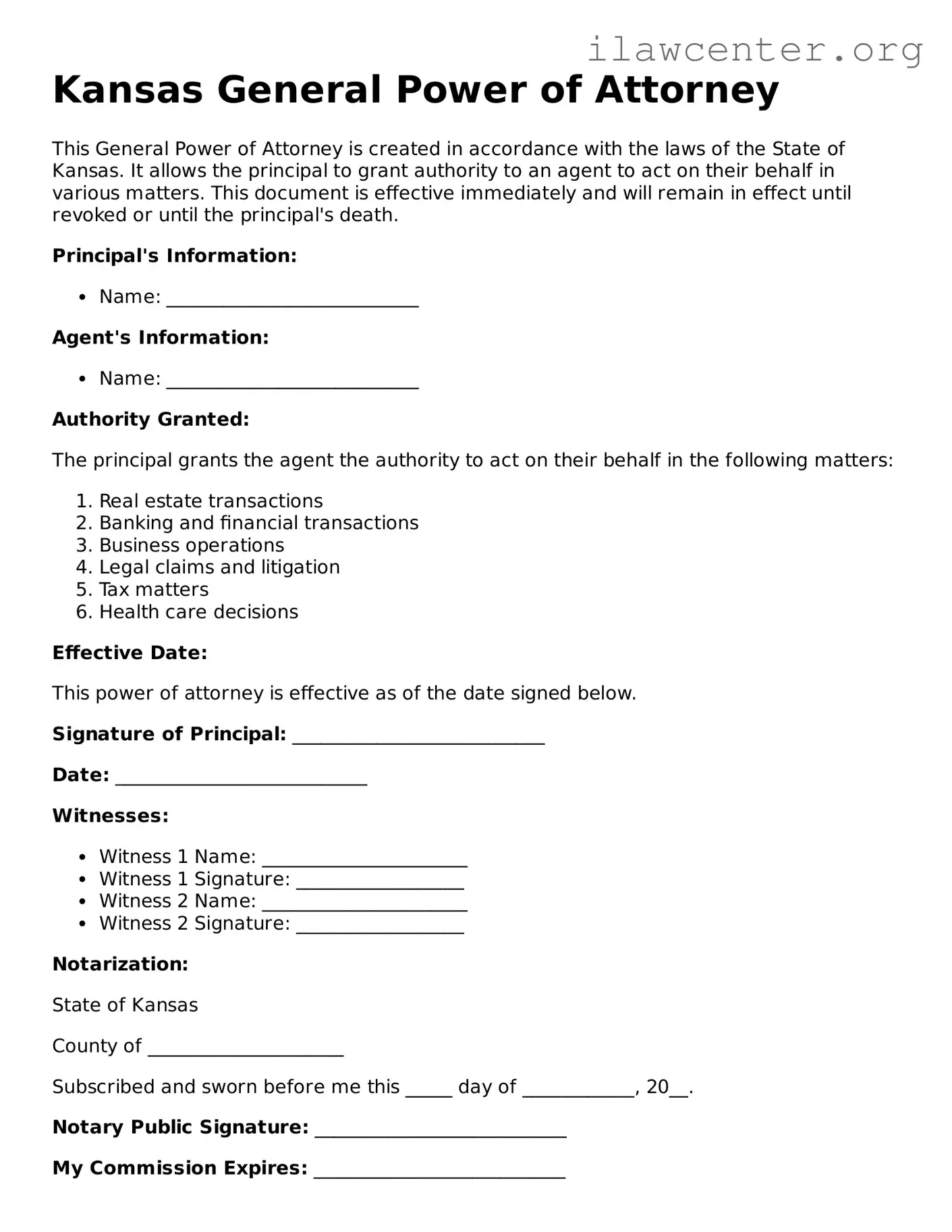
A General Power of Attorney (GPOA) in Kansas is a legal document that allows one person, known as the principal, to appoint another person, called the agent or attorney-in-fact, to act on their behalf. This document grants the agent broad authority to make decisions regarding financial and legal matters, including managing bank accounts, signing contracts, and handling real estate transactions. The GPOA can be effective immediately or can be set to activate upon a specific event, such as the principal's incapacity.
Who can be an agent under a General Power of Attorney?
In Kansas, any competent adult can serve as an agent under a General Power of Attorney. This includes family members, friends, or professionals like attorneys or financial advisors. It is crucial to choose someone trustworthy, as the agent will have significant control over the principal's financial and legal affairs.
How do I create a General Power of Attorney in Kansas?
To create a General Power of Attorney in Kansas, you need to complete a specific form that outlines the powers you wish to grant to your agent. While you can find templates online, it is often beneficial to consult with a legal professional to ensure that the document meets all legal requirements and accurately reflects your intentions. After completing the form, you must sign it in the presence of a notary public to make it legally binding.
Can I revoke a General Power of Attorney in Kansas?
Yes, you can revoke a General Power of Attorney at any time, as long as you are mentally competent. To revoke the GPOA, you should create a written document stating your intention to revoke it and notify your agent and any institutions or individuals that may have relied on the original document. It is advisable to also destroy any copies of the previous GPOA to avoid confusion.
What happens if I become incapacitated?
If you become incapacitated, the General Power of Attorney remains effective unless you specified otherwise in the document. This means your agent can continue to make decisions on your behalf. However, if you want to ensure that your agent only acts when you are incapacitated, you might consider a Durable Power of Attorney, which explicitly states that it remains in effect even if you lose the ability to make decisions.
Are there any limitations to the powers granted in a General Power of Attorney?
Yes, while a General Power of Attorney grants broad powers, there are some limitations. For instance, an agent cannot make decisions regarding the principal's health care unless specifically authorized. Additionally, the agent cannot change the principal’s will or make decisions that would benefit themselves at the expense of the principal. It is essential to clearly outline the powers granted in the GPOA to avoid any misunderstandings.
Do I need a lawyer to create a General Power of Attorney in Kansas?
While it is not legally required to have a lawyer to create a General Power of Attorney in Kansas, seeking legal advice is highly recommended. A lawyer can help ensure that the document complies with state laws, accurately reflects your wishes, and addresses any specific concerns you may have. This can help prevent potential disputes or issues in the future.