Attorney-Verified  Lease Agreement Document for Kansas

Attorney-Verified Lease Agreement Document for Kansas

A Kansas Lease Agreement is a legally binding document that outlines the terms and conditions between a landlord and a tenant for the rental of residential or commercial property in Kansas. This form serves to protect the rights of both parties while ensuring clear expectations are set regarding the rental arrangement. To get started on your leasing journey, fill out the form by clicking the button below.

Article Guide

The Kansas Lease Agreement form serves as a crucial document for both landlords and tenants, establishing clear expectations and responsibilities for both parties involved in a rental arrangement. This form outlines essential details such as the duration of the lease, rental amount, and payment due dates, ensuring that everyone is on the same page from the start. It also covers important aspects like security deposits, maintenance responsibilities, and rules regarding pets or alterations to the property. By including provisions for termination and renewal, the lease agreement provides a roadmap for the duration of the tenancy. Understanding these key components helps foster a positive landlord-tenant relationship and can prevent disputes down the line. Whether you're a seasoned property owner or a first-time renter, familiarity with this form is vital for a smooth leasing experience in Kansas.

Kansas Lease Agreement Preview

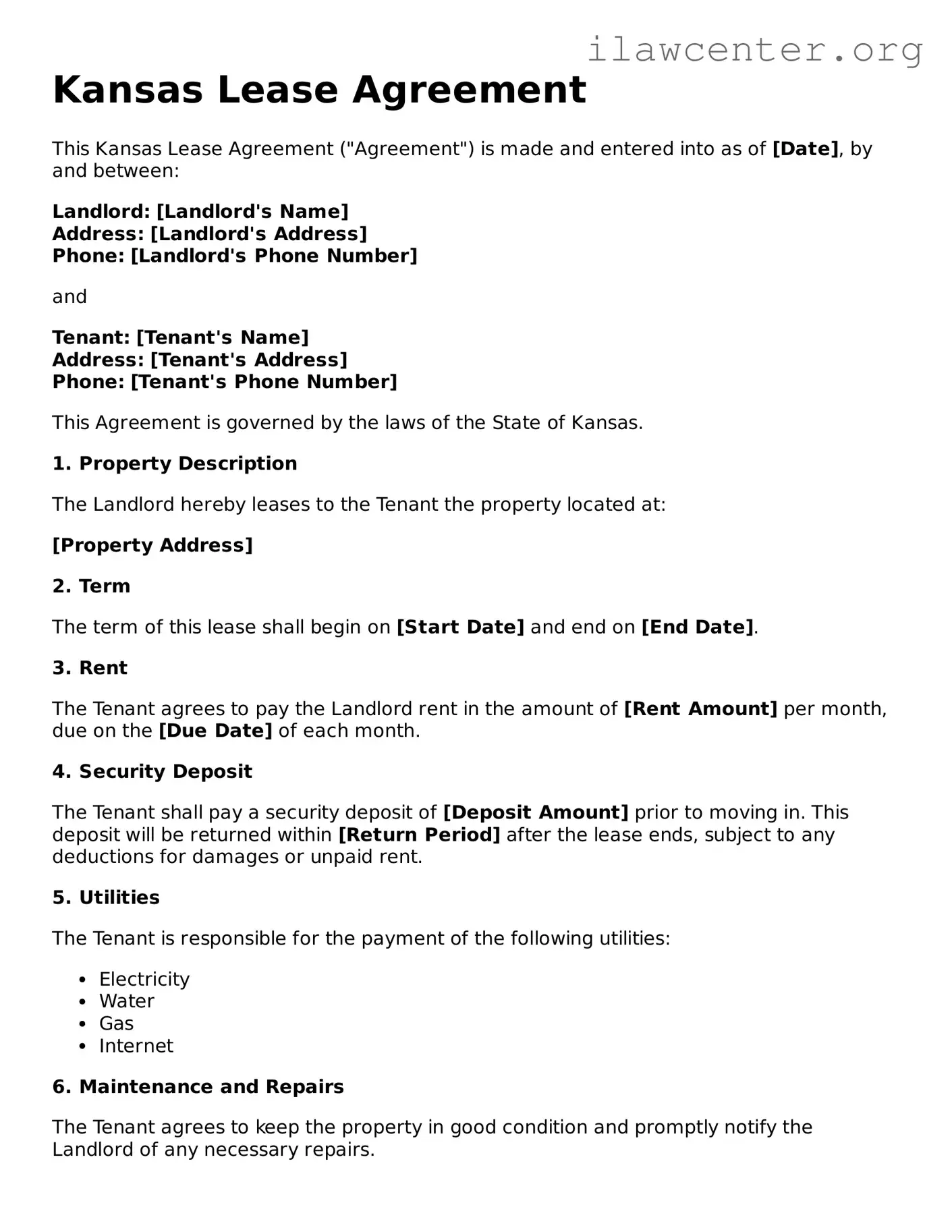
Kansas Lease Agreement

This Kansas Lease Agreement ("Agreement") is made and entered into as of [Date], by and between:

Landlord: [Landlord's Name]
Address: [Landlord's Address]
Phone: [Landlord's Phone Number]

and

Tenant: [Tenant's Name]
Address: [Tenant's Address]
Phone: [Tenant's Phone Number]

This Agreement is governed by the laws of the State of Kansas.

1. Property Description

The Landlord hereby leases to the Tenant the property located at:

[Property Address]

2. Term

The term of this lease shall begin on [Start Date] and end on [End Date].

3. Rent

The Tenant agrees to pay the Landlord rent in the amount of [Rent Amount] per month, due on the [Due Date] of each month.

4. Security Deposit

The Tenant shall pay a security deposit of [Deposit Amount] prior to moving in. This deposit will be returned within [Return Period] after the lease ends, subject to any deductions for damages or unpaid rent.

5. Utilities

The Tenant is responsible for the payment of the following utilities:

  • Electricity
  • Water
  • Gas
  • Internet

6. Maintenance and Repairs

The Tenant agrees to keep the property in good condition and promptly notify the Landlord of any necessary repairs.

7. Termination

Either party may terminate this lease by providing written notice of [Notice Period] days prior to the desired termination date.

8. Governing Law

This Agreement shall be governed by the laws of the State of Kansas.

IN WITNESS WHEREOF, the parties have executed this Lease Agreement as of the date first above written.

Landlord Signature: ____________________________
Date: ____________________________

Tenant Signature: ____________________________
Date: ____________________________

PDF Form Characteristics

Fact Name Description
Governing Law The Kansas Lease Agreement is governed by Kansas state law, specifically the Kansas Residential Landlord and Tenant Act.
Parties Involved The lease must clearly identify the landlord and tenant, including their full names and contact information.
Property Description A detailed description of the rental property, including the address and any specific unit number, should be included.
Lease Term The duration of the lease must be specified, whether it is a fixed term or a month-to-month agreement.
Rent Payment The lease should outline the amount of rent, payment due date, and acceptable payment methods.
Security Deposit Details regarding the security deposit, including the amount and conditions for its return, must be included.
Maintenance Responsibilities The agreement should specify the responsibilities of both the landlord and tenant regarding property maintenance and repairs.
Termination Conditions Conditions under which the lease may be terminated by either party should be clearly stated.
Additional Provisions Any additional rules or regulations, such as pet policies or smoking restrictions, can be included in the lease.

Instructions on Utilizing Kansas Lease Agreement

Filling out the Kansas Lease Agreement form is a straightforward process that will help you establish clear terms between a landlord and tenant. Once completed, this document will outline the rights and responsibilities of both parties, ensuring a smooth rental experience.

  1. Begin by entering the date at the top of the form. This is important for record-keeping.
  2. Fill in the names of the landlord and tenant. Make sure to include full legal names to avoid any confusion.
  3. Provide the rental property address. Include the street address, city, and zip code.
  4. Specify the lease term. Indicate whether it is a month-to-month agreement or for a fixed duration, such as one year.
  5. List the rental amount. Clearly state the monthly rent and when it is due each month.
  6. Detail any security deposit requirements. Include the amount and any conditions for its return.
  7. Outline the utilities that are included in the rent, if any. Specify which party is responsible for paying them.
  8. Include any rules or restrictions that apply to the property. This could cover pets, smoking, or alterations to the property.
  9. Sign and date the form. Both the landlord and tenant must sign to make the agreement legally binding.

After completing these steps, both parties should keep a copy of the signed lease for their records. This will help ensure that everyone is on the same page regarding the terms of the rental agreement.

Important Facts about Kansas Lease Agreement

What is a Kansas Lease Agreement form?

A Kansas Lease Agreement form is a legal document that outlines the terms and conditions under which a landlord rents out a property to a tenant. This agreement typically includes details such as the rental amount, duration of the lease, responsibilities of both parties, and rules regarding the use of the property. It serves to protect both the landlord's and tenant's rights and provides a clear framework for the rental relationship.

What should be included in a Kansas Lease Agreement?

When creating a Kansas Lease Agreement, several key elements should be included. These typically consist of the names of the landlord and tenant, the address of the rental property, the lease term (whether it's month-to-month or for a fixed period), the rental amount and payment schedule, security deposit details, maintenance responsibilities, and any specific rules or restrictions related to the property. Including these details helps prevent misunderstandings and provides a reference for both parties throughout the lease term.

How can I modify a Kansas Lease Agreement?

Modifying a Kansas Lease Agreement requires mutual consent from both the landlord and the tenant. Any changes should be documented in writing and signed by both parties to ensure they are legally enforceable. Common modifications might include adjustments to the rental amount, changes in lease duration, or updates to property rules. It’s important to communicate openly and ensure that any modifications align with Kansas rental laws.

What happens if a tenant violates the lease terms?

If a tenant violates the terms of the lease, the landlord has several options. Depending on the severity of the violation, the landlord may issue a warning or a notice to cure, which gives the tenant a chance to correct the issue. If the problem persists, the landlord may proceed with eviction proceedings. It’s crucial for landlords to follow the proper legal process and document all communications regarding the violation to protect their rights and ensure compliance with Kansas law.

Common mistakes

Filling out a Kansas Lease Agreement form can seem straightforward, but many people make common mistakes that can lead to misunderstandings or disputes later on. One frequent error is failing to provide complete and accurate information. When tenants or landlords skip crucial details, such as the full names of all parties involved or the exact address of the rental property, it can create confusion and complicate the lease's enforcement.

Another common mistake is not specifying the lease term clearly. Some individuals might assume that a verbal agreement suffices, but without a clearly defined start and end date, it can lead to disputes about when the lease begins or ends. This oversight can leave both parties vulnerable and uncertain about their rights and responsibilities.

Additionally, many people overlook the importance of including all agreed-upon terms and conditions. For instance, if there are specific rules about pets, maintenance responsibilities, or utilities, these should be explicitly stated in the lease. Leaving these details out can result in disagreements that could have been easily avoided.

It is also crucial to remember that the lease must comply with local laws. Some may mistakenly assume that a generic lease agreement will suffice, but Kansas has specific regulations regarding rental properties. Not adhering to these laws can render the lease unenforceable, leaving both parties unprotected.

Another mistake involves the security deposit. Many landlords and tenants fail to outline the amount of the security deposit or the conditions for its return. This can lead to misunderstandings when it comes time to reclaim the deposit, potentially resulting in disputes that could have been easily avoided with clear terms.

Moreover, people often forget to include the method of payment for rent. Whether rent is to be paid by check, direct deposit, or another method, specifying this in the lease agreement is essential. Without this clarity, there may be confusion or delays in payment, leading to frustration on both sides.

Some individuals also neglect to sign the lease agreement. A lease is only valid if it is signed by all parties involved. Failing to do so can render the agreement void, leaving both landlords and tenants in a precarious position regarding their rights.

Lastly, many people fail to keep a copy of the signed lease agreement for their records. Without a copy, it becomes difficult to reference the terms agreed upon, which can lead to disputes. Keeping a well-organized record of all documents is crucial for both landlords and tenants to ensure that everyone is on the same page.

Documents used along the form

A Kansas Lease Agreement is a crucial document for both landlords and tenants, outlining the terms of renting a property. However, it is often used in conjunction with other forms and documents to ensure clarity and legal protection for both parties. Below is a list of commonly associated documents that can enhance the leasing process.

  • Rental Application: This form is typically filled out by prospective tenants. It collects personal information, rental history, and references, helping landlords assess the suitability of applicants.
  • Move-In Checklist: This document is used to record the condition of the rental property before a tenant moves in. It helps prevent disputes over security deposits by providing a clear account of any existing damages.
  • Security Deposit Receipt: Landlords provide this receipt to tenants when they pay their security deposit. It serves as proof of payment and outlines the terms regarding the return of the deposit at the end of the lease.
  • Lease Addendum: This is an additional document that modifies or adds specific terms to the original lease agreement. It can cover topics such as pet policies, maintenance responsibilities, or rules for common areas.
  • Notice of Rent Increase: If a landlord intends to raise the rent, this notice informs the tenant of the change. It specifies the new rent amount and the effective date, ensuring transparency in the rental relationship.

Utilizing these forms alongside the Kansas Lease Agreement can create a more comprehensive and organized rental experience. Each document plays a vital role in protecting the rights and responsibilities of both landlords and tenants, fostering a positive leasing environment.

Similar forms

  • Rental Agreement: Similar to a lease agreement, a rental agreement outlines the terms under which a tenant can occupy a property. It typically covers duration, rent amount, and responsibilities of both parties.

  • Sublease Agreement: A sublease agreement allows a tenant to rent out their leased property to another individual. It includes terms similar to a lease, such as duration and rent, but also specifies the relationship between the original tenant and the subtenant.

  • Commercial Lease Agreement: This document is specifically for leasing commercial properties. It includes terms related to business operations, rent calculations based on revenue, and maintenance responsibilities, similar to a residential lease but tailored for business needs.

  • Month-to-Month Rental Agreement: This type of agreement allows tenants to rent a property on a monthly basis, with no long-term commitment. It shares many characteristics with a lease but offers more flexibility regarding termination and renewal.

  • Room Rental Agreement: A room rental agreement is used when a tenant rents a single room within a larger property. It details the terms of occupancy and responsibilities, similar to a lease but focused on shared living arrangements.

  • Property Management Agreement: This document outlines the relationship between a property owner and a property management company. It includes terms for managing rental properties, akin to a lease in terms of obligations and responsibilities.

  • Lease Purchase Agreement: A lease purchase agreement combines elements of a lease and a purchase contract. It allows tenants to rent a property with the option to buy later, incorporating terms from both leases and sales agreements.

  • Co-tenancy Agreement: This agreement is used when multiple tenants share a rental property. It outlines each tenant's rights and responsibilities, similar to a lease but with a focus on shared living arrangements.

  • Lease Extension Agreement: This document extends the terms of an existing lease. It maintains the original lease's terms while allowing for an additional rental period, reflecting continuity in the landlord-tenant relationship.

  • Commercial Sublease Agreement: Like a sublease agreement for residential properties, this document allows a tenant to lease out commercial space to another business. It includes terms pertinent to commercial use, similar to both subleases and commercial leases.

Dos and Don'ts

When filling out the Kansas Lease Agreement form, it's important to follow certain guidelines. Here are some things you should and shouldn't do:

  • Do read the entire lease agreement carefully before signing.
  • Don't leave any blank spaces in the form.
  • Do provide accurate information about yourself and the property.
  • Don't rush through the process; take your time to ensure accuracy.
  • Do ask questions if something is unclear.
  • Don't sign the lease until you fully understand all terms.
  • Do keep a copy of the signed lease for your records.

Misconceptions

Understanding the Kansas Lease Agreement form is crucial for both landlords and tenants. However, several misconceptions can lead to confusion and potential legal issues. Here are eight common misconceptions:

  1. All lease agreements must be in writing.

    While it is advisable to have a written lease for clarity, oral agreements can be legally binding in Kansas. However, proving the terms of an oral lease can be challenging.

  2. Only landlords can terminate a lease.

    Tenants also have the right to terminate a lease under certain conditions, such as breaches of the agreement by the landlord or specific legal circumstances.

  3. Security deposits are non-refundable.

    In Kansas, security deposits are refundable, provided the tenant has not violated the lease terms. Landlords must return the deposit within a specific timeframe after the lease ends.

  4. Lease agreements cannot be modified.

    Lease agreements can be modified if both parties agree to the changes. It is important to document any modifications in writing to avoid disputes.

  5. Landlords can enter the rental property whenever they want.

    Landlords must provide reasonable notice before entering a tenant's property, except in emergencies. This protects tenants' privacy and rights.

  6. All lease terms are negotiable.

    While many terms can be negotiated, some may be non-negotiable due to local laws or property management policies. Understanding these limits is essential.

  7. Tenants cannot have pets under any circumstances.

    Many leases include pet policies, but they can vary widely. Some landlords may allow pets with additional fees or deposits, while others may prohibit them entirely.

  8. Lease agreements automatically renew.

    Not all lease agreements automatically renew. It's important to understand the specific terms regarding renewal and termination to avoid unexpected situations.

By debunking these misconceptions, both landlords and tenants can navigate their lease agreements more effectively and foster a better rental relationship.

Key takeaways

When filling out and using the Kansas Lease Agreement form, there are several important points to keep in mind:

  • Understand the Basics: The lease agreement outlines the terms between the landlord and tenant. Both parties should know their rights and responsibilities.
  • Complete All Sections: Every section of the form should be filled out accurately. Missing information can lead to misunderstandings later.
  • Review the Duration: The lease should specify the length of the rental period. This could be month-to-month or for a fixed term.
  • Security Deposits: The agreement should state the amount of the security deposit and the conditions for its return. Know the rules surrounding deposits in Kansas.
  • Signatures Are Essential: Both the landlord and tenant must sign the agreement. This makes it legally binding and protects both parties.