Attorney-Verified  Notice to Quit Document for Kansas

Attorney-Verified Notice to Quit Document for Kansas

The Kansas Notice to Quit form is a legal document that a landlord uses to inform a tenant that they must vacate the rental property. This notice is typically issued when a tenant has violated the lease agreement or has failed to pay rent. Understanding this form is crucial for both landlords and tenants to ensure that their rights are protected.

If you need to fill out the Kansas Notice to Quit form, click the button below.

Article Guide

In the realm of landlord-tenant relationships, understanding the Kansas Notice to Quit form is crucial for both parties involved. This document serves as a formal notification from a landlord to a tenant, indicating the need to vacate the rental premises. Often utilized in situations where a tenant has failed to pay rent or has violated other terms of the lease agreement, the Notice to Quit outlines the specific reasons for the eviction and sets a deadline for the tenant to leave the property. It is essential to note that this form must be completed accurately and delivered in accordance with state laws to ensure its validity. Moreover, the Notice to Quit plays a pivotal role in the eviction process, as it lays the groundwork for any subsequent legal actions that may be necessary if the tenant does not comply. By understanding the intricacies of this form, both landlords and tenants can navigate the often complex landscape of rental agreements and eviction procedures with greater clarity and confidence.

Kansas Notice to Quit Preview

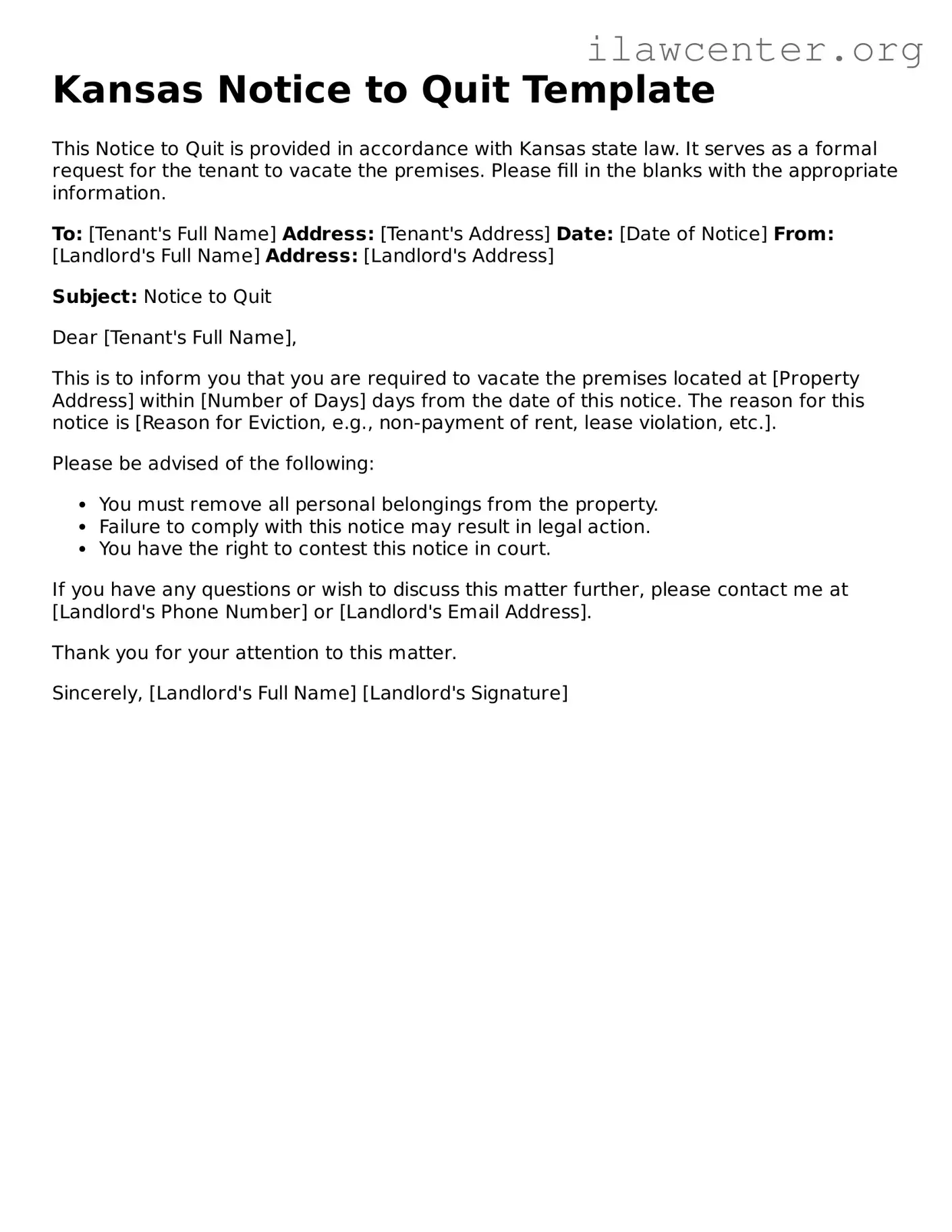
Kansas Notice to Quit Template

This Notice to Quit is provided in accordance with Kansas state law. It serves as a formal request for the tenant to vacate the premises. Please fill in the blanks with the appropriate information.

To: [Tenant's Full Name] Address: [Tenant's Address] Date: [Date of Notice] From: [Landlord's Full Name] Address: [Landlord's Address]

Subject: Notice to Quit

Dear [Tenant's Full Name],

This is to inform you that you are required to vacate the premises located at [Property Address] within [Number of Days] days from the date of this notice. The reason for this notice is [Reason for Eviction, e.g., non-payment of rent, lease violation, etc.].

Please be advised of the following:

  • You must remove all personal belongings from the property.
  • Failure to comply with this notice may result in legal action.
  • You have the right to contest this notice in court.

If you have any questions or wish to discuss this matter further, please contact me at [Landlord's Phone Number] or [Landlord's Email Address].

Thank you for your attention to this matter.

Sincerely, [Landlord's Full Name] [Landlord's Signature]

PDF Form Characteristics

Fact Name Description
Purpose The Kansas Notice to Quit form serves as a formal notification to tenants that they must vacate the rental property.
Governing Law This form is governed by the Kansas Residential Landlord and Tenant Act, specifically K.S.A. 58-2501 et seq.
Delivery Method The notice can be delivered in person, via certified mail, or through other means that ensure the tenant receives it.
Timeframe The notice typically requires a specific period, often 30 days, before the tenant must vacate, depending on the reason for eviction.
Legal Consequences Failure to comply with the notice may result in legal action, allowing the landlord to pursue eviction through the court system.

Instructions on Utilizing Kansas Notice to Quit

After obtaining the Kansas Notice to Quit form, it is important to ensure that all required information is filled out accurately. This form initiates the process of notifying a tenant to vacate the premises. Following the completion of the form, it must be delivered to the tenant in accordance with state regulations.

  1. Begin by entering the date at the top of the form. This should be the date you are filling out the notice.
  2. Next, provide your name and address in the designated areas. This identifies you as the landlord or property owner.
  3. Fill in the tenant's name and the address of the rental property. Ensure that these details are accurate to avoid any confusion.
  4. Specify the reason for the notice to quit. Common reasons include non-payment of rent, lease violations, or the expiration of a lease.
  5. Indicate the number of days the tenant has to vacate the property. This period may vary depending on the reason for the notice.
  6. Sign and date the form at the bottom. Your signature confirms that the notice is valid and has been issued.
  7. Make a copy of the completed form for your records. This is important for future reference.
  8. Deliver the notice to the tenant. This can be done in person, by certified mail, or in accordance with any other method specified by Kansas law.

Important Facts about Kansas Notice to Quit

What is a Kansas Notice to Quit form?

The Kansas Notice to Quit form is a legal document used by landlords to inform tenants that they must vacate the rental property. This notice typically provides a specific timeframe within which the tenant must leave the premises, depending on the reason for the eviction.

When is a Notice to Quit required in Kansas?

A Notice to Quit is required when a landlord wants to terminate a lease agreement due to various reasons, such as non-payment of rent, lease violations, or the expiration of a lease. The specific circumstances dictate the type of notice and the time allowed for the tenant to vacate.

How much notice must be given in Kansas?

The amount of notice required can vary. For non-payment of rent, a landlord typically must provide a 14-day notice. For lease violations, the notice period may be shorter or longer, depending on the nature of the violation. It’s important to check the specific requirements based on the situation.

Can a tenant respond to a Notice to Quit?

Yes, tenants can respond to a Notice to Quit. They may choose to address the issues raised in the notice, negotiate with the landlord, or contest the eviction in court. It’s advisable for tenants to seek legal advice if they wish to dispute the notice.

What happens if a tenant does not leave after receiving a Notice to Quit?

If a tenant does not vacate the property by the deadline specified in the Notice to Quit, the landlord may proceed with legal action to evict the tenant. This often involves filing an eviction lawsuit in court, which can lead to further legal proceedings.

Is a Notice to Quit the same as an eviction notice?

While a Notice to Quit is a type of eviction notice, it serves as a preliminary step in the eviction process. It notifies the tenant of the landlord's intent to terminate the lease and provides an opportunity for the tenant to remedy the situation before formal eviction proceedings begin.

Do I need to use a specific form for the Notice to Quit?

While there is no official state form for the Kansas Notice to Quit, it is essential to ensure that the notice includes all necessary information, such as the reason for termination, the date by which the tenant must vacate, and any relevant lease provisions. Using a clear and concise format is recommended.

Can a Notice to Quit be delivered in person?

Yes, a Notice to Quit can be delivered in person to the tenant. It can also be sent via certified mail or posted on the property, depending on the landlord's preference and the circumstances. Proper delivery is crucial to ensure the notice is legally valid.

What if the tenant believes the Notice to Quit is invalid?

If a tenant believes that the Notice to Quit is invalid, they should document their reasons and seek legal assistance. A tenant may have grounds to contest the notice based on improper delivery, lack of justification, or other legal defenses.

Where can I find more information about the eviction process in Kansas?

For more information about the eviction process in Kansas, tenants and landlords can consult local legal aid organizations, the Kansas Housing Resources Corporation, or the official state website. These resources can provide guidance on rights, responsibilities, and procedures related to eviction.
Common mistakes

Filling out the Kansas Notice to Quit form is a crucial step for landlords seeking to terminate a tenancy. However, many individuals make common mistakes that can lead to confusion or even legal issues. Understanding these pitfalls can help ensure that the process goes smoothly.

One frequent error is failing to provide complete information. Landlords must ensure that all required fields are filled out accurately. This includes the tenant's name, address, and the specific reason for the notice. Omitting any details can lead to delays or challenges in enforcing the notice.

Another mistake involves incorrect dates. The notice must specify the date by which the tenant is expected to vacate the premises. If the date is unclear or inaccurately calculated, it could invalidate the notice. It is essential to double-check the timeline to ensure compliance with state laws.

Some landlords neglect to sign the form. A signature is not just a formality; it serves as proof that the notice is legitimate and has been issued by the landlord. Without a signature, the notice may be considered incomplete and unenforceable.

Additionally, using vague language can create misunderstandings. The Notice to Quit should clearly state the reasons for eviction, whether it’s for non-payment of rent, lease violations, or other issues. Being specific helps avoid confusion and provides a clear basis for the notice.

Many people also forget to deliver the notice properly. The law requires that the notice be delivered in a specific manner, which may include personal delivery, certified mail, or posting on the property. Failing to follow the correct delivery method can result in the notice being deemed ineffective.

Lastly, landlords sometimes overlook the importance of keeping a copy of the notice. Documenting the process can be invaluable if disputes arise later. Having a record of the notice can provide evidence of compliance with legal requirements and protect the landlord's interests.

Documents used along the form

The Kansas Notice to Quit form is an important document used in landlord-tenant relationships. However, it is often accompanied by other forms and documents that help clarify rights and responsibilities. Below is a list of commonly used documents that may be relevant in conjunction with the Notice to Quit.

  • Lease Agreement: This document outlines the terms and conditions of the rental arrangement between the landlord and tenant. It includes details such as rent amount, payment due dates, and rules regarding the property.
  • Eviction Notice: Also known as a Notice to Vacate, this document formally informs the tenant of the landlord's intent to terminate the lease and initiate eviction proceedings if necessary.
  • Demand for Rent: This is a written request from the landlord to the tenant, demanding payment of overdue rent. It serves as a reminder and can be a precursor to eviction actions.
  • Affidavit of Service: This document proves that the Notice to Quit and any other legal documents were properly delivered to the tenant. It is crucial for establishing that the tenant was informed of the eviction process.
  • Response to Eviction Notice: Tenants may use this document to formally respond to an eviction notice, outlining their reasons for contesting the eviction or requesting additional time to vacate.
  • Motion to Dismiss: In some cases, tenants may file this document in court to request that the eviction case be dismissed. It usually includes reasons why the eviction should not proceed.
  • Settlement Agreement: This document outlines an agreement reached between the landlord and tenant to resolve issues without going to court. It may include terms for payment plans or other arrangements.
  • Writ of Possession: If a court grants the eviction, this document allows the landlord to regain possession of the property. It is issued by the court and must be followed by law enforcement if necessary.

Understanding these documents can help both landlords and tenants navigate the rental process more effectively. Each form serves a specific purpose and can significantly impact the outcome of any disputes or legal actions. Always consider seeking legal advice if you are unsure about any of these documents.

Similar forms

  • Eviction Notice: This document serves as a formal communication to a tenant, indicating that they must vacate the property. Similar to the Notice to Quit, it outlines the reasons for eviction and provides a timeline for the tenant to leave. Both documents aim to inform the tenant of their obligations and the consequences of failing to comply.
  • Lease Termination Notice: A lease termination notice is issued when a landlord decides to end a lease agreement. Like the Notice to Quit, it specifies the end date of the tenancy and may include reasons for termination. Both documents are essential in ensuring that tenants are aware of their rights and responsibilities regarding the rental agreement.
  • Notice of Default: This document is used when a tenant fails to meet the terms of their lease, such as not paying rent. The Notice of Default informs the tenant of their breach and often provides a grace period to rectify the situation. This document, like the Notice to Quit, serves to alert the tenant to potential legal actions if they do not address the issue promptly.
  • Demand for Possession: A demand for possession is a legal document that a landlord can file to reclaim their property from a tenant. It is similar to the Notice to Quit in that it demands the tenant vacate the premises, often following a breach of the lease. Both documents emphasize the landlord's right to regain possession and outline the necessary steps for the tenant.

Dos and Don'ts

When filling out the Kansas Notice to Quit form, it’s essential to follow specific guidelines to ensure the process goes smoothly. Here’s a list of things to do and avoid:

  • Do include your name and address accurately.
  • Do provide the tenant's name and address clearly.
  • Do specify the reason for the notice, if applicable.
  • Do sign and date the form to validate it.
  • Don't use vague language; be direct and precise.
  • Don't forget to check local laws for any additional requirements.
  • Don't leave out important details, such as the date the notice is served.

Following these guidelines can help ensure that the notice is legally sound and effective.

Misconceptions

The Kansas Notice to Quit form is an essential document in the landlord-tenant relationship, particularly when it comes to ending a tenancy. However, several misconceptions can lead to confusion about its purpose and use. Here are five common misunderstandings:

  1. It can be used for any type of eviction.

    Many believe that the Notice to Quit can be utilized for all eviction situations. In reality, this form is specifically designed for terminating a lease agreement, usually when a tenant has violated terms or failed to pay rent. Other eviction processes may require different forms and procedures.

  2. It must be served in person.

    Another misconception is that the Notice to Quit must be delivered directly to the tenant. While personal service is one option, Kansas law allows for several methods of delivery, including mailing the notice or posting it on the property, provided that the proper steps are followed.

  3. It gives immediate eviction rights.

    Some individuals think that once the Notice to Quit is served, the landlord can immediately evict the tenant. However, this is not the case. The notice typically provides a specified period for the tenant to vacate the premises, which can range from a few days to a month, depending on the situation.

  4. All tenants receive the same notice period.

    People often assume that every tenant is entitled to the same notice period. In Kansas, the length of the notice can vary based on the reason for the eviction. For instance, non-payment of rent may require a shorter notice period than a lease violation.

  5. It is not necessary to keep a copy.

    Lastly, some landlords believe that they do not need to retain a copy of the Notice to Quit once it has been served. However, keeping a record of all communications and notices is crucial. This documentation can be essential if the situation escalates to legal proceedings.

Understanding these misconceptions can help landlords and tenants navigate the eviction process more effectively and ensure that their rights are protected.

Key takeaways

When dealing with the Kansas Notice to Quit form, it is essential to understand its purpose and the correct way to fill it out. Here are some key takeaways to keep in mind:

  1. Purpose of the Notice: The Kansas Notice to Quit is a legal document used by landlords to inform tenants that they must vacate the rental property. It serves as an official notice of termination of tenancy.
  2. Proper Completion: Ensure that all required fields are filled out accurately. This includes the names of both the landlord and tenant, the address of the rental property, and the reason for the eviction.
  3. Delivery Methods: The Notice to Quit can be delivered in person, sent by certified mail, or posted on the property. Choose a method that ensures the tenant receives the notice.
  4. Timeframe: Pay attention to the notice period specified in the form. Kansas law typically requires a minimum notice period, which varies based on the reason for eviction.
  5. Documentation: Keep a copy of the completed Notice to Quit for your records. This documentation may be necessary if further legal action is required.

Understanding these key points can help make the process smoother and ensure compliance with Kansas rental laws.