Attorney-Verified  Power of Attorney for a Child Document for Kansas

Attorney-Verified Power of Attorney for a Child Document for Kansas

The Kansas Power of Attorney for a Child form allows a parent or legal guardian to designate another adult to make decisions for their child in specific situations. This form is essential for ensuring that a trusted individual can step in when necessary, providing peace of mind for parents. To get started, fill out the form by clicking the button below.

Article Guide

The Kansas Power of Attorney for a Child form is an essential legal document that allows a parent or legal guardian to designate another adult to make decisions on behalf of their child. This form is particularly useful in situations where parents are temporarily unable to care for their child, such as during travel or medical emergencies. It grants the appointed individual the authority to handle various responsibilities, including medical care, educational decisions, and general welfare matters. By completing this form, parents can ensure that their child's needs are met without interruption. The document also provides clarity about the duration of the authority granted and specifies any limitations on the powers conferred. Understanding the intricacies of this form can help parents navigate the complexities of temporary guardianship effectively, ensuring their child's well-being is prioritized at all times.

Kansas Power of Attorney for a Child Preview

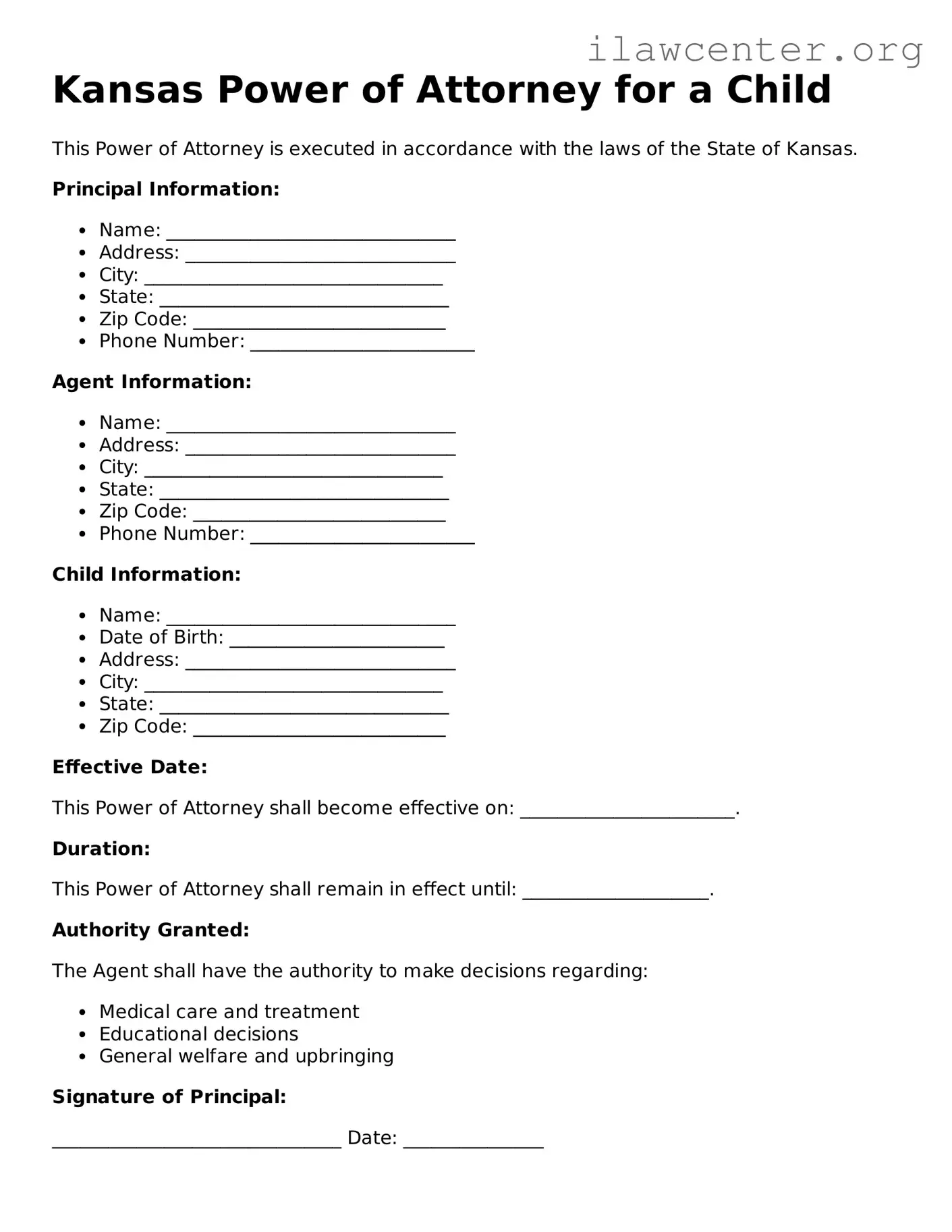
Kansas Power of Attorney for a Child

This Power of Attorney is executed in accordance with the laws of the State of Kansas.

Principal Information:

  • Name: _______________________________
  • Address: _____________________________
  • City: ________________________________
  • State: _______________________________
  • Zip Code: ___________________________
  • Phone Number: ________________________

Agent Information:

  • Name: _______________________________
  • Address: _____________________________
  • City: ________________________________
  • State: _______________________________
  • Zip Code: ___________________________
  • Phone Number: ________________________

Child Information:

  • Name: _______________________________
  • Date of Birth: _______________________
  • Address: _____________________________
  • City: ________________________________
  • State: _______________________________
  • Zip Code: ___________________________

Effective Date:

This Power of Attorney shall become effective on: _______________________.

Duration:

This Power of Attorney shall remain in effect until: ____________________.

Authority Granted:

The Agent shall have the authority to make decisions regarding:

  • Medical care and treatment
  • Educational decisions
  • General welfare and upbringing

Signature of Principal:

_______________________________ Date: _______________

Witnesses:

  1. Name: _________________________ Signature: _______________________ Date: _______________
  2. Name: _________________________ Signature: _______________________ Date: _______________

Notary Public:

State of Kansas, County of ______________________

Subscribed and sworn before me this _____ day of ____________, 20__.

_______________________________

Notary Public Signature

My Commission Expires: _______________

PDF Form Characteristics

Fact Name Description
Definition A Kansas Power of Attorney for a Child form allows a parent or legal guardian to grant authority to another adult to make decisions on behalf of their child.
Governing Law This form is governed by Kansas Statutes Annotated, Chapter 58, Article 6.
Duration The authority granted can be temporary or permanent, depending on the parent’s wishes and the specific circumstances.
Scope of Authority It can include decisions about education, healthcare, and general welfare, but the specific powers should be clearly outlined in the document.
Revocation Parents can revoke the Power of Attorney at any time, as long as they provide written notice to the agent and any relevant parties.
Notarization The form must be signed in the presence of a notary public to be legally valid in Kansas.
Emergency Use This form is often used in emergencies, such as when parents are unavailable due to travel or illness.

Instructions on Utilizing Kansas Power of Attorney for a Child

Filling out the Kansas Power of Attorney for a Child form is a straightforward process that requires careful attention to detail. After completing the form, it is essential to ensure that all required signatures are obtained and that the document is properly filed or stored according to your needs.

  1. Obtain the Kansas Power of Attorney for a Child form. This can be downloaded from the Kansas state website or obtained from a legal office.
  2. Begin by filling in the name of the child for whom the power of attorney is being granted. Include the child's date of birth and any other identifying information requested.
  3. Next, provide your name as the parent or legal guardian granting the power of attorney. Include your address and contact information.
  4. Identify the person you are granting power of attorney to. Fill in their full name, address, and relationship to the child.
  5. Specify the powers being granted. This may include decisions about medical care, education, and general welfare. Be clear and specific about what the attorney-in-fact can do.
  6. Indicate the duration of the power of attorney. You may choose to set a specific end date or leave it open until revoked.
  7. Sign and date the form in the designated area. Ensure that you are signing in front of a notary public, as notarization is typically required.
  8. Have the attorney-in-fact sign the form as well, acknowledging their acceptance of the responsibilities.
  9. Make copies of the completed form for your records and for the attorney-in-fact.

Important Facts about Kansas Power of Attorney for a Child

What is a Power of Attorney for a Child in Kansas?

A Power of Attorney for a Child in Kansas is a legal document that allows a parent or legal guardian to designate another adult to make decisions on behalf of their child. This can include decisions about healthcare, education, and general welfare. The appointed individual, known as the agent, can act on behalf of the child for a specified period or until the parent revokes the authority.

Who can be appointed as an agent under this Power of Attorney?

In Kansas, any responsible adult can be appointed as an agent. This could be a family member, friend, or trusted individual who is willing to take on the responsibility. It is essential to choose someone who understands the child’s needs and can make informed decisions in their best interest.

How long is the Power of Attorney for a Child valid?

The duration of the Power of Attorney for a Child can vary. The document may specify a particular timeframe, or it can remain in effect until the parent or guardian revokes it. Parents should keep in mind that they can revoke the authority at any time as long as they provide proper notice to the agent and any relevant parties.

Do I need to have the Power of Attorney for a Child notarized?

Yes, in Kansas, the Power of Attorney for a Child must be signed in the presence of a notary public. This step is crucial as it adds a layer of authenticity to the document, ensuring that it is legally recognized. Notarization helps prevent disputes regarding the validity of the document in the future.

Can the Power of Attorney for a Child be used for medical decisions?

Yes, the Power of Attorney for a Child can include the authority to make medical decisions. It is important to clearly outline the extent of the agent's powers regarding healthcare in the document. This ensures that the agent can act swiftly in emergencies or make necessary medical choices when the parent or guardian is unavailable.

Common mistakes

Filling out the Kansas Power of Attorney for a Child form can be straightforward, but mistakes can easily occur. One common error is not including all required information. It is essential to provide complete details about both the child and the agent. Missing information can delay the process or even invalidate the document.

Another frequent mistake is failing to sign the document. Both the parent or legal guardian and the agent must sign the form for it to be legally binding. If the signatures are missing, the Power of Attorney may not hold up in court.

People sometimes overlook the importance of specifying the duration of the Power of Attorney. The form should clearly state how long the authority lasts. Without this information, it may lead to confusion or unintended consequences regarding the agent's powers.

In some cases, individuals may not understand the scope of authority granted. The form allows for various powers, and it is crucial to specify what the agent can and cannot do. A vague description can lead to misunderstandings later on.

Another mistake involves not updating the form when circumstances change. If the parent or guardian’s situation evolves, such as a change in residence or a new agent, it is vital to revise the document. An outdated form may not reflect current intentions.

Some people also fail to have the form notarized when required. While notarization may not always be necessary, having a notary can add an extra layer of legitimacy. This can be especially important if the document is challenged later.

Additionally, individuals may neglect to provide copies of the form to relevant parties. Once completed, sharing the Power of Attorney with the agent, the child’s school, and healthcare providers ensures that everyone is informed and can act accordingly.

Another common oversight is not discussing the arrangement with the child. It is essential to communicate with the child about the Power of Attorney. This helps them understand who will be responsible for their care and any decisions that may arise.

Lastly, people may not seek legal advice when needed. While the form is designed to be user-friendly, consulting with a legal professional can clarify any uncertainties. It can also help ensure that the document meets all legal requirements.

Documents used along the form

When establishing a Power of Attorney for a Child in Kansas, several other forms and documents may be beneficial to ensure comprehensive legal coverage. These documents serve various purposes, from health care decisions to travel permissions, and can help clarify responsibilities and authority.

  • Medical Consent Form: This document allows a designated individual to make medical decisions on behalf of the child, ensuring timely care in emergencies.
  • Travel Consent Form: If the child is traveling with someone other than their parents, this form provides permission for the trip, which can help avoid complications at borders or during travel.
  • Child Care Agreement: This agreement outlines the responsibilities and expectations between the caregiver and the parent, detailing care arrangements and financial responsibilities.
  • School Authorization Form: This form grants permission for a designated person to enroll the child in school, attend parent-teacher meetings, and access educational records.
  • Emergency Contact Form: This document lists emergency contacts and relevant medical information, ensuring that caregivers have access to essential details in urgent situations.
  • Release of Information Form: This allows the caregiver to obtain medical or educational records, facilitating communication between the caregiver and institutions involved in the child’s care.
  • Custody Agreement: If applicable, this agreement clarifies the custody arrangements and responsibilities of each parent or guardian, which can be important for legal clarity.
  • Affidavit of Guardianship: This document establishes legal guardianship, providing formal recognition of the caregiver's authority over the child in specific circumstances.

Having these documents in place can help streamline processes and provide clarity in various situations. They ensure that the child’s needs are met while giving caregivers the authority they require to act in the best interest of the child.

Similar forms

The Power of Attorney for a Child form is an important legal document that grants authority to another person to make decisions on behalf of a child. Several other documents serve similar purposes, each with its own specific applications. Below is a list of eight documents that share similarities with the Power of Attorney for a Child form:

  • General Power of Attorney: This document allows one person to act on behalf of another in a broad range of legal and financial matters, similar to how a Power of Attorney for a Child allows for decision-making on behalf of a child.
  • Medical Power of Attorney: This form specifically grants authority to make healthcare decisions for another person. Like the Power of Attorney for a Child, it ensures that someone can act in the best interest of the individual when they are unable to do so themselves.
  • Guardianship Agreement: This legal arrangement appoints a guardian to take care of a child. It is similar in that it designates someone to make decisions for a child, but it often involves a court process.
  • Temporary Custody Agreement: This document allows a designated person to care for a child for a limited time. It is akin to the Power of Attorney for a Child in that it grants authority over the child's care, but it is typically for a shorter duration.
  • Consent to Medical Treatment: This form allows a designated adult to consent to medical treatment for a child. It parallels the Power of Attorney for a Child by ensuring that someone can make important health-related decisions on behalf of the child.
  • Parental Consent Form: Often used in situations such as travel or school activities, this document gives permission for a child to participate in certain events. Like the Power of Attorney for a Child, it involves the delegation of decision-making authority.
  • Special Needs Trust: This document is established to manage assets for a child with special needs. While it focuses on financial matters, it shares the common goal of providing for the child's well-being, similar to a Power of Attorney for a Child.
  • Living Will: Although primarily focused on end-of-life decisions, a living will outlines a person's wishes regarding medical treatment. It connects to the Power of Attorney for a Child by emphasizing the importance of having someone to advocate for a person's wishes when they cannot speak for themselves.

Dos and Don'ts

When filling out the Kansas Power of Attorney for a Child form, it's important to be careful and thorough. Here are some guidelines to help you navigate the process effectively.

  • Do read the entire form carefully before starting.
  • Do ensure that all information is accurate and up to date.
  • Do sign the form in the presence of a notary public.
  • Do provide clear instructions regarding the powers you are granting.
  • Don't leave any sections blank; fill out everything required.
  • Don't forget to include the start and end dates for the authority.
  • Don't use vague language; be specific about what the agent can do.

Following these tips will help ensure that the Power of Attorney for a Child form is filled out correctly and serves its intended purpose.

Misconceptions

Understanding the Kansas Power of Attorney for a Child form is essential for parents and guardians. However, several misconceptions can lead to confusion. Here are eight common misunderstandings:

  1. It is only for emergencies.

    Many believe this form is only necessary in emergencies. In reality, it can be useful for routine situations, such as when parents are traveling or temporarily unavailable.

  2. It must be notarized.

    Some think notarization is mandatory. While having the document notarized can provide additional assurance, it is not a strict requirement for the Power of Attorney to be valid in Kansas.

  3. It can only be used for medical decisions.

    People often assume the form is limited to medical care. However, it can also grant authority for education, travel, and other daily decisions regarding the child’s welfare.

  4. It lasts indefinitely.

    There is a belief that the Power of Attorney remains in effect forever. In fact, it is temporary and can be revoked or will expire after a set period or upon the parent’s return.

  5. Only biological parents can create it.

    Many think only biological parents have the authority to establish this form. However, legal guardians and other authorized individuals can also create a Power of Attorney for a child.

  6. It transfers custody of the child.

    Some believe that signing this form means giving up custody. This is incorrect; it only allows another adult to make decisions on behalf of the child temporarily.

  7. It can be used for any child.

    There is a misconception that the form can apply to any child. In reality, it should be used specifically for children under the age of 18 for whom the parent or guardian has legal authority.

  8. It is a complicated legal document.

    Many feel intimidated by the idea of creating a Power of Attorney. In truth, the form is straightforward and can be completed without extensive legal knowledge.

By clearing up these misconceptions, parents and guardians can better navigate the process and ensure they are prepared for any situation involving their children.

Key takeaways

Filling out the Kansas Power of Attorney for a Child form can seem daunting, but it’s an important tool for parents and guardians. Here are some key takeaways to consider:

  • Understand the Purpose: This form allows a parent or legal guardian to designate someone else to make decisions for their child, especially in situations where they cannot be present.
  • Choose the Right Person: Select someone trustworthy and responsible, as this individual will have significant authority regarding your child's care.
  • Be Specific: Clearly outline the powers you are granting. This can include medical decisions, educational choices, or general care responsibilities.
  • Duration Matters: Specify how long the Power of Attorney will be in effect. It can be temporary or longer-term, depending on your needs.
  • Legal Requirements: Ensure that the form is signed and dated in front of a notary public. This step is crucial for the document to be legally binding.
  • Keep Copies: After completing the form, make several copies. Provide one to the designated individual and keep one for your records.
  • Review Regularly: Life changes, and so might your needs. Regularly review and update the Power of Attorney to reflect any changes in circumstances or preferences.

By understanding these key points, you can confidently fill out and utilize the Kansas Power of Attorney for a Child form, ensuring that your child’s needs are met even when you cannot be there.