Attorney-Verified  Tractor Bill of Sale Document for Kansas

Attorney-Verified Tractor Bill of Sale Document for Kansas

A Kansas Tractor Bill of Sale form is a legal document that records the sale of a tractor between a buyer and a seller in Kansas. This form serves as proof of ownership transfer and outlines essential details of the transaction, ensuring both parties are protected. To make the process seamless, consider filling out the form by clicking the button below.

Article Guide

When it comes to buying or selling a tractor in Kansas, having the right documentation is crucial for both parties involved in the transaction. The Kansas Tractor Bill of Sale form serves as a vital tool that not only provides proof of ownership but also outlines the specifics of the sale. This form typically includes essential details such as the names and addresses of the buyer and seller, the make and model of the tractor, its Vehicle Identification Number (VIN), and the sale price. Additionally, it may cover any warranties or guarantees offered by the seller, ensuring that both parties are clear on the terms of the sale. By utilizing this form, individuals can protect their interests and facilitate a smooth transfer of ownership, making it an indispensable part of any tractor transaction in the state.

Kansas Tractor Bill of Sale Preview

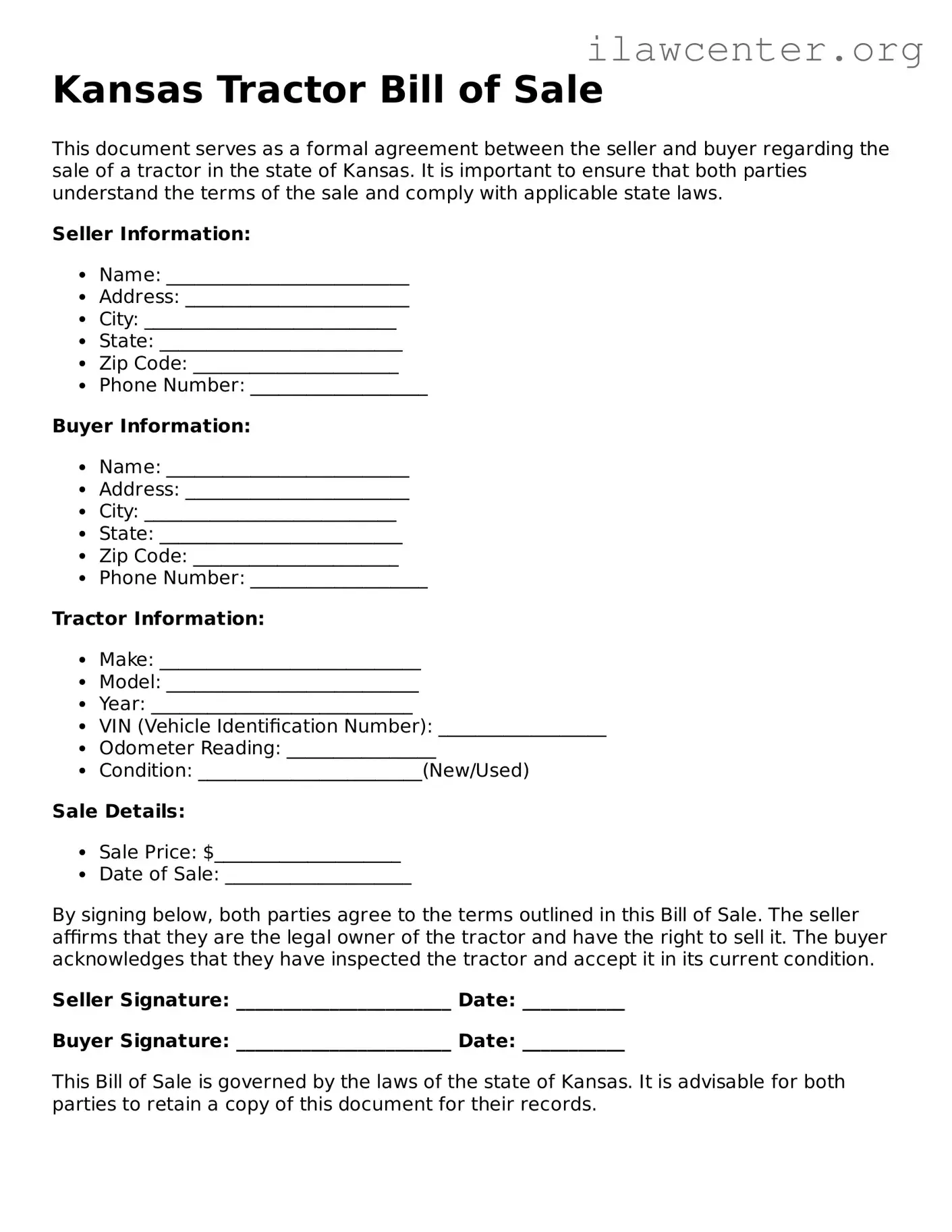
Kansas Tractor Bill of Sale

This document serves as a formal agreement between the seller and buyer regarding the sale of a tractor in the state of Kansas. It is important to ensure that both parties understand the terms of the sale and comply with applicable state laws.

Seller Information:

  • Name: __________________________
  • Address: ________________________
  • City: ___________________________
  • State: __________________________
  • Zip Code: ______________________
  • Phone Number: ___________________

Buyer Information:

  • Name: __________________________
  • Address: ________________________
  • City: ___________________________
  • State: __________________________
  • Zip Code: ______________________
  • Phone Number: ___________________

Tractor Information:

  • Make: ____________________________
  • Model: ___________________________
  • Year: ____________________________
  • VIN (Vehicle Identification Number): __________________
  • Odometer Reading: ________________
  • Condition: ________________________(New/Used)

Sale Details:

  • Sale Price: $____________________
  • Date of Sale: ____________________

By signing below, both parties agree to the terms outlined in this Bill of Sale. The seller affirms that they are the legal owner of the tractor and have the right to sell it. The buyer acknowledges that they have inspected the tractor and accept it in its current condition.

Seller Signature: _______________________ Date: ___________

Buyer Signature: _______________________ Date: ___________

This Bill of Sale is governed by the laws of the state of Kansas. It is advisable for both parties to retain a copy of this document for their records.

PDF Form Characteristics

Fact Name Description
Purpose The Kansas Tractor Bill of Sale form is used to document the sale or transfer of ownership of a tractor in the state of Kansas.
Governing Law This form is governed by the Kansas Statutes Annotated, specifically K.S.A. 8-135.
Required Information Key details such as the buyer's and seller's names, contact information, tractor description, and sale price must be included.
Signatures Both the buyer and seller must sign the form to validate the transaction and ensure legal recognition.

Instructions on Utilizing Kansas Tractor Bill of Sale

After obtaining the Kansas Tractor Bill of Sale form, you will need to provide specific information to ensure that the sale is properly documented. This form serves as a record of the transaction between the buyer and the seller, facilitating a smooth transfer of ownership.

  1. Gather Information: Collect all necessary details about the tractor, including the make, model, year, Vehicle Identification Number (VIN), and odometer reading.
  2. Seller Information: Fill in the seller's full name, address, and contact information in the designated sections.
  3. Buyer Information: Enter the buyer's full name, address, and contact information accurately.
  4. Sale Price: Clearly state the agreed-upon sale price for the tractor.
  5. Date of Sale: Write the date when the transaction takes place.
  6. Signatures: Ensure both the seller and buyer sign and date the form to validate the sale.
  7. Review: Double-check all entries for accuracy before finalizing the document.

Important Facts about Kansas Tractor Bill of Sale

What is a Kansas Tractor Bill of Sale form?

The Kansas Tractor Bill of Sale form is a document used to record the sale and transfer of ownership of a tractor in the state of Kansas. This form serves as proof of the transaction between the buyer and seller, detailing important information about the tractor, including its make, model, year, and identification number. It is essential for both parties to ensure a smooth transfer of ownership.

Is the Kansas Tractor Bill of Sale form required by law?

While it is not legally required to use a Bill of Sale for every tractor sale in Kansas, having one is highly recommended. This document protects both the buyer and seller by providing a clear record of the transaction. In some cases, it may be required for registering the tractor with the Kansas Department of Revenue or for tax purposes.

What information should be included in the form?

The form should include several key pieces of information. This includes the names and addresses of both the buyer and seller, the tractor's make, model, year, and Vehicle Identification Number (VIN). Additionally, the sale price and date of the transaction should be documented. Any warranties or conditions of the sale can also be noted to clarify the agreement between both parties.

How do I obtain a Kansas Tractor Bill of Sale form?

You can easily find a Kansas Tractor Bill of Sale form online through various legal document websites or the Kansas Department of Revenue's website. Many of these sources provide free templates that you can download and fill out. Alternatively, you can create your own document using the necessary information outlined above.

Do I need to have the Bill of Sale notarized?

Notarization is not typically required for a Kansas Tractor Bill of Sale. However, having the document notarized can add an extra layer of security and credibility to the transaction. It may also be beneficial if there are any disputes in the future regarding the sale.

What should I do after completing the Bill of Sale?

Once the Bill of Sale is completed and signed by both parties, it is advisable for both the buyer and seller to keep a copy for their records. The buyer should use the Bill of Sale to register the tractor with the Kansas Department of Revenue, if necessary. This step ensures that the ownership records are updated and reflects the new owner.

Can I use a Kansas Tractor Bill of Sale form for other types of vehicles?

The Kansas Tractor Bill of Sale form is specifically designed for tractors. While some of the information may be similar for other types of vehicles, it is best to use the appropriate Bill of Sale form for each specific vehicle type. This ensures that all necessary details are captured correctly and meets any specific requirements for that vehicle category.
Common mistakes

Filling out the Kansas Tractor Bill of Sale form can seem straightforward, but many people make common mistakes that can lead to confusion or even legal issues. One frequent error is failing to provide complete information about the tractor being sold. Buyers and sellers must include details such as the make, model, year, and Vehicle Identification Number (VIN). Omitting any of this information can create problems when registering the tractor or proving ownership.

Another common mistake is neglecting to include the purchase price. This detail is essential not only for record-keeping but also for tax purposes. Without a clearly stated price, both parties might face difficulties later on, especially if there are questions about the transaction's legitimacy.

Many individuals also forget to sign the document. A Bill of Sale is not just a formality; it serves as a legal contract. Both the buyer and seller must provide their signatures to validate the agreement. Without signatures, the document may not hold up in court if disputes arise.

Inaccurate dates can also lead to complications. It's crucial to enter the correct date of the transaction. A wrong date can create confusion regarding the transfer of ownership and may affect warranty claims or insurance coverage.

Some sellers fail to provide their full legal name and address. This information is vital for identifying the parties involved in the sale. Incomplete or incorrect names can lead to issues when the buyer attempts to register the tractor.

Another mistake involves not providing the buyer's information accurately. Just like the seller, the buyer's full name and address must be included. This ensures that the transaction is properly documented and can be referenced in the future if necessary.

People often overlook the importance of including any disclosures about the tractor's condition. If there are any known issues or defects, these should be clearly stated in the Bill of Sale. This protects both parties and helps avoid potential disputes down the line.

Additionally, some individuals forget to make copies of the completed Bill of Sale. Keeping a copy for personal records is essential. This document serves as proof of the transaction and can be useful if questions arise later regarding ownership or the terms of the sale.

Misunderstanding the payment method can also lead to issues. It's important to clarify how the payment will be made—whether in cash, check, or another method. This detail should be included in the Bill of Sale to ensure both parties are on the same page.

Lastly, many people fail to check for any local regulations or requirements that may apply to their specific situation. It's advisable to research any additional paperwork or steps that may be necessary to complete the sale legally and properly.

Documents used along the form

When buying or selling a tractor in Kansas, it's essential to have the right documents in place. Along with the Kansas Tractor Bill of Sale form, several other forms and documents can help ensure a smooth transaction. Here’s a list of important documents you might need.

  • Title Transfer Form: This document officially transfers ownership of the tractor from the seller to the buyer. It includes details like the vehicle identification number (VIN) and the names of both parties.
  • Affidavit of Ownership: If the seller cannot provide the original title, this form serves as a sworn statement confirming their ownership of the tractor.
  • Odometer Disclosure Statement: Required for certain vehicles, this form records the mileage of the tractor at the time of sale, ensuring transparency and preventing fraud.
  • Sales Tax Exemption Certificate: If the buyer qualifies for a sales tax exemption, this certificate allows them to avoid paying taxes on the purchase price of the tractor.
  • Vehicle Registration Application: After the sale, the buyer must complete this application to register the tractor in their name with the Kansas Department of Revenue.
  • Bill of Sale for Personal Property: This generic bill of sale can be used if the tractor is part of a larger sale, documenting the transaction for personal property.
  • Insurance Policy Document: Proof of insurance may be required before the tractor can be registered. This document shows that the buyer has coverage for their new vehicle.

Having these documents ready can simplify the process and protect both the buyer and seller. Make sure to gather everything needed to ensure a successful transaction.

Similar forms

  • Vehicle Bill of Sale: This document serves a similar purpose by providing proof of the transfer of ownership of a vehicle. It includes details such as the buyer, seller, vehicle identification number, and sale price.
  • Boat Bill of Sale: Like the Tractor Bill of Sale, this form is used to document the sale of a boat. It outlines the terms of the sale and includes information about the boat, such as its make, model, and hull identification number.
  • Equipment Bill of Sale: This document is used for the sale of various types of equipment. It details the equipment being sold, the parties involved, and the agreed-upon sale price, similar to the Tractor Bill of Sale.
  • Real Estate Purchase Agreement: While it pertains to property rather than vehicles or equipment, this document outlines the terms of sale, including the buyer and seller's details, property description, and purchase price, mirroring the essential elements found in a Tractor Bill of Sale.

Dos and Don'ts

When filling out the Kansas Tractor Bill of Sale form, it's important to follow some guidelines to ensure everything goes smoothly. Here’s a list of things to do and avoid.

  • Do provide accurate information about the tractor, including the make, model, and VIN.
  • Do include the sale price and the date of the transaction.
  • Do sign and date the form to make it legally binding.
  • Do keep a copy of the completed form for your records.
  • Don't leave any blank spaces on the form; fill in all required fields.
  • Don't use vague language; be clear and specific about the details.
  • Don't forget to have both the buyer and seller sign the document.

By following these simple dos and don'ts, you can ensure that your Tractor Bill of Sale is completed correctly and legally. This will help protect both parties involved in the transaction.

Misconceptions

Understanding the Kansas Tractor Bill of Sale form is essential for anyone involved in the buying or selling of tractors in the state. However, several misconceptions persist. Here are ten common misunderstandings:

  1. It is not a legally binding document. Many believe that a bill of sale is merely a receipt. In reality, it serves as a legal contract that can be enforced in court.
  2. Only the seller needs to sign it. Some think that only the seller's signature is necessary. Both parties should sign the document to validate the transaction.
  3. The form is not necessary if the tractor is registered. While registration is important, a bill of sale is still required to prove ownership transfer.
  4. It can be handwritten and does not require specific details. A common myth is that any informal note will suffice. In fact, the form should include specific details such as the tractor's make, model, and identification number.
  5. It is only needed for new tractors. Some individuals believe that a bill of sale is unnecessary for used tractors. This is incorrect; it is needed for both new and used sales.
  6. The form is the same for all types of vehicles. People often assume that a tractor bill of sale is identical to a car bill of sale. Each type of vehicle has specific requirements that must be met.
  7. Once signed, it cannot be changed. There is a belief that the document is final once signed. However, both parties can agree to amend the bill of sale if necessary.
  8. It does not need to be notarized. Some think notarization is optional. While it is not always required, having the document notarized can provide additional legal protection.
  9. It is only important for the buyer. Many people believe that only the buyer needs the document. In truth, it is equally important for the seller to have a copy for their records.
  10. It is a one-time requirement. Some individuals think that a bill of sale is only needed at the time of purchase. However, it may also be necessary for future transactions or legal matters.

By dispelling these misconceptions, individuals can better navigate the process of buying or selling a tractor in Kansas. Understanding the importance of the bill of sale ensures a smoother transaction and protects the rights of both parties involved.

Key takeaways

The Kansas Tractor Bill of Sale form serves as an important document for the transfer of ownership of a tractor. Here are key takeaways to consider when filling it out and using it:

  • Accurate Information: Ensure that all details, including the names of the buyer and seller, are correct. Inaccuracies can lead to complications later.
  • Vehicle Identification: Include the tractor's make, model, year, and Vehicle Identification Number (VIN) to clearly identify the equipment being sold.
  • Purchase Price: Clearly state the sale price of the tractor. This information is crucial for both parties and may be needed for tax purposes.
  • As-Is Condition: It’s advisable to include a statement regarding the condition of the tractor. This protects the seller from future claims about the tractor’s performance.
  • Signatures Required: Both the buyer and seller must sign the form. This indicates mutual agreement to the terms of the sale.
  • Keep Copies: After the form is completed and signed, both parties should retain copies for their records. This can help resolve any disputes that may arise later.
  • Check Local Regulations: Be aware of any specific local regulations or additional requirements that may apply to the sale of agricultural equipment in Kansas.