Attorney-Verified  Deed Document for Kentucky

Attorney-Verified Deed Document for Kentucky

A Kentucky Deed form is a legal document used to transfer ownership of real property from one party to another. This essential form ensures that the transaction is recorded properly and protects the rights of both the buyer and seller. To begin your property transfer, fill out the form by clicking the button below.

Article Guide

The Kentucky Deed form serves as a crucial legal document in the process of transferring real estate ownership within the state. This form outlines the specifics of the transaction, including the names of the grantor and grantee, the legal description of the property, and any relevant terms or conditions associated with the transfer. It is essential for ensuring that the transfer is executed properly and in accordance with state laws. Furthermore, the Kentucky Deed form may vary depending on the type of deed being used, such as a warranty deed or a quitclaim deed, each serving different purposes and providing varying levels of protection to the parties involved. The form must be signed by the grantor and typically requires notarization to be legally binding. Once completed, it is important to record the deed with the appropriate county clerk’s office to provide public notice of the change in ownership, thereby protecting the rights of the new owner. Understanding the components and requirements of the Kentucky Deed form is vital for anyone involved in a real estate transaction in the state.

Kentucky Deed Preview

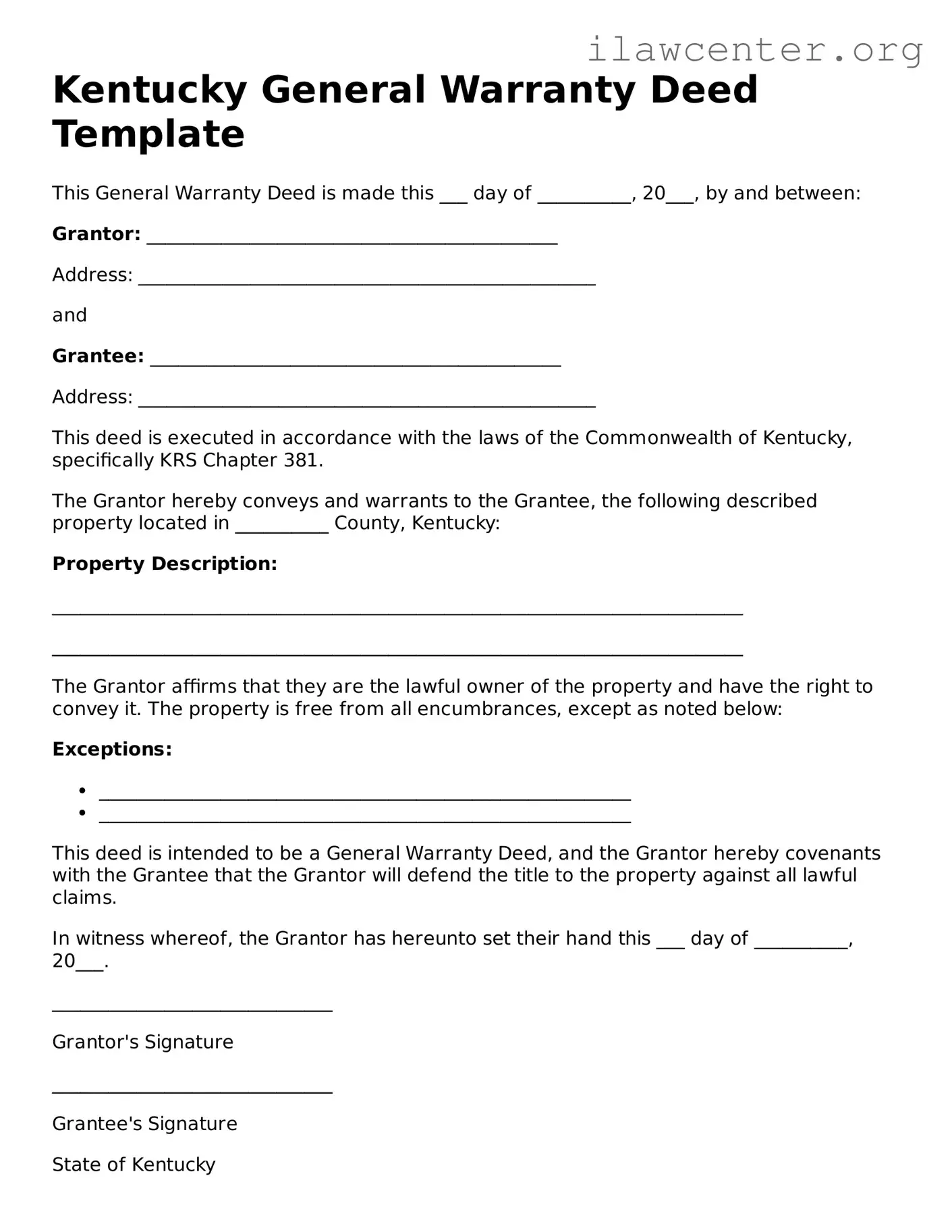
Kentucky General Warranty Deed Template

This General Warranty Deed is made this ___ day of __________, 20___, by and between:

Grantor: ____________________________________________

Address: _________________________________________________

and

Grantee: ____________________________________________

Address: _________________________________________________

This deed is executed in accordance with the laws of the Commonwealth of Kentucky, specifically KRS Chapter 381.

The Grantor hereby conveys and warrants to the Grantee, the following described property located in __________ County, Kentucky:

Property Description:

__________________________________________________________________________

__________________________________________________________________________

The Grantor affirms that they are the lawful owner of the property and have the right to convey it. The property is free from all encumbrances, except as noted below:

Exceptions:

  • _________________________________________________________
  • _________________________________________________________

This deed is intended to be a General Warranty Deed, and the Grantor hereby covenants with the Grantee that the Grantor will defend the title to the property against all lawful claims.

In witness whereof, the Grantor has hereunto set their hand this ___ day of __________, 20___.

______________________________

Grantor's Signature

______________________________

Grantee's Signature

State of Kentucky

County of _______________

Subscribed, sworn to, and acknowledged before me by _______________________ (Grantor) this ___ day of __________, 20___.

______________________________

Notary Public

My Commission Expires: ________________

PDF Form Characteristics

Fact Name Description
Purpose of the Deed The Kentucky Deed form is used to transfer ownership of real property from one party to another.
Governing Law This form is governed by the Kentucky Revised Statutes, specifically KRS Chapter 381.
Types of Deeds Common types of deeds in Kentucky include warranty deeds, quitclaim deeds, and special warranty deeds.
Recording Requirement To ensure legal protection, the deed must be recorded with the county clerk's office in the county where the property is located.

Instructions on Utilizing Kentucky Deed

After you have gathered all necessary information, you are ready to fill out the Kentucky Deed form. This process involves providing specific details about the property and the parties involved. Ensure that you have accurate information to avoid any issues later on.

  1. Begin by entering the date at the top of the form. This is the date when the deed will be executed.
  2. Next, identify the grantor (the person transferring the property). Include their full name and address.
  3. Then, identify the grantee (the person receiving the property). Provide their full name and address as well.
  4. Describe the property being transferred. Include the legal description, which may be found in previous deeds or property records. Make sure this is precise.
  5. Indicate the consideration, or the amount of money or value exchanged for the property. This can be a specific dollar amount or a statement indicating that it is a gift.
  6. Sign the deed in the presence of a notary public. Both the grantor and any witnesses, if required, should also sign the document.
  7. Have the notary public complete their section, which includes their signature and seal. This verifies that the signatures are authentic.
  8. Finally, file the completed deed with the county clerk's office in the county where the property is located. There may be a filing fee, so be prepared for that.

Important Facts about Kentucky Deed

What is a Kentucky Deed form?

A Kentucky Deed form is a legal document used to transfer ownership of real estate in the state of Kentucky. This form outlines the details of the property being transferred, the parties involved, and any conditions of the transfer. It is essential for ensuring that the transaction is recorded properly and legally recognized.

Who needs to fill out a Kentucky Deed form?

Anyone involved in the sale, gift, or transfer of real property in Kentucky needs to complete a Kentucky Deed form. This includes sellers, buyers, and any other parties involved in the transaction. It is crucial for both parties to understand the terms outlined in the deed.

What information is required on the Kentucky Deed form?

The Kentucky Deed form requires specific information, including the names of the grantor (seller) and grantee (buyer), a legal description of the property, and the date of transfer. Additionally, any conditions or restrictions related to the property should be included to avoid future disputes.

Do I need to have the Kentucky Deed form notarized?

Yes, the Kentucky Deed form must be notarized to be legally valid. This means that a notary public must witness the signing of the deed. Notarization helps prevent fraud and ensures that all parties are entering the agreement willingly.

How do I record a Kentucky Deed form?

To record a Kentucky Deed form, you must take the completed and notarized document to the county clerk's office in the county where the property is located. There may be a recording fee, so it's wise to check with the clerk's office beforehand. Recording the deed provides public notice of the transfer and protects your ownership rights.

Can I use a generic deed form for my property transfer in Kentucky?

While you may find generic deed forms online, it is advisable to use a specific Kentucky Deed form. Each state has unique requirements, and using the correct form ensures that you comply with Kentucky law and avoid potential issues in the future.

What happens if I don't record the Kentucky Deed form?

If you fail to record the Kentucky Deed form, your ownership of the property may not be legally recognized. This can lead to disputes over ownership and make it difficult to sell or transfer the property in the future. Recording the deed is a critical step in securing your rights as a property owner.

Where can I obtain a Kentucky Deed form?

You can obtain a Kentucky Deed form from various sources, including online legal form providers, local county clerk's offices, or real estate attorneys. Ensure that the form you choose is up-to-date and complies with Kentucky laws to avoid complications.

Common mistakes

When filling out the Kentucky Deed form, many individuals make common mistakes that can lead to complications down the line. Understanding these pitfalls can help ensure a smoother process. One frequent error is failing to provide complete and accurate information about the property. Omitting essential details, such as the legal description or the parcel number, can create confusion and may result in delays or disputes.

Another mistake is neglecting to include the names of all parties involved in the transaction. It’s crucial to list every owner and buyer correctly. If someone’s name is left off, it could lead to legal challenges or issues with ownership in the future. Similarly, using incorrect spellings of names can cause significant problems. Even minor errors can complicate the legal standing of the deed.

Many people also overlook the importance of signing the deed in the presence of a notary. A signature without notarization may not hold up in court, undermining the entire transaction. It’s essential to ensure that all required signatures are present and that the document is properly notarized to validate the transfer of property.

Another common error is not including the date of the transaction. This detail is vital for establishing the timeline of ownership and can affect various legal aspects, such as tax assessments. Additionally, some individuals forget to check local requirements. Each county in Kentucky may have specific rules or additional forms that need to be completed, which can vary significantly.

People often fail to understand the implications of the type of deed they are using. Different deeds, such as warranty deeds or quitclaim deeds, serve different purposes and offer varying levels of protection. Choosing the wrong type can have serious consequences, especially regarding liability and claims against the property.

Misunderstanding the tax implications is another common mistake. Failing to account for transfer taxes can lead to unexpected costs. It’s important to research and understand any fees associated with the transfer of property to avoid surprises later on.

Additionally, many individuals do not keep a copy of the completed deed for their records. This oversight can lead to difficulties in the future, especially if there are questions about ownership or if the deed needs to be referenced later. Keeping a copy is a simple yet effective way to safeguard one’s interests.

Finally, some people rush through the process without reviewing the document thoroughly. Taking the time to double-check all entries can prevent errors that might otherwise lead to legal issues. A careful review ensures that all information is accurate and complete, providing peace of mind for all parties involved.

In conclusion, by being aware of these common mistakes, individuals can better navigate the complexities of filling out the Kentucky Deed form. Careful attention to detail, understanding legal requirements, and thorough review can make a significant difference in the outcome of property transactions.

Documents used along the form

When transferring property in Kentucky, various forms and documents accompany the Kentucky Deed form to ensure a smooth transaction. Each document serves a specific purpose, providing necessary information and legal protection for both parties involved.

  • Title Search Report: This document outlines the history of ownership of the property. It confirms that the seller has the right to sell the property and that there are no outstanding liens or claims against it.
  • Property Disclosure Statement: Sellers are often required to disclose any known issues with the property. This statement protects buyers by informing them of potential problems before the sale is finalized.
  • Settlement Statement (HUD-1): This form details all financial aspects of the transaction, including closing costs, fees, and the final amount due at closing. It provides transparency for both buyer and seller.
  • Purchase Agreement: This legally binding contract outlines the terms of the sale, including the purchase price, contingencies, and any conditions that must be met before the sale can proceed.
  • Affidavit of Title: This document is a sworn statement from the seller affirming their ownership of the property and the absence of any undisclosed liens or claims.
  • Power of Attorney: If a party cannot be present during the transaction, this document allows another person to act on their behalf, facilitating the signing of necessary documents.
  • IRS Form 1099-S: This form reports the sale of real estate to the IRS. It is important for tax purposes and must be filed by the settlement agent after the transaction.
  • Deed of Trust or Mortgage: If the buyer is financing the property, this document secures the loan with the property as collateral, outlining the lender's rights in case of default.
  • Homeowners Association (HOA) Documents: If the property is part of an HOA, these documents provide rules, regulations, and financial information regarding the association.

Each of these documents plays a critical role in the property transaction process in Kentucky. Understanding their purposes can help ensure that all legal requirements are met, protecting both buyers and sellers throughout the process.

Similar forms

The Deed form is a legal document used to transfer ownership of property. Several other documents serve similar purposes or have related functions. Here is a list of nine documents that share similarities with the Deed form:

  • Title: This document proves ownership of property and may be used in conjunction with a Deed to establish legal rights.
  • Bill of Sale: This document transfers ownership of personal property, such as vehicles or equipment, similar to how a Deed transfers real property.
  • Lease Agreement: While primarily used for rental arrangements, a Lease Agreement outlines the rights and responsibilities of both parties, akin to a Deed's function in defining ownership rights.
  • Mortgage Agreement: This document outlines the terms of a loan secured by real property, linking it to the Deed through the transfer of property interests.
  • Quitclaim Deed: This specific type of Deed transfers interest in property without guaranteeing that the title is clear, similar in purpose but different in the level of assurance provided.
  • Trust Agreement: A Trust Agreement can hold property on behalf of beneficiaries, relating to the Deed in terms of property rights and transfer mechanisms.
  • Power of Attorney: This document allows one person to act on behalf of another in legal matters, including property transactions, similar to how a Deed facilitates property transfer.
  • Affidavit of Title: This sworn statement confirms the seller's ownership and the absence of claims against the property, complementing the Deed's purpose.
  • Property Settlement Agreement: Often used in divorce cases, this document divides property between parties, similar to how a Deed can transfer ownership from one party to another.

Dos and Don'ts

When filling out the Kentucky Deed form, it is important to pay attention to detail. Here are some things you should and shouldn't do:

  • Do double-check the names of all parties involved to ensure accuracy.
  • Do include a clear legal description of the property.
  • Do sign the deed in the presence of a notary public.
  • Do provide the correct date of the transaction.
  • Do keep a copy of the completed deed for your records.
  • Don't use white-out or any correction fluid on the form.
  • Don't leave any blank spaces; fill in all required fields.
  • Don't forget to check local recording requirements.
  • Don't rush through the process; take your time to ensure everything is correct.
  • Don't assume that verbal agreements will be enough; everything must be in writing.

Misconceptions

When dealing with real estate transactions in Kentucky, understanding the deed form is crucial. However, several misconceptions can lead to confusion. Here are eight common misunderstandings about the Kentucky Deed form:

  1. All deeds are the same.

    Many people believe that all deeds serve the same purpose, but this is not true. There are various types of deeds, such as warranty deeds and quitclaim deeds, each with distinct functions and implications.

  2. A deed is the same as a title.

    While a deed transfers ownership of property, it is not the same as a title. The title represents legal ownership, while the deed is the document that conveys that ownership.

  3. Deeds do not need to be recorded.

    Some believe that recording a deed is optional. In reality, recording is essential to protect ownership rights and provide public notice of the transfer.

  4. Only lawyers can prepare a deed.

    This misconception suggests that only licensed attorneys can draft deeds. In Kentucky, individuals can create their own deeds, but it is often advisable to seek legal guidance to ensure accuracy.

  5. A deed must be notarized to be valid.

    While notarization adds an extra layer of authenticity, Kentucky law does not require a deed to be notarized for it to be legally valid. However, it is highly recommended.

  6. All parties must be present when signing the deed.

    It is a common belief that all parties involved must sign the deed at the same time. In fact, parties can sign separately, as long as the signatures are properly documented.

  7. Once a deed is signed, it cannot be changed.

    Many think that a signed deed is set in stone. However, deeds can be amended or revoked under certain circumstances, provided the proper legal procedures are followed.

  8. Deeds are only necessary for sales transactions.

    Some people assume that deeds are only required when property is sold. Deeds are also necessary for other transfers, such as gifts or inheritance, to formalize the change in ownership.

Understanding these misconceptions can help individuals navigate the complexities of property transactions in Kentucky more effectively. Being informed ensures that all parties involved can make sound decisions regarding real estate matters.

Key takeaways

Filling out and using the Kentucky Deed form is a crucial step in the process of transferring property ownership. Here are some key takeaways to keep in mind:

  • Accurate Information is Essential: Ensure that all names, addresses, and legal descriptions of the property are filled out correctly. Mistakes can lead to delays or complications in the transfer process.
  • Consideration Amount: The deed must include the consideration amount, which is the value exchanged for the property. This is often the sale price but can also be a nominal amount in some cases.
  • Signature Requirements: The deed must be signed by the grantor (the person transferring the property). In some cases, witnesses or a notary public may also be required for the signature to be valid.
  • Recording the Deed: After completing the deed, it must be recorded with the county clerk's office in the county where the property is located. This step is vital to ensure that the transfer is legally recognized.
  • Consulting Professionals: It is often beneficial to consult with a real estate attorney or a qualified professional when filling out the deed. Their expertise can help avoid potential issues and ensure compliance with Kentucky laws.