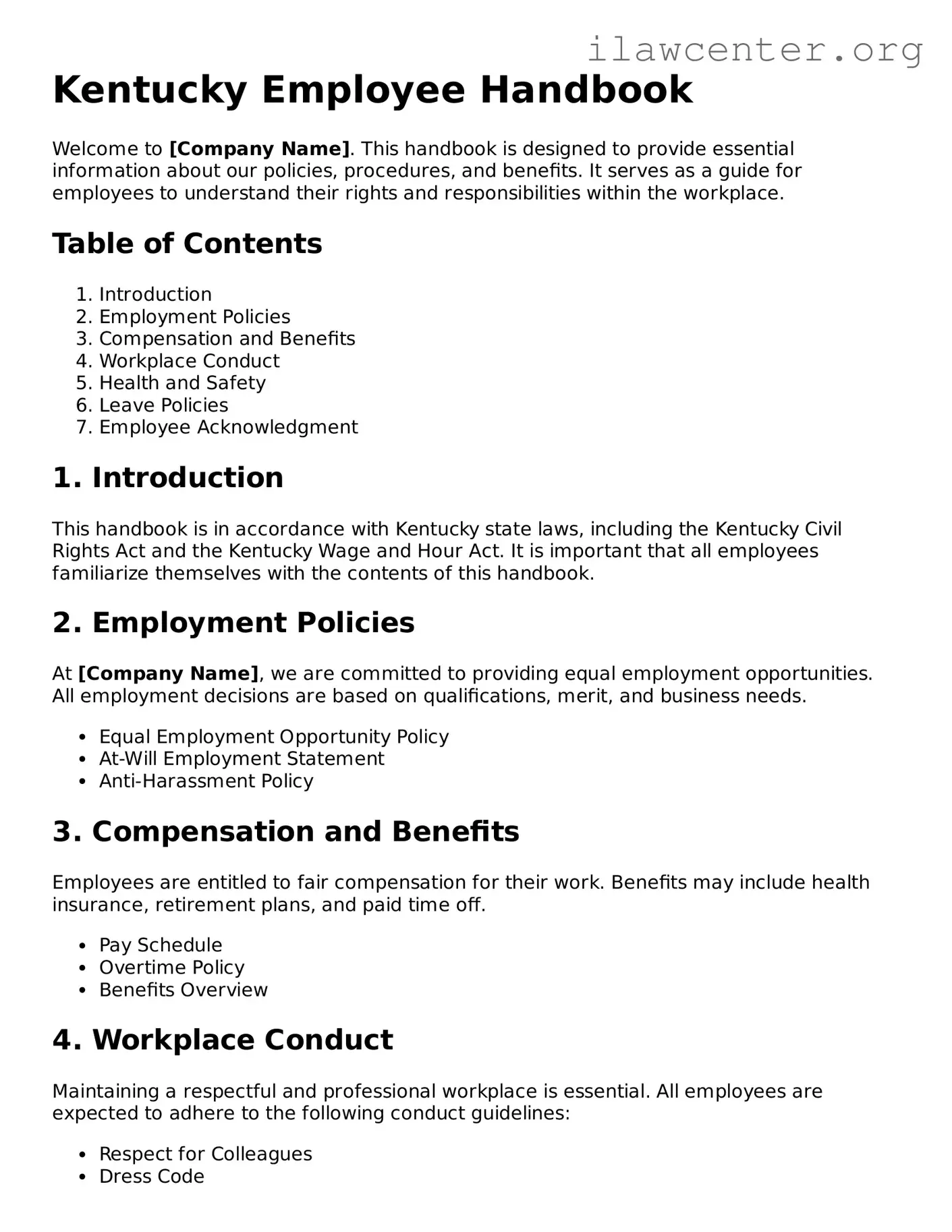
What is the Kentucky Employee Handbook form?
The Kentucky Employee Handbook form is a document that outlines the policies, procedures, and expectations of an employer for their employees in the state of Kentucky. It serves as a guide for employees to understand their rights and responsibilities within the workplace.
Why is an Employee Handbook important?
An Employee Handbook is essential because it helps to establish clear communication between the employer and employees. It can reduce misunderstandings and disputes by providing a reference point for company policies, workplace behavior, and employee benefits. Additionally, it can protect the employer from potential legal issues by demonstrating that policies have been clearly communicated.
What should be included in the Kentucky Employee Handbook?
Typically, a Kentucky Employee Handbook should include sections on workplace conduct, attendance policies, compensation, benefits, and procedures for reporting grievances. It may also cover topics such as anti-discrimination policies, safety protocols, and disciplinary actions. Each section should be clear and concise to ensure employees can easily understand the information.
Is it necessary to have an Employee Handbook in Kentucky?
While it is not legally required to have an Employee Handbook in Kentucky, it is highly recommended. Having a handbook can help clarify expectations and protect both the employer and employees. It can also serve as a valuable tool for training new hires and maintaining a positive workplace culture.
How often should the Employee Handbook be updated?
It is advisable to review and update the Employee Handbook at least annually or whenever there are significant changes to company policies, state laws, or federal regulations. Regular updates ensure that the information remains accurate and relevant, helping to maintain compliance and clarity.
Can employees provide input on the Employee Handbook?
Yes, employees can and should be encouraged to provide input on the Employee Handbook. Gathering feedback can help identify areas that may need clarification or improvement. Involving employees in this process can also foster a sense of ownership and commitment to the policies outlined in the handbook.
How should the Employee Handbook be distributed to employees?
The Employee Handbook can be distributed in various ways, including printed copies, digital formats, or through an employee portal. Regardless of the method, it is important to ensure that every employee receives a copy and acknowledges its receipt. Employers should also provide an opportunity for employees to ask questions about the handbook.
What should an employer do if an employee violates a policy in the Handbook?
If an employee violates a policy outlined in the Employee Handbook, the employer should follow the disciplinary procedures specified in the handbook. This may involve verbal or written warnings, suspension, or even termination, depending on the severity of the violation. Consistency in enforcing policies is crucial to maintain fairness and credibility.
Are there any legal considerations when creating an Employee Handbook?
Yes, there are several legal considerations to keep in mind when creating an Employee Handbook. Employers must ensure that their policies comply with federal and state laws, including anti-discrimination laws, wage and hour laws, and workplace safety regulations. Consulting with a legal professional can help ensure compliance and mitigate potential legal risks.
What should be done if an employee does not sign the acknowledgment of receipt for the Handbook?
If an employee refuses to sign the acknowledgment of receipt for the Employee Handbook, it is important to document the situation. Employers should communicate the importance of the handbook and encourage the employee to review its contents. While a signature may not be legally required, having documentation of the employee's refusal can be helpful in case of future disputes.