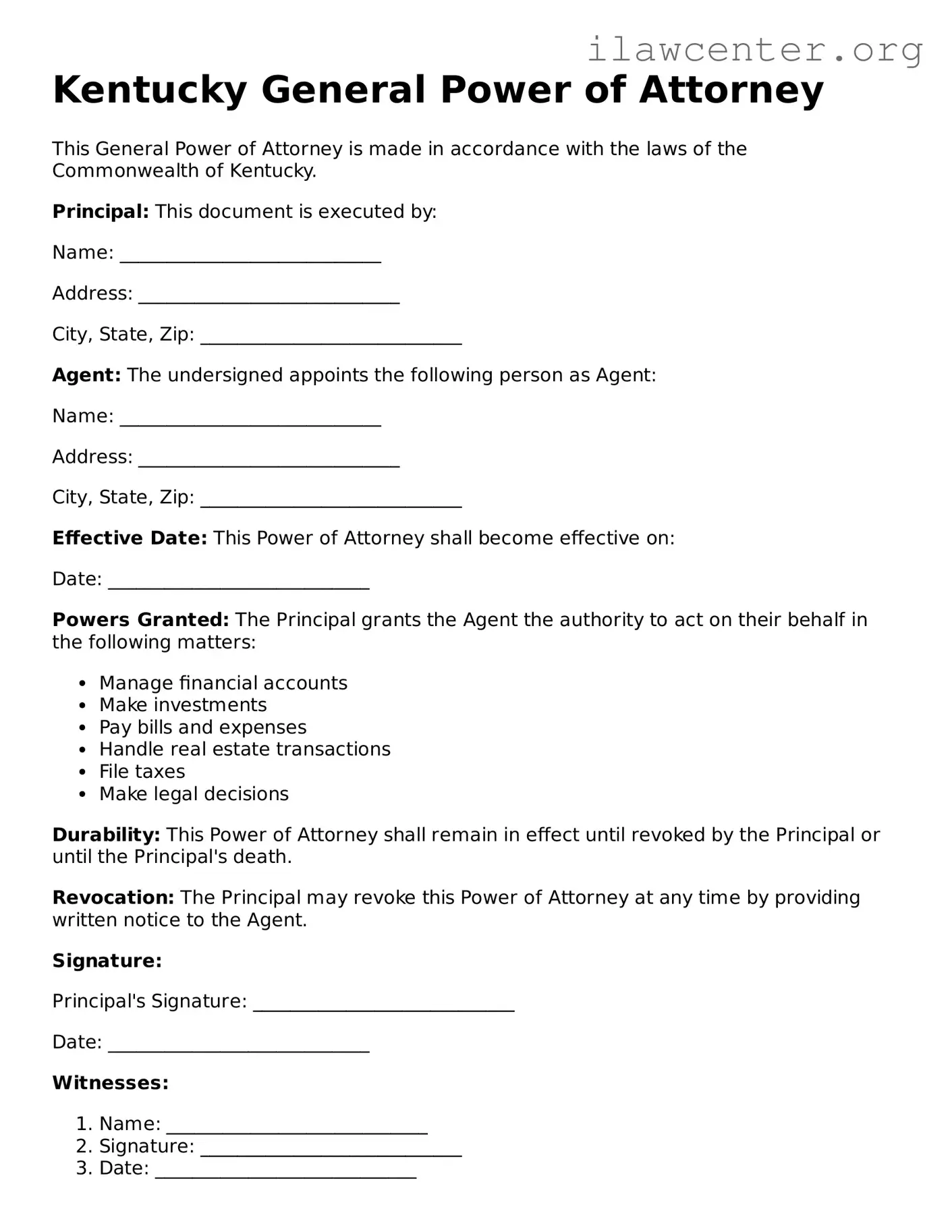
What is a General Power of Attorney in Kentucky?
A General Power of Attorney is a legal document that allows one person, known as the principal, to grant another person, called the agent, the authority to act on their behalf. This authority can cover a wide range of decisions, including financial matters, property management, and other personal affairs. It is a powerful tool for ensuring that someone you trust can make decisions for you if you are unable to do so.
Who can be appointed as an agent under the General Power of Attorney?
In Kentucky, anyone over the age of 18 can be appointed as an agent. This includes family members, friends, or professionals such as attorneys. It's crucial to choose someone who is trustworthy and capable of handling your affairs responsibly, as they will have significant authority over your decisions.
Does a General Power of Attorney need to be notarized in Kentucky?
Yes, a General Power of Attorney must be notarized to be legally valid in Kentucky. This means that you will need to sign the document in the presence of a notary public, who will then verify your identity and witness your signature. This step helps prevent fraud and ensures that the document is executed properly.
Can I revoke a General Power of Attorney once it is created?
Yes, you can revoke a General Power of Attorney at any time, as long as you are mentally competent. To do so, you should create a written revocation document and notify your agent and any relevant third parties, such as banks or healthcare providers. It’s essential to ensure that the revocation is clear and that all parties are aware of it to avoid any confusion.
What happens if I become incapacitated and do not have a General Power of Attorney?
If you become incapacitated and do not have a General Power of Attorney in place, your loved ones may need to go through a court process to obtain guardianship or conservatorship over you. This process can be lengthy, costly, and emotionally taxing for your family. Having a General Power of Attorney can help avoid this situation by designating someone to act on your behalf ahead of time.
Can a General Power of Attorney be used for healthcare decisions?
A General Power of Attorney typically covers financial and legal matters, but it does not automatically grant authority for healthcare decisions. For healthcare decisions, a separate document known as a Medical Power of Attorney or Healthcare Proxy is needed. It’s advisable to create both documents to ensure comprehensive coverage of your wishes.
How long does a General Power of Attorney remain in effect?
A General Power of Attorney remains in effect until you revoke it, until a specified expiration date, or until your death. If you become incapacitated, the power of attorney may continue to be effective unless it is a durable power of attorney, which specifically states that it remains in effect during periods of incapacity. Be sure to clarify the terms when creating the document.