Attorney-Verified  Lease Agreement Document for Kentucky

Attorney-Verified Lease Agreement Document for Kentucky

A Kentucky Lease Agreement form is a legal document that outlines the terms and conditions between a landlord and tenant for renting residential or commercial property in Kentucky. This form serves to protect the rights and responsibilities of both parties, ensuring a clear understanding of the rental arrangement. To begin your leasing process, consider filling out the form by clicking the button below.

Article Guide

In the realm of renting and leasing, the Kentucky Lease Agreement form stands as a vital document that outlines the rights and responsibilities of both landlords and tenants. This form serves as a blueprint for the rental relationship, detailing essential aspects such as the duration of the lease, rental payment terms, and security deposit requirements. It also addresses maintenance obligations, the conditions under which the lease may be terminated, and the rules governing property use. By clearly defining these elements, the agreement fosters a transparent and respectful interaction between the parties involved. Moreover, it often includes provisions for resolving disputes, thereby providing a framework for amicable solutions should conflicts arise. Understanding the nuances of this form is crucial for anyone entering into a lease in Kentucky, as it not only protects the interests of both landlords and tenants but also promotes a harmonious living environment.

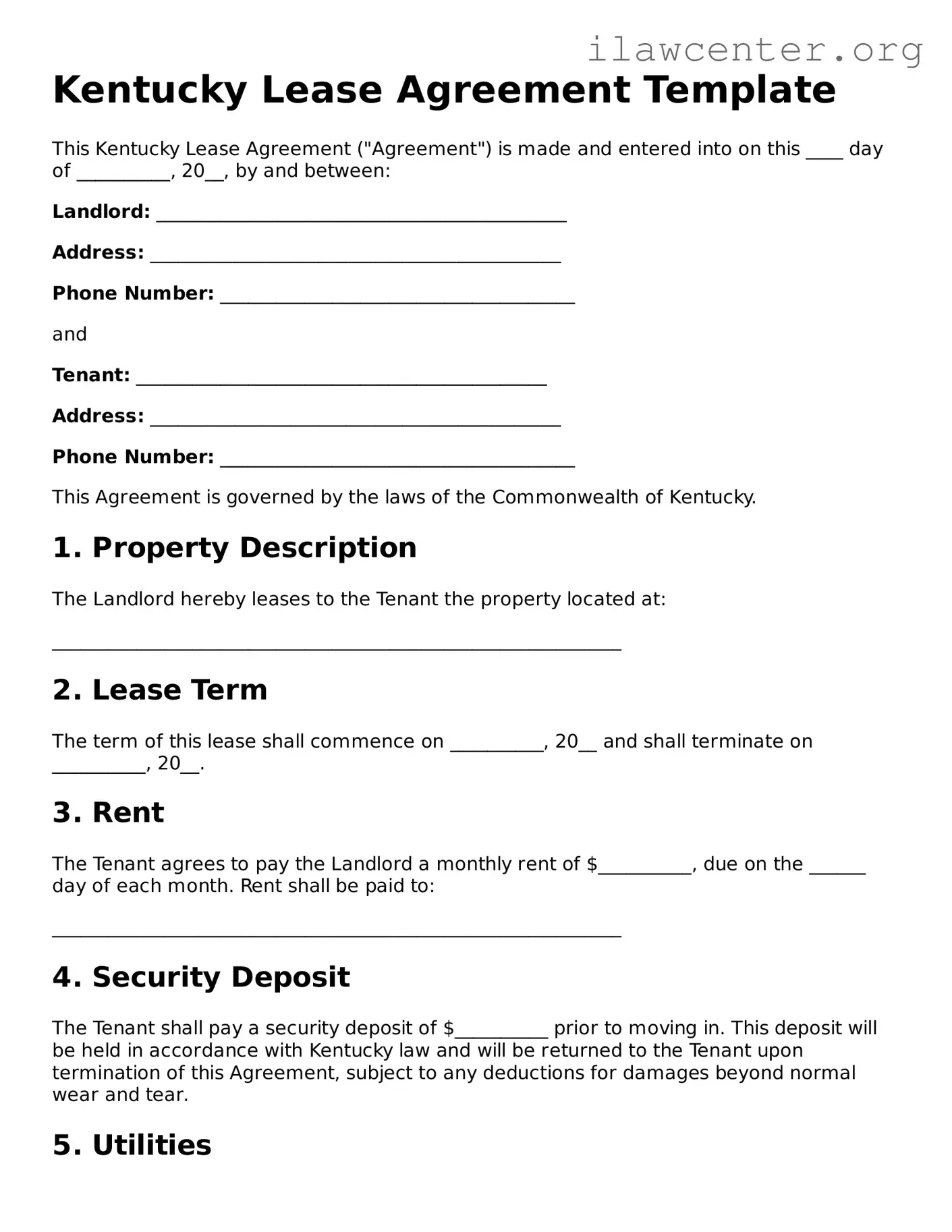
Kentucky Lease Agreement Preview

Kentucky Lease Agreement Template

This Kentucky Lease Agreement ("Agreement") is made and entered into on this ____ day of __________, 20__, by and between:

Landlord: ____________________________________________

Address: ____________________________________________

Phone Number: ______________________________________

and

Tenant: ____________________________________________

Address: ____________________________________________

Phone Number: ______________________________________

This Agreement is governed by the laws of the Commonwealth of Kentucky.

1. Property Description

The Landlord hereby leases to the Tenant the property located at:

_____________________________________________________________

2. Lease Term

The term of this lease shall commence on __________, 20__ and shall terminate on __________, 20__.

3. Rent

The Tenant agrees to pay the Landlord a monthly rent of $__________, due on the ______ day of each month. Rent shall be paid to:

_____________________________________________________________

4. Security Deposit

The Tenant shall pay a security deposit of $__________ prior to moving in. This deposit will be held in accordance with Kentucky law and will be returned to the Tenant upon termination of this Agreement, subject to any deductions for damages beyond normal wear and tear.

5. Utilities

The following utilities shall be the responsibility of the Tenant:

  • Electricity
  • Water
  • Gas
  • Internet

The following utilities shall be the responsibility of the Landlord:

  • Trash Removal
  • Maintenance of Common Areas

6. Maintenance and Repairs

The Tenant agrees to maintain the property in a clean and sanitary condition. Any necessary repairs should be reported to the Landlord promptly.

7. Termination

Either party may terminate this Agreement by providing written notice at least 30 days prior to the intended termination date.

8. Governing Law

This Agreement shall be governed by and construed in accordance with the laws of the Commonwealth of Kentucky.

9. Signatures

By signing below, both parties agree to the terms and conditions set forth in this Lease Agreement.

Landlord Signature: ___________________________ Date: ___________

Tenant Signature: ___________________________ Date: ___________

PDF Form Characteristics

Fact Name Description
Governing Law The Kentucky Lease Agreement is governed by Kentucky state laws, specifically the Kentucky Revised Statutes (KRS) Chapter 383.
Parties Involved The lease agreement involves two main parties: the landlord (lessor) and the tenant (lessee).
Property Description The agreement must clearly describe the rental property, including its address and any specific details that identify it.
Lease Term Lease agreements can be for a fixed term or a month-to-month basis, with the duration specified in the document.
Rent Payment The lease should state the amount of rent due, the payment schedule, and acceptable payment methods.
Security Deposit Landlords may require a security deposit, which must comply with Kentucky law regarding maximum amounts and return timelines.
Termination Conditions The agreement should outline the conditions under which either party can terminate the lease, including notice requirements.

Instructions on Utilizing Kentucky Lease Agreement

Filling out the Kentucky Lease Agreement form is an essential step in formalizing a rental arrangement. Proper completion ensures that both landlords and tenants understand their rights and responsibilities. Below are the steps to guide you through the process.

  1. Begin by entering the date at the top of the form.
  2. Provide the landlord's name and contact information in the designated section.
  3. Next, fill in the tenant's name and contact information.
  4. Specify the property address where the lease will apply.
  5. Indicate the lease term, including the start and end dates.
  6. Detail the monthly rent amount and the due date for rent payments.
  7. Include any security deposit amount and terms for its return.
  8. Outline any utilities that are included in the rent and those that the tenant is responsible for.
  9. Specify any rules or regulations regarding the property, such as pet policies or maintenance responsibilities.
  10. Sign and date the form at the bottom, ensuring both the landlord and tenant have signed.

After completing the form, both parties should retain a copy for their records. This ensures clarity and accountability throughout the lease period.

Important Facts about Kentucky Lease Agreement

What is a Kentucky Lease Agreement form?

A Kentucky Lease Agreement form is a legal document that outlines the terms and conditions under which a landlord rents property to a tenant in the state of Kentucky. This agreement specifies the rights and responsibilities of both parties, including rental payment terms, lease duration, maintenance obligations, and rules regarding the use of the property. It serves to protect both the landlord’s and tenant’s interests and ensures clarity in the rental arrangement.

What essential elements should be included in a Kentucky Lease Agreement?

Key elements of a Kentucky Lease Agreement include the names of the landlord and tenant, property address, lease term (duration), rent amount and payment due date, security deposit details, maintenance responsibilities, and any rules or restrictions regarding the use of the property. Additionally, the agreement should outline the process for terminating the lease and any penalties for breaking the lease terms. Including these details helps prevent misunderstandings and disputes.

How long is a typical lease term in Kentucky?

Lease terms in Kentucky can vary widely. Typically, leases are either month-to-month or fixed-term agreements lasting 6 to 12 months. Month-to-month leases offer flexibility, allowing either party to terminate the lease with proper notice, while fixed-term leases provide stability for both landlords and tenants. It’s important to choose a lease term that aligns with both parties' needs and expectations.

Can a landlord increase rent during the lease term?

In Kentucky, landlords cannot increase rent during the lease term unless the lease agreement specifically allows for such increases. If the lease is month-to-month, landlords may increase rent by providing proper notice, typically 30 days. For fixed-term leases, any rent increase would generally take effect only after the lease expires, unless agreed upon in writing by both parties. Clear communication about rent increases is crucial to maintaining a positive landlord-tenant relationship.

What should I do if I need to terminate the lease early?

If you need to terminate the lease early, review the lease agreement for any specific clauses regarding early termination. Many agreements include penalties or requirements for notice. It’s advisable to communicate openly with the landlord about your situation, as they may be willing to negotiate an early termination agreement. Document any agreements in writing to avoid potential disputes later. Understanding your rights and obligations can help facilitate a smoother transition.

Common mistakes

Filling out the Kentucky Lease Agreement form can be straightforward, but many people make common mistakes that can lead to confusion or legal issues. One frequent error is not providing complete tenant information. Ensure that all tenants' full names and contact details are included. Omitting this information can cause problems down the line.

Another common mistake is failing to specify the lease term. Clearly state the start and end dates of the lease. If this information is vague or missing, it could lead to misunderstandings about the duration of the rental agreement.

Many individuals overlook the importance of detailing the rent amount and payment schedule. Clearly outline how much rent is due, when it is due, and the acceptable payment methods. Incomplete or unclear rent terms can result in disputes between landlords and tenants.

People often neglect to include information about security deposits. Specify the amount of the security deposit and the conditions under which it will be returned. Failing to address this can lead to disagreements at the end of the lease.

Another mistake is not addressing maintenance responsibilities. Clearly define who is responsible for maintenance and repairs. This helps prevent conflicts about who should handle issues that arise during the lease term.

Some individuals forget to include any additional fees. If there are fees for late payments, utilities, or other services, these should be clearly stated in the agreement. Transparency about all costs is essential for a smooth rental experience.

People sometimes fail to read and understand the terms of the lease before signing. Take the time to review each section carefully. Understanding your rights and responsibilities is crucial to avoiding future problems.

Another common error is not including the landlord's contact information. Make sure to provide a reliable way for tenants to reach the landlord for any issues that may arise. This can save time and frustration for both parties.

Some tenants and landlords forget to include clauses regarding pets or smoking. If there are specific rules or restrictions, they should be clearly outlined in the lease. This helps to avoid disputes and ensures everyone is on the same page.

Lastly, many people fail to keep a copy of the signed lease agreement. Always ensure that both parties have a signed copy for their records. This document is essential for reference throughout the lease term.

Documents used along the form

When entering into a lease agreement in Kentucky, it’s essential to have a clear understanding of the other documents that may accompany your lease. These forms help clarify responsibilities, protect rights, and ensure a smooth landlord-tenant relationship. Below is a list of commonly used forms alongside the Kentucky Lease Agreement.

  • Rental Application: This form is typically completed by prospective tenants to provide landlords with necessary information. It includes details about the applicant's employment, rental history, and references. A thorough application helps landlords make informed decisions.
  • Move-In/Move-Out Checklist: This checklist is used to document the condition of the rental property before a tenant moves in and after they move out. It helps both parties agree on the state of the property, which can be crucial for security deposit disputes.
  • Security Deposit Receipt: This document acknowledges the receipt of the security deposit from the tenant. It outlines the amount received and any conditions regarding its return, ensuring transparency and accountability for both parties.
  • Lease Addendum: An addendum is a document that modifies or adds specific terms to the original lease agreement. This might include pet policies, maintenance responsibilities, or changes in rental terms. It is important for clarifying any additional agreements made after the lease is signed.
  • Notice to Terminate Lease: This form is used by either the landlord or tenant to formally notify the other party of the intention to terminate the lease. It specifies the required notice period and ensures that both parties are aware of the end date of the tenancy.

Having these documents in place can significantly ease the leasing process and help prevent misunderstandings. By ensuring that all parties are well-informed and agree on the terms, you can foster a positive rental experience in Kentucky.

Similar forms

A Lease Agreement is a crucial document in the realm of property rental. However, several other documents share similarities with it, each serving specific purposes in real estate and rental transactions. Here’s a list of six documents that are similar to a Lease Agreement:

  • Rental Agreement: Like a Lease Agreement, a Rental Agreement outlines the terms of renting a property. However, it typically covers shorter time frames, often on a month-to-month basis, allowing for more flexibility.
  • Sublease Agreement: This document allows a tenant to rent out their leased property to another party. It includes terms similar to a Lease Agreement, ensuring that the original tenant remains responsible for the lease obligations.
  • Property Management Agreement: This agreement is between a property owner and a property management company. It outlines the responsibilities of the management company, including rent collection and maintenance, similar to how a Lease Agreement outlines tenant obligations.
  • Tenancy Agreement: A Tenancy Agreement is often used interchangeably with a Lease Agreement. It details the rights and responsibilities of both the landlord and tenant, covering aspects such as rent, duration, and property use.
  • Commercial Lease Agreement: This document is specifically for renting commercial properties. While it shares many features with a residential Lease Agreement, it addresses different legal considerations relevant to businesses.
  • Option to Purchase Agreement: This document gives a tenant the option to buy the property they are renting at a later date. It includes terms similar to a Lease Agreement but adds provisions related to the purchase option.

Understanding these documents can help both landlords and tenants navigate their rights and responsibilities more effectively. Each document serves a unique purpose while sharing common elements with the Lease Agreement.

Dos and Don'ts

When filling out the Kentucky Lease Agreement form, it is essential to approach the process with care. Here are some important do's and don'ts to keep in mind:

  • Do read the entire lease agreement thoroughly before filling it out.
  • Do ensure that all parties involved in the lease are clearly identified.
  • Do provide accurate information regarding the rental property, including the address.
  • Do specify the lease term, including start and end dates.
  • Do outline the payment terms, including the amount of rent and due dates.
  • Don't leave any blank spaces on the form; all fields should be filled out completely.
  • Don't use unclear language or abbreviations that could lead to misunderstandings.
  • Don't ignore local laws and regulations that may affect the lease agreement.
  • Don't sign the lease without understanding all the terms and conditions.
  • Don't forget to keep a copy of the signed lease for your records.

Misconceptions

Many people have misconceptions about the Kentucky Lease Agreement form. Here are ten common misunderstandings, along with explanations to clarify them:

  1. All lease agreements are the same. Many believe that all lease agreements follow a standard format. In reality, each lease can vary significantly based on the property, the landlord, and the tenant's needs.
  2. Oral agreements are sufficient. Some think that a verbal agreement is enough to secure a lease. However, having a written lease is essential for legal protection and clarity.
  3. Only landlords need to sign. A common belief is that only the landlord's signature is necessary. Both the landlord and the tenant should sign the lease to make it legally binding.
  4. Security deposits are optional. Many assume that security deposits are not required. In Kentucky, landlords can require a security deposit, and it is often standard practice.
  5. Lease terms can be changed anytime. Some tenants think they can modify the lease terms at will. Changes must be agreed upon by both parties and documented in writing.
  6. All repairs are the landlord's responsibility. While landlords are generally responsible for major repairs, tenants may also have obligations for minor maintenance and upkeep.
  7. Breaking a lease is easy. Many believe they can break a lease without consequences. However, breaking a lease can lead to financial penalties and legal issues.
  8. Subleasing is always allowed. Some tenants think they can sublease their apartment without permission. In most cases, landlords must approve any subleasing arrangements.
  9. Lease agreements don’t need to be renewed. Many think that leases automatically renew. In fact, leases typically expire unless both parties agree to renew or extend them.
  10. Rent increases can happen anytime. Some believe landlords can raise rent whenever they want. In Kentucky, landlords must provide notice before increasing rent, as outlined in the lease.

Understanding these misconceptions can help both landlords and tenants navigate their lease agreements more effectively.

Key takeaways

When filling out and using the Kentucky Lease Agreement form, keep these key takeaways in mind:

  • Understand the Basics: Familiarize yourself with what a lease agreement is and its purpose. It outlines the terms between a landlord and a tenant.
  • Identify the Parties: Clearly state the names of both the landlord and the tenant. This ensures everyone knows who is involved in the agreement.
  • Specify the Property: Provide a detailed description of the rental property. Include the address and any specific details that make it unique.
  • Outline the Lease Term: Indicate the length of the lease. Whether it’s month-to-month or a fixed term, make sure this is clearly defined.
  • Detail the Rent Amount: Clearly state how much rent is due, when it is due, and the acceptable payment methods. This helps avoid confusion later.
  • Include Security Deposit Information: Specify the amount of the security deposit and the conditions for its return. This protects both parties.
  • Review and Sign: Both parties should review the agreement carefully before signing. This step is crucial to ensure everyone is on the same page.

By following these takeaways, you can navigate the Kentucky Lease Agreement form with confidence.