Attorney-Verified  Notice to Quit Document for Kentucky

Attorney-Verified Notice to Quit Document for Kentucky

The Kentucky Notice to Quit form is a legal document that a landlord uses to inform a tenant that they must vacate the rental property. This notice is typically issued when a tenant has violated the terms of their lease or failed to pay rent. Understanding this form is crucial for both landlords and tenants to ensure a smooth transition and compliance with state laws.

To fill out the form, click the button below.

Article Guide

In Kentucky, the Notice to Quit form serves as a crucial step in the landlord-tenant relationship, particularly when it comes to addressing lease violations or the termination of tenancy. This form is typically issued by a landlord when a tenant has failed to comply with the terms of their lease, such as not paying rent or engaging in unlawful activities. The Notice to Quit outlines the specific reasons for the termination and provides the tenant with a clear timeframe to vacate the property. Understanding the details of this document is essential for both landlords and tenants, as it ensures that the process is conducted fairly and legally. By following the proper procedures, landlords can protect their rights while tenants can understand their responsibilities and options. The form not only emphasizes the importance of communication but also aims to prevent disputes by laying out clear expectations for both parties involved.

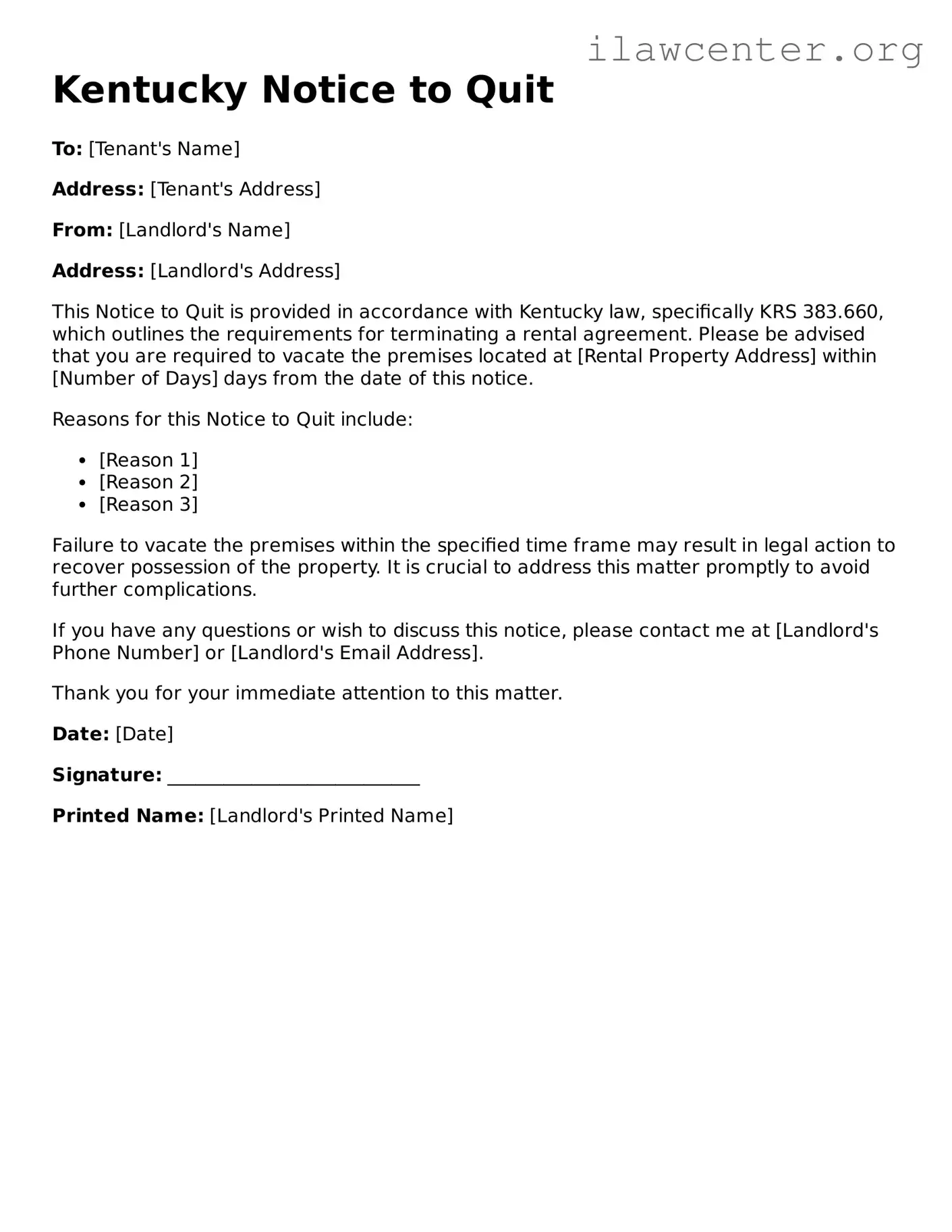
Kentucky Notice to Quit Preview

Kentucky Notice to Quit

To: [Tenant's Name]

Address: [Tenant's Address]

From: [Landlord's Name]

Address: [Landlord's Address]

This Notice to Quit is provided in accordance with Kentucky law, specifically KRS 383.660, which outlines the requirements for terminating a rental agreement. Please be advised that you are required to vacate the premises located at [Rental Property Address] within [Number of Days] days from the date of this notice.

Reasons for this Notice to Quit include:

  • [Reason 1]
  • [Reason 2]
  • [Reason 3]

Failure to vacate the premises within the specified time frame may result in legal action to recover possession of the property. It is crucial to address this matter promptly to avoid further complications.

If you have any questions or wish to discuss this notice, please contact me at [Landlord's Phone Number] or [Landlord's Email Address].

Thank you for your immediate attention to this matter.

Date: [Date]

Signature: ___________________________

Printed Name: [Landlord's Printed Name]

PDF Form Characteristics

Fact Name Details
Purpose The Kentucky Notice to Quit form is used by landlords to notify tenants of their need to vacate the rental property.
Governing Law This form is governed by Kentucky Revised Statutes, specifically KRS 383.660.
Notice Period Typically, a 7-day notice is required for non-payment of rent, while a 30-day notice is needed for other lease violations.
Delivery Method The notice can be delivered in person, by mail, or posted on the property.
Tenant Rights Tenants have the right to contest the notice in court if they believe it was issued improperly.
Form Requirements The form must include the date, the tenant's name, and the reason for the notice.
Signature The landlord or their authorized agent must sign the notice for it to be valid.
Legal Action If the tenant does not vacate, the landlord may proceed with eviction proceedings after the notice period expires.
Retaliation Prohibited Landlords cannot retaliate against tenants for exercising their legal rights when issuing a notice.
Documentation It is advisable for landlords to keep a copy of the notice for their records.

Instructions on Utilizing Kentucky Notice to Quit

After completing the Kentucky Notice to Quit form, you will need to deliver it to the tenant. This step is crucial for initiating the process of addressing any lease violations or non-payment issues. Make sure to keep a copy for your records.

  1. Obtain the Kentucky Notice to Quit form. You can find it online or at your local courthouse.
  2. Fill in your name and address at the top of the form. This is your information as the landlord.
  3. Provide the tenant's name and address. Ensure that this information is accurate to avoid any complications.
  4. Specify the reason for the notice. Be clear and concise about the issue, such as non-payment of rent or lease violations.
  5. Indicate the date by which the tenant must vacate the property. This should comply with Kentucky law regarding notice periods.
  6. Sign and date the form. Your signature validates the notice.
  7. Make copies of the completed form for your records and for delivery to the tenant.

Important Facts about Kentucky Notice to Quit

What is a Kentucky Notice to Quit form?

The Kentucky Notice to Quit form is a legal document that a landlord uses to inform a tenant that they must vacate the rental property. This notice is typically issued when a tenant has violated the terms of their lease agreement or has failed to pay rent. The form outlines the reasons for the eviction and provides a specific timeframe for the tenant to leave the property.

When is a Notice to Quit required in Kentucky?

A Notice to Quit is required in situations where a tenant has not paid rent, has violated lease terms, or is engaging in illegal activities on the premises. It serves as a formal notification that the landlord intends to terminate the tenancy and begin the eviction process if the tenant does not comply.

How much notice must a landlord give before filing for eviction?

The amount of notice required depends on the reason for the eviction. For non-payment of rent, Kentucky law typically requires a seven-day notice. For lease violations, landlords usually must provide a 14-day notice. In cases of illegal activity, the notice period may be shorter or even immediate, depending on the severity of the situation.

Can a tenant contest a Notice to Quit?

Yes, a tenant can contest a Notice to Quit. If a tenant believes the notice is unjust or that they have not violated the lease, they may respond to the notice and seek legal advice. If the landlord proceeds with eviction, the tenant has the right to present their case in court.

What happens if a tenant does not comply with the Notice to Quit?

If a tenant does not comply with the Notice to Quit, the landlord may file an eviction lawsuit in court. This legal action can result in the tenant being ordered to leave the property and may involve additional legal fees and costs for both parties.

Is a Notice to Quit the same as an eviction notice?

While a Notice to Quit is often a precursor to an eviction notice, they are not the same. The Notice to Quit informs the tenant of the need to vacate, while an eviction notice is a formal legal document that follows if the tenant fails to leave. The eviction notice is filed with the court and may lead to a court hearing.

Do landlords need to provide a reason for the Notice to Quit?

Yes, landlords must provide a reason for issuing a Notice to Quit. The notice should clearly state the grounds for termination, whether it is due to non-payment of rent, lease violations, or other issues. This transparency is important for both legal compliance and effective communication.

Can a tenant request a longer notice period?

A tenant can request a longer notice period, but the landlord is not obligated to grant this request. It is advisable for tenants to communicate openly with their landlords if they need more time to vacate the property. In some cases, landlords may be willing to negotiate an extended timeframe.
Common mistakes

When filling out the Kentucky Notice to Quit form, many individuals make common mistakes that can lead to complications down the line. One frequent error is failing to provide the correct address of the tenant. It is essential to include the complete and accurate address where the tenant resides. Omitting or miswriting even a single digit in the address can cause delays in the eviction process or even render the notice invalid.

Another mistake often made involves the date of the notice. The form requires a specific date when the notice is served. If this date is not clearly indicated or is incorrectly recorded, it can create confusion about the timeline for the tenant's response. Remember, the date is crucial for determining the legal timeframe for the tenant to vacate the property.

People sometimes overlook the necessity of including the reason for the eviction. While the Notice to Quit form may not require an extensive explanation, it is important to state the reason clearly and concisely. A vague or incomplete reason can lead to disputes and may undermine the effectiveness of the notice. Providing a straightforward reason helps both parties understand the situation better.

Lastly, many individuals forget to sign the notice. A signature is a vital component that validates the document. Without it, the notice may not be considered legally binding. Therefore, always ensure that the notice is signed and dated before it is delivered to the tenant. Taking these steps can help avoid unnecessary complications and ensure a smoother process.

Documents used along the form

When dealing with rental agreements and potential evictions in Kentucky, several forms and documents can complement the Kentucky Notice to Quit form. Understanding these documents can help ensure that the process goes smoothly and that all parties are aware of their rights and responsibilities.

  • Lease Agreement: This is the initial contract between the landlord and tenant, outlining the terms of the rental arrangement, including rent amount, duration, and responsibilities of both parties.
  • Rent Payment Receipt: A document that serves as proof of payment made by the tenant to the landlord. It is essential for both parties to keep records of these transactions.
  • Notice of Non-Payment of Rent: This notice is sent to the tenant when rent has not been received by the due date. It informs the tenant of the overdue payment and may include a deadline for payment to avoid further action.
  • Eviction Notice: This formal notice informs the tenant that the landlord intends to terminate the lease due to specific reasons, often related to non-payment or lease violations. It is a critical step before filing for eviction in court.
  • Affidavit of Service: This document confirms that the landlord has delivered the Notice to Quit or other notices to the tenant. It serves as evidence that proper procedures were followed.
  • Answer to Eviction Complaint: If a tenant receives an eviction notice, they may respond with this document, outlining their side of the story and any defenses they may have against the eviction.
  • Judgment Order: If the eviction case goes to court, this document is issued by the judge, detailing the outcome of the case, including whether the eviction is granted or denied.
  • Writ of Possession: This court order allows the landlord to regain possession of the rental property after a successful eviction proceeding. It authorizes law enforcement to assist in removing the tenant if necessary.
  • Security Deposit Return Form: After a tenant vacates the property, this form outlines the return of the security deposit, detailing any deductions for damages or unpaid rent.

Being familiar with these documents can empower both landlords and tenants. Each form plays a vital role in ensuring that the rental process is fair and legally compliant. Understanding their purpose can help prevent misunderstandings and facilitate a smoother resolution to any rental disputes.

Similar forms

  • Eviction Notice: This document serves as a formal request for a tenant to vacate a rental property. Like the Notice to Quit, it outlines the reasons for the eviction and provides a timeline for the tenant to leave.
  • Lease Termination Letter: A lease termination letter informs a tenant that their lease will not be renewed. Similar to the Notice to Quit, it specifies the end date of the tenancy and any necessary actions the tenant must take.
  • Demand for Possession: This document demands that a tenant return possession of the property to the landlord. It shares similarities with the Notice to Quit in that it communicates the landlord's intent to regain control of the property.
  • Notice of Non-Renewal: A notice of non-renewal indicates that a landlord will not renew a tenant's lease. This document is akin to the Notice to Quit as it sets forth the end of the rental agreement and the expectations for the tenant's departure.

Dos and Don'ts

When filling out the Kentucky Notice to Quit form, it is important to follow specific guidelines to ensure accuracy and compliance. Below is a list of actions to take and avoid during this process.

  • Do provide accurate tenant information, including full names and addresses.
  • Do clearly state the reason for the notice.
  • Do specify the date by which the tenant must vacate the property.
  • Do keep a copy of the completed form for your records.
  • Do deliver the notice in a manner that complies with local laws, such as personal delivery or certified mail.
  • Don't use vague language that may confuse the tenant.
  • Don't forget to sign and date the form.
  • Don't ignore local regulations regarding notice periods.
  • Don't leave out important details, such as the property address.
  • Don't assume that verbal communication is sufficient; always provide written notice.

Misconceptions

The Kentucky Notice to Quit form is an important document in the landlord-tenant relationship. However, several misconceptions exist about its purpose and usage. Below is a list of ten common misunderstandings regarding this form.

  1. It can be used for any type of eviction.

    The Notice to Quit is specifically for terminating a tenancy, not for all eviction scenarios. Different situations require different forms.

  2. It must be served in person.

    The form can be delivered by mail, posted on the property, or served in person. The method of delivery can vary based on local laws.

  3. It is the same as a court eviction notice.

    The Notice to Quit is a preliminary step. A court eviction notice is issued after legal proceedings have commenced.

  4. All tenants must receive a Notice to Quit.

    This notice is only required when a tenant has violated lease terms or failed to pay rent. Not all tenants will need to receive one.

  5. It can be ignored by the tenant.

    Ignoring a Notice to Quit can lead to legal action. Tenants should take it seriously and respond appropriately.

  6. There is no specific time frame for serving it.

    There are specific time frames outlined in Kentucky law for how long a tenant has to respond after receiving the notice.

  7. It must be notarized.

    The Notice to Quit does not require notarization. It simply needs to be properly filled out and served.

  8. It can be handwritten.

    While it can be handwritten, using a typed form is often recommended for clarity and professionalism.

  9. Once served, the tenant must leave immediately.

    The tenant typically has a specific period to respond or vacate the premises, as dictated by the notice.

  10. It is only for non-payment of rent.

    The Notice to Quit can be issued for various lease violations, not just for failure to pay rent.

Understanding these misconceptions can help both landlords and tenants navigate the eviction process more effectively and ensure compliance with Kentucky laws.

Key takeaways

Filling out and using the Kentucky Notice to Quit form can be a straightforward process if you keep a few key points in mind. Here are some essential takeaways to help you navigate this form effectively:

  • The Notice to Quit is a formal document used by landlords to inform tenants that they must vacate the rental property.
  • It is crucial to include the correct address of the rental property to avoid confusion.
  • Clearly state the reason for the notice, whether it’s for non-payment of rent or lease violations.
  • The notice must specify the time frame in which the tenant must vacate the premises, typically ranging from 7 to 30 days, depending on the situation.
  • Ensure that the notice is signed and dated by the landlord or their authorized representative.
  • Keep a copy of the Notice to Quit for your records; it serves as proof that you provided the notice.
  • Delivery of the notice can be done via mail or personal service; ensure you follow the method that complies with Kentucky law.
  • Filing the Notice to Quit does not automatically initiate eviction proceedings; it is merely a step in the process.
  • Be aware of local ordinances that may affect the notice period or requirements.
  • Consulting with a legal professional can provide additional clarity and ensure compliance with all relevant laws.

By keeping these points in mind, you can ensure that your Notice to Quit is properly filled out and serves its intended purpose effectively.