Attorney-Verified  Real Estate Purchase Agreement Document for Kentucky

Attorney-Verified Real Estate Purchase Agreement Document for Kentucky

The Kentucky Real Estate Purchase Agreement is a legal document that outlines the terms and conditions of a property sale between a buyer and a seller. This form serves as a crucial tool in facilitating smooth transactions, ensuring that both parties understand their rights and obligations. To get started on your property purchase, fill out the form by clicking the button below.

Article Guide

The Kentucky Real Estate Purchase Agreement form serves as a crucial document in the process of buying and selling property in the state. This form outlines the essential terms and conditions that both the buyer and seller must agree upon to facilitate a smooth transaction. Key aspects of the agreement include the purchase price, financing details, and the closing date. Additionally, it addresses contingencies such as inspections and appraisals, which are vital for protecting both parties' interests. The form also specifies the responsibilities of each party, including disclosures and any repairs needed before the sale is finalized. By clearly stating these elements, the agreement aims to minimize misunderstandings and disputes, ensuring that both buyers and sellers have a clear roadmap for the transaction ahead. Understanding the intricacies of this document is essential for anyone involved in real estate in Kentucky, as it lays the groundwork for a successful sale or purchase.

Kentucky Real Estate Purchase Agreement Preview

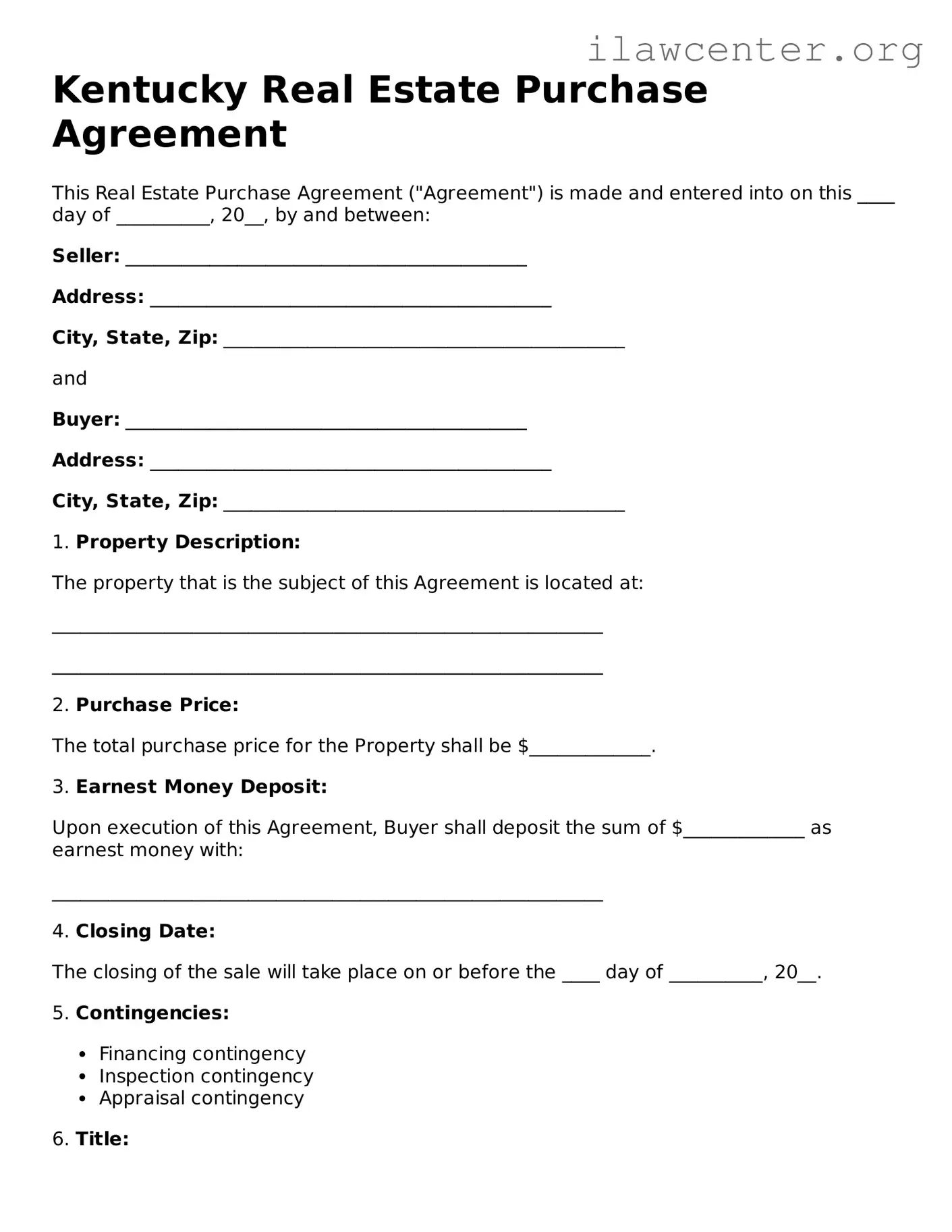
Kentucky Real Estate Purchase Agreement

This Real Estate Purchase Agreement ("Agreement") is made and entered into on this ____ day of __________, 20__, by and between:

Seller: ___________________________________________

Address: ___________________________________________

City, State, Zip: ___________________________________________

and

Buyer: ___________________________________________

Address: ___________________________________________

City, State, Zip: ___________________________________________

1. Property Description:

The property that is the subject of this Agreement is located at:

___________________________________________________________

___________________________________________________________

2. Purchase Price:

The total purchase price for the Property shall be $_____________.

3. Earnest Money Deposit:

Upon execution of this Agreement, Buyer shall deposit the sum of $_____________ as earnest money with:

___________________________________________________________

4. Closing Date:

The closing of the sale will take place on or before the ____ day of __________, 20__.

5. Contingencies:

  • Financing contingency
  • Inspection contingency
  • Appraisal contingency

6. Title:

Seller shall provide a marketable title to the Property, free of any liens or encumbrances, except as disclosed herein.

7. Possession:

Possession of the Property shall be delivered to Buyer on the closing date.

8. Governing Law:

This Agreement shall be governed by the laws of the Commonwealth of Kentucky.

9. Signatures:

In witness whereof, the parties have executed this Agreement as of the date first above written.

Seller's Signature: _______________________________

Date: _______________________________

Buyer's Signature: _______________________________

Date: _______________________________

PDF Form Characteristics

Fact Name Description
Governing Law The Kentucky Real Estate Purchase Agreement is governed by Kentucky state law.
Parties Involved The agreement involves a buyer and a seller, both of whom must be identified in the document.
Property Description A detailed description of the property being sold is required, including address and legal description.
Purchase Price The agreement must clearly state the purchase price and any earnest money deposit.
Contingencies Buyers may include contingencies, such as financing or inspection, that must be satisfied before the sale is finalized.
Closing Date The agreement specifies a closing date, which is when the ownership of the property is transferred.
Disclosure Requirements Sellers are required to provide disclosures about the property, including any known defects or issues.
Signatures The agreement must be signed by both parties to be legally binding.

Instructions on Utilizing Kentucky Real Estate Purchase Agreement

Once you have the Kentucky Real Estate Purchase Agreement form in front of you, it's time to fill it out accurately. This document is essential for formalizing the terms of a real estate transaction. Follow these steps to ensure that you complete the form correctly.

  1. Start with the date: Write the date on which you are completing the agreement.
  2. Identify the parties: Fill in the names and addresses of the buyer(s) and seller(s). Make sure to include all relevant contact information.
  3. Property description: Provide a detailed description of the property being sold. Include the address, parcel number, and any other identifying information.
  4. Purchase price: Clearly state the total purchase price for the property. Specify any deposit amount that may be required.
  5. Financing terms: Indicate how the buyer plans to finance the purchase. This could be through a mortgage, cash, or other means.
  6. Contingencies: List any contingencies that must be met for the sale to proceed, such as inspections or financing approval.
  7. Closing date: Specify the proposed closing date for the transaction.
  8. Signatures: Ensure that all parties involved sign and date the agreement. This is crucial for the document to be legally binding.

After completing the form, review it carefully to ensure that all information is accurate. Once you are satisfied, you can proceed with the next steps in the real estate transaction process.

Important Facts about Kentucky Real Estate Purchase Agreement

What is a Kentucky Real Estate Purchase Agreement?

The Kentucky Real Estate Purchase Agreement is a legal document that outlines the terms and conditions of a real estate transaction between a buyer and a seller. It serves as a formal agreement to buy and sell property, detailing important aspects such as the purchase price, financing arrangements, and any contingencies that may apply.

What key elements are included in the agreement?

This agreement typically includes the names of the parties involved, a description of the property, the purchase price, earnest money details, closing date, and any contingencies like inspections or financing. It may also address repairs, personal property included in the sale, and any other specific terms the parties agree upon.

Is the agreement legally binding?

Yes, once both parties sign the Kentucky Real Estate Purchase Agreement, it becomes a legally binding contract. This means that both the buyer and the seller are obligated to fulfill the terms outlined in the agreement unless they mutually agree to change or terminate it.

What happens if either party wants to back out of the agreement?

If either party wishes to back out, they must carefully review the contingencies listed in the agreement. If a contingency is not met, such as failing to secure financing or unsatisfactory inspection results, the party may have the right to withdraw without penalty. However, if there are no valid contingencies, backing out could result in legal consequences or loss of earnest money.

Can I make changes to the agreement after it's signed?

Changes can be made to the agreement after it has been signed, but both parties must agree to these modifications. It’s essential to document any changes in writing and have both parties sign off on the updated terms to ensure clarity and legal enforceability.

Do I need a real estate agent to complete the agreement?

While it is not required to have a real estate agent to complete the Kentucky Real Estate Purchase Agreement, many buyers and sellers choose to work with one for guidance. An agent can provide valuable insights, help navigate negotiations, and ensure that the agreement is completed correctly.

How is earnest money handled in the agreement?

Earnest money is a deposit made by the buyer to show their commitment to purchasing the property. The agreement will specify the amount of earnest money and how it will be held—typically in an escrow account. This money is usually applied to the purchase price at closing, but if the buyer backs out without a valid reason, the seller may keep the earnest money as compensation.

What should I do if I have questions about the agreement?

If you have questions about the Kentucky Real Estate Purchase Agreement, it is advisable to consult a real estate attorney or a qualified real estate professional. They can provide clarity on specific terms, help you understand your rights and obligations, and ensure that your interests are protected throughout the transaction.

Where can I find the Kentucky Real Estate Purchase Agreement form?

The Kentucky Real Estate Purchase Agreement form can typically be obtained from real estate professionals, online legal document services, or local real estate associations. It’s important to use the most current version of the form to ensure compliance with state laws and regulations.
Common mistakes

Filling out the Kentucky Real Estate Purchase Agreement form can be a daunting task. Many individuals make common mistakes that can lead to complications down the line. One frequent error is failing to provide accurate property descriptions. This includes not specifying the exact address or including details about the property boundaries. A vague description can create confusion and disputes later.

Another mistake often seen is the omission of important dates. Buyers and sellers need to clearly state the closing date, inspection periods, and any deadlines for contingencies. Missing these dates can result in misunderstandings and missed opportunities, potentially jeopardizing the transaction.

Additionally, people sometimes neglect to include all necessary parties in the agreement. If a spouse or co-owner is not listed, it could lead to legal issues later. It’s crucial to ensure that everyone with a stake in the property is named in the document to avoid complications during the sale.

Financial details are also a common area of error. Buyers may incorrectly fill out the financing section, not specifying whether the purchase is contingent upon obtaining a loan. This can lead to confusion regarding the buyer's ability to complete the purchase, which could result in the deal falling through.

Another frequent oversight is not addressing contingencies adequately. Buyers should include contingencies for inspections, appraisals, and financing. Failing to do so can leave them vulnerable if any issues arise during the buying process. It’s essential to protect oneself with clear and specific contingencies.

People often forget to review the terms of the agreement thoroughly before signing. Rushing through the document can lead to misunderstandings about responsibilities and obligations. Taking the time to read and understand every clause can prevent issues from arising later.

Lastly, not consulting with a real estate professional or attorney can be a significant mistake. Many individuals attempt to navigate the process on their own, only to find themselves facing unexpected challenges. Seeking guidance can provide clarity and help ensure that the agreement is filled out correctly, protecting all parties involved.

Documents used along the form

When engaging in real estate transactions in Kentucky, several important documents complement the Kentucky Real Estate Purchase Agreement. Each document serves a specific purpose, ensuring that both buyers and sellers are protected and informed throughout the process. Understanding these forms can help streamline the transaction and mitigate potential issues.

  • Disclosure Statement: This document provides essential information about the property’s condition, including any known defects or issues. Sellers are typically required to disclose material facts that could affect the buyer’s decision.
  • Title Search Report: Conducted by a title company, this report verifies the legal ownership of the property and identifies any liens, encumbrances, or other claims that may affect the title.
  • Purchase Agreement Addendum: This is an additional document that modifies or adds specific terms to the original purchase agreement, such as contingencies or special requests from either party.
  • Home Inspection Report: After a home inspection, this report outlines the findings regarding the property's condition, including structural, electrical, plumbing, and safety issues. Buyers often use this information to negotiate repairs or price adjustments.
  • Financing Agreement: This document details the terms of any loans or financing arrangements the buyer is securing to purchase the property, including interest rates, payment schedules, and lender information.
  • Closing Disclosure: Required by federal law, this form provides a detailed account of the final terms of the mortgage, including loan costs, closing costs, and other financial details, allowing buyers to understand their financial obligations before closing.
  • Deed: The deed is the legal document that transfers ownership of the property from the seller to the buyer. It includes a description of the property and must be recorded with the county to be legally binding.
  • Property Survey: This document outlines the boundaries of the property and any improvements made. It can reveal disputes over property lines and is often necessary for securing financing.
  • Affidavit of Title: This sworn statement from the seller confirms that they hold clear title to the property and have the right to sell it. It assures the buyer that there are no undisclosed claims against the property.

Each of these documents plays a vital role in the real estate transaction process in Kentucky. Familiarizing oneself with them can lead to a smoother experience, ensuring that both parties understand their rights and responsibilities. As you navigate the complexities of buying or selling property, having these forms at your disposal will empower you to make informed decisions.

Similar forms

  • Lease Agreement: This document outlines the terms under which a landlord allows a tenant to occupy property. Both agreements detail payment terms, property descriptions, and responsibilities of each party.
  • Option to Purchase Agreement: This agreement gives a potential buyer the right to purchase a property at a predetermined price within a specified time frame. Like the purchase agreement, it includes terms and conditions related to the sale.
  • Real Estate Listing Agreement: This document is between a property owner and a real estate agent. It details the agent's responsibilities in marketing the property, similar to how a purchase agreement defines the buyer's and seller's roles in a transaction.
  • Purchase and Sale Agreement: Often used interchangeably with the Real Estate Purchase Agreement, this document serves the same purpose of outlining the terms of a property sale, including price and contingencies.
  • Counteroffer: When one party responds to an initial offer with changes, this document outlines the new terms. It is similar to a purchase agreement in that it specifies the conditions of the sale.
  • Escrow Agreement: This document involves a third party holding funds during the transaction. It shares similarities with a purchase agreement by ensuring that all terms are met before the sale is finalized.
  • Disclosure Statement: This document informs buyers of any known issues with the property. Like the purchase agreement, it is crucial for transparency and outlines important details about the property.
  • Title Report: This document provides information on the property’s ownership history and any liens. It is essential for buyers, similar to how a purchase agreement protects their interests in the transaction.

Dos and Don'ts

When filling out the Kentucky Real Estate Purchase Agreement form, it’s crucial to approach the task with care. Here are five things you should and shouldn't do:

  • Do read the entire agreement carefully before filling it out.
  • Don't rush through the process. Take your time to ensure accuracy.
  • Do provide clear and complete information about the property and the parties involved.
  • Don't leave any sections blank unless instructed to do so. Incomplete forms can lead to complications.
  • Do consult a real estate professional if you have questions or uncertainties.

By following these guidelines, you can help ensure that your Real Estate Purchase Agreement is completed correctly and effectively.

Misconceptions

The Kentucky Real Estate Purchase Agreement form is a crucial document in the home buying process, yet there are several misconceptions surrounding it. Understanding these misconceptions can help buyers and sellers navigate their transactions more effectively.

  • Misconception 1: The form is a standard template that can be used for any property.
  • While the Kentucky Real Estate Purchase Agreement does have standard elements, it is not a one-size-fits-all document. Each transaction may require specific terms and conditions tailored to the unique aspects of the property and the agreement between the parties involved.

  • Misconception 2: Once signed, the agreement cannot be changed.
  • This is not true. The agreement can be amended if both parties agree to the changes. It’s important to communicate openly about any modifications and document them properly to ensure that all parties are on the same page.

  • Misconception 3: The agreement guarantees that the sale will go through.
  • Signing the agreement does not guarantee that the sale will be completed. Various factors, such as financing issues, inspections, or appraisal problems, can affect the outcome. Both parties should remain aware of these potential hurdles.

  • Misconception 4: Only real estate agents can fill out the form.
  • While real estate agents often assist in completing the form, buyers and sellers can also fill it out themselves. However, it is advisable to seek guidance or review from a legal professional to ensure that all necessary details are included and correctly stated.

Key takeaways

When filling out and using the Kentucky Real Estate Purchase Agreement form, it’s essential to keep a few key points in mind to ensure a smooth transaction. Here are some important takeaways:

  • Accuracy is Key: Ensure that all information provided, such as names, addresses, and property details, is accurate. Mistakes can lead to complications down the line.
  • Understand Contingencies: Familiarize yourself with the contingencies included in the agreement. These can protect your interests, such as securing financing or completing inspections.
  • Review Deadlines: Pay close attention to deadlines outlined in the agreement. Missing these dates can result in the loss of the deal or your earnest money.
  • Seek Professional Guidance: Consider consulting with a real estate agent or attorney. Their expertise can help clarify any uncertainties and ensure that your rights are protected.

By keeping these takeaways in mind, you can navigate the Kentucky Real Estate Purchase Agreement with greater confidence and clarity.