Attorney-Verified  Rental Application Document for Kentucky

Attorney-Verified Rental Application Document for Kentucky

The Kentucky Rental Application form is a document used by landlords to gather essential information about potential tenants. This form helps ensure that the rental process is fair and efficient for both parties involved. Ready to take the next step? Fill out the form by clicking the button below.

Article Guide

When it comes to securing a rental property in Kentucky, understanding the rental application form is essential for both landlords and prospective tenants. This document serves as a vital tool in the tenant screening process, allowing landlords to gather necessary information about applicants. Key components typically include personal details such as name, contact information, and employment history, alongside financial data like income and credit history. Additionally, the form often requests references from previous landlords or personal contacts, which can provide valuable insights into an applicant's reliability and character. By ensuring that all relevant information is collected, the Kentucky Rental Application form helps create a fair and efficient rental process, fostering transparency and trust between landlords and tenants alike.

Kentucky Rental Application Preview

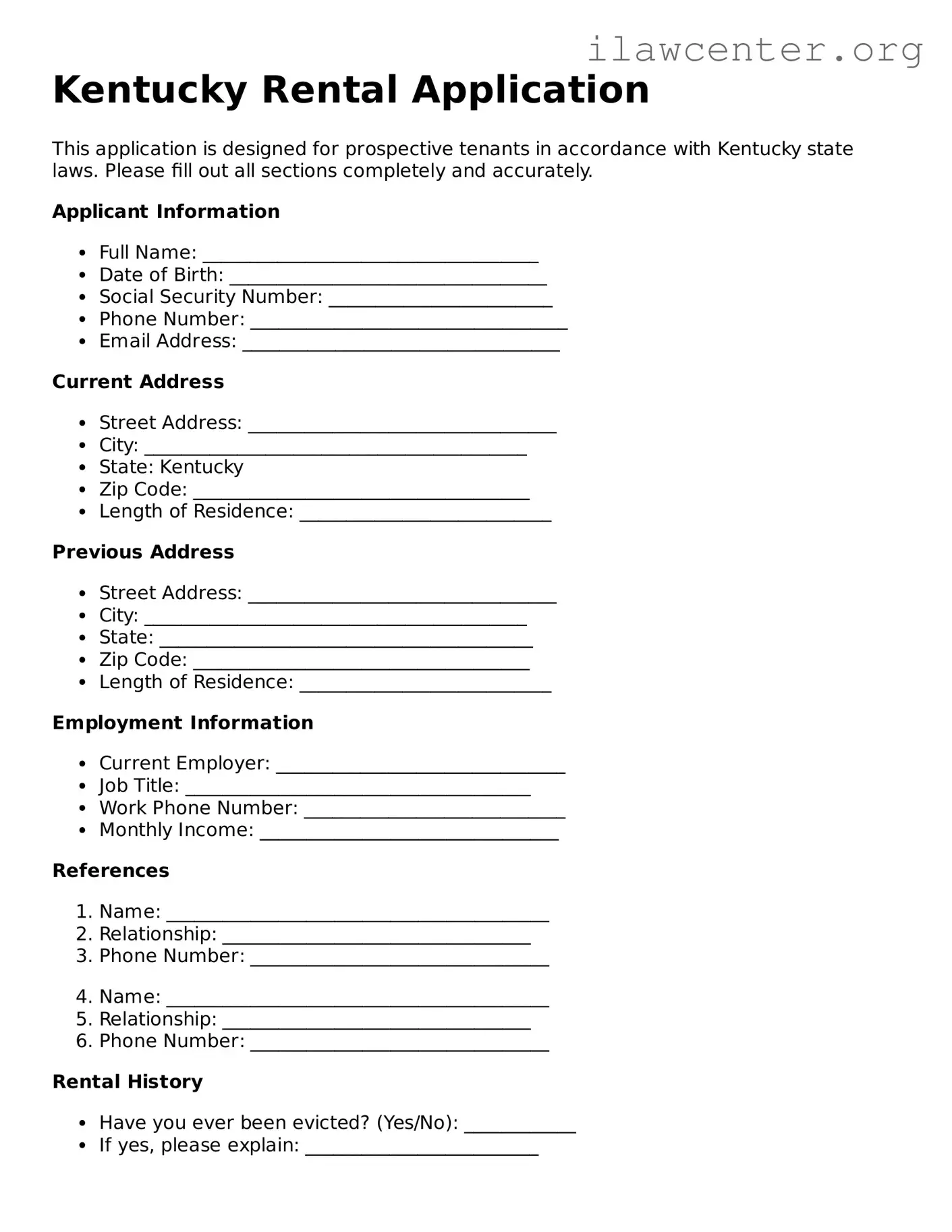
Kentucky Rental Application

This application is designed for prospective tenants in accordance with Kentucky state laws. Please fill out all sections completely and accurately.

Applicant Information

  • Full Name: ____________________________________
  • Date of Birth: __________________________________
  • Social Security Number: ________________________
  • Phone Number: __________________________________
  • Email Address: __________________________________

Current Address

  • Street Address: _________________________________
  • City: _________________________________________
  • State: Kentucky
  • Zip Code: ____________________________________
  • Length of Residence: ___________________________

Previous Address

  • Street Address: _________________________________
  • City: _________________________________________
  • State: ________________________________________
  • Zip Code: ____________________________________
  • Length of Residence: ___________________________

Employment Information

  • Current Employer: _______________________________
  • Job Title: _____________________________________
  • Work Phone Number: ____________________________
  • Monthly Income: ________________________________

References

  1. Name: _________________________________________
  2. Relationship: _________________________________
  3. Phone Number: ________________________________
  1. Name: _________________________________________
  2. Relationship: _________________________________
  3. Phone Number: ________________________________

Rental History

  • Have you ever been evicted? (Yes/No): ____________
  • If yes, please explain: _________________________

Signature

I hereby certify that the information provided is true and accurate to the best of my knowledge. I authorize the landlord to verify all information provided in this application.

Applicant Signature: _______________________________

Date: ___________________________________________

PDF Form Characteristics

Fact Name Description
Purpose The Kentucky Rental Application form is used by landlords to screen potential tenants.
Required Information Applicants typically need to provide personal details, rental history, and income information.
Application Fee Landlords may charge an application fee to cover the cost of background checks.
Fair Housing Compliance The application process must comply with the Fair Housing Act to prevent discrimination.
Governing Laws The Kentucky Residential Landlord and Tenant Act governs rental applications in the state.
Privacy Considerations Landlords must handle personal information in accordance with privacy laws and regulations.

Instructions on Utilizing Kentucky Rental Application

Filling out the Kentucky Rental Application form is an important step in securing a rental property. Once you have completed the form, it will be submitted to the landlord or property manager for review. They will use the information provided to evaluate your application.

  1. Begin by entering your personal information. This typically includes your full name, current address, and contact details.
  2. Provide employment information. List your current employer, job title, and length of employment. Include your monthly income if required.
  3. Fill in your rental history. Include details about your previous addresses, the names of landlords, and the duration of your stay at each location.
  4. Disclose any additional occupants. If anyone else will be living with you, include their names and relationships to you.
  5. Complete the background check authorization section. This may require you to provide your Social Security number and consent for a background check.
  6. Review the application fees section. Make sure to note any fees that may be required for processing your application.
  7. Sign and date the application. Your signature indicates that the information provided is accurate to the best of your knowledge.

After completing these steps, you will be ready to submit your application. Make sure to keep a copy for your records and follow up with the landlord or property manager if you do not hear back within a reasonable timeframe.

Important Facts about Kentucky Rental Application

What is a Kentucky Rental Application form?

The Kentucky Rental Application form is a document that potential tenants fill out when applying to rent a property. This form collects important information about the applicant, including their personal details, rental history, employment information, and references. Landlords use this information to assess whether the applicant is a suitable tenant.

What information do I need to provide on the application?

When filling out the Kentucky Rental Application, you will typically need to provide your full name, contact information, social security number, and date of birth. Additionally, you may need to disclose your current and previous addresses, employment details, income, and references. Some landlords might also ask for a copy of your ID or proof of income.

Is there an application fee?

Many landlords or property management companies charge an application fee to cover the costs of processing the application, which may include background and credit checks. The amount can vary, so it's important to ask the landlord about any fees before submitting your application.

How long does the application process take?

The length of the application process can vary based on the landlord or property management company. Generally, it can take anywhere from a few hours to a few days. If the landlord needs to conduct background checks or contact references, this may extend the timeline. It’s advisable to follow up if you haven’t heard back within a reasonable timeframe.

What happens if my application is denied?

If your application is denied, the landlord is usually required to provide a reason. Common reasons for denial include poor credit history, insufficient income, or negative rental history. You have the right to request a copy of your credit report if that was a factor in the decision. Understanding the reasons can help you address any issues in future applications.

Can I appeal a denial?

While you cannot formally "appeal" a denial, you can take steps to address the concerns raised by the landlord. If you believe there has been a mistake or if you have resolved issues that may have contributed to the denial, consider reaching out to the landlord to discuss your situation. Providing additional documentation or references may help your case.

Common mistakes

Filling out a rental application can be a straightforward process, but many people make common mistakes that can hinder their chances of securing a rental property. One frequent error is failing to provide complete and accurate personal information. This includes not only your name and contact details but also your social security number and date of birth. Landlords rely on this information to conduct background checks, so any discrepancies can raise red flags.

Another mistake is neglecting to list all sources of income. It’s essential to include not just your primary job but any additional income streams, such as freelance work or rental income from other properties. This comprehensive view of your finances can demonstrate your ability to pay rent consistently.

Some applicants forget to provide references or fail to inform their references in advance. Landlords often contact previous landlords or employers to verify information. If your references are caught off guard, they may not respond promptly, which could delay your application process.

In addition, many people overlook the importance of checking their credit history before submitting an application. A poor credit score can impact a landlord's decision. By reviewing your credit report in advance, you can address any issues that may arise and provide explanations if necessary.

Another common pitfall is not reading the application thoroughly before signing. It’s crucial to understand the terms and conditions outlined in the application. Some applicants may inadvertently agree to terms that are not favorable to them simply because they did not take the time to read through everything carefully.

Some individuals also underestimate the significance of including a cover letter with their application. A brief letter can help you stand out from other applicants. It’s an opportunity to express your enthusiasm for the property and provide any context about your rental history or financial situation.

People often forget to include the required application fee. This fee is typically used to cover the costs of background and credit checks. Without this payment, your application may not even be processed, regardless of how qualified you are.

Additionally, applicants sometimes fail to provide necessary documentation, such as pay stubs or proof of employment. Landlords often require this information to verify income and employment status. Missing documents can lead to delays or even rejection of your application.

Lastly, a lack of professionalism in communication can be detrimental. Whether it’s an email or a phone call, maintaining a polite and respectful tone is essential. First impressions matter, and showing that you are a responsible and courteous potential tenant can make a significant difference.

Documents used along the form

When applying for a rental property in Kentucky, several forms and documents may accompany the rental application. These documents help landlords assess potential tenants and ensure a smooth leasing process. Here are some key forms often used alongside the Kentucky Rental Application:

  • Credit Report Authorization Form: This form allows landlords to obtain a tenant's credit report. It provides insight into the applicant's financial history and creditworthiness.
  • Employment Verification Form: Landlords use this document to confirm the applicant's employment status and income. It helps ensure that the tenant can afford the rent.
  • Rental History Verification Form: This form requests information about the applicant's previous rental experiences. It helps landlords assess reliability and behavior as a tenant.
  • Background Check Consent Form: This document grants permission for a background check. It typically includes criminal history and other relevant checks to evaluate the applicant's suitability.
  • Guarantor Agreement: If an applicant has insufficient income or poor credit, a guarantor may be required. This agreement outlines the responsibilities of the guarantor in case the tenant fails to pay rent.
  • Pet Policy Agreement: For applicants with pets, this form outlines the rules and fees related to pet ownership in the rental property. It clarifies expectations for both parties.

Having these documents ready can expedite the application process and improve the chances of securing a rental property. Always ensure that all information is accurate and up-to-date to avoid any delays or issues.

Similar forms

The Rental Application form shares similarities with several other documents commonly used in housing and rental processes. Below are six documents that have comparable features and purposes:

  • Lease Agreement: This document outlines the terms and conditions of renting a property. Like the Rental Application, it requires personal information and details about rental history.
  • Tenant Screening Report: This report includes background checks and credit history. It is similar to the Rental Application in that both assess the suitability of a potential tenant.
  • Employment Verification Form: This form confirms a tenant's employment status and income. It often accompanies a Rental Application to verify financial stability.
  • Credit Application: This document collects personal and financial information to assess creditworthiness. Both the Rental Application and Credit Application aim to evaluate the applicant's reliability.
  • Rental History Verification: This document provides details about previous rentals. Like the Rental Application, it helps landlords understand an applicant's past rental behavior.
  • Guarantor Application: This form is used when a tenant needs a guarantor for their lease. It shares similarities with the Rental Application in that it gathers necessary information about the guarantor's financial standing.

Dos and Don'ts

When filling out the Kentucky Rental Application form, it's important to approach the process with care. The following list outlines key actions to take and avoid to ensure a smooth application experience.

  • Do provide accurate information. Ensure that all details, such as your name, contact information, and rental history, are correct. This builds trust with potential landlords.
  • Do include references. Having personal or professional references can strengthen your application and provide insight into your character.
  • Do check for completeness. Review the application to ensure all sections are filled out completely. Incomplete applications may be rejected.
  • Do submit the application on time. Adhering to deadlines shows responsibility and respect for the landlord’s time.
  • Don't provide false information. Misrepresenting yourself can lead to disqualification from the rental process and future legal issues.
  • Don't forget to read the fine print. Understanding the terms and conditions of the rental application can prevent misunderstandings later on.

By following these guidelines, applicants can present themselves in the best light possible, increasing their chances of securing a rental property in Kentucky.

Misconceptions

Understanding the Kentucky Rental Application form can be challenging, especially with various misconceptions floating around. Here are five common misunderstandings that may lead to confusion:

  1. All landlords require the same information.

    Not all landlords in Kentucky ask for the same details on their rental applications. While many will request basic information like your name and contact details, others may have specific requirements based on their property or rental policies.

  2. A rental application guarantees approval.

    Submitting a rental application does not guarantee that you will be approved for the rental. Landlords will assess your application based on various factors, including credit history, rental history, and income verification.

  3. Only personal information is required.

    While personal details are essential, many landlords also require financial information. This may include proof of income, employment verification, and sometimes even references from previous landlords.

  4. Once submitted, applications cannot be updated.

    This is not true. If your circumstances change or you realize you made an error, many landlords allow you to update your application before they make a decision.

  5. There are no fees associated with the application.

    Many landlords charge a fee to process rental applications. This fee typically covers the cost of background checks and credit reports, so it’s essential to be prepared for this potential expense.

By clearing up these misconceptions, prospective tenants can approach the rental application process with greater confidence and understanding.

Key takeaways

Filling out a Kentucky Rental Application form can be an important step in securing a rental property. Here are some key takeaways to keep in mind:

  1. Complete Accuracy is Crucial: Ensure that all personal information, including your name, contact details, and employment history, is accurate. Mistakes can lead to delays or even disqualification.
  2. Provide References: Most applications will ask for references. Choose individuals who can vouch for your reliability and character, such as previous landlords or employers.
  3. Financial Information: Be prepared to disclose your income and financial history. This helps landlords assess your ability to pay rent on time.
  4. Criminal Background Checks: Understand that many landlords will conduct background checks. Be honest about any past issues, as hiding information can lead to rejection.
  5. Rental History Matters: Include details of your previous rental experiences. Landlords often look for a history of responsible tenancy.
  6. Application Fees: Be aware that many landlords charge a non-refundable application fee. This fee covers the cost of processing your application and conducting background checks.
  7. Follow Up: After submitting your application, it’s a good idea to follow up with the landlord or property manager. This shows your interest and can help expedite the process.

By keeping these points in mind, you can enhance your chances of successfully securing the rental property you desire.