Attorney-Verified  Residential Lease Agreement Document for Kentucky

Attorney-Verified Residential Lease Agreement Document for Kentucky

The Kentucky Residential Lease Agreement is a legally binding document that outlines the terms and conditions between a landlord and a tenant for renting residential property in Kentucky. This form serves to protect the rights of both parties, ensuring clarity and mutual understanding regarding the lease terms. For those ready to formalize their rental arrangement, consider filling out the form by clicking the button below.

Article Guide

The Kentucky Residential Lease Agreement is a vital document that outlines the relationship between landlords and tenants in rental properties across the state. This form serves as a comprehensive guide, detailing key elements such as the rental amount, payment terms, and duration of the lease. It also specifies the responsibilities of both parties, including maintenance obligations and rules regarding property use. Additionally, the agreement addresses security deposits, pet policies, and procedures for terminating the lease. By clearly defining these aspects, the form helps to prevent misunderstandings and disputes, fostering a more harmonious living arrangement. Understanding this document is crucial for anyone involved in renting a property in Kentucky, whether you are a seasoned landlord or a first-time tenant.

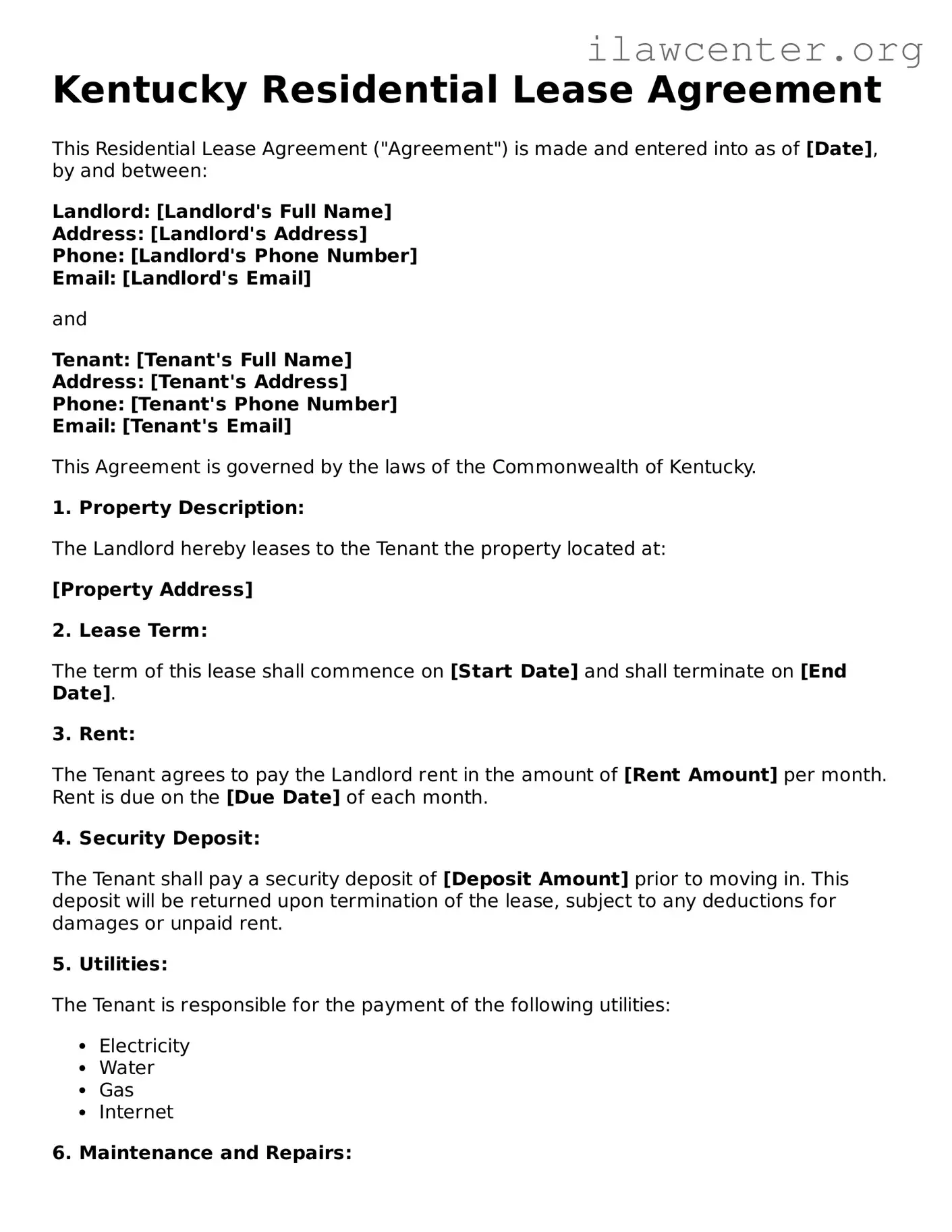
Kentucky Residential Lease Agreement Preview

Kentucky Residential Lease Agreement

This Residential Lease Agreement ("Agreement") is made and entered into as of [Date], by and between:

Landlord: [Landlord's Full Name]
Address: [Landlord's Address]
Phone: [Landlord's Phone Number]
Email: [Landlord's Email]

and

Tenant: [Tenant's Full Name]
Address: [Tenant's Address]
Phone: [Tenant's Phone Number]
Email: [Tenant's Email]

This Agreement is governed by the laws of the Commonwealth of Kentucky.

1. Property Description:

The Landlord hereby leases to the Tenant the property located at:

[Property Address]

2. Lease Term:

The term of this lease shall commence on [Start Date] and shall terminate on [End Date].

3. Rent:

The Tenant agrees to pay the Landlord rent in the amount of [Rent Amount] per month. Rent is due on the [Due Date] of each month.

4. Security Deposit:

The Tenant shall pay a security deposit of [Deposit Amount] prior to moving in. This deposit will be returned upon termination of the lease, subject to any deductions for damages or unpaid rent.

5. Utilities:

The Tenant is responsible for the payment of the following utilities:

  • Electricity
  • Water
  • Gas
  • Internet

6. Maintenance and Repairs:

The Tenant agrees to keep the property in good condition. The Landlord will be responsible for major repairs unless damage is caused by the Tenant's negligence.

7. Termination:

Either party may terminate this Agreement by providing written notice at least [Notice Period] days prior to the intended termination date.

8. Governing Law:

This Agreement shall be governed by the laws of the Commonwealth of Kentucky.

9. Signatures:

By signing below, both parties agree to the terms of this Residential Lease Agreement.

Landlord Signature: ________________________ Date: _______________

Tenant Signature: ________________________ Date: _______________

PDF Form Characteristics

Fact Name Description
Governing Law The Kentucky Residential Lease Agreement is governed by Kentucky Revised Statutes (KRS) Chapter 383.
Parties Involved The agreement outlines the responsibilities of both the landlord and the tenant.
Lease Duration Leases can be for a fixed term or month-to-month, depending on the agreement between the parties.
Security Deposit The maximum security deposit is typically one month's rent, and it must be returned within 60 days after the lease ends, barring any deductions.
Notice Requirements Both parties must provide written notice for termination or renewal, usually at least 30 days in advance.

Instructions on Utilizing Kentucky Residential Lease Agreement

Completing the Kentucky Residential Lease Agreement form requires attention to detail and accuracy. This form outlines the terms of the rental arrangement between the landlord and tenant. Below are the steps to successfully fill out the form.

  1. Begin by entering the date at the top of the form. This should reflect the date when the lease is being signed.
  2. Provide the full name and address of the landlord. Ensure that all information is accurate to avoid future disputes.
  3. Enter the tenant's full name and current address. This identifies who will be residing in the rental property.
  4. Specify the rental property address. Include the street address, city, state, and zip code.
  5. Indicate the lease term. This could be a fixed term (e.g., one year) or month-to-month. Clearly state the start and end dates if applicable.
  6. Fill in the rental amount. Clearly state the monthly rent and any additional fees that may apply.
  7. Detail the security deposit amount. This is typically required before the tenant moves in.
  8. List any utilities included in the rent. Specify which utilities the landlord will cover and which the tenant is responsible for.
  9. Include any additional terms or conditions. This may involve pet policies, maintenance responsibilities, or rules regarding alterations to the property.
  10. Both the landlord and tenant should sign and date the form. Signatures confirm that both parties agree to the terms outlined in the lease.

After completing the form, ensure that both parties retain a copy for their records. It is advisable to review the lease periodically to ensure compliance with its terms.

Important Facts about Kentucky Residential Lease Agreement

What is a Kentucky Residential Lease Agreement?

A Kentucky Residential Lease Agreement is a legally binding document that outlines the terms and conditions under which a landlord rents property to a tenant. This agreement typically includes details such as the rental amount, payment due dates, duration of the lease, security deposits, and the responsibilities of both the landlord and tenant. It serves to protect the rights of both parties and provides a clear framework for the rental relationship.

What should be included in the Residential Lease Agreement?

Essential elements of a Kentucky Residential Lease Agreement include the names of the landlord and tenant, the address of the rental property, the lease term (whether it is month-to-month or for a fixed duration), the amount of rent and payment methods, security deposit details, maintenance responsibilities, and rules regarding pets or smoking. Additionally, it should outline procedures for terminating the lease, as well as any local laws that may apply.

How long is a typical lease term in Kentucky?

Lease terms in Kentucky can vary widely, but they commonly range from six months to one year. Some agreements may be structured as month-to-month leases, allowing for more flexibility. It is important for both landlords and tenants to understand the implications of the lease duration, as it affects their rights and obligations, including notice periods for termination or renewal.

Can a landlord increase rent during the lease term?

Generally, a landlord cannot increase rent during the lease term unless the lease agreement specifically allows for it. Most fixed-term leases establish a set rental amount for the duration of the lease. However, for month-to-month leases, landlords can increase rent with proper notice, typically 30 days in Kentucky. It is crucial for tenants to read their lease carefully to understand any provisions related to rent increases.

What happens if a tenant needs to break the lease early?

If a tenant needs to break the lease early, they may be subject to penalties as outlined in the agreement. Many leases include an early termination clause, which specifies the conditions under which a tenant can leave before the lease ends, often requiring advance notice and possibly a fee. In some cases, tenants may be able to negotiate with the landlord to find a mutually agreeable solution, such as subletting the property or finding a replacement tenant.

Common mistakes

Filling out a Kentucky Residential Lease Agreement form is a crucial step for both landlords and tenants. However, several common mistakes can lead to misunderstandings and potential legal issues. One frequent error is failing to provide accurate information about the rental property. It's essential to include the correct address, unit number, and any specific details that distinguish the property. Omitting or misrepresenting this information can create confusion and disputes down the line.

Another common mistake is neglecting to specify the lease term. Whether it’s a month-to-month agreement or a fixed-term lease, clarity is key. Without a defined duration, both parties may have different expectations regarding the length of the tenancy. This can lead to conflicts and even premature eviction if one party believes the lease has expired while the other does not.

People often overlook the importance of detailing the rent amount and payment terms. It’s not just about stating how much rent is due; the form should clearly outline when payments are due, acceptable payment methods, and any late fees that may apply. This clarity helps prevent disputes over missed payments and ensures that both parties understand their financial obligations.

Additionally, many individuals fail to include information about security deposits. The lease should specify the amount of the deposit, the conditions under which it may be withheld, and the timeline for its return after the lease ends. Without this information, tenants may feel uncertain about their rights regarding their deposit, and landlords may face challenges in retaining the deposit if they cannot justify their reasons.

Another mistake involves not addressing maintenance responsibilities. The lease should outline who is responsible for repairs and maintenance of the property. Vague language can lead to misunderstandings, with tenants expecting landlords to handle all repairs while landlords may assume tenants will take care of minor issues. Clear terms help establish expectations and responsibilities for both parties.

Lastly, failing to include any additional terms or conditions can be a significant oversight. Landlords may want to impose specific rules regarding pets, smoking, or alterations to the property. If these are not explicitly stated in the lease, tenants may assume they have more freedom than intended, leading to potential conflicts. Always ensure that the lease reflects any additional agreements made verbally to avoid confusion later on.

Documents used along the form

When entering into a rental agreement in Kentucky, several additional forms and documents may be beneficial. These documents help clarify the rights and responsibilities of both landlords and tenants, ensuring a smoother leasing process. Below is a list of commonly used forms that often accompany the Kentucky Residential Lease Agreement.

  • Rental Application: This form collects information about potential tenants, including their employment history, rental history, and credit background. It helps landlords assess the suitability of applicants before entering into a lease agreement.
  • Security Deposit Receipt: After a tenant pays a security deposit, this receipt serves as proof of the transaction. It outlines the amount paid and the conditions under which the deposit may be retained or returned at the end of the lease.
  • Move-In Inspection Checklist: This document allows both the landlord and tenant to document the condition of the property before the tenant moves in. It helps prevent disputes regarding damages when the lease ends.
  • Lease Addendum: If there are specific rules or conditions that need to be added to the original lease, an addendum is used. This could include pet policies, maintenance responsibilities, or any other agreements made after the lease signing.
  • Notice to Quit: Should a tenant need to terminate the lease early or if a landlord needs to initiate eviction proceedings, this notice outlines the necessary steps and timelines involved in the process.
  • Rent Receipt: This document provides a record of rent payments made by the tenant. It can be useful for both parties to track payment history and ensure timely payments.

Utilizing these forms can enhance the rental experience for both landlords and tenants. By being well-prepared and informed, both parties can foster a positive and legally compliant leasing relationship.

Similar forms

The Residential Lease Agreement is a crucial document in the rental process, but it shares similarities with several other important documents. Below are eight documents that resemble the Residential Lease Agreement, along with explanations of how they are similar.

  • Rental Agreement: Like the Residential Lease Agreement, a rental agreement outlines the terms and conditions of renting a property. Both documents specify rent amount, duration, and responsibilities of the landlord and tenant.
  • Commercial Lease Agreement: This document is similar in structure to a residential lease but pertains to business properties. It details rental terms and conditions, including payment schedules and maintenance responsibilities.
  • Sublease Agreement: A sublease agreement allows a tenant to rent out their leased property to another party. It includes similar terms regarding rent and responsibilities, much like a Residential Lease Agreement.
  • Lease Option Agreement: This document provides the tenant with the option to purchase the property at the end of the lease term. It shares many terms with a Residential Lease Agreement, including rent and maintenance obligations.
  • Month-to-Month Lease Agreement: This type of lease allows tenants to rent a property on a month-to-month basis. It includes similar terms regarding rent and notice periods for termination, akin to a Residential Lease Agreement.
  • Roommate Agreement: When multiple tenants share a rental property, a roommate agreement outlines responsibilities and expectations. It addresses similar issues, such as rent payment and property maintenance, as seen in a Residential Lease Agreement.
  • Lease Termination Agreement: This document outlines the terms under which a lease can be terminated early. It may reference similar conditions found in the Residential Lease Agreement, such as notice periods and penalties.
  • Property Management Agreement: This agreement between a property owner and a management company details the management of a rental property. It often includes terms related to tenant leasing, which are comparable to those in a Residential Lease Agreement.

Dos and Don'ts

When filling out the Kentucky Residential Lease Agreement form, it’s important to approach the process carefully to ensure clarity and legality. Here’s a list of things you should and shouldn’t do:

  • Do read the entire lease agreement before filling it out.
  • Do provide accurate information about yourself and the property.
  • Do discuss any terms or conditions with your landlord before signing.
  • Do keep a copy of the signed lease for your records.
  • Do ask questions if any part of the lease is unclear.
  • Don’t rush through the form without understanding each section.
  • Don’t leave any sections blank unless instructed.
  • Don’t sign the lease if you do not agree with the terms.
  • Don’t forget to date your signature.
  • Don’t assume verbal agreements are included in the lease.

Misconceptions

Many people have misunderstandings about the Kentucky Residential Lease Agreement form. Here are eight common misconceptions:

  1. All lease agreements are the same.

    Each lease agreement can vary based on the landlord's preferences and local laws. The Kentucky Residential Lease Agreement has specific terms that may not apply in other states.

  2. Verbal agreements are sufficient.

    While verbal agreements can be made, they are hard to enforce. A written lease agreement provides clear documentation of the terms agreed upon.

  3. Only landlords need to sign the lease.

    Both the landlord and the tenant must sign the lease for it to be valid. This shows that both parties agree to the terms.

  4. Security deposits are not required.

    Many landlords require a security deposit to cover potential damages. This is a common practice and should be outlined in the lease agreement.

  5. Tenants cannot negotiate lease terms.

    Tenants can negotiate terms such as rent amount, lease length, and maintenance responsibilities. Open communication can lead to a mutually agreeable contract.

  6. Once signed, the lease cannot be changed.

    Changes can be made to the lease if both parties agree. Any modifications should be documented in writing and signed by both the landlord and tenant.

  7. Rent increases can happen anytime.

    In Kentucky, landlords must follow specific rules regarding rent increases. These rules often require notice to the tenant before any increase takes effect.

  8. All lease agreements must include the same clauses.

    While some clauses are standard, each lease can include different terms based on the needs of the landlord and tenant. It’s important to read and understand the specific lease.

Key takeaways

Filling out and using the Kentucky Residential Lease Agreement form can seem daunting, but understanding its key components can make the process smoother. Here are some important takeaways to keep in mind:

  • The lease agreement should clearly identify the landlord and tenant involved in the rental arrangement.
  • Specify the property address and any included amenities to avoid confusion later on.
  • Clearly outline the lease term, whether it’s month-to-month or for a fixed duration.
  • Include the rent amount and specify when it is due each month.
  • Detail any security deposit requirements and conditions for its return.
  • Outline the responsibilities of both the landlord and tenant regarding maintenance and repairs.
  • Address utilities by specifying which are included in the rent and which are the tenant’s responsibility.
  • Include terms regarding pets, such as whether they are allowed and any associated fees.
  • Be sure to include a termination clause that explains how either party can end the lease.
  • Finally, both parties should sign and date the agreement to make it legally binding.

Understanding these key elements will help ensure that both landlords and tenants are on the same page and can lead to a positive rental experience.