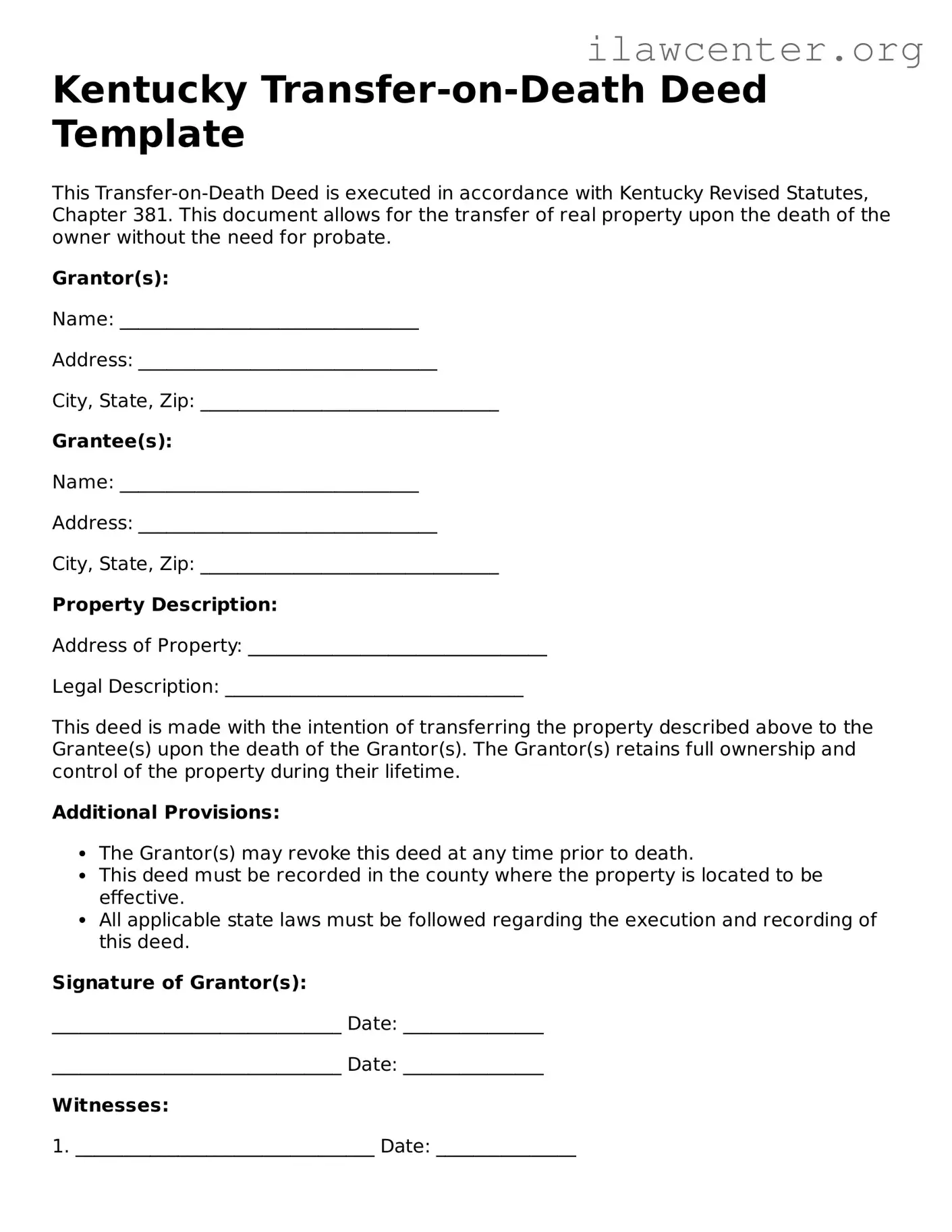
What is a Transfer-on-Death Deed in Kentucky?
A Transfer-on-Death Deed (TODD) allows property owners in Kentucky to transfer their real estate to a designated beneficiary upon their death. This deed is effective immediately but does not transfer ownership until the owner's passing. It helps avoid probate, making the transfer process simpler and quicker for the beneficiary.
Who can use a Transfer-on-Death Deed?
Any individual who owns real estate in Kentucky can use a Transfer-on-Death Deed. This includes homeowners and property owners. However, it’s essential that the property is solely owned by the individual or that all co-owners agree to the transfer.
How do I create a Transfer-on-Death Deed?
To create a Transfer-on-Death Deed, you need to fill out the appropriate form, which includes details about the property and the beneficiary. The form must be signed by the owner and notarized. After that, it should be recorded with the county clerk’s office where the property is located to make it legally binding.
Can I change the beneficiary after creating the deed?
Yes, you can change the beneficiary at any time before your death. To do this, you will need to execute a new Transfer-on-Death Deed that names the new beneficiary. Make sure to record this new deed with the county clerk to ensure it is valid.
What happens if the beneficiary dies before me?
If the beneficiary named in the Transfer-on-Death Deed passes away before you, the property will not transfer to them. Instead, the deed will typically become void. You may want to consider naming alternate beneficiaries to avoid complications.
Are there any tax implications with a Transfer-on-Death Deed?
Generally, a Transfer-on-Death Deed does not trigger any immediate tax consequences. The property is not considered part of your estate for tax purposes until your death. However, it’s wise to consult a tax professional to understand any potential implications for your specific situation.
Can a Transfer-on-Death Deed be contested?
Yes, like any legal document, a Transfer-on-Death Deed can be contested. If someone believes they have a valid claim to the property, they may challenge the deed in court. This could happen if there are questions about the owner’s capacity or if there are claims of undue influence.
Do I need an attorney to create a Transfer-on-Death Deed?
While it’s not legally required to have an attorney, consulting one can be beneficial. An attorney can help ensure that the deed is completed correctly and that it meets all legal requirements, which can prevent issues later on.
Can I use a Transfer-on-Death Deed for all types of property?
A Transfer-on-Death Deed can only be used for real estate, such as homes, land, and commercial properties. It cannot be used for personal property like vehicles or bank accounts. For those types of assets, other estate planning tools may be more appropriate.
Is there a fee to record a Transfer-on-Death Deed?
Yes, there is usually a fee to record a Transfer-on-Death Deed with the county clerk’s office. The fee can vary by county, so it’s best to check with your local office for the exact amount. Recording the deed is important to ensure its validity.