Fillable Land Purchase Agreement Document

Fillable Land Purchase Agreement Document

A Land Purchase Agreement form is a legal document that outlines the terms and conditions of a real estate transaction between a buyer and a seller. This agreement serves to protect the interests of both parties by detailing the purchase price, property description, and any contingencies. To get started on your real estate journey, fill out the form by clicking the button below.

Article Guide

When it comes to acquiring real estate, a Land Purchase Agreement is an essential document that outlines the terms and conditions between the buyer and seller. This form serves as a roadmap for the transaction, detailing critical aspects such as the purchase price, payment terms, and any contingencies that may apply. It also specifies the legal description of the property, ensuring both parties have a clear understanding of what is being bought and sold. Additionally, the agreement may include provisions for inspections, financing, and the closing process, protecting the interests of both the buyer and seller. By clearly articulating the responsibilities and expectations of each party, the Land Purchase Agreement helps to minimize misunderstandings and disputes, making it a vital component of any real estate transaction.

Land Purchase Agreement Preview

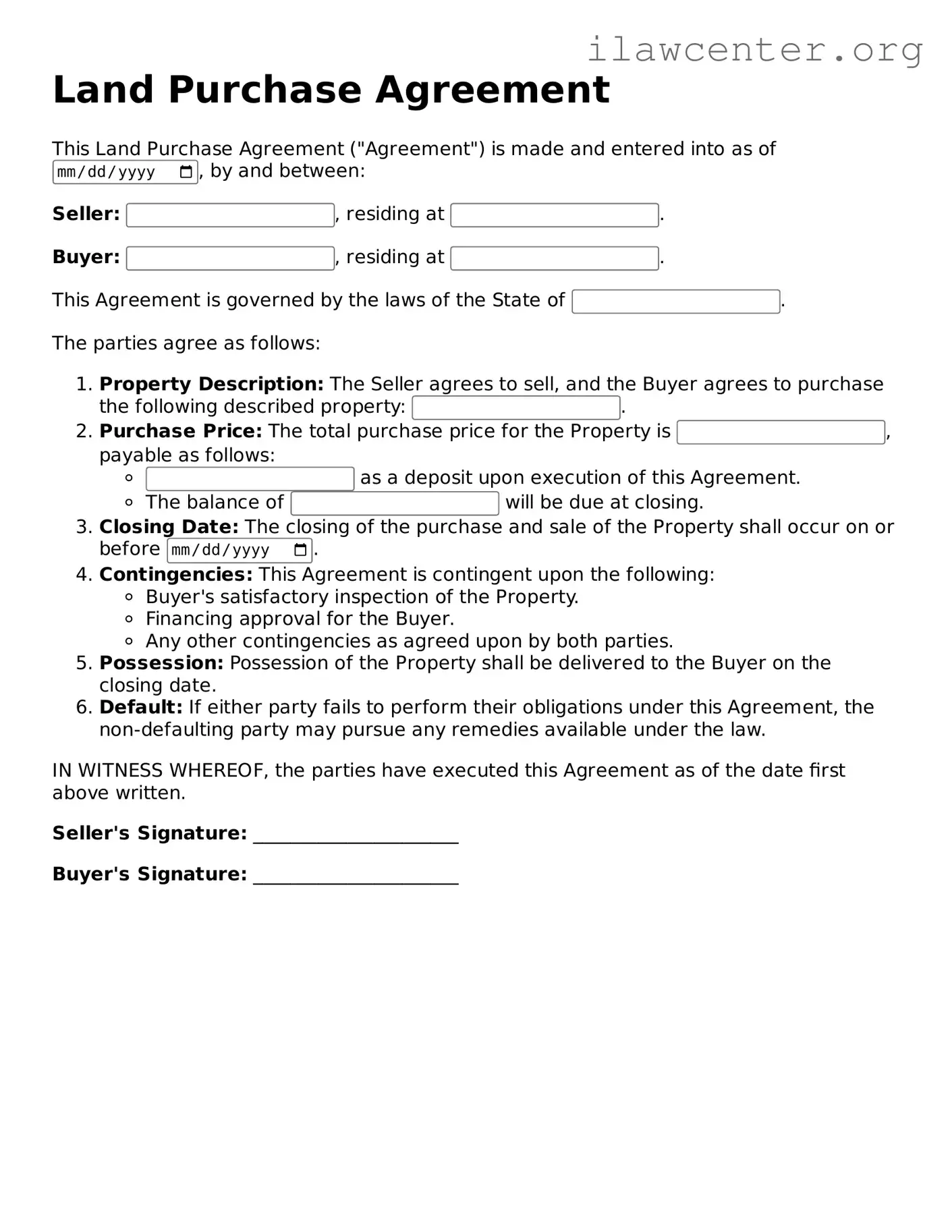
Land Purchase Agreement

This Land Purchase Agreement ("Agreement") is made and entered into as of , by and between:

Seller: , residing at .

Buyer: , residing at .

This Agreement is governed by the laws of the State of .

The parties agree as follows:

  1. Property Description: The Seller agrees to sell, and the Buyer agrees to purchase the following described property: .
  2. Purchase Price: The total purchase price for the Property is , payable as follows:
    • as a deposit upon execution of this Agreement.
    • The balance of will be due at closing.
  3. Closing Date: The closing of the purchase and sale of the Property shall occur on or before .
  4. Contingencies: This Agreement is contingent upon the following:
    • Buyer's satisfactory inspection of the Property.
    • Financing approval for the Buyer.
    • Any other contingencies as agreed upon by both parties.
  5. Possession: Possession of the Property shall be delivered to the Buyer on the closing date.
  6. Default: If either party fails to perform their obligations under this Agreement, the non-defaulting party may pursue any remedies available under the law.

IN WITNESS WHEREOF, the parties have executed this Agreement as of the date first above written.

Seller's Signature: ______________________

Buyer's Signature: ______________________

PDF Form Characteristics

Fact Name Description
Definition A Land Purchase Agreement is a contract between a buyer and a seller for the sale of real estate.
Purpose This agreement outlines the terms and conditions of the property sale, ensuring clarity for both parties.
Key Components It typically includes the purchase price, property description, and closing date.
Governing Law (California) In California, the agreement is governed by the California Civil Code.
Governing Law (Texas) In Texas, the Texas Property Code governs the Land Purchase Agreement.
Earnest Money Buyers often provide earnest money to show their commitment to the purchase.
Contingencies Common contingencies include financing, inspections, and appraisal requirements.
Closing Process The closing process involves signing documents and transferring funds to finalize the sale.
Legal Review It’s advisable for both parties to have a lawyer review the agreement before signing.
Dispute Resolution The agreement may include terms for resolving disputes, such as mediation or arbitration.

Instructions on Utilizing Land Purchase Agreement

Completing the Land Purchase Agreement form is an essential step in finalizing a property transaction. This process involves providing specific information about the buyer, seller, and the property itself. Follow the steps outlined below to ensure that you fill out the form accurately and completely.

  1. Begin by entering the date at the top of the form.
  2. Provide the full name and contact information of the buyer. Include the buyer's address, phone number, and email address.
  3. Next, fill in the seller's details. Include the seller's full name, address, phone number, and email address.
  4. Describe the property being purchased. Include the address, legal description, and any parcel identification numbers.
  5. Specify the purchase price of the property. Clearly state the total amount agreed upon by both parties.
  6. Indicate the payment terms. Specify how the buyer intends to pay, whether it’s a lump sum, financing, or other arrangements.
  7. Include any contingencies that may apply to the sale. This could involve inspections, financing approval, or other conditions that must be met.
  8. Outline the closing date. Specify when the transaction will be finalized and ownership will be transferred.
  9. Both parties must sign and date the form. Ensure that signatures are clear and legible.

After completing the form, review all entries for accuracy. It's important to ensure that all information is correct before proceeding with the next steps in the property transaction process.

Important Facts about Land Purchase Agreement

What is a Land Purchase Agreement?

A Land Purchase Agreement is a legal document that outlines the terms and conditions under which one party agrees to buy land from another party. This agreement details important information such as the purchase price, payment terms, and any contingencies that must be met before the sale can be finalized. It's essential for both buyers and sellers to have a clear understanding of their rights and responsibilities throughout the transaction.

Why is a Land Purchase Agreement important?

This agreement serves as a safeguard for both parties involved in the transaction. It clearly defines the expectations and obligations of the buyer and seller, reducing the risk of misunderstandings or disputes. Additionally, having a written agreement can provide legal protection if issues arise after the sale. It also helps ensure that all necessary disclosures are made, which can prevent future complications.

What should be included in a Land Purchase Agreement?

A comprehensive Land Purchase Agreement should include several key elements. These typically consist of the legal description of the property, the purchase price, the payment method, any contingencies (like financing or inspections), and the closing date. It may also outline any included fixtures or improvements on the land, as well as any easements or restrictions that affect the property.

Can a Land Purchase Agreement be modified?

Yes, a Land Purchase Agreement can be modified, but both parties must agree to any changes. Modifications should be documented in writing and signed by both the buyer and seller to ensure clarity and enforceability. It's advisable to keep a record of all changes made to the original agreement to avoid confusion later on.

What happens if one party breaches the Land Purchase Agreement?

If one party fails to uphold their end of the agreement, it is considered a breach. The non-breaching party may have several options, including seeking damages or specific performance, which means they can ask the court to enforce the terms of the agreement. It's important to consult with a legal professional to understand the best course of action in such situations.

Is it necessary to have a lawyer review the Land Purchase Agreement?

While it is not legally required to have a lawyer review the agreement, it is highly recommended. A legal professional can help ensure that the document is comprehensive, complies with local laws, and adequately protects your interests. This can be especially beneficial if the transaction involves complex issues or if you are unfamiliar with real estate laws.

How can I obtain a Land Purchase Agreement form?

Land Purchase Agreement forms can be obtained from various sources. Many online legal service providers offer customizable templates that can be tailored to your specific needs. Additionally, you may find forms available at local real estate offices or through legal stationery stores. Always ensure that the form you choose complies with your state’s regulations.
Common mistakes

Filling out a Land Purchase Agreement form is a crucial step in any real estate transaction. However, many people make common mistakes that can lead to complications later on. One frequent error is not providing accurate property descriptions. It's essential to include precise details about the land, such as its boundaries and any structures on it. Without this information, disputes may arise over what exactly is being sold.

Another mistake is failing to include all necessary parties in the agreement. Both the buyer and seller should be clearly identified, along with any co-owners or agents involved. Omitting a party can create legal issues down the line, potentially invalidating the agreement.

People often overlook the importance of specifying the purchase price. While this might seem straightforward, being vague or ambiguous can lead to misunderstandings. Clearly stating the total amount and any deposit requirements helps ensure both parties are on the same page.

Additionally, many individuals neglect to outline the terms of payment. It's vital to specify how and when payments will be made. This includes detailing any financing arrangements or payment schedules. Without this clarity, confusion may arise regarding payment expectations.

Another common error involves not addressing contingencies. Buyers should consider including conditions that must be met for the sale to proceed, such as securing financing or passing inspections. Failing to include these can lead to complications if things don’t go as planned.

Some people also forget to review local laws and regulations. Each state has specific requirements for land transactions. Ignoring these can result in delays or even legal issues. Always ensure compliance with local laws to avoid future problems.

Inadequate signatures and dates is another mistake that can invalidate an agreement. All parties involved must sign the document, and it should be dated appropriately. A missing signature can render the entire agreement unenforceable.

Lastly, many individuals fail to keep copies of the signed agreement. After completing the form, it’s essential to retain a copy for your records. This ensures that you have a reference point should any disputes arise in the future. Keeping thorough documentation is key to a smooth transaction.

Documents used along the form

When engaging in a land purchase transaction, several documents accompany the Land Purchase Agreement to ensure clarity and legality. Each of these documents plays a crucial role in the process, safeguarding the interests of both the buyer and the seller. Below is a list of commonly used forms and documents that may be required alongside the Land Purchase Agreement.

  • Title Report: This document provides a comprehensive overview of the property's title history, including any liens, encumbrances, or claims that may affect ownership.
  • Deed: The deed is the legal document that transfers ownership of the property from the seller to the buyer. It must be executed and recorded to be effective.
  • Disclosure Statement: Sellers are often required to provide a disclosure statement detailing any known issues or defects with the property, ensuring transparency in the transaction.
  • Financing Agreement: If the buyer is financing the purchase, this document outlines the terms of the loan, including interest rates, repayment schedules, and any conditions that must be met.
  • Property Survey: A survey provides an accurate depiction of the property's boundaries, easements, and any improvements made, which is essential for resolving disputes and confirming property lines.
  • Closing Statement: This document summarizes the financial aspects of the transaction, detailing all costs, fees, and credits involved in the closing process.
  • Escrow Agreement: An escrow agreement establishes the terms under which a neutral third party will hold funds and documents until all conditions of the sale are met.
  • Homeowners Association (HOA) Documents: If the property is part of an HOA, these documents outline the rules, regulations, and fees associated with the community.
  • Inspection Reports: Buyers may obtain inspection reports to assess the condition of the property, identifying any repairs or maintenance issues that need to be addressed.

Understanding these documents can significantly enhance the buying or selling experience. Each plays a vital role in ensuring that the transaction proceeds smoothly and that both parties are protected throughout the process.

Similar forms

  • Real Estate Purchase Agreement: This document outlines the terms and conditions for the sale of residential or commercial property. Similar to a Land Purchase Agreement, it includes details such as purchase price, closing date, and contingencies.
  • Lease Agreement: A Lease Agreement is a contract between a landlord and tenant. It specifies the terms of renting a property, including duration and payment terms, much like how a Land Purchase Agreement details the terms of buying land.
  • Option to Purchase Agreement: This document grants a buyer the right to purchase a property at a later date. It shares similarities with a Land Purchase Agreement by defining the purchase price and the time frame in which the buyer can exercise their option.
  • Deed of Trust: A Deed of Trust is used in real estate transactions to secure a loan with the property as collateral. While it serves a different purpose, it is similar in that it involves the transfer of property rights and outlines the responsibilities of the parties involved.

Dos and Don'ts

When filling out a Land Purchase Agreement form, it’s essential to approach the task with care. Here are some important do's and don'ts to keep in mind:

  • Do read the entire form carefully before starting.
  • Do provide accurate information about the property and the parties involved.
  • Do include all necessary attachments, such as surveys or title reports.
  • Do consult with a real estate attorney if you have questions.
  • Do keep a copy of the completed form for your records.
  • Don't rush through the form; take your time to ensure accuracy.
  • Don't leave any sections blank unless instructed to do so.
  • Don't ignore deadlines for submission.
  • Don't sign the agreement without fully understanding its terms.

Misconceptions

Understanding the Land Purchase Agreement form is essential for anyone involved in real estate transactions. However, several misconceptions can lead to confusion. Here are seven common misconceptions about this form:

  1. It is only necessary for large transactions. Many believe that a Land Purchase Agreement is only required for significant purchases. In reality, it is advisable for any land transaction, regardless of size, to ensure all parties are protected.
  2. Verbal agreements are sufficient. Some individuals think that a verbal agreement suffices. However, without a written agreement, misunderstandings can arise, making it difficult to enforce terms.
  3. All terms are negotiable. While many terms can be negotiated, some aspects of the agreement may be non-negotiable due to local laws or lender requirements. It is important to understand which terms can be altered.
  4. It is a standard form that requires no customization. Although there are standard templates, each transaction may have unique aspects that require customization. Relying solely on a generic form may overlook specific needs.
  5. Once signed, it cannot be changed. Some believe that a signed agreement is set in stone. In fact, parties can amend the agreement if all agree to the changes, provided they document the modifications properly.
  6. It only protects the buyer. This misconception suggests that only the buyer benefits from the agreement. In truth, the Land Purchase Agreement also protects the seller by clearly outlining their rights and responsibilities.
  7. Legal advice is unnecessary. Many think they can complete the process without legal counsel. However, consulting with a legal professional can help clarify terms and ensure compliance with local laws.

Being aware of these misconceptions can help individuals navigate the complexities of land transactions more effectively.

Key takeaways

When it comes to purchasing land, understanding the Land Purchase Agreement form is crucial. This document serves as a binding contract between the buyer and seller, outlining the terms of the transaction. Here are some key takeaways to keep in mind:

  1. Identify the Parties: Clearly state the names and addresses of both the buyer and seller. This ensures that everyone involved is properly recognized in the agreement.
  2. Property Description: Provide a detailed description of the land being purchased. Include the address, legal description, and any relevant parcel numbers.
  3. Purchase Price: Specify the total purchase price for the land. Be clear about how and when this amount will be paid.
  4. Deposit Details: If applicable, outline any deposit amount required to secure the agreement. This shows the seller that the buyer is serious.
  5. Contingencies: List any conditions that must be met before the sale can proceed. Common contingencies include financing approval and inspections.
  6. Closing Date: Establish a timeline for when the transaction will be finalized. This is important for both parties to plan accordingly.
  7. Disclosures: Ensure that any required disclosures about the property are included. This protects both parties and promotes transparency.
  8. Signatures: Both the buyer and seller must sign the agreement for it to be legally binding. Make sure to include the date of signing.
  9. Legal Advice: While the form can be filled out independently, seeking legal advice is recommended. An attorney can help clarify any complex issues.

By following these key points, you can navigate the Land Purchase Agreement form with confidence. This document is not just a formality; it is a critical part of the land-buying process that protects your interests.