Fillable Law School Letter of Recommendation Document

Fillable Law School Letter of Recommendation Document

The Law School Letter of Recommendation form is a crucial document that allows individuals to provide insights into a candidate's qualifications and character as they apply to law school. This form serves as a means for recommenders to share their perspectives, enhancing the applicant's profile. To ensure a smooth application process, please consider filling out the form by clicking the button below.

Article Guide

Applying to law school can be a daunting process, and one of the key components that can significantly enhance your application is the Law School Letter of Recommendation form. This form serves as a vital tool for prospective students, allowing them to showcase their strengths through the insights of others. Typically, law schools request that applicants provide letters from individuals who can speak to their academic abilities, professional experiences, and personal qualities. The form often includes specific questions that guide the recommender in addressing the applicant's skills, character, and potential for success in the legal field. It may also ask for examples of leadership, critical thinking, and ethical judgment. Understanding the nuances of this form can make a difference, as a well-crafted letter can illuminate an applicant’s unique attributes and set them apart in a competitive pool. With the right approach, both the applicant and the recommender can work together to create a compelling narrative that highlights the applicant’s qualifications and readiness for the rigors of law school.

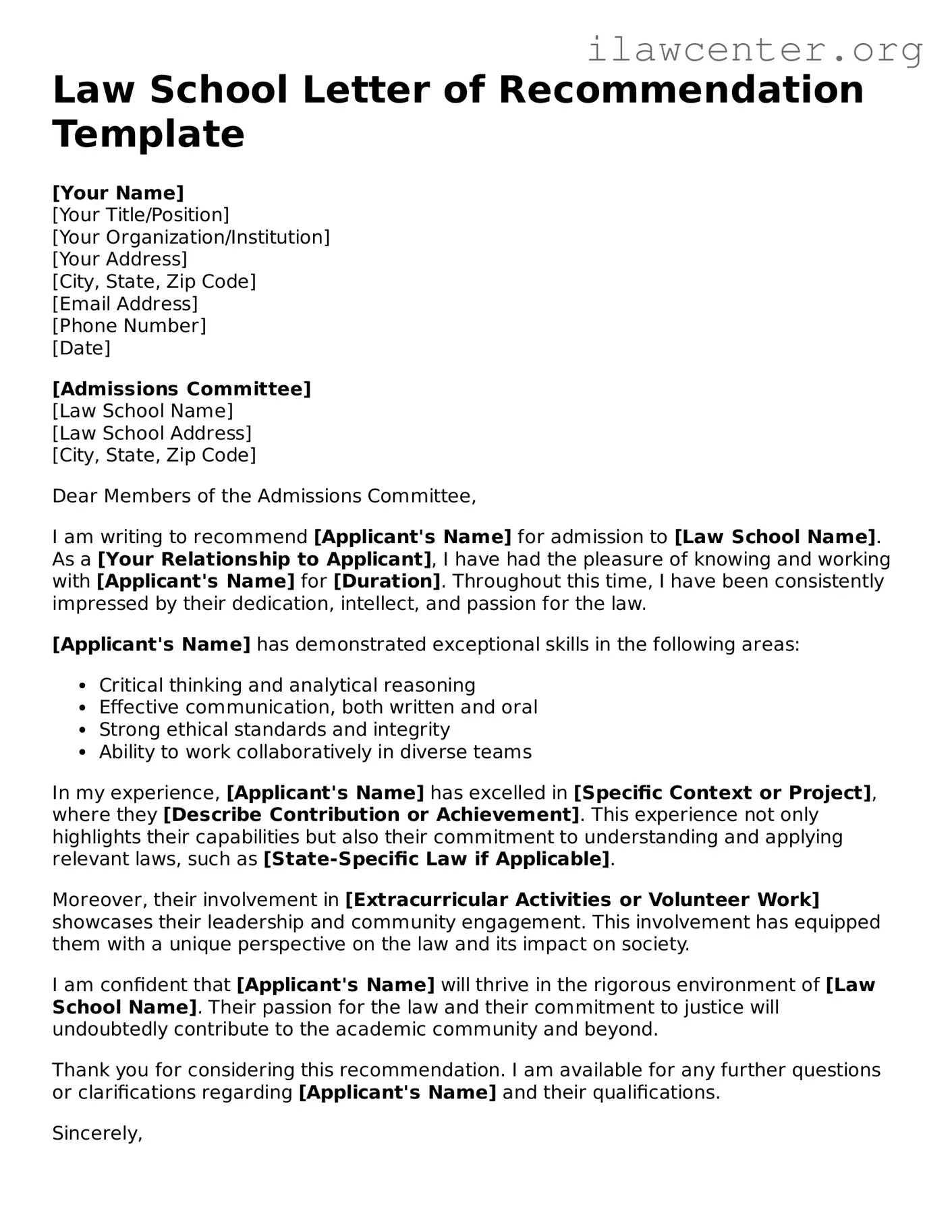
Law School Letter of Recommendation Preview

Law School Letter of Recommendation Template

[Your Name]
[Your Title/Position]
[Your Organization/Institution]
[Your Address]
[City, State, Zip Code]
[Email Address]
[Phone Number]
[Date]

[Admissions Committee]
[Law School Name]
[Law School Address]
[City, State, Zip Code]

Dear Members of the Admissions Committee,

I am writing to recommend [Applicant's Name] for admission to [Law School Name]. As a [Your Relationship to Applicant], I have had the pleasure of knowing and working with [Applicant's Name] for [Duration]. Throughout this time, I have been consistently impressed by their dedication, intellect, and passion for the law.

[Applicant's Name] has demonstrated exceptional skills in the following areas:

  • Critical thinking and analytical reasoning
  • Effective communication, both written and oral
  • Strong ethical standards and integrity
  • Ability to work collaboratively in diverse teams

In my experience, [Applicant's Name] has excelled in [Specific Context or Project], where they [Describe Contribution or Achievement]. This experience not only highlights their capabilities but also their commitment to understanding and applying relevant laws, such as [State-Specific Law if Applicable].

Moreover, their involvement in [Extracurricular Activities or Volunteer Work] showcases their leadership and community engagement. This involvement has equipped them with a unique perspective on the law and its impact on society.

I am confident that [Applicant's Name] will thrive in the rigorous environment of [Law School Name]. Their passion for the law and their commitment to justice will undoubtedly contribute to the academic community and beyond.

Thank you for considering this recommendation. I am available for any further questions or clarifications regarding [Applicant's Name] and their qualifications.

Sincerely,

[Your Name]
[Your Title/Position]

PDF Form Characteristics

Fact Name Description
Purpose The Law School Letter of Recommendation form is designed to provide admissions committees with insights into a candidate's qualifications and character.
Confidentiality Many forms allow recommenders to submit their letters confidentially, meaning the applicant will not see the content.
Recommender Eligibility Typically, recommenders should be individuals who can speak to the applicant's academic abilities or professional experiences, such as professors or employers.
Submission Process Most law schools require recommenders to submit their letters electronically through a designated portal or via email.
State-Specific Forms Some states may have specific guidelines or forms that recommenders must follow, depending on local law and regulations.
Length Requirements There is often a recommended length for the letter, typically ranging from one to two pages.
Deadline Each law school sets its own deadlines for when letters of recommendation must be submitted, which applicants must communicate to their recommenders.
Impact on Admissions A strong letter of recommendation can significantly enhance an applicant's chances of admission by providing a personal endorsement.
Governing Laws In some states, laws regarding confidentiality and privacy may impact how recommendations are handled, such as FERPA in educational contexts.

Instructions on Utilizing Law School Letter of Recommendation

After receiving the Law School Letter of Recommendation form, it's important to follow the steps carefully to ensure that the recommendation is completed accurately and submitted on time. This process is crucial for your application, so attention to detail is key.

  1. Read the instructions on the form thoroughly to understand the requirements.
  2. Fill in your personal information, including your full name, contact details, and any identification numbers requested.
  3. Provide the name and contact information of the person writing the recommendation.
  4. Specify the program or school to which you are applying.
  5. Indicate any specific points or qualities you would like the recommender to highlight.
  6. Sign and date the form where indicated to confirm your consent.
  7. Review the completed form for any errors or omissions.
  8. Provide the form to your recommender, ensuring they understand the submission process and deadline.
  9. Follow up with your recommender to confirm that they have submitted the letter on time.

Important Facts about Law School Letter of Recommendation

What is a Law School Letter of Recommendation?

A Law School Letter of Recommendation is a document written by someone who can speak to your qualifications and character as a potential law student. This letter typically comes from a professor, employer, or someone who knows you well in a professional or academic context. It serves to provide insight into your abilities, work ethic, and suitability for law school.

Who should I ask to write my letter of recommendation?

It is advisable to ask individuals who are familiar with your academic achievements or professional experiences. Professors, supervisors, or mentors who can provide specific examples of your skills and character are ideal candidates. Choose someone who can articulate your strengths and potential as a law student.

How many letters of recommendation do I need?

Most law schools typically require two to three letters of recommendation. It’s essential to check the specific requirements of each school to which you are applying, as they may have different guidelines regarding the number and type of letters needed.

What should I provide to my recommenders?

When asking for a letter of recommendation, provide your recommenders with your resume, a personal statement, and any relevant information about the law schools you are applying to. This context can help them write a more tailored and effective letter on your behalf.

Can I see my letter of recommendation before it is submitted?

Typically, letters of recommendation are confidential. This means that once your recommender submits the letter, you will not have access to it. This confidentiality can encourage recommenders to provide honest and candid assessments of your qualifications.

How should my recommender submit the letter?

Most law schools have a specific process for submitting letters of recommendation, often through an online application system. Your recommenders will usually need to upload their letters directly to this system. Ensure that you inform them about the submission process to avoid any delays.

What if my recommender is unable to write a letter?

If a potential recommender feels they cannot write a strong letter for you, it is best to respect their decision. You should seek another individual who can provide a positive and supportive letter. It’s important that your letters reflect your strengths and capabilities.

Can I use the same letter for multiple law schools?

Yes, you can use the same letter of recommendation for multiple law schools, provided that the content is relevant to each institution. However, some schools may prefer letters that address specific qualities or experiences relevant to their programs. It’s always a good idea to check the requirements of each school.

How long should my recommender take to write the letter?

It’s courteous to give your recommenders at least four to six weeks to write your letter. This timeframe allows them to reflect on your qualifications and write a thoughtful, comprehensive recommendation. Be sure to ask well in advance of application deadlines.

What happens if my recommender misses the deadline?

If your recommender misses the submission deadline, it could impact your application. It’s important to follow up with them gently to ensure they are aware of the deadline and to offer assistance if needed. If necessary, consider having a backup recommender in mind just in case.
Common mistakes

When applying to law school, a letter of recommendation can significantly impact an applicant's chances of admission. However, many people make common mistakes when filling out the Law School Letter of Recommendation form. Understanding these pitfalls can help ensure that the recommendations are effective and present the applicant in the best light possible.

One frequent error is choosing the wrong recommender. Applicants often select individuals who may not know them well or who lack a strong understanding of their abilities. It's crucial to choose someone who can provide specific examples of the applicant's skills and character. A recommendation from a professor or employer who can speak to the applicant's relevant experiences and strengths is far more valuable than a generic endorsement.

Another mistake is failing to provide adequate information to the recommender. Applicants should offer their recommenders a resume, personal statement, or details about their law school interests. This background information can help the recommender tailor their letter, making it more personal and impactful. Without this context, the letter may lack depth and fail to highlight the applicant's unique qualifications.

Some applicants also make the mistake of not following up with their recommenders. After requesting a letter, it's essential to check in politely as the deadline approaches. A gentle reminder can help ensure that the letter is submitted on time. This follow-up demonstrates professionalism and respect for the recommender’s time.

Additionally, applicants sometimes neglect to proofread the recommendation form itself. Spelling errors or grammatical mistakes can detract from the overall impression of the application. Taking the time to review the form ensures that it is polished and reflects the applicant's attention to detail.

Another common issue is not understanding the submission process. Each law school may have different requirements for how letters of recommendation should be submitted, whether through an online portal or by mail. Applicants should carefully read the instructions and ensure that their recommenders are aware of the correct procedure to avoid any last-minute complications.

Finally, some applicants mistakenly assume that a generic letter is sufficient. A letter that lacks specific details or anecdotes about the applicant can feel impersonal and may not make a strong impression on the admissions committee. Recommenders should be encouraged to share personal stories that illustrate the applicant's strengths, work ethic, and potential for success in law school.

By avoiding these common mistakes, applicants can enhance their letters of recommendation, making them a powerful component of their law school application. Thoughtful preparation and clear communication with recommenders are key to achieving this goal.

Documents used along the form

When applying to law school, candidates often need to submit various documents alongside their Law School Letter of Recommendation form. Each of these documents plays a crucial role in presenting a comprehensive picture of the applicant's qualifications and character. Below is a list of common forms and documents that may accompany the recommendation letter.

  • Personal Statement: This document allows applicants to express their motivations for pursuing a legal education. It often includes personal experiences, academic interests, and future career goals.
  • Resume: A detailed summary of the applicant's educational background, work experience, and relevant skills. This helps the admissions committee understand the candidate's professional journey.
  • Transcripts: Official records from previous educational institutions, showcasing the applicant's academic performance. Transcripts provide insight into the candidate's coursework and grades.
  • Application Form: The primary document that collects essential information about the applicant, including personal details, educational history, and extracurricular activities.
  • LSAT Score Report: A report of the applicant's Law School Admission Test (LSAT) scores. This standardized test is a key factor in law school admissions.
  • Additional Letters of Recommendation: Other letters from professors, employers, or professionals who can speak to the applicant's abilities and character, providing a well-rounded perspective.
  • Writing Sample: A piece of writing that demonstrates the applicant's analytical and writing skills, often required to assess the candidate's ability to communicate effectively in a legal context.

Submitting these documents alongside the Law School Letter of Recommendation form enhances the application and helps admissions committees make informed decisions. Each piece contributes to a fuller understanding of the applicant's potential as a future legal professional.

Similar forms

The Law School Letter of Recommendation form serves a vital purpose in the application process for prospective law students. It shares similarities with several other documents that also aim to provide insights into an individual's qualifications and character. Below is a list of ten documents that are comparable to the Law School Letter of Recommendation form, along with explanations of their similarities.

  • College Recommendation Letter: Like the Law School Letter of Recommendation, a college recommendation letter is written by educators or mentors to support a student's application for undergraduate programs. Both documents highlight the applicant's skills, achievements, and character traits.
  • Job Reference Letter: A job reference letter is provided by a former employer or colleague, detailing the candidate's work ethic and capabilities. Similar to law school recommendations, these letters aim to present a well-rounded view of the individual to potential employers.
  • Graduate School Recommendation Letter: This document is used for applications to graduate programs and shares the same goal of assessing the applicant's readiness for advanced study. Both types of letters focus on academic performance and personal qualities relevant to the field of study.
  • Character Reference Letter: A character reference letter is often written by someone who knows the individual well, such as a community leader or family friend. It provides a personal perspective on the applicant's character, similar to how a law school recommendation letter offers insight into a candidate's personal attributes.
  • Professional Endorsement: This document is often used in professional settings to endorse an individual's skills and qualifications. Like the law school recommendation, it aims to establish credibility and support the applicant's case for advancement or opportunity.
  • Personal Statement: While not a letter, a personal statement allows applicants to express their motivations and aspirations. Both documents serve to complement the application by providing deeper insights into the applicant's background and goals.
  • Scholarship Recommendation Letter: Similar to a law school recommendation, a scholarship recommendation letter is written to support a candidate's application for financial aid. It emphasizes the applicant's achievements and potential, highlighting why they deserve the scholarship.
  • Internship Recommendation Letter: This type of letter is provided by supervisors or mentors during an internship. It shares a common purpose with law school recommendations by evaluating the applicant's performance and suitability for further academic or professional pursuits.
  • Volunteer Reference Letter: A volunteer reference letter is written by someone who has observed the applicant's contributions in a volunteer setting. Both documents aim to provide a holistic view of the applicant's character and commitment to service.
  • Professional License Application Reference: When applying for certain professional licenses, applicants often need reference letters. These letters serve a similar function to law school recommendations by affirming the applicant's qualifications and character in a professional context.

Dos and Don'ts

When filling out the Law School Letter of Recommendation form, consider the following guidelines to ensure a smooth process.

  • Do choose recommenders who know you well and can speak to your strengths.
  • Do provide your recommenders with relevant information about your goals and experiences.
  • Do give your recommenders plenty of time to complete the letter.
  • Do follow up with a thank-you note after they submit the letter.
  • Don’t wait until the last minute to ask for a recommendation.
  • Don’t fill out the form without reviewing it for accuracy.
  • Don’t pressure your recommenders or make them feel rushed.

Misconceptions

When applying to law school, letters of recommendation play a crucial role in presenting your qualifications. However, several misconceptions can cloud the understanding of this important component. Here are ten common misconceptions about the Law School Letter of Recommendation form:

  1. Only professors can write letters of recommendation. Many applicants believe that only academic references are acceptable. In reality, employers, supervisors, or mentors can provide valuable insights into your skills and character.
  2. Letters must come from well-known figures. While a letter from a prominent person may carry weight, the content and authenticity of the recommendation are far more important than the writer's fame.
  3. All letters should be the same. Some applicants think that using a generic letter is sufficient. Tailoring each letter to the specific law school can make a significant difference in how your application is perceived.
  4. Recommenders should only focus on academic performance. While academic achievements are important, recommenders should also highlight your personal qualities, work ethic, and potential for success in law school.
  5. Letters can be submitted at any time. Applicants often assume that timing doesn’t matter. It’s essential to ensure that letters are submitted by the application deadline to avoid any issues.
  6. Recommenders should only write about your strengths. Some believe that focusing solely on strengths is best. However, a balanced perspective that acknowledges areas for growth can enhance credibility.
  7. All law schools require the same type of letter. Different schools may have specific requirements or preferences. Researching each school’s guidelines can help you meet their expectations.
  8. Letters don’t need to be formal. While a personal touch is appreciated, letters should maintain a professional tone. This reflects the seriousness of the application process.
  9. You can ask anyone to write a letter. It’s important to choose recommenders who know you well and can provide meaningful insights. A strong letter from someone who knows you personally is more impactful than a generic one.
  10. Once submitted, letters cannot be changed. Some applicants think that once a letter is sent, it cannot be altered. If necessary, you can ask your recommender to update or change the content before submission.

Understanding these misconceptions can help you navigate the letter of recommendation process more effectively, ultimately strengthening your law school application.

Key takeaways

When preparing to fill out and use the Law School Letter of Recommendation form, consider the following key takeaways:

  • Choose the Right Recommenders: Select individuals who know you well and can speak to your strengths, achievements, and character. Professors, employers, or mentors are often good choices.
  • Provide Context: Share your goals and relevant experiences with your recommenders. This information helps them write a more personalized and impactful letter.
  • Follow Instructions Carefully: Adhere to any specific guidelines provided by the law schools. This includes formatting, submission methods, and deadlines.
  • Request Letters Early: Give your recommenders ample time to write the letters. A few weeks’ notice is usually appropriate, allowing them to craft thoughtful recommendations.