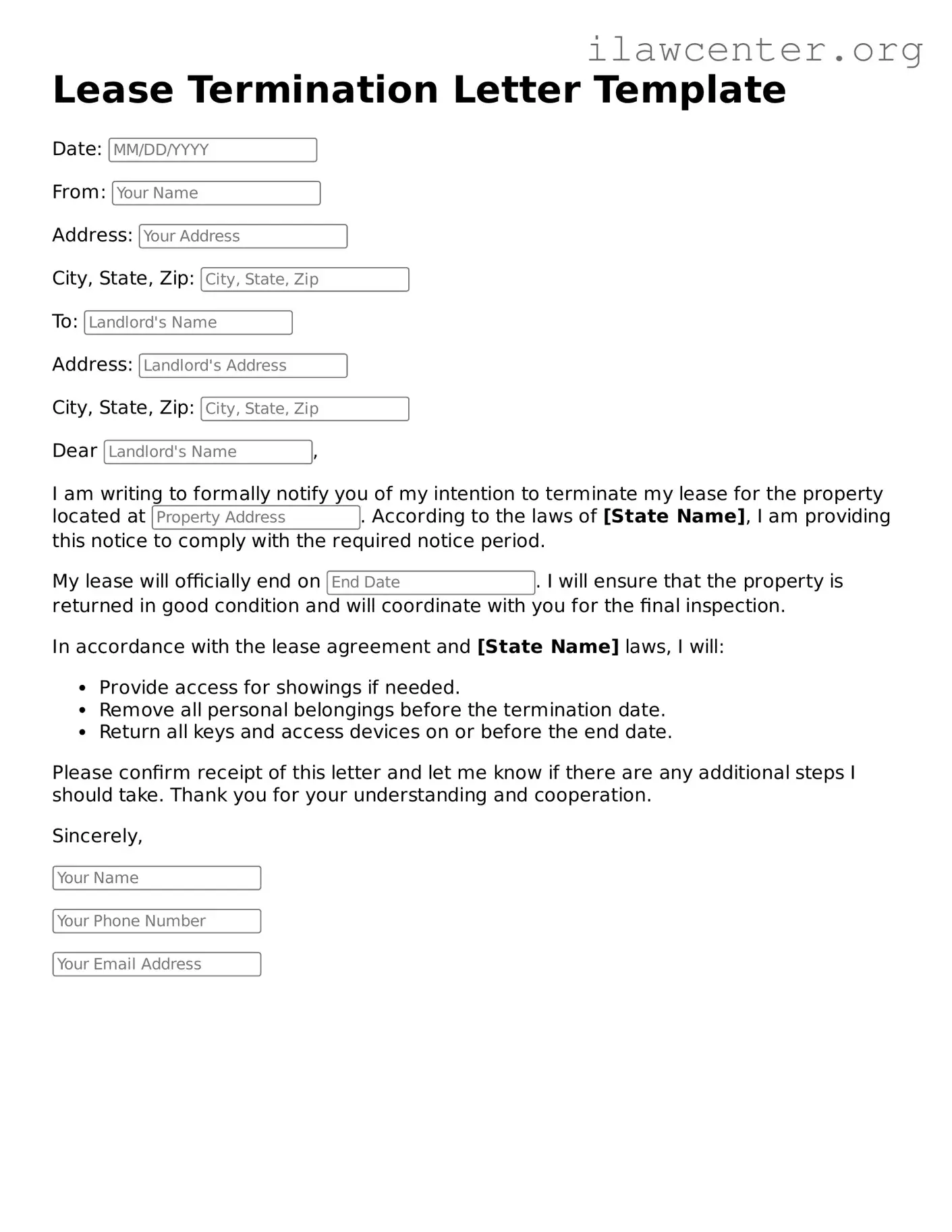
When filling out a Lease Termination Letter form, individuals often overlook key details that can lead to complications. One common mistake is failing to include the correct address of the rental property. This information is crucial for ensuring that the landlord understands which lease is being terminated. Without it, there can be confusion, potentially delaying the process.
Another frequent error is neglecting to provide a specific termination date. A vague or unspecified date can lead to misunderstandings regarding when the tenant intends to vacate the property. Clarity is essential; specifying the exact date helps both parties plan accordingly.
Many people also forget to sign the letter. A signature is a vital part of any formal communication, as it verifies the tenant's intention to terminate the lease. Without a signature, the letter may not be considered valid, leaving the tenant in a precarious position.
Additionally, some individuals fail to keep a copy of the completed letter for their records. Documenting communication is important in case disputes arise later. Having a copy can serve as proof of the notice given and the terms agreed upon.
It is also common for tenants to skip the inclusion of their contact information. Providing a phone number or email address allows the landlord to reach out for any follow-up questions or clarifications. This simple step can facilitate smoother communication during the transition period.
Another mistake involves not adhering to the notice period required by the lease agreement. Many leases specify how much notice must be given before terminating the lease. Ignoring this requirement can lead to penalties or additional charges, creating unnecessary stress for the tenant.
Some tenants may also forget to mention any final walk-through or inspection requests. Including a request for a walk-through can help ensure that both parties agree on the condition of the property before the tenant vacates. This can prevent disputes over security deposits later on.
Failing to clarify the reason for termination can also lead to confusion. While not always necessary, stating the reason can provide context and help the landlord understand the situation better. This transparency can foster a more amicable relationship during the lease termination process.
Lastly, individuals sometimes neglect to follow up after sending the letter. Confirming receipt of the lease termination letter is important. A quick phone call or email can ensure that the landlord has received the notice and is aware of the tenant's intentions.