Fillable Lease-to-Own Agreement Document

Fillable Lease-to-Own Agreement Document

A Lease-to-Own Agreement is a legally binding contract that allows individuals to rent a property with the option to purchase it later. This arrangement provides a pathway to homeownership for those who may not be ready to buy immediately. If you're considering this option, take the first step by filling out the form below!

Article Guide

In today's dynamic housing market, many individuals and families are exploring alternative pathways to homeownership, and one popular option is the Lease-to-Own Agreement. This type of agreement allows potential buyers to rent a property for a specified period, with the opportunity to purchase it at the end of the lease term. Key components of this agreement typically include the rental duration, purchase price, and any upfront option fees that may be required. Additionally, the agreement often outlines the responsibilities of both the tenant and the landlord, covering maintenance, repairs, and other essential aspects of property management. By understanding the critical elements of a Lease-to-Own Agreement, individuals can make informed decisions that align with their financial goals and housing needs, ultimately paving the way for a smoother transition to homeownership.

Lease-to-Own Agreement Preview

Lease-to-Own Agreement

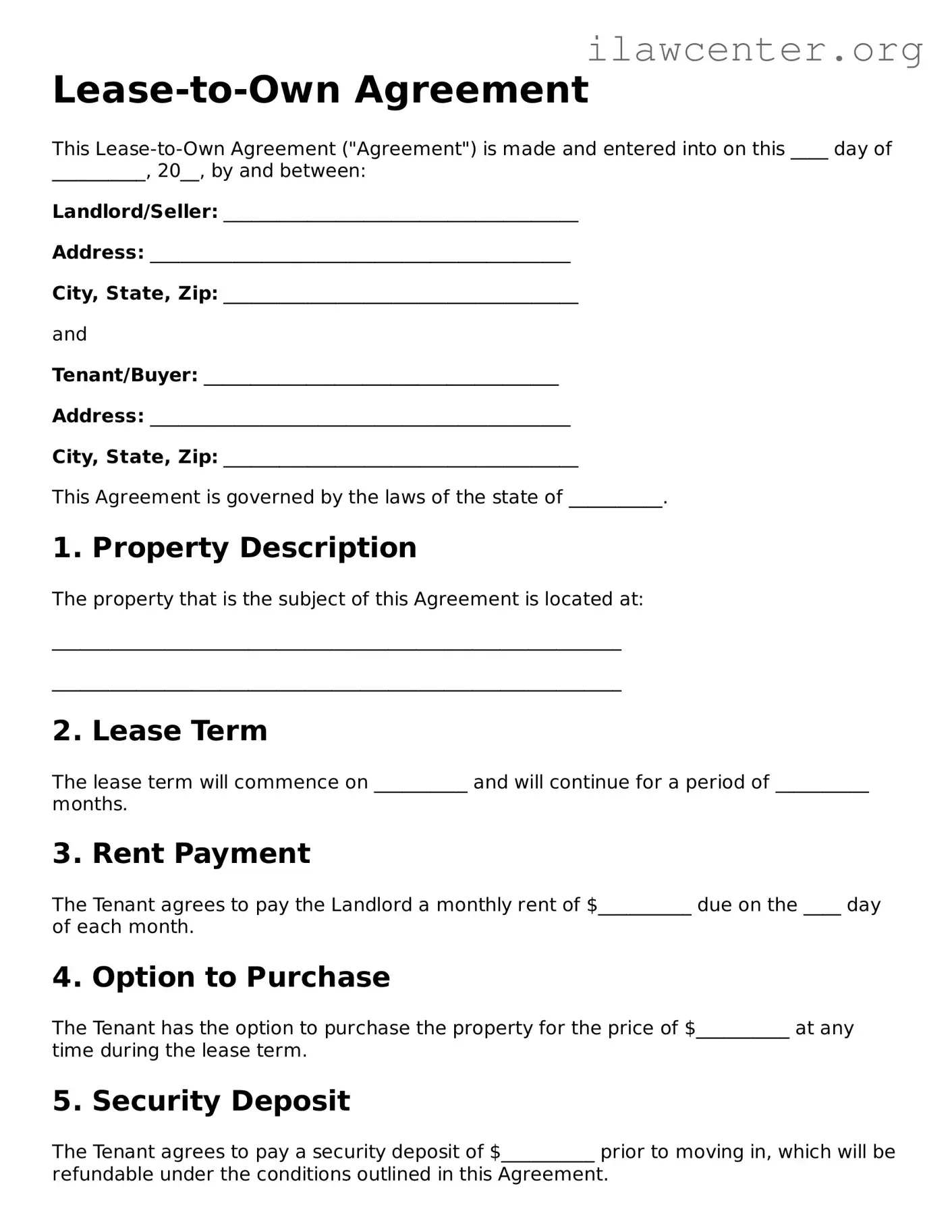
This Lease-to-Own Agreement ("Agreement") is made and entered into on this ____ day of __________, 20__, by and between:

Landlord/Seller: ______________________________________

Address: _____________________________________________

City, State, Zip: ______________________________________

and

Tenant/Buyer: ______________________________________

Address: _____________________________________________

City, State, Zip: ______________________________________

This Agreement is governed by the laws of the state of __________.

1. Property Description

The property that is the subject of this Agreement is located at:

_____________________________________________________________

_____________________________________________________________

2. Lease Term

The lease term will commence on __________ and will continue for a period of __________ months.

3. Rent Payment

The Tenant agrees to pay the Landlord a monthly rent of $__________ due on the ____ day of each month.

4. Option to Purchase

The Tenant has the option to purchase the property for the price of $__________ at any time during the lease term.

5. Security Deposit

The Tenant agrees to pay a security deposit of $__________ prior to moving in, which will be refundable under the conditions outlined in this Agreement.

6. Responsibilities

Both parties agree to the following responsibilities:

  • The Landlord will maintain the property in good condition.
  • The Tenant will keep the property clean and report any maintenance issues promptly.
  • The Tenant will be responsible for all utilities during the lease term.

7. Default

If the Tenant fails to make any payment on time or breaches any other terms of this Agreement, the Landlord may terminate this Agreement after providing written notice.

8. Governing Law

This Agreement shall be governed by and construed in accordance with the laws of the state of __________.

9. Signatures

By signing below, both parties agree to the terms and conditions outlined in this Lease-to-Own Agreement.

Landlord/Seller Signature: ___________________________

Date: _____________________________________________

Tenant/Buyer Signature: ____________________________

Date: _____________________________________________

PDF Form Characteristics

Fact Name Description
Definition A lease-to-own agreement allows a tenant to rent a property with the option to purchase it later.
Payment Structure Typically, a portion of the rent payments goes toward the eventual purchase price of the property.
Duration The agreement usually specifies a set period for renting before the purchase option must be exercised.
State-Specific Forms Each state may have its own specific lease-to-own agreement forms, governed by local real estate laws.
Legal Considerations It is important to understand the legal implications, including tenant rights and obligations under state law.
Governing Laws In California, for example, the agreement is governed by the California Civil Code, while Texas follows the Texas Property Code.
Maintenance Responsibilities Typically, the lease-to-own agreement outlines who is responsible for property maintenance during the rental period.
Negotiation Flexibility Terms of the lease-to-own agreement can often be negotiated, including purchase price and rental terms.

Instructions on Utilizing Lease-to-Own Agreement

Filling out the Lease-to-Own Agreement form is a straightforward process. Once completed, this form will help clarify the terms of the agreement between you and the other party. Follow these steps to ensure everything is filled out correctly.

  1. Read the entire form carefully before starting. This will help you understand the information needed.
  2. Fill in your name in the designated area. Make sure to include your full legal name.
  3. Provide the other party's name as it appears in their identification. This is essential for legal clarity.
  4. Enter the property address where the lease-to-own agreement applies. Double-check for accuracy.
  5. Specify the lease term in months or years. Clearly indicate the start and end dates.
  6. List the monthly payment amount in the appropriate section. Ensure this figure is accurate and agreed upon.
  7. Include any upfront fees or deposits required. Clearly state the amount and purpose.
  8. Detail any additional terms or conditions that both parties have agreed upon. Be specific to avoid confusion later.
  9. Sign and date the form at the bottom. Both parties must do this to validate the agreement.

Once you have completed these steps, review the form for any errors or missing information. After confirming everything is accurate, you can proceed to exchange the signed copies with the other party.

Important Facts about Lease-to-Own Agreement

What is a Lease-to-Own Agreement?

A Lease-to-Own Agreement is a contract that allows a tenant to rent a property with the option to purchase it after a specified period. This arrangement combines elements of a traditional lease with the opportunity to buy the property, providing a pathway for those who may not be ready to purchase outright. Typically, a portion of the rent paid may be credited toward the purchase price if the tenant decides to buy the home.

Who benefits from a Lease-to-Own Agreement?

Both landlords and tenants can benefit from a Lease-to-Own Agreement. Tenants gain the chance to live in a property while working towards ownership, which can be particularly advantageous for those with credit challenges or limited savings. Landlords, on the other hand, can attract potential buyers, reduce vacancy rates, and receive steady rental income during the lease period.

What should be included in a Lease-to-Own Agreement?

An effective Lease-to-Own Agreement should include key details such as the lease term, purchase price, rent amount, and the percentage of rent that will go towards the purchase. Additionally, it should outline maintenance responsibilities, the process for exercising the purchase option, and any contingencies that may apply. Clear terms help prevent misunderstandings later on.

How is the purchase price determined in a Lease-to-Own Agreement?

The purchase price can be set at the beginning of the lease or determined based on market value at the time the tenant chooses to buy. Many agreements specify a fixed price to provide clarity and security for both parties. It’s important to negotiate and agree on this price before signing the contract to avoid any confusion later.

What happens if the tenant decides not to purchase the property?

If the tenant chooses not to buy the property by the end of the lease term, they typically forfeit any rent credits accumulated toward the purchase. The tenant will then need to vacate the property unless the landlord agrees to extend the lease. It’s crucial for tenants to carefully consider their financial situation and readiness to purchase before entering into this type of agreement.

Can a Lease-to-Own Agreement be customized?

Yes, a Lease-to-Own Agreement can be customized to fit the needs of both the landlord and tenant. Specific terms regarding the lease duration, purchase option, and maintenance responsibilities can be tailored to suit individual circumstances. However, it’s advisable to ensure that any modifications comply with local laws and regulations to maintain legal validity.

Common mistakes

Filling out a Lease-to-Own Agreement form can be a straightforward process, but several common mistakes can lead to complications later on. One frequent error occurs when individuals fail to read the entire agreement before signing. This oversight can result in misunderstandings about the terms and conditions of the lease, including payment schedules and maintenance responsibilities.

Another common mistake is not providing accurate personal information. Incomplete or incorrect details can delay the processing of the agreement and may even lead to disputes. It is essential to double-check all entries, including names, addresses, and contact information, to ensure they are correct.

People often overlook the importance of understanding the financial terms outlined in the agreement. Misinterpreting the payment structure, including the total cost of the lease and any additional fees, can lead to financial strain. It is crucial to clarify any confusing terms with the landlord or property manager before signing.

Many individuals also neglect to discuss maintenance responsibilities. The agreement should clearly outline who is responsible for repairs and upkeep of the property. Failing to address this can lead to disputes over who is accountable for certain issues, which can be frustrating for both parties.

Another mistake is not considering the duration of the lease. Some individuals may sign an agreement without fully understanding the length of the lease term or the conditions for renewal. This can create difficulties if personal circumstances change and the individual needs to move before the lease ends.

Additionally, people sometimes forget to include contingencies for unexpected situations. Life changes, such as job relocations or family emergencies, can occur. Including clauses that address these possibilities can provide necessary flexibility and peace of mind.

Finally, individuals may fail to keep a copy of the signed agreement for their records. Having a personal copy is important for reference in case any disputes arise in the future. It is advisable to store this document in a safe place where it can be easily accessed.

Documents used along the form

A Lease-to-Own Agreement is a valuable document for both tenants and property owners, outlining the terms of renting a property with the option to purchase it later. However, several other forms and documents often accompany this agreement to ensure clarity and protection for all parties involved. Below are six essential documents that are commonly used alongside a Lease-to-Own Agreement.

  • Rental Application: This form collects personal and financial information from potential tenants. It helps property owners assess the suitability of applicants and make informed decisions about leasing the property.
  • Credit Report Authorization: This document allows the property owner to obtain the tenant's credit report. It provides insight into the tenant's financial history, including creditworthiness, which can be crucial in determining their ability to fulfill lease obligations.
  • Disclosure Statement: This statement outlines any known issues with the property, such as repairs needed or past damages. It ensures transparency and protects both parties by making them aware of the property's condition before entering into the agreement.
  • Purchase Option Agreement: This document specifies the terms under which the tenant can purchase the property at the end of the lease term. It includes details like the purchase price and any conditions that must be met, providing a clear pathway to ownership.
  • Inspection Report: An inspection report details the condition of the property at the time of the lease. It serves as a record that can help resolve disputes regarding property condition when the lease ends.
  • Security Deposit Receipt: This receipt acknowledges the amount of the security deposit collected from the tenant. It protects both parties by documenting the funds and the conditions under which they may be withheld at the end of the lease.

Utilizing these documents alongside a Lease-to-Own Agreement can help facilitate a smoother transaction and provide necessary protections for both tenants and property owners. It’s important to ensure that all forms are completed accurately and stored securely for future reference.

Similar forms

  • Rental Agreement: This document outlines the terms under which a tenant can occupy a property. Similar to a Lease-to-Own Agreement, it specifies the duration of the rental, payment terms, and responsibilities of both parties.
  • Purchase Agreement: This document details the terms of sale for a property. Like the Lease-to-Own Agreement, it includes the purchase price and conditions under which the buyer takes ownership, though it usually does not involve a rental period.
  • Option to Purchase Agreement: This document gives a tenant the right to buy the property at a later date. It shares similarities with the Lease-to-Own Agreement by providing a pathway to ownership while allowing for an initial rental period.
  • Rent-to-Own Agreement: This is a specific type of Lease-to-Own Agreement where rent payments contribute towards the purchase price. Both documents facilitate a gradual transition from renting to owning.
  • Lease Agreement: A standard lease outlines the terms of renting a property without any option for purchase. While it lacks the ownership component, it shares many terms related to property use and tenant responsibilities.
  • Installment Sale Agreement: This document allows a buyer to pay for a property in installments. Similar to a Lease-to-Own Agreement, it breaks down the payment process over time, but usually does not involve renting beforehand.
  • Real Estate Purchase Option: This document allows a buyer to secure the right to purchase a property within a specified time frame. It parallels the Lease-to-Own Agreement in that it provides a future ownership opportunity while establishing conditions for the transaction.

Dos and Don'ts

When filling out a Lease-to-Own Agreement form, it’s essential to approach the process with care and attention. Here are some important dos and don’ts to keep in mind:

  • Do read the entire agreement thoroughly before signing.
  • Do verify the property details to ensure accuracy.
  • Do clarify any terms or conditions that are unclear.
  • Do keep copies of all documents for your records.
  • Do consult with a legal expert if you have questions.
  • Don't rush through the form; take your time to understand it.
  • Don't leave any fields blank; fill in all required information.
  • Don't ignore any additional fees or costs mentioned in the agreement.
  • Don't sign without ensuring you are comfortable with all terms.

Following these guidelines can help you navigate the Lease-to-Own Agreement process more effectively. Always prioritize clear communication and understanding to protect your interests.

Misconceptions

Lease-to-own agreements can be a great option for many people, but there are several misconceptions that can lead to confusion. Here are eight common misunderstandings about these agreements:

  1. They are the same as traditional leases. Many believe that lease-to-own agreements function like standard rental agreements. However, they include an option to purchase the property at the end of the lease term, which is not a feature of typical leases.
  2. You must buy the property at the end of the lease. Some people think that entering into a lease-to-own agreement means they are obligated to purchase the property. In reality, you have the option to buy, but you can choose not to if it doesn’t suit your needs.
  3. All payments go toward the purchase price. A common myth is that every payment made during the lease goes directly towards the eventual purchase price. In truth, a portion of the rent may be credited toward the purchase, but not all of it is guaranteed to count.
  4. Lease-to-own agreements are only for people with bad credit. While these agreements can be beneficial for individuals with credit challenges, they are also a viable option for those looking to improve their financial situation or test a property before committing to a purchase.
  5. They are only available for homes. Many people think lease-to-own options are limited to residential properties. However, this type of agreement can also apply to various types of real estate, including commercial properties and vehicles.
  6. You can’t negotiate the terms. Some assume that lease-to-own agreements are set in stone. In fact, terms such as the purchase price, lease duration, and payment structure can often be negotiated between the tenant and the landlord.
  7. They are always a bad investment. There is a belief that lease-to-own agreements are inherently risky. While they do come with their own set of challenges, they can also provide flexibility and an opportunity for buyers to secure a property without immediate full payment.
  8. You don’t need a real estate agent. Many think that hiring a real estate agent is unnecessary for lease-to-own agreements. However, having professional guidance can help navigate the complexities of the agreement and ensure that all terms are clearly understood.

Understanding these misconceptions can help individuals make informed decisions about lease-to-own agreements. It’s essential to gather accurate information and consider personal circumstances before entering into such arrangements.

Key takeaways

When considering a Lease-to-Own Agreement, understanding the key elements can significantly impact your experience. Here are some essential takeaways to keep in mind:

  • Understand the Terms: Familiarize yourself with the specific terms of the agreement. This includes the duration of the lease, monthly payments, and the purchase price at the end of the lease term.
  • Know Your Rights: As a tenant, you have rights that protect you throughout the lease period. Ensure you are aware of these rights, including maintenance responsibilities and what happens if you decide not to purchase the property.
  • Document Everything: Keep thorough records of all communications and transactions related to the agreement. This documentation can be crucial if disputes arise in the future.
  • Consider Financial Implications: Evaluate your financial situation before entering into the agreement. Ensure that the monthly payments fit within your budget and consider how the purchase price may affect your long-term financial goals.

By keeping these takeaways in mind, you can navigate the Lease-to-Own process with greater confidence and clarity.