Fillable Letter of Intent Document

Fillable Letter of Intent Document

A Letter of Intent (LOI) is a document outlining the preliminary understanding between parties who intend to enter into a formal agreement. This form serves as a starting point for negotiations and can clarify the intentions of both sides. To get started on your own Letter of Intent, fill out the form by clicking the button below.

Article Guide

A Letter of Intent (LOI) serves as a preliminary agreement between parties, outlining the intentions and expectations before entering into a more formal contract. This document often plays a crucial role in various transactions, such as business deals, real estate purchases, or academic admissions. Typically, an LOI includes essential elements like the names of the parties involved, a description of the purpose, and key terms that will guide future negotiations. It may also address timelines, confidentiality clauses, and any conditions that must be met before finalizing the agreement. While it is not legally binding in most cases, the Letter of Intent sets the stage for a collaborative relationship and helps ensure that all parties are on the same page as they move forward. Understanding the components and purpose of an LOI can empower individuals and organizations to navigate their negotiations with clarity and confidence.

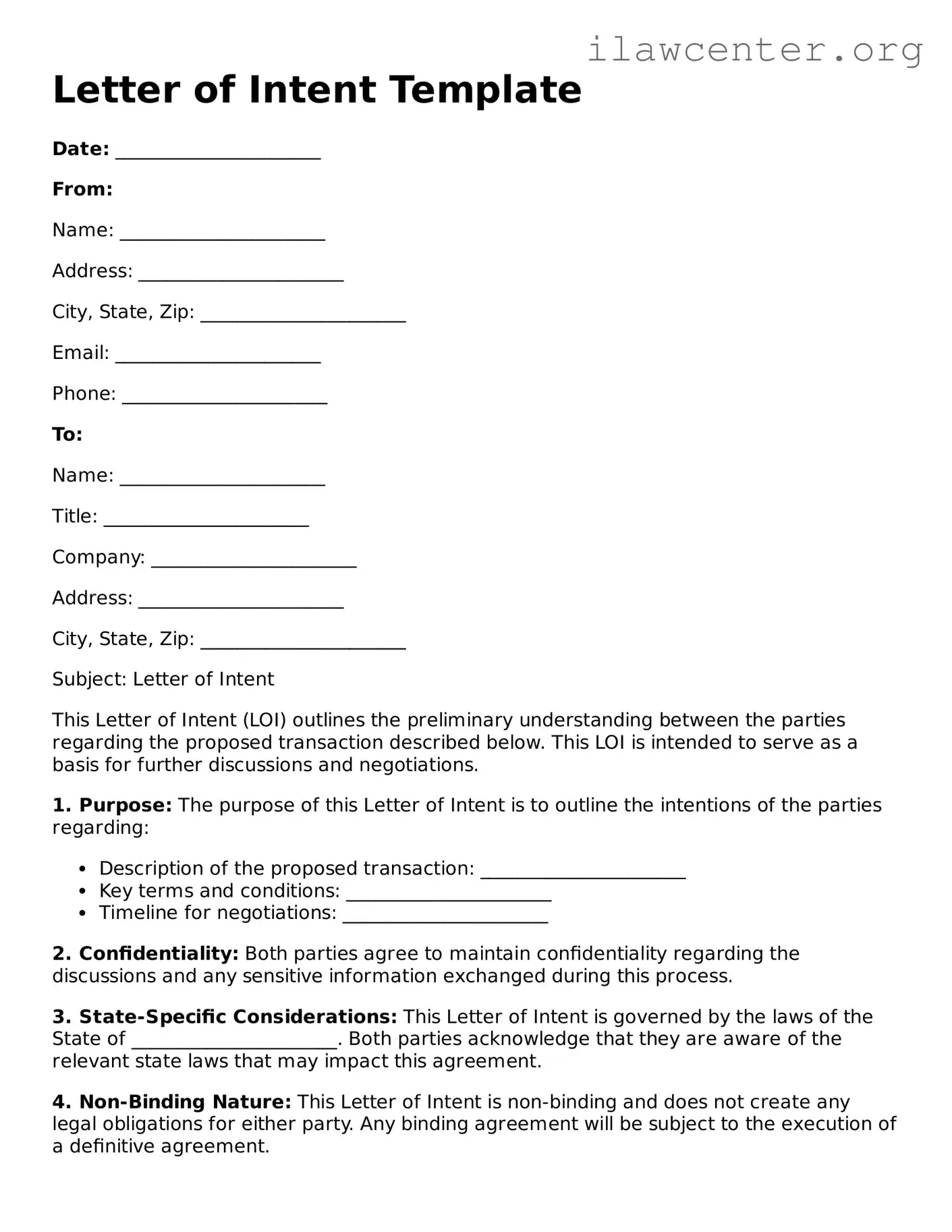
Letter of Intent Preview

Letter of Intent Template

Date: ______________________

From:

Name: ______________________

Address: ______________________

City, State, Zip: ______________________

Email: ______________________

Phone: ______________________

To:

Name: ______________________

Title: ______________________

Company: ______________________

Address: ______________________

City, State, Zip: ______________________

Subject: Letter of Intent

This Letter of Intent (LOI) outlines the preliminary understanding between the parties regarding the proposed transaction described below. This LOI is intended to serve as a basis for further discussions and negotiations.

1. Purpose: The purpose of this Letter of Intent is to outline the intentions of the parties regarding:

  • Description of the proposed transaction: ______________________
  • Key terms and conditions: ______________________
  • Timeline for negotiations: ______________________

2. Confidentiality: Both parties agree to maintain confidentiality regarding the discussions and any sensitive information exchanged during this process.

3. State-Specific Considerations: This Letter of Intent is governed by the laws of the State of ______________________. Both parties acknowledge that they are aware of the relevant state laws that may impact this agreement.

4. Non-Binding Nature: This Letter of Intent is non-binding and does not create any legal obligations for either party. Any binding agreement will be subject to the execution of a definitive agreement.

5. Next Steps: The parties agree to the following next steps:

  1. Schedule a meeting to discuss terms: ______________________
  2. Draft a formal agreement: ______________________
  3. Set a deadline for finalizing the agreement: ______________________

By signing below, the parties indicate their intent to move forward with the discussions outlined in this Letter of Intent.

Signatures:

______________________ (Signature of Sender)

______________________ (Date)

______________________ (Signature of Recipient)

______________________ (Date)

PDF Form Characteristics

Fact Name Description
Purpose A Letter of Intent outlines the preliminary understanding between parties before formal agreements are finalized.
Binding Nature Typically, a Letter of Intent is non-binding, meaning it does not create legal obligations unless specified otherwise.
Common Uses This form is often used in business transactions, real estate deals, and employment agreements.
Governing Law (California) In California, the governing law for Letters of Intent is based on the California Civil Code.
Governing Law (New York) In New York, Letters of Intent are governed by New York State contract law.
Key Components Essential elements include the parties involved, purpose, terms of the agreement, and any deadlines.

Instructions on Utilizing Letter of Intent

Once you have the Letter of Intent form in hand, it's time to fill it out carefully. This form is crucial for outlining your intentions and setting the stage for future discussions. Follow the steps below to ensure that you complete the form accurately and effectively.

  1. Begin by entering your full name in the designated field at the top of the form.
  2. Provide your contact information, including your phone number and email address, so you can be easily reached.
  3. Fill in the date on which you are completing the form. This helps to establish a timeline for your intentions.
  4. Specify the name of the person or organization you are addressing the Letter of Intent to.
  5. Clearly state the purpose of your letter in the provided section. Be concise but thorough.
  6. Include any relevant details or conditions that pertain to your intentions. This may involve timelines, expectations, or specific terms.
  7. Review the form to ensure that all information is accurate and complete. Double-check for any spelling or grammatical errors.
  8. Sign and date the form at the bottom to validate your intent.

After completing the form, you will need to submit it to the appropriate party. Keep a copy for your records, as it may be useful for future reference. Make sure to follow any additional instructions provided by the recipient to ensure your Letter of Intent is processed smoothly.

Important Facts about Letter of Intent

What is a Letter of Intent (LOI)?

A Letter of Intent (LOI) is a document that outlines the preliminary understanding between two or more parties who intend to enter into a formal agreement. It serves as a starting point for negotiations and can detail the key terms and conditions that will be included in the final contract. While an LOI is not legally binding, it expresses the intent of the parties to move forward with discussions and can help clarify expectations early in the process.

What are the key components of a Letter of Intent?

An effective LOI typically includes several important components. These may consist of the purpose of the agreement, the scope of work, timelines, financial considerations, and any confidentiality provisions. Additionally, it might outline the responsibilities of each party and any conditions that must be met before a formal agreement is finalized. Including these elements can help ensure that all parties are aligned before proceeding.

Is a Letter of Intent legally binding?

When should I use a Letter of Intent?

Common mistakes

When filling out a Letter of Intent (LOI), individuals often overlook important details that can lead to misunderstandings or complications later on. One common mistake is failing to clearly define the purpose of the letter. Without a specific objective, the LOI may lack direction, causing confusion for both parties involved. A well-defined purpose sets the tone for the entire document.

Another frequent error is neglecting to include essential contact information. If the parties cannot easily reach each other, it can hinder communication and stall negotiations. Including complete names, addresses, phone numbers, and email addresses ensures that both parties can stay in touch throughout the process.

Many people also make the mistake of using vague language. Ambiguity can lead to misinterpretation of the terms discussed. It is crucial to use clear and concise language to express intentions and expectations. Specificity helps to avoid potential disputes and misunderstandings in the future.

Additionally, some individuals forget to outline the timeline for the proposed actions. A well-structured timeline indicates when each step should occur, providing a framework for the agreement. Without a timeline, parties may have different expectations regarding deadlines, which can lead to frustration.

Another common oversight is not addressing contingencies. Life can be unpredictable, and circumstances may change. Including contingencies in the LOI allows for flexibility and provides a plan for unforeseen events. This preparation can save both parties from potential conflicts later on.

People often skip the review process, which can be detrimental. Errors in spelling, grammar, or factual information can undermine the credibility of the document. Taking the time to carefully review the LOI before submission ensures that it is professional and accurate.

Lastly, failing to sign the Letter of Intent can render it ineffective. A signature signifies agreement and commitment to the outlined intentions. Without it, the LOI may not hold any weight, leaving both parties without a formal understanding of their arrangement.

Documents used along the form

A Letter of Intent (LOI) serves as a preliminary agreement outlining the intentions of parties involved in a potential transaction or partnership. While the LOI is crucial in setting the stage for negotiations, several other documents often accompany it to provide clarity and structure. Here’s a brief overview of these essential forms.

  • Memorandum of Understanding (MOU): This document outlines the general principles of the agreement between parties. It is less formal than a contract and serves to clarify the intentions and responsibilities before a final agreement is reached.
  • Non-Disclosure Agreement (NDA): Protecting sensitive information is vital during negotiations. An NDA ensures that parties do not disclose confidential information shared during discussions, fostering a trustworthy environment.
  • Term Sheet: This document summarizes the key terms and conditions of a proposed agreement. It provides a framework for the deal, including pricing, timelines, and responsibilities, helping parties align their expectations.
  • Due Diligence Checklist: Before finalizing any agreement, parties typically conduct due diligence to assess risks and validate information. A checklist helps ensure all necessary evaluations are completed systematically.
  • Purchase Agreement: If the negotiations progress successfully, a purchase agreement formalizes the terms of the sale. It details the obligations of both parties and serves as a legally binding contract once signed.

Each of these documents plays a vital role in the negotiation process, helping to ensure that all parties are aligned and informed. Understanding these forms can facilitate smoother discussions and ultimately lead to successful agreements.

Similar forms

  • Memorandum of Understanding (MOU): An MOU outlines the intentions of parties involved in a potential agreement. Like a Letter of Intent, it sets the stage for future negotiations without creating binding obligations.
  • Term Sheet: A term sheet summarizes the key terms and conditions of a proposed transaction. Similar to a Letter of Intent, it provides a framework for further discussions and negotiations.
  • Non-Disclosure Agreement (NDA): An NDA protects confidential information exchanged during negotiations. While a Letter of Intent expresses intent to negotiate, an NDA ensures that sensitive information remains private.
  • Purchase Agreement: A purchase agreement is a legally binding contract for the sale of goods or services. It often follows a Letter of Intent, which outlines the initial terms before the final contract is drafted.
  • Collaboration Agreement: This document details the terms of cooperation between parties. Like a Letter of Intent, it establishes mutual understanding and expectations before formalizing the partnership.
  • Joint Venture Agreement: A joint venture agreement formalizes the collaboration between two or more parties for a specific project. It builds on the intentions laid out in a Letter of Intent.
  • Letter of Understanding (LOU): An LOU expresses mutual agreement on specific terms and conditions. It serves a similar purpose to a Letter of Intent by outlining the parties' intentions without creating a binding contract.
  • Framework Agreement: A framework agreement sets out the general principles that will govern future contracts. Like a Letter of Intent, it provides a basis for ongoing negotiations and agreements.
  • Binding Letter of Intent: Unlike a standard Letter of Intent, a binding version includes specific terms that create enforceable obligations. It serves a similar purpose but with legal weight behind the intentions expressed.

Dos and Don'ts

When filling out the Letter of Intent form, it’s important to follow certain guidelines to ensure your submission is clear and effective. Here are four things you should and shouldn't do:

  • Do: Read the instructions carefully before starting.
  • Do: Provide accurate and complete information.
  • Don't: Rush through the form; take your time to review.
  • Don't: Leave any required fields blank.

Misconceptions

Misconceptions about the Letter of Intent (LOI) can lead to confusion and missteps in negotiations. Here are eight common misunderstandings:

  1. LOIs are legally binding contracts.

    Many believe that a Letter of Intent holds the same legal weight as a contract. In reality, an LOI is often non-binding, serving primarily as a preliminary agreement outlining the intentions of the parties involved.

  2. All terms must be finalized in the LOI.

    Some think that every detail needs to be settled before signing an LOI. However, it typically outlines key points and serves as a foundation for further negotiations.

  3. LOIs are only used in real estate transactions.

    This form is commonly associated with real estate, but it is also used in various industries, including mergers and acquisitions, joint ventures, and partnerships.

  4. Submitting an LOI guarantees a deal.

    Submitting a Letter of Intent does not guarantee that a deal will be finalized. It simply indicates interest and willingness to negotiate further.

  5. LOIs are unnecessary if a contract is being drafted.

    Some may think that if a formal contract is being created, an LOI is redundant. However, an LOI can help clarify intentions and streamline the negotiation process.

  6. Once signed, an LOI cannot be changed.

    People often assume that an LOI is set in stone once signed. In fact, parties can negotiate changes to the terms before finalizing a binding agreement.

  7. LOIs are only for large transactions.

    While they are frequently used in significant deals, Letters of Intent can also be beneficial for smaller agreements, providing clarity and direction.

  8. LOIs are a waste of time.

    Some view the process of drafting an LOI as unnecessary. However, it can save time in the long run by aligning expectations and reducing misunderstandings.

Key takeaways

When filling out and using a Letter of Intent (LOI) form, there are several important points to consider. Here are some key takeaways:

  • Clarity is crucial. Clearly outline your intentions and objectives in the LOI. Ambiguity can lead to misunderstandings down the line.
  • Be concise. Keep your language straightforward and to the point. A well-organized LOI is easier to read and understand.
  • Include essential details. Make sure to provide all relevant information, such as dates, parties involved, and any specific terms you wish to address.
  • Understand its purpose. An LOI serves as a preliminary agreement and does not usually create binding obligations. Recognize its role in the negotiation process.

By following these guidelines, you can create an effective Letter of Intent that clearly communicates your goals and sets the stage for future discussions.