Fillable Letter of Intent to Lease Commercial Property Document

Fillable Letter of Intent to Lease Commercial Property Document

The Letter of Intent to Lease Commercial Property is a preliminary document that outlines the basic terms and conditions under which a lease agreement may be negotiated. This form serves as a starting point for discussions between landlords and prospective tenants, helping to clarify intentions before formalizing a lease. For those ready to take the next step, fill out the form by clicking the button below.

Article Guide

When considering the leasing of commercial property, a Letter of Intent (LOI) serves as a crucial preliminary document that outlines the key terms and conditions of a potential lease agreement. This form typically includes important details such as the proposed rental rate, lease duration, and any specific requirements related to the property. It may also address the responsibilities of both the landlord and tenant, providing clarity on maintenance obligations and other essential aspects of the lease. By detailing the intentions of both parties, the LOI helps to establish a framework for negotiations, ensuring that both sides are aligned before entering into a formal lease contract. Additionally, this document can facilitate smoother discussions regarding any contingencies or special provisions that may be necessary, such as tenant improvements or options for renewal. Overall, the Letter of Intent to Lease Commercial Property is a vital step in the leasing process, helping to set the stage for a successful rental relationship.

Letter of Intent to Lease Commercial Property Preview

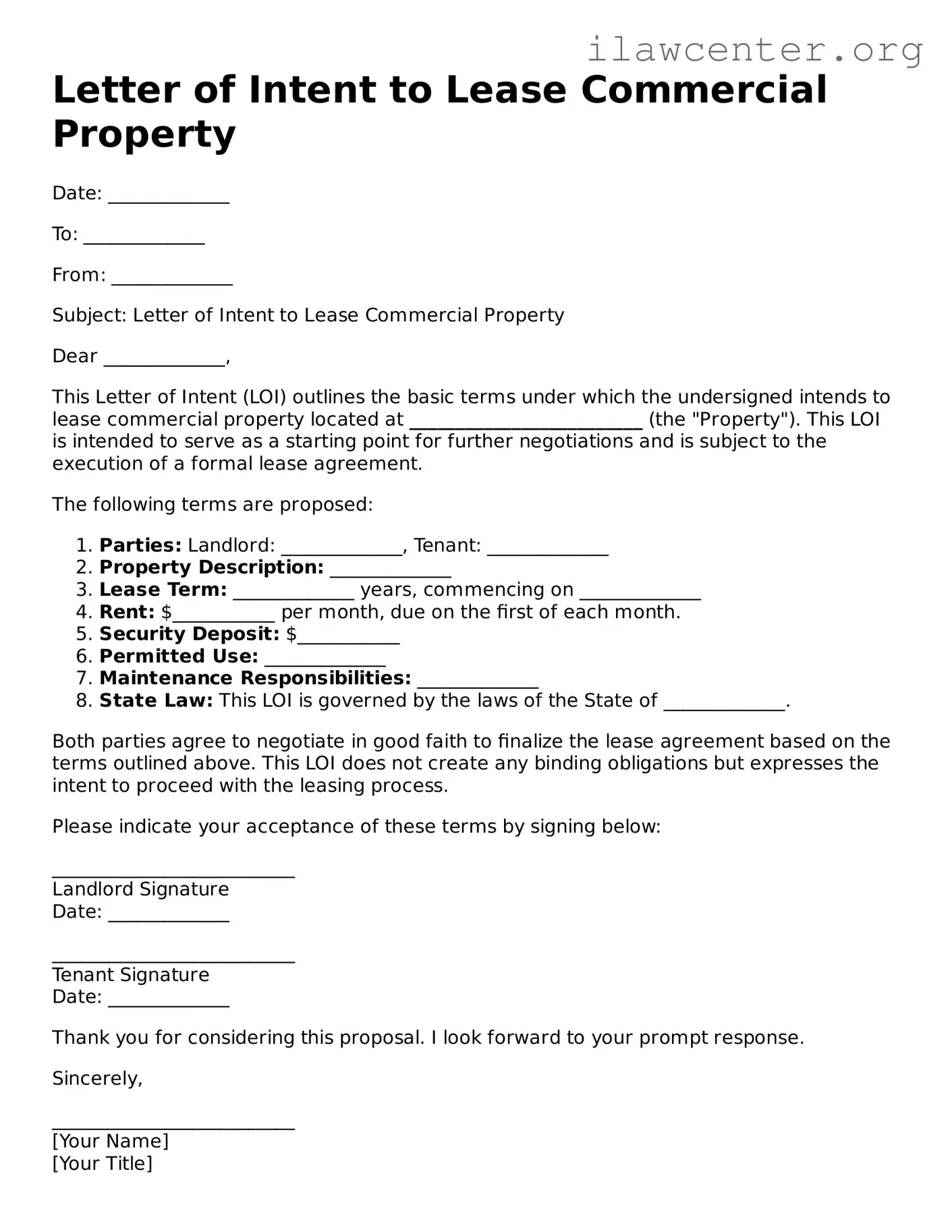
Letter of Intent to Lease Commercial Property

Date: _____________

To: _____________

From: _____________

Subject: Letter of Intent to Lease Commercial Property

Dear _____________,

This Letter of Intent (LOI) outlines the basic terms under which the undersigned intends to lease commercial property located at _________________________ (the "Property"). This LOI is intended to serve as a starting point for further negotiations and is subject to the execution of a formal lease agreement.

The following terms are proposed:

  1. Parties: Landlord: _____________, Tenant: _____________
  2. Property Description: _____________
  3. Lease Term: _____________ years, commencing on _____________
  4. Rent: $___________ per month, due on the first of each month.
  5. Security Deposit: $___________
  6. Permitted Use: _____________
  7. Maintenance Responsibilities: _____________
  8. State Law: This LOI is governed by the laws of the State of _____________.

Both parties agree to negotiate in good faith to finalize the lease agreement based on the terms outlined above. This LOI does not create any binding obligations but expresses the intent to proceed with the leasing process.

Please indicate your acceptance of these terms by signing below:

__________________________
Landlord Signature
Date: _____________

__________________________
Tenant Signature
Date: _____________

Thank you for considering this proposal. I look forward to your prompt response.

Sincerely,

__________________________
[Your Name]
[Your Title]
[Your Company Name]
[Your Contact Information]

PDF Form Characteristics

Fact Name Description
Definition A Letter of Intent to Lease Commercial Property is a preliminary agreement outlining the terms of a potential lease.
Purpose This document serves to express interest in leasing a property and to establish key terms before drafting a formal lease.
Binding Nature Typically, a Letter of Intent is non-binding, meaning neither party is legally obligated to proceed with the lease.
Key Components Common elements include the lease term, rental rate, and property description.
Negotiation Tool The document can facilitate negotiations between the landlord and potential tenant, clarifying intentions and expectations.
State Variations Each state may have specific laws governing Letters of Intent; it is crucial to review local regulations.
Governing Law - California In California, the Uniform Commercial Code may apply, along with state-specific real estate laws.
Governing Law - New York New York law governs commercial leases, and the Real Property Law is particularly relevant.
Governing Law - Texas Texas law, including the Texas Property Code, outlines regulations for commercial leases and related agreements.
Importance of Legal Review Having a legal professional review the Letter of Intent is advisable to ensure compliance and protect interests.

Instructions on Utilizing Letter of Intent to Lease Commercial Property

Filling out a Letter of Intent to Lease Commercial Property is an important step in securing a rental agreement for your business space. Once completed, this form will serve as a preliminary document outlining your intentions to lease, setting the stage for further negotiations and the drafting of a formal lease agreement.

  1. Start with your contact information. At the top of the form, clearly write your name, address, phone number, and email. This ensures that the landlord can easily reach you.
  2. Identify the property. Specify the address of the commercial property you are interested in leasing. Include any relevant details that might help identify the space, such as suite numbers or landmarks.
  3. State the proposed lease term. Indicate how long you intend to lease the property. This could be a specific number of months or years, depending on your business needs.
  4. Include your intended use of the property. Describe what you plan to do in the space. Be clear about your business activities, as this can impact the landlord's decision.
  5. Outline your proposed rental rate. Mention the amount you are willing to pay for the lease. If you have a range, include that as well.
  6. Discuss any contingencies. If there are conditions that must be met before you finalize the lease, such as obtaining financing or permits, list them here.
  7. Sign and date the form. Make sure to sign the document and include the date. This signifies your commitment to the terms outlined in the letter.

Once you have completed the form, review it for accuracy and clarity. After that, you can present it to the landlord or property manager to initiate discussions about the lease agreement.

Important Facts about Letter of Intent to Lease Commercial Property

What is a Letter of Intent to Lease Commercial Property?

A Letter of Intent (LOI) to lease commercial property is a preliminary agreement between a potential tenant and landlord. This document outlines the basic terms and conditions that both parties intend to negotiate further. It serves as a starting point for discussions and can help clarify each party's expectations before drafting a formal lease agreement.

Why is a Letter of Intent important?

An LOI is important because it helps establish a mutual understanding of the key terms of the lease, such as rental rates, lease duration, and any special provisions. By clearly outlining these points, both parties can avoid misunderstandings later in the negotiation process. Additionally, having a written document can help expedite the formal lease drafting process once both parties reach an agreement.

What should be included in a Letter of Intent?

A well-crafted LOI should include several key elements. These typically consist of the proposed rental amount, lease term, property description, and any contingencies or conditions that must be met before the lease is finalized. Other important aspects may include the intended use of the property, maintenance responsibilities, and any options for renewal or expansion. Each of these components plays a crucial role in shaping the final lease agreement.

Is a Letter of Intent legally binding?

Generally, a Letter of Intent is not considered legally binding in the same way a formal lease agreement is. However, certain provisions within the LOI may be enforceable, depending on how the document is worded. It is essential for both parties to understand that while the LOI outlines intentions, it does not create a legal obligation to proceed with the lease until a formal agreement is executed.

How can I ensure my Letter of Intent is effective?

To ensure the effectiveness of your LOI, it is advisable to be clear and specific about all terms and conditions. Avoid vague language that could lead to misinterpretation. Consulting with a legal professional can also provide valuable insights and help tailor the document to meet your specific needs. Finally, both parties should review the LOI thoroughly before signing to confirm mutual agreement on all outlined terms.

Common mistakes

When filling out a Letter of Intent to Lease Commercial Property form, many individuals overlook critical details that can lead to misunderstandings or complications down the line. One common mistake is failing to specify the exact terms of the lease. This includes the duration of the lease, the rental amount, and any options for renewal. Without clear terms, both parties may have differing expectations, which can create conflict later.

Another frequent error is neglecting to outline the responsibilities for maintenance and repairs. It's essential to clarify who is responsible for what, as this can significantly impact the overall cost and management of the property. If these responsibilities are not clearly defined, tenants may find themselves facing unexpected expenses or landlords might be left with unaddressed maintenance issues.

People often forget to include contingencies in their Letter of Intent. Contingencies can protect both parties by outlining conditions that must be met before the lease is finalized. For example, a tenant might want to include a contingency that allows them to back out if they cannot secure financing. Without these provisions, individuals may find themselves in binding agreements that do not suit their needs.

Finally, many individuals fail to review the document thoroughly before submission. Typos, missing information, or unclear language can lead to misinterpretations. Taking the time to carefully review the Letter of Intent can prevent misunderstandings and ensure that all parties are on the same page. A well-prepared document sets the foundation for a successful leasing relationship.

Documents used along the form

When entering into a commercial lease agreement, several important documents accompany the Letter of Intent to Lease Commercial Property. These documents help clarify the terms of the lease and protect the interests of both the landlord and tenant. Below is a list of commonly used forms that you should be aware of.

  • Lease Agreement: This is the formal contract that outlines the terms and conditions of the lease, including rent, duration, and responsibilities of both parties.
  • Confidentiality Agreement: This document ensures that sensitive information shared during negotiations remains private and is not disclosed to third parties.
  • Property Condition Report: A detailed assessment of the property’s current state, this report helps identify any existing issues and responsibilities for repairs.
  • Personal Guarantee: In some cases, landlords may require a personal guarantee from the tenant, ensuring that an individual will be responsible for fulfilling the lease obligations if the business cannot.
  • Financial Statements: These documents provide insight into the tenant's financial health, helping landlords assess the tenant's ability to pay rent consistently.
  • Insurance Certificates: Proof of insurance coverage is often required to protect both parties from potential liabilities related to the property.
  • Subordination, Non-Disturbance, and Attornment Agreement (SNDA): This agreement clarifies the relationship between the tenant and any lenders in the event of foreclosure, ensuring that the lease remains intact.

Understanding these documents is crucial for a smooth leasing process. Each plays a vital role in establishing clear expectations and protecting your interests. Be proactive in reviewing these forms to ensure a successful commercial lease experience.

Similar forms

  • Lease Agreement: This is the formal contract that outlines the terms and conditions for renting commercial property. Like the Letter of Intent, it specifies the rental amount, duration, and responsibilities of both parties, but it is more detailed and legally binding.
  • Memorandum of Understanding (MOU): An MOU serves as a preliminary agreement between parties. It outlines the intentions and key points of a future contract, similar to a Letter of Intent, but it may not always be legally enforceable.
  • Purchase Agreement: This document is used when one party intends to buy property from another. It details the terms of the sale, much like a Letter of Intent outlines leasing terms, but it focuses on ownership transfer instead of rental.
  • Term Sheet: A term sheet summarizes the key terms and conditions of a business deal. It is similar to a Letter of Intent in that it provides a framework for negotiation, but it is often used in various business transactions beyond leasing.
  • Non-Disclosure Agreement (NDA): An NDA protects confidential information exchanged between parties. While a Letter of Intent discusses leasing terms, an NDA ensures that sensitive information remains private during negotiations.
  • Letter of Intent to Purchase: This document expresses a buyer's intention to buy a property. It is similar to the Letter of Intent to Lease in that it outlines the buyer's proposed terms but focuses on acquisition rather than rental.
  • Broker Agreement: A broker agreement outlines the relationship between a property owner and a real estate broker. Like a Letter of Intent, it establishes expectations and responsibilities, but it pertains to the brokerage process rather than leasing.

Dos and Don'ts

When filling out the Letter of Intent to Lease Commercial Property form, it is essential to follow certain guidelines to ensure accuracy and clarity. Here are four things you should do and should not do:

  • Do: Provide accurate information about your business and its needs.
  • Do: Clearly state the desired lease terms, including duration and rental rate.
  • Do: Review the form carefully before submission to avoid errors.
  • Do: Include any special requirements or conditions that may apply to your lease.
  • Don't: Rush through the form; take your time to ensure completeness.
  • Don't: Leave any sections blank unless instructed to do so.
  • Don't: Use vague language; be specific about your intentions.
  • Don't: Forget to sign and date the form before submission.

Misconceptions

When it comes to leasing commercial property, the Letter of Intent (LOI) is often misunderstood. Here are nine common misconceptions about this important document:

  1. The LOI is a legally binding contract. Many people believe that once the LOI is signed, it creates a binding agreement. In reality, the LOI is typically a preliminary document outlining the terms of a potential lease. It serves as a basis for negotiation but is not legally enforceable unless explicitly stated.
  2. All terms are final once the LOI is signed. Another misconception is that the terms outlined in the LOI are set in stone. However, the LOI is often subject to further negotiation. Parties may revise terms based on due diligence or changing circumstances.
  3. The LOI must be detailed and comprehensive. Some believe that an effective LOI must include every detail of the lease agreement. While it should cover key terms, such as rent and duration, it does not need to be exhaustive. The purpose is to outline the main points for further discussion.
  4. An LOI guarantees that the lease will be finalized. Signing an LOI does not guarantee that a lease will be executed. It merely indicates that the parties are interested in moving forward. Various factors can still derail the final agreement.
  5. The LOI is only for the landlord’s benefit. This misconception suggests that the LOI serves only the interests of the property owner. In fact, it benefits both parties by clarifying intentions and expectations early in the negotiation process.
  6. All LOIs are the same. People often think that all Letters of Intent are standardized. In reality, LOIs can vary significantly based on the specific circumstances and needs of the parties involved. Each LOI should be tailored to reflect the unique aspects of the transaction.
  7. The LOI is not necessary if the lease is straightforward. Some may believe that a simple lease agreement does not require an LOI. However, even in straightforward cases, an LOI can help clarify intentions and minimize misunderstandings before the lease is finalized.
  8. Once the LOI is signed, negotiations are over. This misconception assumes that signing the LOI ends all negotiations. In truth, the LOI often opens the door for further discussions, allowing both parties to refine the terms before the lease is finalized.
  9. Legal counsel is not needed for an LOI. Many people think they can draft an LOI without professional assistance. While it is possible to create one independently, consulting with a legal expert can help ensure that the document accurately reflects the parties' intentions and protects their interests.

Understanding these misconceptions can help both landlords and tenants navigate the leasing process more effectively. A well-crafted Letter of Intent can serve as a valuable tool in establishing a clear foundation for future negotiations.

Key takeaways

When considering a Letter of Intent to Lease Commercial Property, it is essential to understand its significance and how to effectively complete the form. Here are five key takeaways:

  1. Clarify Your Intentions: The letter serves as a preliminary agreement that outlines the basic terms of the lease. Clearly stating your intentions can help avoid misunderstandings later in the process.
  2. Include Essential Details: Ensure that the letter includes critical information such as the property address, proposed lease term, rental rate, and any specific conditions that may apply.
  3. Express Negotiation Flexibility: Indicate your willingness to negotiate terms. This openness can foster a collaborative atmosphere between you and the property owner.
  4. Consult Legal Counsel: Before finalizing the letter, consider having a legal expert review it. Their insights can help safeguard your interests and ensure compliance with local laws.
  5. Use It as a Foundation: The Letter of Intent is not a binding contract but rather a foundation for future negotiations. Treat it as a stepping stone toward a formal lease agreement.

By keeping these takeaways in mind, you can navigate the leasing process more effectively and position yourself for a successful agreement.