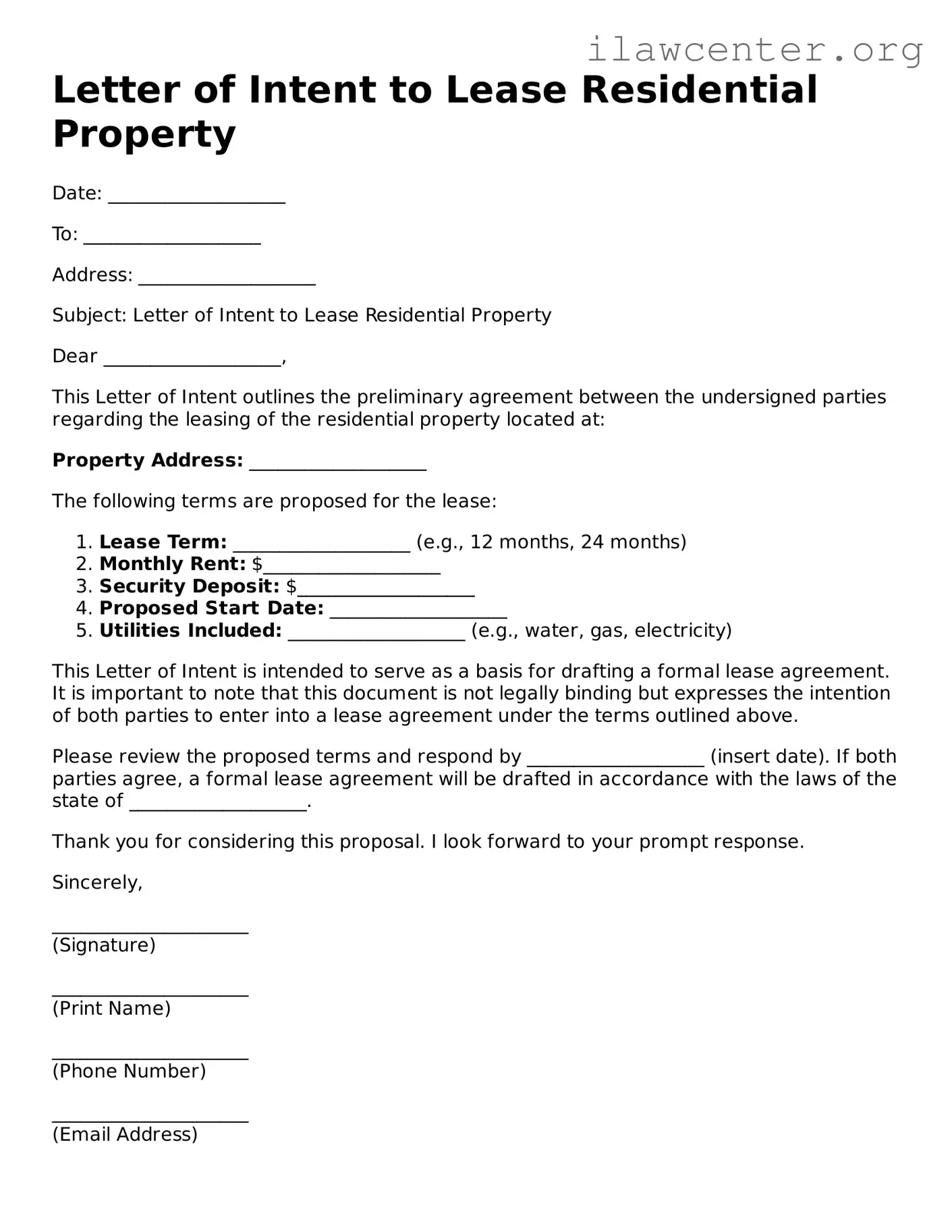
Filling out a Letter of Intent to Lease Residential Property form can be straightforward, but many people make common mistakes that can lead to complications. One frequent error is failing to provide complete contact information. This includes not only the names of all parties involved but also current phone numbers and email addresses. Without accurate contact details, communication may suffer.
Another mistake is neglecting to specify the lease term. Individuals often forget to indicate the desired start and end dates for the lease. This omission can create confusion about the intended duration of the rental agreement. It is crucial to be clear about how long the lease will last to avoid misunderstandings later.
Some people overlook the importance of including the rental amount. It is essential to state the monthly rent clearly. Leaving this blank or writing an ambiguous figure can lead to disputes over payment expectations. Clarity regarding the financial terms is vital for a smooth leasing process.
Additionally, failing to outline any specific conditions or requirements can be problematic. If there are particular stipulations, such as pet policies or maintenance responsibilities, these should be clearly articulated. Without these details, both parties may have different expectations, leading to potential conflicts.
Another common mistake is not reviewing the form for accuracy before submission. Typos or incorrect information can lead to significant issues down the line. Taking the time to double-check all entries ensures that the information is correct and complete.
Some individuals also forget to include a signature and date. A Letter of Intent is not considered valid without the proper signatures. This oversight can render the document ineffective, making it essential to sign and date the form appropriately.
People sometimes fail to attach any required supporting documents. If the form requests additional information, such as proof of income or references, neglecting to include these can delay the leasing process. Always ensure that all necessary documents accompany the form.
Another mistake involves not clearly identifying the property in question. It is important to include the full address and any specific details that distinguish the property. Without this information, there can be confusion about which property is being leased.
Some individuals may also use vague language when describing their intentions. Clear and direct language is crucial to avoid misinterpretation. Being specific about what you want helps both parties understand the terms of the lease.
Lastly, many people do not consider the implications of their intentions. A Letter of Intent is a preliminary document, but it can carry weight in negotiations. Understanding the potential consequences of the statements made can help individuals make more informed decisions.