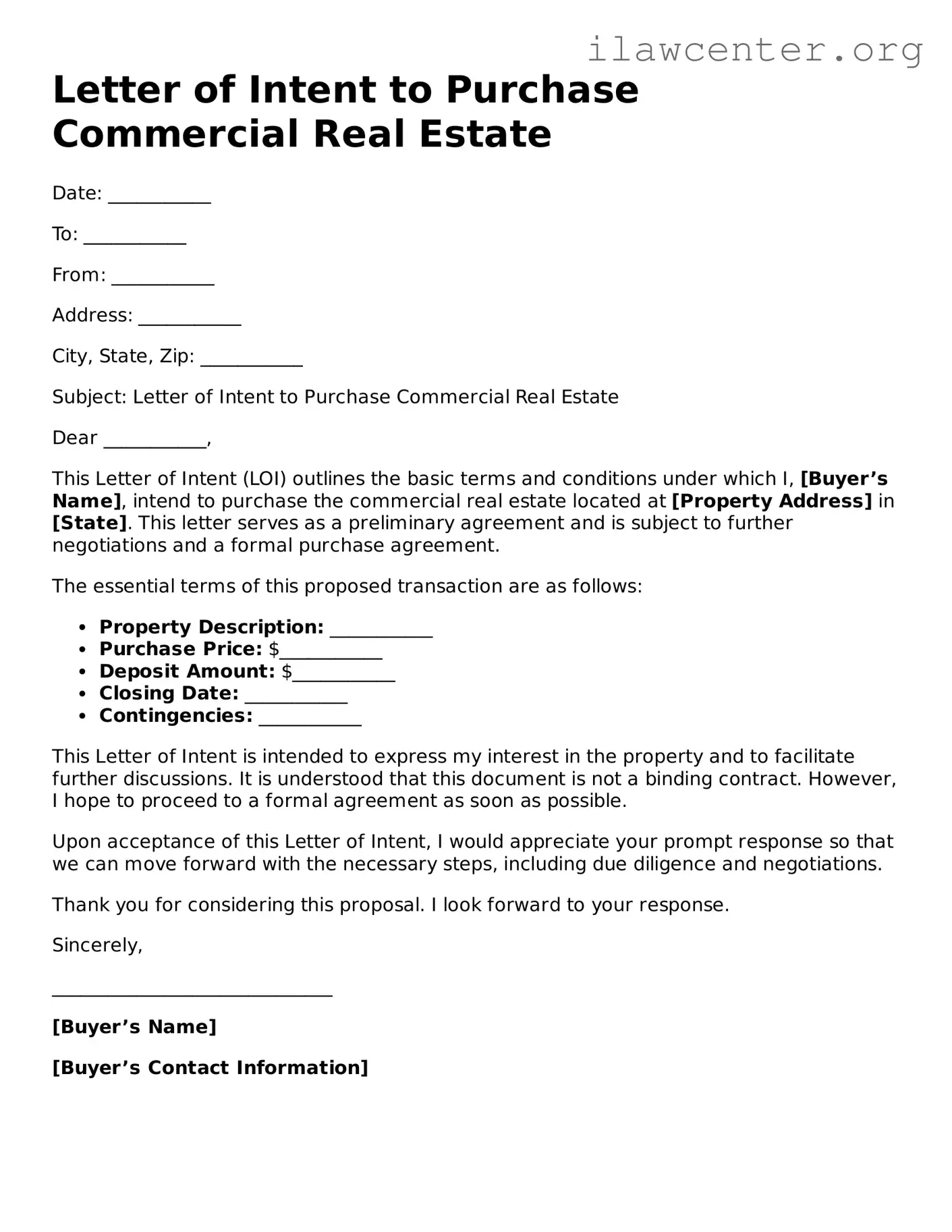
What is a Letter of Intent to Purchase Commercial Real Estate?
A Letter of Intent (LOI) to purchase commercial real estate is a document that outlines the preliminary understanding between a buyer and a seller regarding the terms of a potential real estate transaction. While it is not a legally binding contract, it serves as a starting point for negotiations and can help clarify the intentions of both parties. The LOI typically includes key details such as the purchase price, property description, and any contingencies that may apply.
Why is a Letter of Intent important in real estate transactions?
The LOI plays a crucial role in real estate transactions because it establishes a framework for the deal. It helps both parties understand the essential terms and conditions before entering into a more formal agreement. By outlining the main points, the LOI can prevent misunderstandings and streamline the negotiation process. It also demonstrates the buyer's serious intent to purchase the property, which can be beneficial in competitive markets.
What should be included in a Letter of Intent?
A well-crafted LOI typically includes several key components. These may consist of the purchase price, a description of the property, proposed closing date, any contingencies (such as financing or inspections), and the timeline for due diligence. Additionally, it may outline the responsibilities of both parties during the negotiation process and any exclusivity period that prevents the seller from negotiating with other potential buyers.
Is a Letter of Intent legally binding?
Generally, a Letter of Intent is not legally binding, meaning that either party can walk away from the deal without legal repercussions. However, certain provisions within the LOI, such as confidentiality clauses or exclusivity agreements, may be binding. It is essential for both parties to clearly understand which parts of the LOI are enforceable and which are not, to avoid potential disputes later on.
How does a Letter of Intent differ from a purchase agreement?
A Letter of Intent is a preliminary document that outlines the main terms of a potential deal, while a purchase agreement is a formal contract that legally binds the buyer and seller to the transaction. The purchase agreement includes more detailed terms, conditions, and legal obligations for both parties. Essentially, the LOI serves as a roadmap leading to the more comprehensive purchase agreement.
Can a Letter of Intent be modified after it is signed?
Yes, a Letter of Intent can be modified after it is signed, but both parties must agree to any changes. If new terms or conditions arise during negotiations, it is common for the LOI to be amended to reflect these updates. Clear communication is vital during this process to ensure that both parties are on the same page regarding any modifications made to the document.
What happens after a Letter of Intent is signed?
Once a Letter of Intent is signed, the next steps typically involve conducting due diligence and negotiating a formal purchase agreement. The buyer may begin inspections, secure financing, and review any necessary documentation related to the property. Meanwhile, the seller may prepare to provide additional information and work with the buyer to finalize the terms of the purchase agreement. This phase is crucial, as it sets the stage for a successful transaction.