Fillable Letter of Intent to Sue Document

Fillable Letter of Intent to Sue Document

A Letter of Intent to Sue is a formal document that notifies an individual or organization of your intention to take legal action against them. This letter serves as a critical first step in the legal process, often encouraging resolution before a lawsuit is filed. If you believe you have a valid claim, consider filling out the form by clicking the button below.

Article Guide

When faced with a legal dispute, understanding your options is crucial, and one important step in that process is the Letter of Intent to Sue form. This document serves as a formal notice to the other party that you are considering legal action and outlines your grievances clearly and concisely. By using this form, you not only communicate your intent but also provide the recipient with an opportunity to address the issues before escalating to a lawsuit. This proactive approach can sometimes lead to a resolution without the need for court intervention. The form typically includes essential details such as the parties involved, a description of the dispute, and a demand for resolution. It’s important to approach this step thoughtfully, as it can set the tone for any future negotiations or legal proceedings. In a world where time is often of the essence, taking this initial step can be pivotal in protecting your rights and interests.

Letter of Intent to Sue Preview

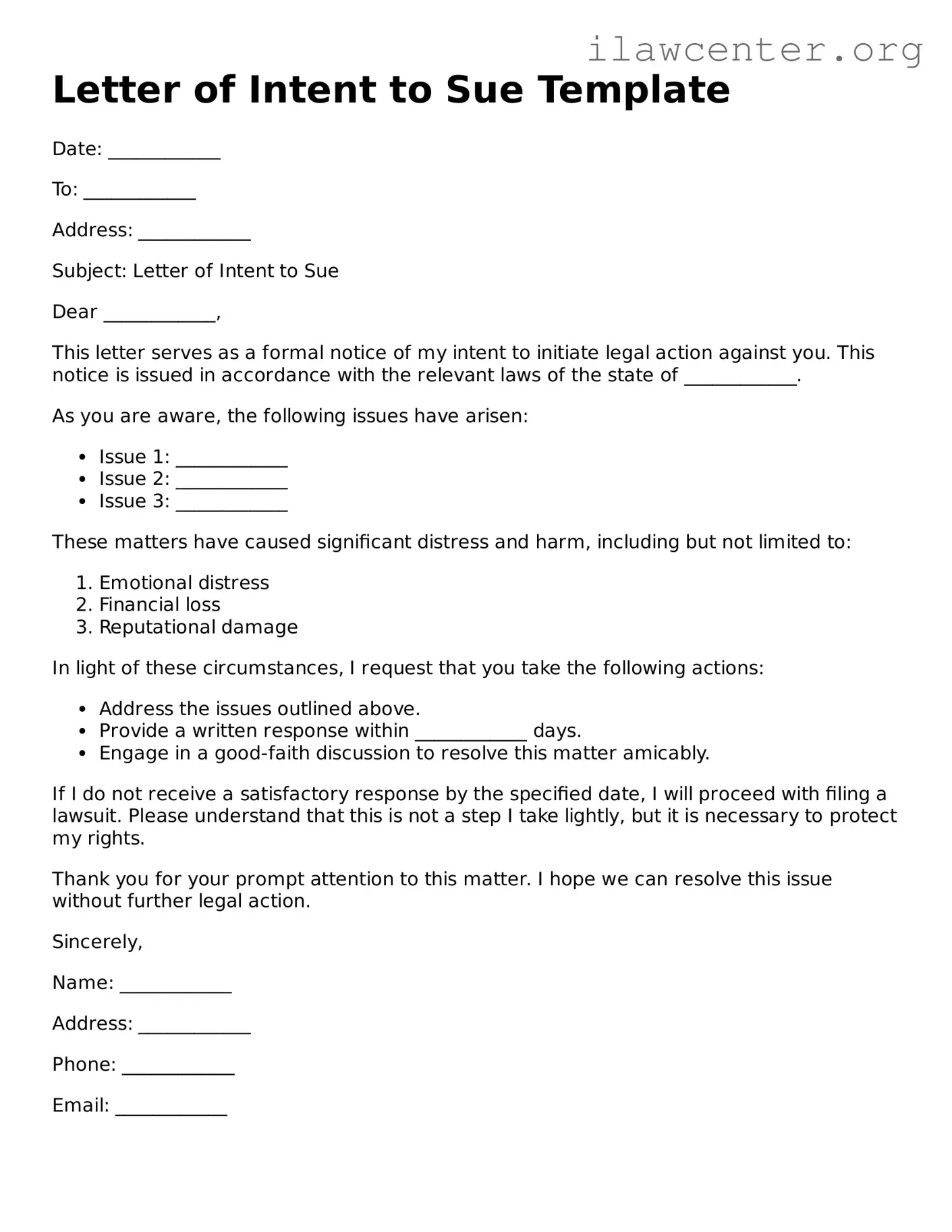
Letter of Intent to Sue Template

Date: ____________

To: ____________

Address: ____________

Subject: Letter of Intent to Sue

Dear ____________,

This letter serves as a formal notice of my intent to initiate legal action against you. This notice is issued in accordance with the relevant laws of the state of ____________.

As you are aware, the following issues have arisen:

  • Issue 1: ____________
  • Issue 2: ____________
  • Issue 3: ____________

These matters have caused significant distress and harm, including but not limited to:

  1. Emotional distress
  2. Financial loss
  3. Reputational damage

In light of these circumstances, I request that you take the following actions:

  • Address the issues outlined above.
  • Provide a written response within ____________ days.
  • Engage in a good-faith discussion to resolve this matter amicably.

If I do not receive a satisfactory response by the specified date, I will proceed with filing a lawsuit. Please understand that this is not a step I take lightly, but it is necessary to protect my rights.

Thank you for your prompt attention to this matter. I hope we can resolve this issue without further legal action.

Sincerely,

Name: ____________

Address: ____________

Phone: ____________

Email: ____________

PDF Form Characteristics

Fact Name Description
Purpose A Letter of Intent to Sue informs a party of the intent to initiate legal action, allowing for potential resolution before a lawsuit is filed.
State-Specific Forms Many states have their own forms or requirements for a Letter of Intent to Sue. Check your state’s laws for specific guidelines.
Governing Law The governing laws for these letters vary by state. For example, California's Civil Code Section 3280 outlines specific requirements.
Content Requirements The letter typically includes the parties involved, a description of the issue, and a request for resolution.
Response Time Recipients of the letter often have a specified period to respond before legal action can be initiated.
Legal Implications Sending a Letter of Intent to Sue can establish a timeline for negotiations and may impact future legal proceedings.

Instructions on Utilizing Letter of Intent to Sue

Filling out a Letter of Intent to Sue form is an important step in the legal process. After completing the form, you will typically send it to the party you intend to sue, informing them of your intention to take legal action. This can sometimes lead to a resolution without the need for a lawsuit. Follow these steps to ensure you fill out the form correctly.

  1. Begin by entering your full name and contact information at the top of the form.
  2. Provide the name and contact information of the party you intend to sue.
  3. Clearly state the reason for your intended lawsuit. Be specific about the events that led to this decision.
  4. Include any relevant dates associated with the events in question.
  5. List any attempts you have made to resolve the issue before deciding to sue.
  6. Specify the damages or relief you are seeking as a result of the situation.
  7. Sign and date the form at the bottom to validate your intent.

Once you have completed the form, review it for accuracy. Make sure all information is correct and clear. After that, you can send it to the appropriate party, keeping a copy for your records.

Important Facts about Letter of Intent to Sue

What is a Letter of Intent to Sue?

A Letter of Intent to Sue is a formal document that notifies an individual or organization of your intention to file a lawsuit against them. This letter serves as a warning and outlines the grievances you have, along with the potential legal claims you may pursue. It can encourage the recipient to address the issue before it escalates to court proceedings.

When should I send a Letter of Intent to Sue?

You should consider sending a Letter of Intent to Sue when you have attempted to resolve a dispute through other means, such as negotiation or mediation, but have not reached a satisfactory outcome. This letter can be particularly useful in situations involving contract disputes, personal injury claims, or property issues, where clear communication about your intentions is essential.

What should be included in the Letter of Intent to Sue?

Your Letter of Intent to Sue should include several key components. Start with your contact information and that of the recipient. Clearly state the reason for the letter, detailing the events that led to your grievance. Specify the legal grounds for your potential claims and outline any damages or losses you have incurred. Finally, provide a deadline for the recipient to respond, as well as any proposed solutions or actions you expect them to take.

Is a Letter of Intent to Sue legally binding?

A Letter of Intent to Sue is not a legally binding document. However, it can serve as a critical step in the legal process. While it does not create a formal obligation for the recipient to act, it does indicate your serious intent to pursue legal action if the matter is not resolved. It can also be useful in demonstrating that you have made a good faith effort to settle the dispute outside of court.

Can I send a Letter of Intent to Sue without a lawyer?

Yes, you can send a Letter of Intent to Sue without a lawyer. Many individuals choose to draft and send this letter on their own, especially in straightforward cases. However, consulting with a legal professional can provide valuable insights and help ensure that your letter is effective and properly formatted. A lawyer can also assist in identifying the strongest legal arguments for your case.

What happens after I send the Letter of Intent to Sue?

After sending the Letter of Intent to Sue, you should await a response from the recipient. They may choose to address your concerns, propose a settlement, or ignore the letter altogether. If they respond positively, you may be able to resolve the issue amicably. If not, you may proceed with filing a lawsuit, having established that you attempted to resolve the matter beforehand.

Can a Letter of Intent to Sue help in negotiations?

Yes, a Letter of Intent to Sue can be a powerful tool in negotiations. By clearly outlining your grievances and intentions, it demonstrates your seriousness about the situation. This can prompt the recipient to take your claims more seriously and may encourage them to engage in meaningful discussions to avoid litigation. Effective communication can often lead to a resolution that satisfies both parties.
Common mistakes

When filling out a Letter of Intent to Sue form, many individuals make common mistakes that can hinder their case. One frequent error is failing to provide complete information. This includes not listing all parties involved or omitting crucial details about the incident. Incomplete information can lead to delays or even rejection of the letter.

Another mistake is not clearly stating the reason for the lawsuit. A vague description can confuse the reader and weaken the intent. It’s important to be specific about what happened and why it warrants legal action. Clarity helps ensure that the recipient understands the seriousness of the situation.

People often overlook the importance of including relevant dates. Forgetting to mention when the incident occurred or when the parties were notified can create gaps in the timeline of events. This oversight can make it challenging to establish a clear narrative for the case.

Additionally, some individuals neglect to include their contact information. Without a way for the other party to respond or communicate, the process can stall. Providing a phone number, email, or mailing address is essential for effective communication.

Another common error is failing to sign and date the letter. A Letter of Intent to Sue is not considered valid unless it is signed by the person initiating the lawsuit. Without a signature, the document may be seen as incomplete or unofficial.

Lastly, many people forget to keep a copy of the letter for their records. This can lead to confusion later on, especially if questions arise about what was sent or when. Keeping a copy ensures that all parties have a reference point for future discussions.

Documents used along the form

A Letter of Intent to Sue is often the first step in a legal dispute. It signals your intention to pursue legal action and outlines the basis for your claim. To support this process, several other forms and documents may be necessary. Below is a list of common documents that are frequently used alongside the Letter of Intent to Sue.

  • Complaint: This document formally initiates a lawsuit. It outlines the plaintiff's case, including the facts, legal claims, and the relief sought.
  • Summons: A legal document issued by the court that notifies the defendant of the lawsuit and instructs them to respond.
  • Affidavit: A written statement confirmed by oath or affirmation, used as evidence in court. It often supports claims made in the complaint.
  • Demand Letter: A document sent to the opposing party outlining the claim and requesting a specific action or compensation before legal proceedings begin.
  • Notice of Claim: This document informs a government entity of a claim against it. It is often required before filing a lawsuit against public agencies.
  • Response or Answer: The defendant’s written response to the complaint, addressing the allegations and stating any defenses.
  • Discovery Requests: These include interrogatories, requests for production, and requests for admissions. They allow both parties to gather information from each other.
  • Settlement Agreement: A document outlining the terms of a settlement reached between the parties, often resolving the dispute without going to trial.
  • Motion: A formal request made to the court for a specific ruling or order, often filed during the course of litigation.
  • Case Management Statement: A document that outlines the status of the case and proposed timelines for discovery and trial, typically required by the court.

These documents play crucial roles in the legal process, helping to clarify claims, establish timelines, and facilitate communication between parties. Understanding these forms can help streamline the legal proceedings and improve the chances of a favorable outcome.

Similar forms

  • Demand Letter: A demand letter is a formal document sent to an individual or organization outlining a claim and requesting compensation or action. Like the Letter of Intent to Sue, it serves as a preliminary step before legal action, often encouraging resolution without going to court.
  • Notice of Claim: This document notifies a governmental entity of a potential lawsuit. Similar to the Letter of Intent to Sue, it provides the recipient with an opportunity to address the issue before formal litigation begins. It often includes details about the claim and the damages sought.
  • Cease and Desist Letter: A cease and desist letter is used to formally request that someone stop a particular action. Much like the Letter of Intent to Sue, it signals potential legal action if the recipient does not comply. This document aims to resolve disputes amicably before escalating to court.
  • Pre-Litigation Notice: This notice informs the other party of a potential lawsuit and outlines the claims being made. It is similar to the Letter of Intent to Sue in that it serves as a warning and encourages the parties to negotiate a resolution before entering the courtroom.
  • Settlement Proposal: A settlement proposal outlines the terms under which one party is willing to resolve a dispute without going to trial. Like the Letter of Intent to Sue, it can facilitate discussions and negotiations, aiming to avoid the costs and time associated with litigation.

Dos and Don'ts

When filling out a Letter of Intent to Sue form, it’s important to be thorough and accurate. Here are six key actions to take and avoid:

  • Do provide clear and concise information about your claim.
  • Do include all relevant details, such as dates, locations, and parties involved.
  • Do maintain a professional tone throughout the document.
  • Do proofread for any errors or omissions before submission.
  • Don't use emotional language or personal attacks against the other party.
  • Don't leave any sections blank; incomplete forms can delay the process.

Following these guidelines can help ensure your Letter of Intent to Sue is effective and taken seriously.

Misconceptions

The Letter of Intent to Sue form is often misunderstood. Here are ten common misconceptions about this document:

  1. It is a formal lawsuit. Many people believe that submitting a Letter of Intent to Sue automatically initiates a legal case. In reality, it is a preliminary step meant to inform the other party of potential legal action.
  2. It guarantees a lawsuit will follow. Submitting this letter does not mean a lawsuit will definitely occur. It serves as a warning and may lead to negotiations or settlements instead.
  3. It must be filed with the court. A Letter of Intent to Sue is typically not filed with a court. Instead, it is sent directly to the party involved in the dispute.
  4. It requires legal representation. While having an attorney can be beneficial, individuals can draft and send this letter on their own if they choose.
  5. It has a standard format. There is no universally accepted format for this letter. Each situation may require a different approach based on the specifics of the dispute.
  6. It must be sent via certified mail. While sending it through certified mail can provide proof of delivery, it is not a requirement. Regular mail or email may also be used.
  7. It is only for personal injury cases. This letter can be used in various types of disputes, including contract issues, property disputes, and more.
  8. It includes detailed legal arguments. The letter should state the intent to sue but does not need to delve into intricate legal arguments or evidence.
  9. It must be sent immediately. While timing can be important, there is no strict deadline for sending this letter. However, it is wise to act promptly to preserve legal rights.
  10. It is a threat. While it may feel confrontational, the letter is often a means to open communication and resolve issues before escalating to litigation.

Understanding these misconceptions can help individuals navigate the process more effectively and make informed decisions regarding their legal matters.

Key takeaways

When considering legal action, filling out a Letter of Intent to Sue form can be a crucial first step. Here are some key takeaways to keep in mind:

  1. Understand the Purpose: This form serves as a formal notice to the other party that you intend to take legal action. It can sometimes prompt a resolution before the lawsuit is filed.
  2. Be Clear and Concise: Clearly state your intentions and the reasons for your potential lawsuit. Avoid vague language to ensure your message is understood.
  3. Include Relevant Details: Provide important information such as dates, events, and the nature of the dispute. This context can help the other party understand your position.
  4. Document Your Efforts: If you have attempted to resolve the issue informally, mention these efforts. This can demonstrate your willingness to find a solution without litigation.
  5. Consult Legal Counsel: While it’s possible to fill out the form on your own, seeking legal advice can help ensure that your letter is effective and legally sound.
  6. Send It Properly: Make sure to send the letter through a method that provides proof of delivery, such as certified mail. This can be important if the matter escalates to court.
  7. Keep a Copy: Always retain a copy of the Letter of Intent to Sue for your records. This documentation can be valuable if legal proceedings follow.

By following these guidelines, you can effectively use the Letter of Intent to Sue form as a tool in your legal strategy.