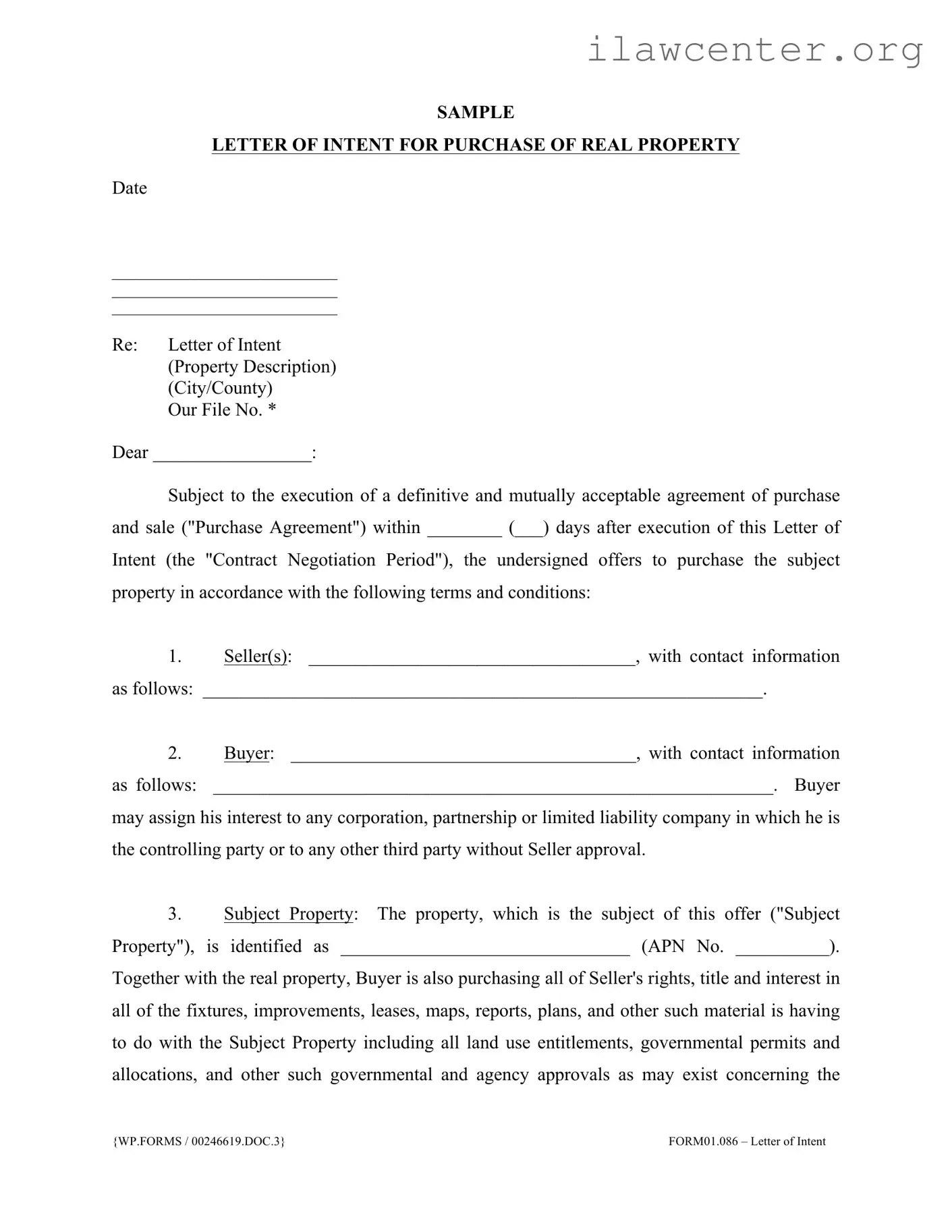





Letter To Purchase Land PDF Template

Letter To Purchase Land PDF Template

The Letter To Purchase Land form is a preliminary document that outlines the intentions of a buyer to purchase a specific piece of real estate. It serves as a foundation for negotiating the terms of a formal purchase agreement, ensuring both parties understand their rights and responsibilities during the negotiation period. For those looking to secure land, filling out this form is a crucial first step; click the button below to get started.

Article Guide

When considering the purchase of land, a Letter to Purchase Land serves as a crucial first step in formalizing your intentions. This document outlines the key terms and conditions of the proposed transaction, setting the stage for further negotiations. It begins with basic information, such as the names and contact details of both the buyer and seller. The specific property being offered for sale is identified, along with any fixtures and rights associated with it. The letter also details the proposed purchase price and outlines the terms of the sale, including the opening of escrow and deposit requirements. Importantly, it establishes a feasibility period during which the buyer can conduct due diligence on the property. This period allows for careful consideration and evaluation before any binding agreement is finalized. Additionally, the letter emphasizes that it is not a definitive contract but rather an expression of interest, with a specified timeframe for negotiations. Understanding these elements is essential for anyone looking to navigate the complexities of real estate transactions effectively.

Letter To Purchase Land Preview

_____________________________
_____________________________
_____________________________
SAMPLE
LETTER OF INTENT FOR PURCHASE OF REAL PROPERTY
Date
Re: Letter of Intent
(Property Description)
(City/County)
Our File No. *
Dear _________________:
Subject to the execution of a definitive and mutually acceptable agreement of purchase
and sale ("Purchase Agreement") within ________ (___) days after execution of this Letter of
Intent (the "Contract Negotiation Period"), the undersigned offers to purchase the subject
property in accordance with the following terms and conditions:
1. Seller(s): ___________________________________, with contact information
as follows: ____________________________________________________________.
2. Buyer: _____________________________________, with contact information
as follows: ____________________________________________________________. Buyer
may assign his interest to any corporation, partnership or limited liability company in which he is
the controlling party or to any other third party without Seller approval.
3. Subject Property: The property, which is the subject of this offer ("Subject
Property"), is identified as _______________________________ (APN No. __________).
Together with the real property, Buyer is also purchasing all of Seller's rights, title and interest in
all of the fixtures, improvements, leases, maps, reports, plans, and other such material is having
to do with the Subject Property including all land use entitlements, governmental permits and
allocations, and other such governmental and agency approvals as may exist concerning the
{WP.FORMS / 00246619.DOC.3} FORM01.086 Letter of Intent
_____________________
_____________________
Page 2
property. In addition, this offer to purchase includes the following specific items: ___________
____________________________________________.
4. Purchase Price: ___________________ ($________).
5. Terms of Purchase: ________________________________________________
___________________________________________________.
6. Opening of Escrow: Escrow ("the Purchase Escrow") shall be opened at
______________
Title Company within three (3) business days from execution of this Letter of
Intent. The Purchase Agreement and Mutual Escrow Instructions shall be mutually prepared and
executed by Buyer and Seller within ________ (___) days of execution by both parties of this
Letter of Intent to purchase (the "Contract Negotiation Period").
7. Deposit Toward Purchase Price:
A. Initial Deposit: Concurrently with the opening of escrow, Buyer shall
place
therein the sum of ___________________________ Dollars ($____________) as a
refundable deposit toward and applicable to the Purchase Price ("the Initial Deposit"). Escrow
Holder shall deposit such sum in an interest-bearing, federally insured account with interest
accruing for the benefit of Buyer.
B. Second Deposit: An additional non-refundable deposit of
__________________________
Dollars ($____________) shall be applicable to the Purchase
Price and upon approval of the feasibility shall be released to Seller, inclusive of the Initial
Deposit.
8. Feasibility Period: Buyer shall have until ________________ to perform all
feasibility
and due diligence for subject property. Seller shall fully cooperate with Buyer in
_____________________
_____________________
Page 3
providing any and all information available regarding the development potential of the property.
Buyer may terminate this Letter of Intent and/or the Purchase Agreement at any time prior to the
end of the Feasibility Period for any reason or no reason at all upon written notification to Seller
and Escrow Holder of the termination. Upon notice of termination, Escrow Holder shall be
instructed to immediately release the Initial Deposit made by Buyer and return to Buyer within
five (5) business days of termination.
9. Buyer's Condition Precedent to Closing: Following the expiration of the
Feasibility Period, Buyer's obligation to close escrow shall be subject only to the following
conditions:
A. Title Company shall be in position to issue a policy of title insurance to
Buyer in the full amount of the Purchase Price showing good and marketable title vested in
Buyer subject only to such exceptions to title as have been approved by Buyer during the
Feasibility Period.
B. The non-existence of any development, building, construction, flood or
moratoria affecting the Subject Property.
C. Seller to provide Buyer title to property free and clear of liens except for
non-delinquent bonds and taxes.
10. Close of Escrow: Close of escrow to be on _______________________.
_____________________
_____________________
Page 4
11. Other Provisions:
A. The Purchase Agreement may contain other provisions such as, but not
limited
to, a liquidated damages clause, attorney's fees, notices, mutual indemnifications,
broker's commission, and the like.
B. Any and all documentation provided by Seller to Buyer shall be returned
to Seller upon cancellation of this transaction.
12. Expiration of Offer: This Letter of Intent shall constitute an open offer until
____________, at which time it shall be automatically terminated if not executed by Seller.
If the above outline of terms and conditions are acceptable, please indicate by signing
below.
All parties to these transactions intend that this proposal be superseded by a the Purchase
Agreement. In the meantime, all parties agree to proceed in accordance with terms and
conditions outlined in this Letter of Intent. Seller understands the purpose of this Letter of Intent
is to allow further investigation by both parties into the feasibility of entering into a formal
agreement. This Letter of Intent is only binding on the parties during the Contract Negotiation
period. If the Purchase Agreement is not mutually executed within the Contract Negotiation
Period for any reason whatsoever or no reason at all, this Letter of Intent shall expire and no
party shall have any further rights or duties hereunder. Seller shall not solicit other offers during
the Contract Negotiation Period.
BUYER:
________________________________ Dated: _________________
SELLER:
________________________________ Dated: _________________
_____________________
_____________________
Page 5

File Properties

Fact Name Description
Purpose The Letter to Purchase Land serves as a preliminary agreement outlining the buyer's intent to purchase real property, pending a formal Purchase Agreement.
Contract Negotiation Period The buyer and seller have a specified period, usually a few days, to negotiate the terms of the Purchase Agreement after signing the Letter of Intent.
Assignment Rights The buyer can assign their interest in the property to a corporation or partnership without needing seller approval, providing flexibility in the transaction.
Property Description The Letter must include a clear description of the subject property, including its APN (Assessor's Parcel Number) for identification purposes.
Deposit Requirements The buyer is required to make an initial refundable deposit and may also be required to make a non-refundable second deposit, which is applied to the purchase price.
Feasibility Period The buyer is granted a timeframe to conduct due diligence on the property, during which they can terminate the Letter of Intent without penalty.
Title Insurance The buyer's obligation to close the sale is contingent upon the Title Company being able to issue a policy of title insurance showing clear title to the property.
Close of Escrow The closing of escrow must occur on a specified date, which is determined during the negotiation of the Purchase Agreement.
Governing Law The Letter to Purchase Land is subject to state-specific laws, which can vary. For example, California law governs such agreements under the California Civil Code.
Expiration of Offer The offer outlined in the Letter is open until a specified date. If not executed by the seller by that date, the offer automatically terminates.

Instructions on Utilizing Letter To Purchase Land

Filling out the Letter to Purchase Land form is a crucial step in initiating a real estate transaction. This document outlines the intentions of both the buyer and the seller, setting the stage for further negotiations. Once completed, the form will guide the parties through the next steps in finalizing the purchase agreement.

  1. Date: Write the current date at the top of the form.
  2. Recipient Information: Fill in the name and address of the seller.
  3. Subject Property: Describe the property being purchased, including its address and APN (Assessor's Parcel Number).
  4. Seller Information: Enter the seller's name and contact information.
  5. Buyer Information: Provide your name and contact details as the buyer.
  6. Purchase Price: Clearly state the proposed purchase price in both words and numbers.
  7. Terms of Purchase: Outline any specific terms related to the purchase.
  8. Escrow Information: Indicate the title company where escrow will be opened and the timeline for doing so.
  9. Deposits: Specify the amounts for the initial and second deposits, detailing their refundable or non-refundable nature.
  10. Feasibility Period: State the deadline for conducting feasibility and due diligence on the property.
  11. Closing Conditions: List any conditions that must be met before closing the escrow.
  12. Close of Escrow: Indicate the proposed closing date for the transaction.
  13. Other Provisions: Mention any additional terms that may be included in the Purchase Agreement.
  14. Expiration of Offer: Specify the expiration date for the offer if not accepted by the seller.
  15. Signatures: Ensure both the buyer and seller sign and date the form to indicate acceptance.

Important Facts about Letter To Purchase Land

What is a Letter To Purchase Land form?

The Letter To Purchase Land form is a document that outlines an offer to buy a specific piece of real estate. It serves as a preliminary agreement between the buyer and seller, detailing the terms and conditions under which the buyer intends to purchase the property. This letter is often the first step in the negotiation process and is typically followed by a more formal Purchase Agreement.

What information is required to complete the form?

To complete the Letter To Purchase Land form, several key pieces of information are needed. This includes the names and contact details of both the buyer and seller, a description of the property being purchased, the proposed purchase price, and the terms of the purchase. Additionally, details about deposits, the feasibility period for inspections, and the timeline for closing escrow must be provided. Each section must be filled out carefully to ensure clarity and mutual understanding.

What happens after the Letter To Purchase Land is signed?

Once both parties sign the Letter To Purchase Land, the Contract Negotiation Period begins. This period allows both the buyer and seller to negotiate the terms of the Purchase Agreement. During this time, the buyer can conduct due diligence on the property, including inspections and feasibility studies. If the Purchase Agreement is not finalized within the specified timeframe, the letter will expire, and neither party will have any further obligations under it.

Can the buyer change their mind after signing the letter?

Yes, the buyer can change their mind after signing the Letter To Purchase Land. The letter allows the buyer to terminate their interest in the property during the feasibility period without any specific reason. If the buyer decides to withdraw, they must provide written notice to the seller and the escrow holder. Upon termination, the buyer will receive their initial deposit back within five business days.

Common mistakes

When filling out the Letter To Purchase Land form, people often make several common mistakes that can lead to confusion or complications later in the process. Understanding these pitfalls can help ensure that the form is completed correctly and efficiently.

One frequent error is failing to provide complete contact information for both the seller and the buyer. This section is crucial for communication during the negotiation process. Incomplete or incorrect details can cause delays and misunderstandings. It is essential to double-check that all names, addresses, and phone numbers are accurate and up-to-date.

Another mistake involves not clearly identifying the subject property. The form requires specific information, such as the property description and APN number. Omitting this information or providing vague descriptions can create ambiguity about what is being purchased. Buyers should take the time to ensure that the property details are precise and comprehensive.

Additionally, some individuals overlook the importance of specifying the purchase price. Leaving this section blank or providing an unclear amount can lead to disputes later on. It is important to clearly state the purchase price in both numerical and written form to avoid any confusion.

People also sometimes forget to include terms of purchase or leave them vague. This section outlines the conditions of the sale and should be as detailed as possible. Ambiguities can lead to differing interpretations and potential conflicts. Buyers should clearly articulate their expectations regarding payment terms and any other relevant conditions.

Another common oversight is neglecting the feasibility period. Buyers must indicate the timeframe in which they will conduct due diligence. Failing to set a specific date can result in rushed decisions or missed opportunities to fully assess the property. It is critical to establish a clear timeline for this period.

Lastly, individuals may not pay enough attention to the expiration of the offer. This section specifies how long the offer remains valid. If this date is not clearly defined, the offer could expire before both parties have a chance to agree. It is advisable to set a reasonable expiration date to ensure both parties have ample time to consider the proposal.

Documents used along the form

When considering the purchase of land, a Letter To Purchase Land is often accompanied by several other important documents. Each of these documents serves a specific purpose in the transaction, ensuring that both the buyer and seller are protected and that the process runs smoothly. Below is a list of common forms and documents that are typically used alongside the Letter To Purchase Land.

  • Purchase Agreement: This is a formal contract that outlines the terms and conditions of the sale. It includes details such as the purchase price, payment terms, and any contingencies that must be met before the sale is finalized.
  • Title Report: This document provides information about the ownership of the property and any liens or encumbrances that may exist. It helps the buyer ensure that the seller has the legal right to sell the property.
  • Escrow Instructions: These are detailed guidelines provided to the escrow agent that outline how to handle the funds and documents related to the transaction. They specify the conditions under which the sale will be completed.
  • Disclosure Statements: Sellers are often required to provide disclosures about the property’s condition and any known issues. This document helps protect buyers by ensuring they are aware of potential problems before completing the purchase.
  • Due Diligence Checklist: This is a list of tasks and investigations that a buyer should complete before finalizing the purchase. It may include inspections, surveys, and environmental assessments to evaluate the property’s suitability for the buyer's intended use.
  • Financing Documents: If the buyer is obtaining a loan to purchase the property, these documents will outline the terms of the loan, including interest rates, repayment schedules, and any conditions set by the lender.
  • Power of Attorney: In some cases, a buyer or seller may authorize another person to act on their behalf in the transaction. This document grants that authority and is often used when one party cannot be present at closing.
  • Closing Statement: This document summarizes the final financial transaction between the buyer and seller. It details all costs, fees, and disbursements associated with the sale, ensuring transparency in the closing process.
  • Property Survey: A survey provides a detailed map of the property’s boundaries and any structures on it. This is crucial for confirming property lines and identifying any encroachments or easements that may affect the buyer's use of the land.
  • Homeowners Association (HOA) Documents: If the property is part of an HOA, these documents outline the rules, regulations, and fees associated with the community. Buyers need to review these to understand their obligations as property owners.

Each of these documents plays a critical role in the land purchasing process. By understanding their purpose and ensuring they are properly completed, both buyers and sellers can navigate the complexities of real estate transactions with greater confidence and clarity.

Similar forms

  • Purchase Agreement: This document formalizes the terms of the sale, including the purchase price and conditions. It is the definitive agreement that follows the Letter of Intent, detailing the obligations of both buyer and seller.
  • Offer to Purchase Real Estate: Similar to the Letter of Intent, this document expresses the buyer's intention to buy property, outlining essential terms such as price and conditions, but it is typically more formal and binding.
  • Sales Contract: This legally binding agreement outlines the specifics of the sale, including contingencies and closing procedures. It is often created after the Letter of Intent is accepted.
  • Real Estate Purchase and Sale Agreement: This comprehensive document details all aspects of the transaction, including financing, inspections, and disclosures, and serves as the final agreement between the parties.
  • Escrow Agreement: This document outlines the terms under which a neutral third party will hold funds and documents until all conditions of the sale are met, ensuring a secure transaction.
  • Letter of Intent for Lease: Similar in structure to the Letter of Intent for Purchase, this document expresses a tenant's intention to lease a property, detailing terms such as rent and duration.
  • Due Diligence Checklist: This document lists the necessary investigations and evaluations a buyer should conduct before finalizing a purchase, ensuring they are aware of any potential issues with the property.
  • Disclosure Statement: This document provides essential information about the property's condition and any known issues, similar to the information requested during the feasibility period in the Letter of Intent.
  • Title Commitment: This document outlines the title insurance coverage and any liens or encumbrances on the property, ensuring the buyer receives clear title upon closing.
  • Termination Notice: This document is used to formally end negotiations or a transaction, similar to the termination clause in the Letter of Intent, providing a clear record of the decision.

Dos and Don'ts

When filling out the Letter To Purchase Land form, it is crucial to approach the task with care. Here are five important things to keep in mind:

  • Do ensure all information is accurate. Verify that names, contact details, and property descriptions are correct to avoid confusion later.
  • Don't leave any sections blank. Each part of the form should be completed to provide a clear understanding of the offer.
  • Do specify the purchase price clearly. This helps both parties understand the financial terms upfront.
  • Don't use vague language. Be specific about the terms and conditions to prevent misunderstandings.
  • Do keep a copy for your records. Having a copy of the completed form is essential for future reference and follow-ups.

By following these guidelines, you can ensure a smoother process in your land purchase negotiations.

Misconceptions

Misconceptions about the Letter to Purchase Land form can lead to confusion and missteps in real estate transactions. Here are seven common misconceptions, along with clarifications to help you better understand this important document.

  • It is a legally binding contract. Many believe that the Letter of Intent (LOI) is a binding agreement. In reality, it is typically non-binding and serves as a preliminary document outlining the terms of a future purchase agreement.
  • All terms are set in stone. Some people think that once the LOI is signed, all terms are fixed. However, the LOI is often a starting point for negotiations, and terms can be adjusted before the final Purchase Agreement is executed.
  • It guarantees the sale of the property. A common misconception is that signing the LOI guarantees that the property will be sold. In truth, the seller can still consider other offers during the Contract Negotiation Period.
  • Only the buyer can terminate the agreement. Many assume that only the buyer has the right to terminate the LOI. In fact, both parties can withdraw from negotiations if they find the terms unacceptable.
  • It does not require a deposit. Some people think that no money is involved until the final sale. However, the LOI often includes provisions for an initial deposit, which shows the buyer's commitment to the transaction.
  • Due diligence is optional. A misconception exists that buyers can skip due diligence once the LOI is signed. In reality, the feasibility period allows buyers to investigate the property thoroughly before committing to the purchase.
  • It does not involve legal considerations. Many believe that the LOI is a simple, informal agreement. However, it can have legal implications, and both parties should consider consulting legal counsel before signing.

Understanding these misconceptions can help both buyers and sellers navigate the complexities of real estate transactions more effectively. Clarity in the process fosters better communication and more successful outcomes.

Key takeaways

  • Clearly state the date at the top of the letter to establish a timeline.

  • Identify the seller and buyer by including their full names and contact information.

  • Describe the property being purchased, including the property identification number (APN).

  • Specify the purchase price in both words and numbers for clarity.

  • Outline the terms of purchase in a straightforward manner to avoid confusion.

  • Indicate the title company where escrow will be opened and the timeline for doing so.

  • Detail the deposit requirements, including initial and second deposits, and their conditions.

  • Set a feasibility period for the buyer to conduct due diligence on the property.

  • List any conditions that must be met before closing escrow, such as title insurance and lien clearance.

  • Include a clear expiration date for the offer to ensure timely responses from the seller.