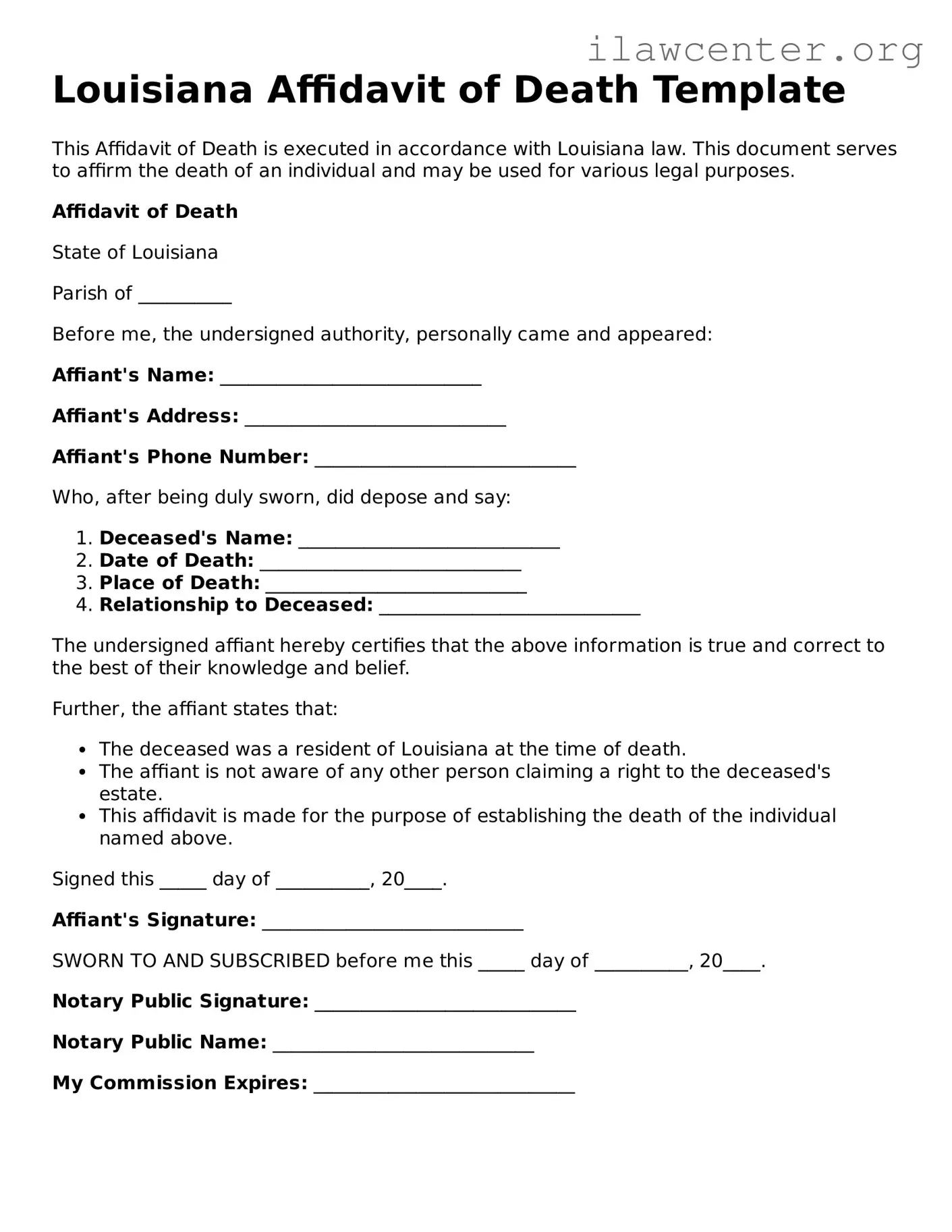
What is the Louisiana Affidavit of Death form?
The Louisiana Affidavit of Death form is a legal document used to officially declare the death of an individual. This form is often required to settle estates, transfer property, or update legal records. It serves as a formal acknowledgment of a person's passing and may be used in various legal proceedings.
Who can complete the Affidavit of Death form?
The form can typically be completed by a family member, executor of the estate, or any individual who has knowledge of the decedent's death. It is important that the person completing the form has the necessary information and can provide accurate details regarding the deceased.
What information is required on the form?
Essential information includes the full name of the deceased, the date of death, and the place of death. Additionally, the form may require the affiant's name, relationship to the deceased, and their signature. It is crucial to ensure that all details are accurate to avoid any legal complications.
Do I need to have the form notarized?
Yes, the Affidavit of Death form typically needs to be notarized. This means a notary public must witness the signing of the document and provide their seal. Notarization adds a layer of authenticity and helps ensure that the document is legally valid.
Where should I file the Affidavit of Death?
The completed and notarized Affidavit of Death should be filed with the appropriate local or parish court. In some cases, it may also need to be submitted to other entities, such as banks or the Department of Motor Vehicles, especially if it pertains to transferring assets or updating records.
Is there a fee associated with filing the form?
Filing fees may vary depending on the jurisdiction. It is advisable to check with the local court or office where the affidavit will be filed to determine if any fees apply. Being aware of potential costs can help avoid surprises during the process.
Can the Affidavit of Death be used for any type of property transfer?
The Affidavit of Death can be used for transferring certain types of property, particularly if the deceased held assets in their name alone. However, it is important to consult with a legal professional to understand the specific requirements and implications for different types of property.
What happens if I don’t file the Affidavit of Death?
If the Affidavit of Death is not filed, it may delay the settlement of the deceased's estate and the transfer of assets. Additionally, it could lead to complications in legal matters related to the deceased, such as claims against their estate or issues with beneficiaries. Timely filing helps ensure a smoother process for all involved.