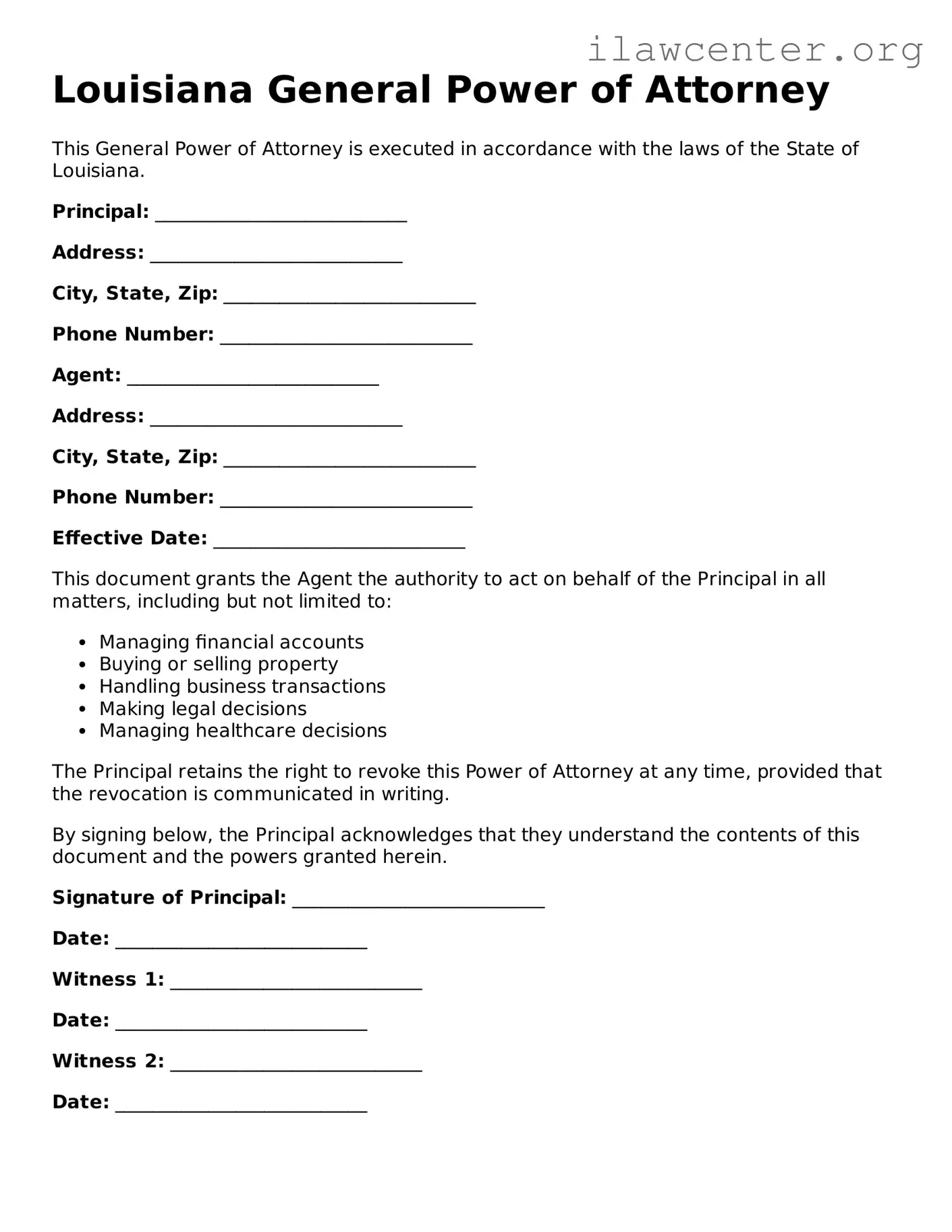
What is a Louisiana General Power of Attorney?
A Louisiana General Power of Attorney is a legal document that allows one person, known as the principal, to grant another person, called the agent or attorney-in-fact, the authority to act on their behalf. This can include managing finances, making legal decisions, and handling various affairs when the principal is unable to do so themselves.
Why might someone need a General Power of Attorney?
People often choose to create a General Power of Attorney to ensure that their affairs are managed according to their wishes if they become incapacitated or unable to make decisions. This document can provide peace of mind, knowing that a trusted individual will be able to handle important matters during difficult times.
Who can be appointed as an agent in a General Power of Attorney?
Any competent adult can be appointed as an agent in a General Power of Attorney. This includes family members, friends, or professionals, such as attorneys. It is essential to choose someone trustworthy, as they will have significant control over the principal's affairs.
What powers can be granted to the agent?
The powers granted in a General Power of Attorney can be broad. They may include managing bank accounts, buying or selling property, paying bills, and making healthcare decisions. The principal can specify which powers to include or exclude in the document.
Is a General Power of Attorney effective immediately?
Yes, a General Power of Attorney typically becomes effective immediately upon signing, unless the principal specifies a different start date. This means the agent can begin acting on behalf of the principal right away.
Can a General Power of Attorney be revoked?
Yes, a principal can revoke a General Power of Attorney at any time, as long as they are mentally competent. This revocation must be done in writing and should be communicated to the agent and any relevant institutions to prevent unauthorized actions.
Does a General Power of Attorney remain valid after the principal's death?
No, a General Power of Attorney automatically becomes invalid upon the death of the principal. After that point, the principal's estate will be managed according to their will or, if there is no will, according to state laws of intestacy.
Is it necessary to have the General Power of Attorney notarized?
While it is not always required, having a General Power of Attorney notarized is highly recommended. Notarization adds an extra layer of authenticity and can help prevent disputes regarding the validity of the document.
Can I use a General Power of Attorney for healthcare decisions?
A General Power of Attorney can include healthcare decisions, but it is often better to create a separate document called a Healthcare Power of Attorney for this purpose. This ensures that specific medical wishes are clearly outlined and respected.
What should I do if I have more questions about the General Power of Attorney?
If you have additional questions or need assistance, consider consulting with a legal professional who can provide guidance tailored to your specific situation. They can help clarify any concerns and ensure that your document meets all necessary requirements.