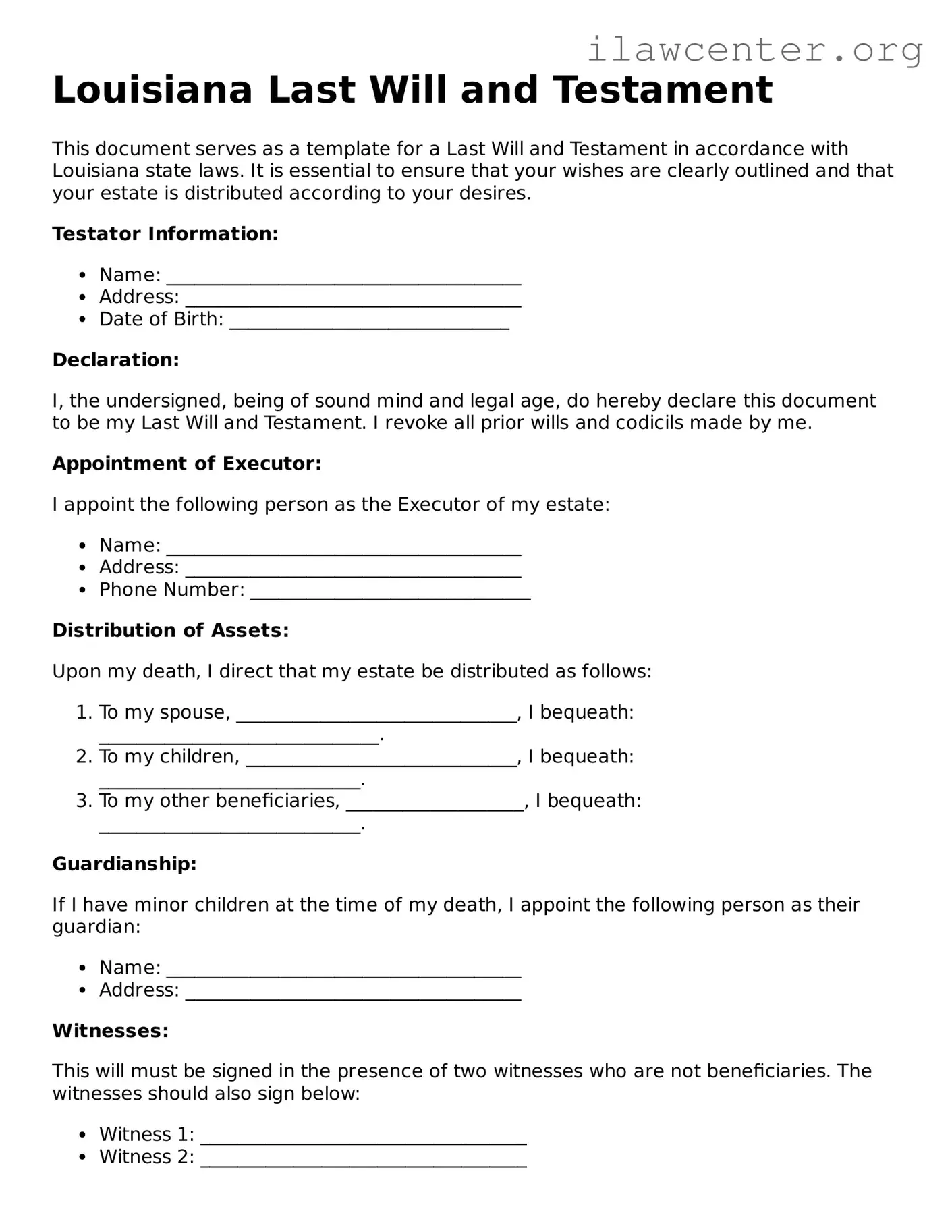
What is a Last Will and Testament in Louisiana?
A Last Will and Testament is a legal document that outlines how a person's assets and affairs should be handled after their death. In Louisiana, this document allows individuals to specify who will inherit their property, appoint guardians for minor children, and designate an executor to manage the estate. It is an essential tool for ensuring that your wishes are honored and can provide peace of mind for you and your loved ones.
Who can create a Last Will and Testament in Louisiana?
In Louisiana, any person who is at least 18 years old and of sound mind can create a Last Will and Testament. This means you must be able to understand the nature of your actions and the consequences of your decisions. If you meet these criteria, you can take the important step of preparing your will to reflect your wishes.
Does a Last Will and Testament need to be notarized in Louisiana?
While a Last Will and Testament does not need to be notarized to be valid in Louisiana, it is highly recommended. If your will is not notarized, it must be signed by two witnesses who are not beneficiaries. A notarized will can streamline the probate process and may reduce the likelihood of disputes among heirs.
What happens if someone dies without a will in Louisiana?
If a person dies without a will, they are considered to have died "intestate." In this case, Louisiana's intestacy laws will determine how their assets are distributed. This may not align with the deceased's wishes, which is why creating a will is crucial. Intestacy laws can be complex and may lead to unintended consequences, so having a will can provide clarity and control over your estate.
Can I change my Last Will and Testament after it is created?
Yes, you can change your Last Will and Testament at any time while you are alive and of sound mind. To make changes, you can either create a new will or draft a codicil, which is an amendment to the existing will. It’s important to follow the same legal formalities when making changes to ensure that your updated wishes are enforceable.
What is the role of an executor in a Last Will and Testament?
The executor is the person you designate to carry out the instructions in your will. This individual is responsible for managing your estate, paying debts and taxes, and distributing assets to beneficiaries according to your wishes. Choosing a trustworthy and responsible executor is vital, as they will play a significant role in ensuring your final wishes are honored.
Can I disinherit someone in my Louisiana will?
Yes, you can disinherit someone in your will, but it is important to be clear about your intentions. In Louisiana, if you have children, they are entitled to a portion of your estate, known as "forced heirship." However, you can disinherit other relatives or specify that certain individuals receive nothing. It’s advisable to consult with a legal professional to ensure your wishes are accurately reflected and legally enforceable.
How is a Last Will and Testament executed in Louisiana?
To execute a Last Will and Testament in Louisiana, you must sign the document in the presence of two witnesses or a notary. If you choose to have witnesses, they must not be beneficiaries of the will. The signing process is crucial, as it confirms that you are of sound mind and that the will reflects your true intentions. Following these steps can help prevent challenges to the will after your passing.
What should I do after creating my Last Will and Testament?
After creating your Last Will and Testament, it is important to store it in a safe place and inform your executor and loved ones of its location. Regularly review your will, especially after significant life changes such as marriage, divorce, or the birth of a child. Keeping your will up to date ensures that it continues to reflect your current wishes and circumstances.