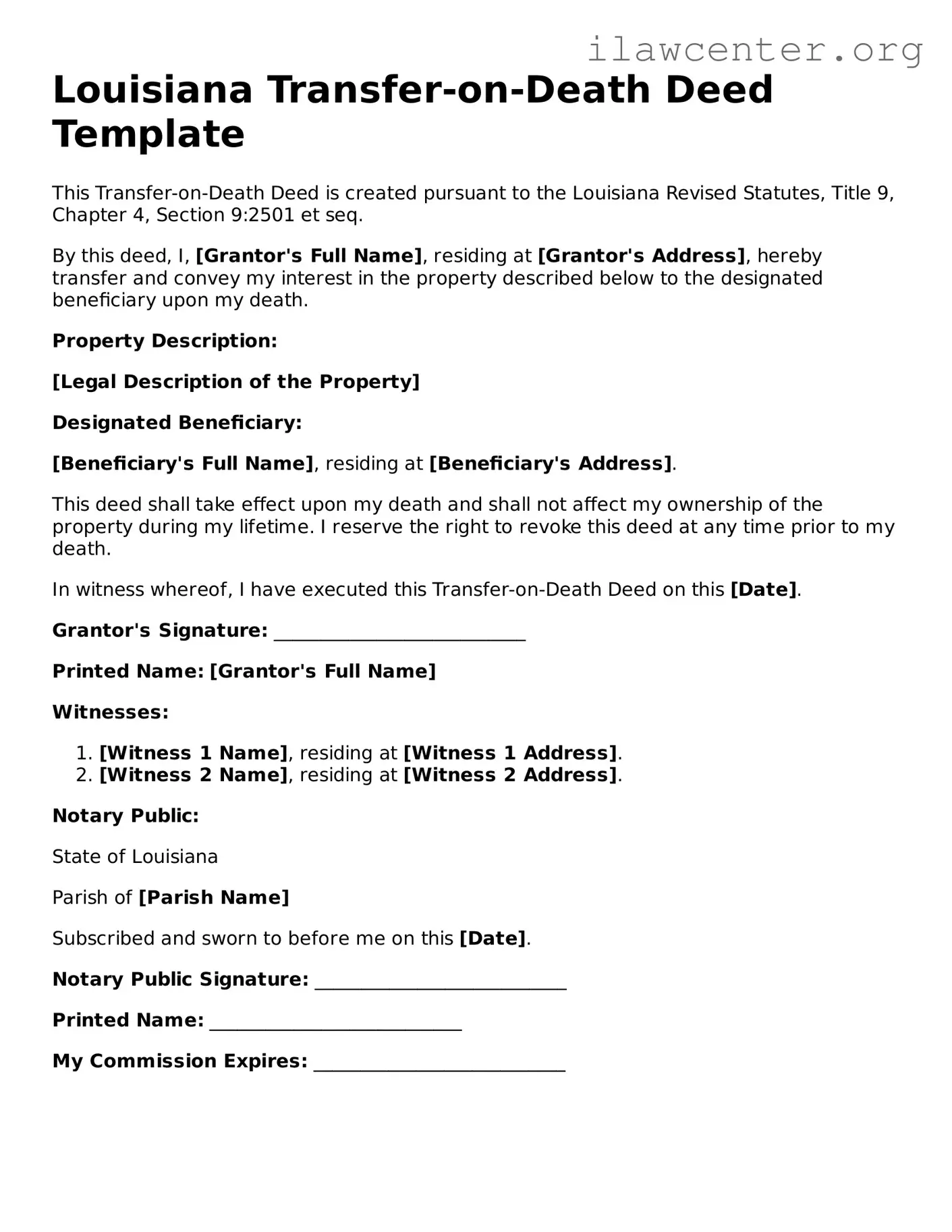
What is a Transfer-on-Death Deed in Louisiana?
A Transfer-on-Death Deed (TODD) is a legal document that allows an individual to transfer real estate property to a designated beneficiary upon their death. This deed allows the owner to retain full control of the property during their lifetime, ensuring that the property passes directly to the beneficiary without the need for probate.
Who can create a Transfer-on-Death Deed?
Any individual who owns real estate in Louisiana can create a Transfer-on-Death Deed. The owner must be of sound mind and at least 18 years old. It is essential that the deed is executed properly to be valid.
How does a Transfer-on-Death Deed work?
Upon the death of the property owner, the Transfer-on-Death Deed automatically transfers the property to the named beneficiary. This transfer occurs outside of the probate process, simplifying the transition of ownership and often reducing associated costs and delays.
Do I need to notify my beneficiaries about the Transfer-on-Death Deed?
While it is not legally required to notify beneficiaries, it is highly recommended. Informing them can prevent confusion and ensure that they are prepared to take ownership of the property when the time comes.
Can I change or revoke a Transfer-on-Death Deed?
Yes, a Transfer-on-Death Deed can be revoked or changed at any time before the property owner's death. To do this, the owner must execute a new deed or a formal revocation document. It is important to ensure that the revocation is properly recorded in the appropriate parish office.
Is a Transfer-on-Death Deed subject to creditors?
Yes, the property transferred via a Transfer-on-Death Deed may still be subject to the deceased owner's creditors. Beneficiaries may need to address any outstanding debts before they can fully claim ownership of the property.
Are there any tax implications with a Transfer-on-Death Deed?
Generally, the transfer of property through a Transfer-on-Death Deed does not trigger immediate tax consequences. However, beneficiaries may be responsible for property taxes and potential capital gains taxes if they sell the property later. Consulting a tax professional is advisable for specific guidance.
What is the process for filing a Transfer-on-Death Deed in Louisiana?
The process involves completing the Transfer-on-Death Deed form, signing it in the presence of a notary, and then recording it with the parish clerk of court where the property is located. Proper recording is crucial for the deed to be effective.
Is legal assistance necessary to create a Transfer-on-Death Deed?
While it is possible to create a Transfer-on-Death Deed without legal assistance, seeking guidance from an attorney is recommended. An attorney can ensure that the deed complies with Louisiana laws and meets the specific needs of the property owner.
Can a Transfer-on-Death Deed be used for all types of property?
A Transfer-on-Death Deed can be used for real estate property, including residential and commercial properties. However, it does not apply to personal property, such as vehicles or bank accounts. Different methods are required for transferring those types of assets.