Medevac request form GTA 08-01-004 PDF Template

Medevac request form GTA 08-01-004 PDF Template

The Medevac request form, known as GTA 08-01-004, is a crucial document used to facilitate the urgent transportation of patients requiring medical evacuation. This form ensures that all necessary information is collected to expedite the process and provide timely care. Understanding its importance can make a significant difference in emergency situations, so be sure to fill out the form by clicking the button below.

Article Guide

The Medevac request form, known as GTA 08-01-004, plays a crucial role in emergency medical situations, particularly in military and remote operations. This form serves as a standardized method for requesting medical evacuation, ensuring that all necessary information is conveyed clearly and efficiently. Key elements of the form include patient details, medical condition, and the urgency of the evacuation. Additionally, it requires the identification of the requesting unit and the location from which the patient needs to be evacuated. By providing a structured approach, the form facilitates timely responses from medical teams, ultimately aiming to enhance patient outcomes in critical scenarios. Understanding the intricacies of this form is essential for personnel involved in emergency response, as it not only streamlines communication but also ensures that life-saving resources are deployed effectively.

Medevac request form GTA 08-01-004 Preview

---------------------------------------------------------------------------------------------------------------------------------------------------
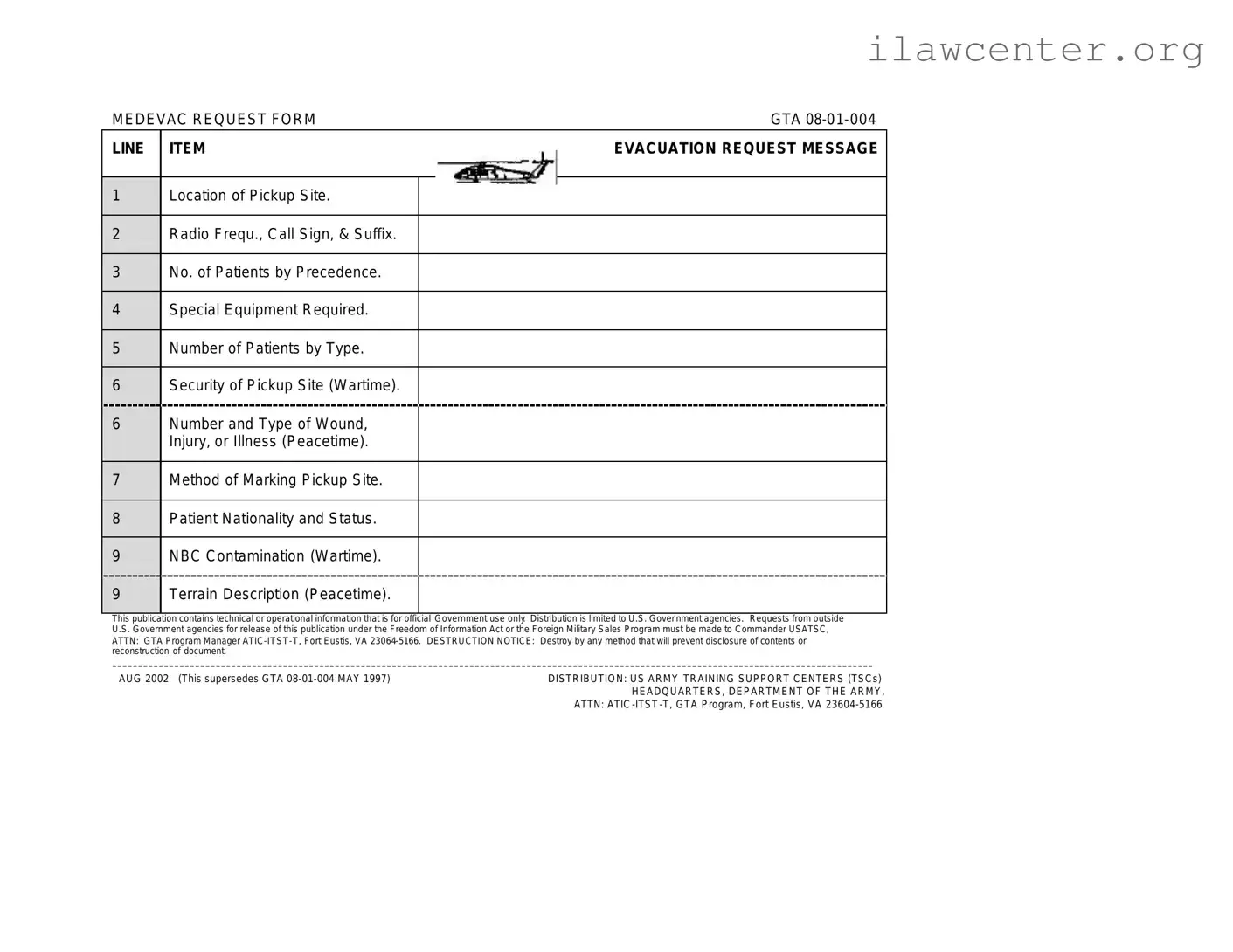
MEDEVAC REQUEST FORM GTA 08-01-004
LINE ITEM EVACUATION REQUEST MESSAGE
1 Location of Pickup Site.
2 Radio Frequ., Call Sign, & Suffix.
3 No. of Patients by Precedence.
4 Special Equipment Required.
5 Number of Patients by Type.
6 Security of Pickup Site (Wartime).
6 Number and Type of Wound,
Injury, or Illness (Peacetime).
7 Method of Marking Pickup Site.
8 Patient Nationality and Status.
9 NBC Contamination (Wartime).
9 Terrain Description (Peacetime).
This publication contains technical or operational information that is for official Government use only. Distribution is limited to U.S. Gover nment agencies. Requests from outside
U.S. Government agencies for release of this publication under the Freedom of Information Act or the Foreign Military Sales Program must be made to Commander USATSC,
ATTN: GTA Program Manager ATIC-ITST-T, Fort Eustis, VA 23064-5166. DESTRUCTION NOTICE: Destroy by any method that will prevent disclosure of contents or
reconstruction of document.
AUG 2002 (This supersedes GTA 08-01-004 MAY 1997) DISTRIBUTION: US ARMY TRAINING SUPPORT CENTERS (TSCs)
HEADQUARTERS, DEPARTMENT OF THE ARMY,
ATTN: ATIC-ITST-T, GTA Program, Fort Eustis, VA 23604-5166
LINE ITEM EXPLANATION
1. Location of
Pickup Site.
Encrypt grid coordinates. When using DRYAD Numeral Cipher, the same SET line will be used to encrypt grid
zone letters and coordinates. To preclude misunderstanding, a statement is made that grid zone letters are in-
cluded in the message (unless unit SOP specifies its use at all times).
2. Radio Frequency,
Call Sign, Suffix.
Encrypt the frequency of the radio at the pickup site, not a relay frequency. The call sign (and suffix if used) of
person to be contacted at the pickup site may be transmitted in the clear.
3. No. of Patients
by Precedence.
Report only applicable info & encrypt brevity codes. A = Urgent, B = Urgent-Surg, C = Priority, D = Routine, E =
Convenience. (If 2 or more categories reported in same request, insert the word break” btwn. each category.)
4. Spec Equipment. Encrypt applicable brevity codes. A = None, B = Hoist, C = Extraction equipment, D = Ventilator.
5. No. of Patients
by Type.
Report only applicable information and encrypt brevity code. If requesting MEDEVAC for both types, insert the
word break between the litter entry and ambulatory entry: L + # of Pnt -Litter; A + # of Pnt - Ambul (sitting).
6. Security Pickup
Site (Wartime).
N = No enemy troops in area, P = Possibly enemy troops in area (approach with caution), E = Enemy troops in
area (approach with caution), X = Enemy troops in area (armed escort required).
6. Number and type
of Wound, Injury,
Illness (Peacetime).
Specific information regarding patient wounds by type (gunshot or shrapnel). Report serious bleeding, along
with patient blood type, if known.
7. Method of
Marking Pickup Site.
Encrypt the brevity codes. A = Panels, B = Pyrotechnic signal, C = Smoke Signal, D = None, E = Other.
8. Patient Nation-
ality and Status.
Number of patients in each category need not be transmitted. Encrypt only applicable brevity codes. A = US
military, B = US civilian, C = Non-US mil, D = Non-US civilian, E = EPW.
9. NBC Contami-
nation, (Wartime).
Include this line only when applicable. Encrypt the applicable brevity codes. N = nuclear, B = biological, C =
chemical.
9. Terrain Descrip-
tion (Peacetime).
Include details of terrain features in and around proposed landing site. If possible, describe the relationship of
site to a prominent terrain feature ( lake, mountain, tower).
Reference: FM 8-10-6, Medical Evacuation in a Theater of Operations, pages 7-7 through 7-9.

File Properties

Fact Name Description
Purpose The Medevac request form GTA 08-01-004 is used to request medical evacuation services for individuals in need of urgent medical attention.
Eligibility Individuals requiring immediate medical transport due to life-threatening conditions may be eligible for Medevac services.
Information Required The form requires detailed information about the patient, including medical history, current condition, and the location of the incident.
Submission Process Completed forms should be submitted to the appropriate medical transport authority for review and approval.
State-Specific Forms Some states have their own specific forms for Medevac requests, which may vary in requirements and procedures.
Governing Laws State laws regarding emergency medical services govern the use of Medevac request forms, ensuring compliance with medical transport regulations.
Time Sensitivity Timeliness is crucial; delays in submitting the form can result in adverse outcomes for the patient.
Approval Criteria Approval for Medevac services is based on the urgency of the medical condition and the availability of resources.
Confidentiality Patient information provided on the form is protected under HIPAA regulations, ensuring privacy and confidentiality.
Training Requirement Personnel completing the form should receive proper training to ensure accurate and effective information submission.

Instructions on Utilizing Medevac request form GTA 08-01-004

When preparing to fill out the Medevac request form GTA 08-01-004, it’s essential to gather all necessary information beforehand. This ensures a smooth process and helps avoid any delays. Follow these steps to complete the form accurately.

  1. Begin by entering the patient's full name in the designated section.
  2. Provide the patient's date of birth and Social Security number.
  3. Fill in the patient's current location, including the address and any specific details that may assist in locating them.
  4. Indicate the nature of the medical emergency or condition that necessitates the medevac.
  5. List any relevant medical history or pre-existing conditions that could impact the evacuation.
  6. Include the name and contact information of the attending physician or medical personnel responsible for the patient’s care.
  7. Specify the preferred destination hospital or medical facility.
  8. Sign and date the form to validate the request.

After completing the form, it is important to review all entries for accuracy. Ensure that all necessary signatures are included before submitting the request to the appropriate authority. This will help facilitate a timely response to the emergency situation.

Important Facts about Medevac request form GTA 08-01-004

What is the Medevac request form GTA 08-01-004?

The Medevac request form GTA 08-01-004 is a standardized document used to request medical evacuation for individuals in need of urgent medical care. This form is designed to ensure that all necessary information is collected efficiently, facilitating a timely response from medical personnel. It serves as a critical tool in emergencies where immediate transport to a medical facility is required.

Who should use the Medevac request form?

This form should be used by healthcare providers, emergency responders, or any authorized personnel who are responsible for arranging medical evacuations. It is essential for those who are in situations where a patient requires urgent medical attention that cannot be provided on-site.

What information is required on the form?

The Medevac request form typically requires detailed information about the patient, including their name, age, medical history, and the nature of their medical condition. Additionally, the form may ask for the location of the patient, the urgency of the situation, and any specific medical needs during transport. Accurate and complete information is crucial to ensure the appropriate medical response.

How is the form submitted?

The submission process for the Medevac request form can vary depending on the organization or agency involved. Generally, the completed form should be submitted to the designated medical evacuation coordination center or emergency services. Some organizations may allow for electronic submissions, while others may require a physical copy to be faxed or delivered in person.

What happens after the form is submitted?

Once the Medevac request form is submitted, the medical evacuation team will review the information provided. They will assess the urgency of the situation and determine the best course of action for transporting the patient. This may involve coordinating with air or ground transport services to ensure that the patient receives the necessary medical care as quickly as possible.

Are there any specific guidelines for filling out the form?

Yes, there are typically guidelines that should be followed when completing the Medevac request form. It is important to fill out all sections of the form clearly and accurately. Use legible handwriting or type the information if possible. Double-check for any missing information or errors before submission, as these can delay the response time in critical situations.

What should I do if I encounter issues with the form?

If there are any issues or uncertainties regarding the Medevac request form, it is advisable to consult with a supervisor or a designated point of contact within your organization. They can provide guidance on how to properly complete the form or address any specific concerns you may have. Prompt communication is key to ensuring that the medical evacuation process proceeds smoothly.

Common mistakes

Filling out the Medevac request form GTA 08-01-004 can be a critical process for ensuring timely medical evacuation. However, there are common mistakes that individuals often make, which can lead to delays or complications in the evacuation process. Understanding these mistakes can help improve the accuracy of the submissions.

One frequent error is providing incomplete patient information. Essential details such as the patient's full name, date of birth, and medical history must be clearly stated. Omitting any of this information can result in confusion and hinder the medical team’s ability to provide appropriate care. Ensuring that all patient details are accurate and comprehensive is crucial.

Another mistake is failing to specify the urgency of the situation. The form requires an assessment of the medical condition and the need for immediate evacuation. If the urgency is not clearly articulated, medical personnel may misjudge the priority of the request. This could lead to significant delays in receiving the necessary care.

Additionally, some individuals neglect to include relevant medical documentation. Supporting documents, such as treatment records or diagnostic results, should accompany the request. Without these, medical teams may lack critical context about the patient’s condition, which can affect the decision-making process regarding the evacuation.

Inaccurate or unclear descriptions of the patient's condition also pose a problem. It is vital to provide a precise account of symptoms and medical history. Vague language can lead to misunderstandings and misinterpretations, potentially compromising the patient's safety and care.

Finally, not reviewing the completed form before submission is a common oversight. Errors in spelling, grammar, or factual information can undermine the credibility of the request. Taking the time to carefully review the form can help ensure that all information is correct and that the request is taken seriously by medical personnel.

Documents used along the form

The Medevac request form GTA 08-01-004 is an essential document used in medical evacuation scenarios. It is often accompanied by several other forms and documents that facilitate the efficient processing of the request and ensure proper medical care during transport. Below is a list of commonly used documents alongside the Medevac request form.

  • Patient Information Form: This form collects vital details about the patient, including medical history, current medications, and allergies. It helps medical personnel understand the patient's condition better.
  • Medical Release Form: This document authorizes healthcare providers to share the patient's medical information with the evacuation team. It is crucial for ensuring continuity of care during transport.
  • Transport Authorization Form: This form grants permission for the patient to be transported by air or ground. It may include signatures from the patient or their legal representative.
  • Physician's Orders: These are written instructions from a physician outlining the necessary medical care and interventions required during the transport. They guide the medical team in providing appropriate care.
  • Insurance Verification Form: This document verifies the patient's insurance coverage for the transport. It ensures that the costs associated with the Medevac are covered by the insurance provider.
  • Incident Report: This form documents the circumstances surrounding the medical emergency that necessitated the Medevac. It provides context for the medical team and can be important for legal purposes.
  • Flight Plan: This document outlines the intended route for the air transport, including departure and arrival locations. It is essential for coordinating logistics and ensuring safety during the flight.
  • Patient Transfer Checklist: This checklist ensures that all necessary equipment and supplies are ready for the patient’s transfer. It helps prevent oversights and ensures that the medical team is prepared.

These documents work together to streamline the Medevac process, ensuring that patients receive timely and effective medical care. Properly completing and submitting each form is critical for the success of the evacuation and the well-being of the patient.

Similar forms

The Medevac request form GTA 08-01-004 is essential for coordinating medical evacuations. Several other documents serve similar purposes in different contexts. Here’s a list of those documents and how they relate to the Medevac request form:

  • Patient Transfer Form: This document facilitates the transfer of patients between medical facilities, ensuring that all necessary medical information is communicated effectively.
  • Emergency Medical Services (EMS) Run Sheet: EMS providers use this form to document patient care during transport. It captures vital information similar to the Medevac form.
  • Air Ambulance Request Form: This form is specifically for requesting air transport for patients, detailing medical needs and logistics, much like the Medevac request.
  • Trauma Transfer Protocol: This protocol outlines the steps for transferring trauma patients, ensuring they receive timely care, similar to the Medevac process.
  • Medical Release Form: This document authorizes the transfer of medical information, ensuring that receiving facilities have the necessary patient data, akin to the Medevac form.
  • Patient Care Report (PCR): This report provides a comprehensive overview of the patient's condition and care during transport, paralleling the information required in the Medevac request.
  • Inter-Facility Transfer Form: This form is used when patients are moved between healthcare facilities, ensuring all medical details are shared, similar to the Medevac request.
  • Clinical Summary Document: This document summarizes a patient’s medical history and treatment, aiding in continuity of care during evacuations, much like the Medevac request.
  • Emergency Contact Form: This form gathers emergency contact information for patients, ensuring that families are informed during medical evacuations, similar to the Medevac process.

Each of these documents plays a crucial role in ensuring safe and efficient medical transport, sharing vital information, and facilitating communication among healthcare providers.

Dos and Don'ts

When filling out the Medevac request form GTA 08-01-004, it is important to follow certain guidelines to ensure accuracy and efficiency. Below is a list of things you should and shouldn't do.

  • Do double-check all information for accuracy before submission.
  • Do provide clear and concise descriptions of the medical condition.
  • Do include all relevant patient information, such as age and medical history.
  • Do ensure that the requesting authority’s contact information is up to date.
  • Don't leave any sections of the form blank unless instructed.
  • Don't use medical jargon that may not be understood by all reviewers.
  • Don't forget to sign and date the form where required.

By following these guidelines, you can help facilitate a smoother process for medical evacuation requests.

Misconceptions

When dealing with the Medevac request form GTA 08-01-004, several misconceptions can arise. Understanding these misconceptions is crucial for ensuring that the process runs smoothly and effectively. Here are five common misconceptions:

  1. The form is only for military personnel. Many believe that the Medevac request form is exclusively for military members. In reality, it can be utilized by civilians in certain emergency situations as well, especially when they are in a location where military resources are available.
  2. Submitting the form guarantees immediate evacuation. Some individuals think that filling out the form will automatically result in an immediate evacuation. However, the approval process involves several steps, including assessment of the situation and available resources, which may delay the response.
  3. Only doctors can fill out the form. It is a common belief that only licensed medical professionals are authorized to complete the Medevac request form. In fact, while medical personnel often provide critical information, trained personnel from various backgrounds can assist in filling out the necessary details.
  4. The form is complicated and difficult to understand. Many people feel intimidated by the form, thinking it is overly complex. In truth, the form is designed to be straightforward, with clear sections that guide the user in providing essential information.
  5. Once submitted, the information cannot be changed. Some individuals worry that they cannot modify their submission after it has been sent. However, if new information arises or corrections are needed, it is possible to update the request as long as it is communicated promptly to the relevant authorities.

By clarifying these misconceptions, individuals can navigate the Medevac request process with greater confidence and understanding. It's important to approach the situation with accurate information to ensure the best possible outcomes during emergencies.

Key takeaways

When it comes to filling out and using the Medevac request form GTA 08-01-004, there are several important points to keep in mind. Understanding these can help ensure a smooth process when medical evacuation is necessary.

  • Accuracy is Crucial: Ensure all information is filled out correctly. Mistakes can lead to delays in medical care.
  • Timeliness Matters: Submit the form as soon as the need for evacuation arises. Quick action can be critical in emergency situations.
  • Provide Detailed Information: Include all relevant medical details. This helps medical teams prepare adequately for the patient's needs.
  • Follow Up: After submitting the form, check in to confirm that it has been received and is being processed. Communication is key.

By keeping these takeaways in mind, you can help facilitate a more effective and efficient medical evacuation process when it’s needed most.