

Medical Consent Babysitter PDF Template

Medical Consent Babysitter PDF Template

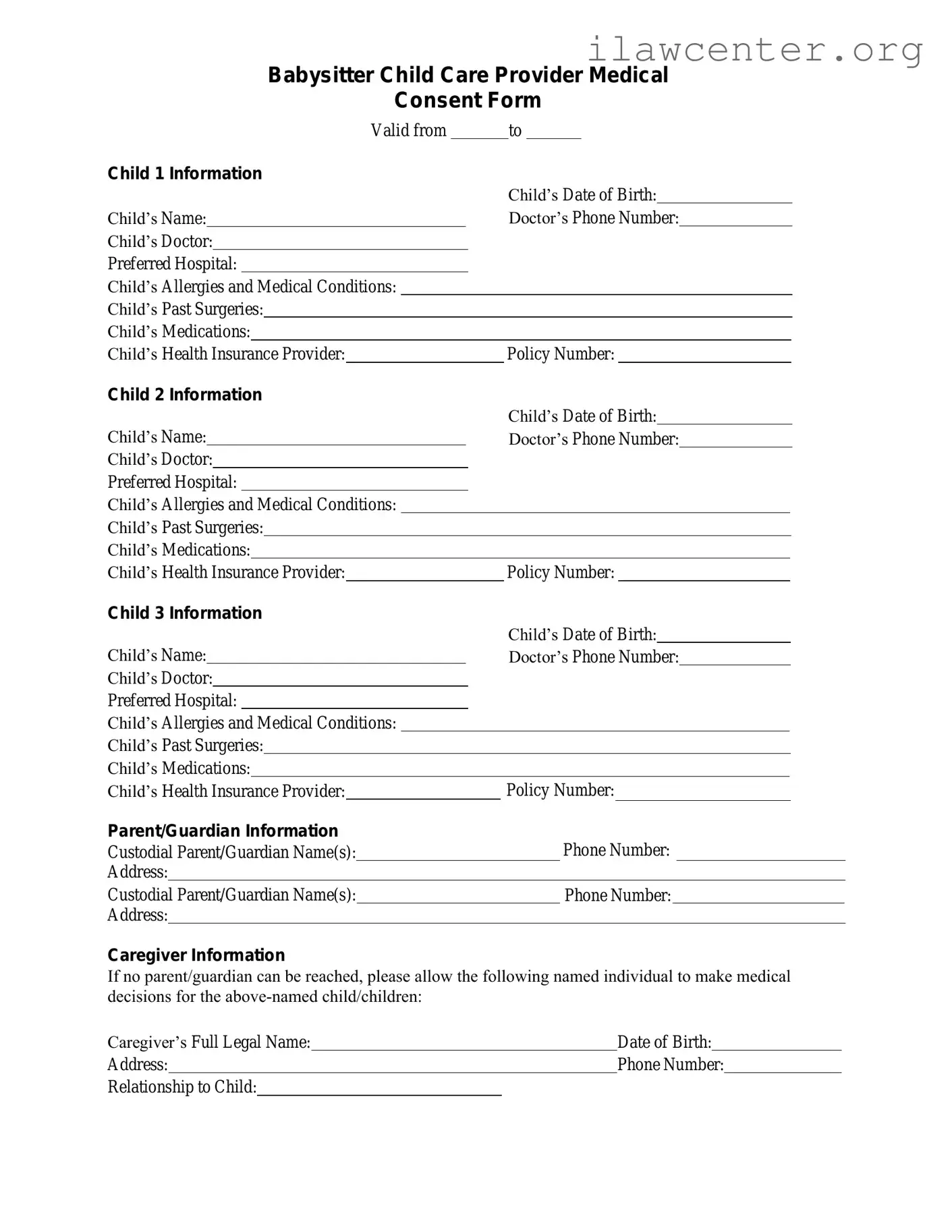
The Medical Consent Babysitter Form is a crucial document that allows caregivers to make medical decisions for your children in case of an emergency. This form ensures that important medical information is readily available, including details about allergies, medications, and preferred hospitals. It is essential for parents to fill out this form to provide peace of mind while their children are in someone else's care.

Don't wait—fill out the form by clicking the button below.

Article Guide

When parents or guardians leave their children in the care of a babysitter, ensuring their safety and well-being becomes paramount. The Medical Consent Babysitter form serves as a crucial document that outlines important medical information and authorizations needed in case of an emergency. This form collects essential details about each child, including their names, dates of birth, allergies, medical conditions, past surgeries, and medications. It also identifies the child’s doctor and preferred hospital, ensuring that caregivers have immediate access to vital health information. In addition, the form designates a caregiver who can make medical decisions if the parents or guardians cannot be reached. This provision allows for timely medical intervention, which can be critical in emergencies. Furthermore, the form includes sections for parent or guardian contact information and signatures, reinforcing its legal standing. By completing this form, caregivers can confidently act in the best interest of the children, knowing they have the necessary authority to make informed medical decisions when it matters most.

Babysitter Child Care Provider Medical
Consent Form
Valid from to
Child 1 Information
Child’s Name:
Child’s Doctor:
Preferred Hospital:
Child’s Date of Birth:
Doctor’s Phone Number:
Child’s Allergies and Medical Conditions:
Child’s Past Surgeries:
Child’s Medications:
Child’s Health Insurance Provider: Policy Number:
Child 2 Information
Child’s Date of Birth:
Child’s Name:
Doctor’s Phone Number:
Child’s Doctor:
Preferred Hospital:
Child’s Allergies and Medical Conditions:
Child’s Past Surgeries:
Child’s Medications:
Child’s Health Insurance Provider: Policy Number:
Child 3 Information
Child’s Date of Birth:
Child’s Name:
Doctor’s Phone Number:
Child’s Doctor:
Preferred Hospital:
Child’s Allergies and Medical Conditions:
Child’s Past Surgeries:
Child’s Medications:
Child’s Health Insurance Provider:
Policy Number:
Parent/Guardian Information
Custodial Parent/Guardian Name(s):
Phone Number:
Address:
Custodial Parent/Guardian Name(s):
Phone Number:
Address:
Caregiver Information
If no parent/guardian can be reached, please allow the following named individual to make medical
decisions for the above-named child/children:
Caregiver’s Full Legal Name: Date of Birth:
Address: Phone Number:
Relationship to Child:
Minor Medical Consent
In case of an emergency, I grant permission to to make medical decisions
for my child/children until one parent/guardian can be reached. Medical decisions I authorize the
above named individual to make include:
Sharing personal information about my child/children with emergency personnel.
Authorizing use of life-saving medical devices.
Authorizing use of an ambulance for transport.
Other:
Parent/Guardian Name: Signature: Date:
Witness Name: Signature: Date:
Parent/Guardian Name: Signature: Date:
Witness Name: Signature: Date:
In case of an emergency, I agree to make medical decisions for the above named child/children until one
parent/guardian can be reached.
Caregiver Name: Signature: Date: Witness:
Witness Name: Signature: Date:

File Properties

Fact Name Details
Purpose The Medical Consent Babysitter form allows caregivers to make medical decisions for a child in the absence of a parent or guardian.
Child Information The form requires detailed information for up to three children, including their names, dates of birth, and medical history.
Emergency Decisions In case of an emergency, the designated caregiver is authorized to make critical medical decisions until a parent or guardian can be contacted.
Medical History Parents must provide information about allergies, past surgeries, and current medications for each child to ensure proper care.
Legal Authority The form grants legal authority to the caregiver to act in the child's best interest during medical emergencies.
State-Specific Laws Each state may have different laws governing medical consent for minors. It is essential to check local regulations to ensure compliance.
Insurance Information Parents must include health insurance details, which may facilitate quicker medical treatment in emergencies.
Signatures Required The form must be signed by the parent or guardian and a witness to validate the consent provided.

Completing the Medical Consent Babysitter form is an essential step in ensuring that your children receive appropriate medical care in case of an emergency. This form provides vital information to caregivers and medical personnel, allowing them to make informed decisions regarding your child's health. Below are the steps to accurately fill out the form.

  1. Begin by entering the valid dates for the form at the top.
  2. For each child, fill in the following information:
    • Child’s Name
    • Child’s Date of Birth
    • Child’s Doctor
    • Doctor’s Phone Number
    • Preferred Hospital
    • Child’s Allergies and Medical Conditions
    • Child’s Past Surgeries
    • Child’s Medications
    • Child’s Health Insurance Provider
    • Policy Number
  3. Repeat the previous step for each additional child, if applicable.
  4. Next, provide Parent/Guardian Information:
    • Custodial Parent/Guardian Name(s)
    • Phone Number
    • Address
  5. If there is a second custodial parent/guardian, fill in their information as well.
  6. Designate a Caregiver who can make medical decisions if the parent/guardian cannot be reached:
    • Caregiver’s Full Legal Name
    • Date of Birth
    • Address
    • Phone Number
    • Relationship to Child
  7. In the Minor Medical Consent section, indicate your permissions by checking the appropriate boxes.
  8. Sign and date the form in the designated areas for both the parent/guardian and the witness.
  9. If applicable, have the caregiver sign and date the form as well, along with a witness.

What is the purpose of the Medical Consent Babysitter form?

The Medical Consent Babysitter form serves an essential role in ensuring that your child receives prompt medical care in case of an emergency. This form provides caregivers, such as babysitters, with the authority to make medical decisions on your behalf if you are unreachable. It includes vital information about your child’s health, allergies, medications, and emergency contacts, which can significantly aid medical personnel in providing appropriate care. By completing this form, you can have peace of mind knowing that your child will receive the necessary attention if an urgent situation arises.

What information do I need to provide on the form?

You will need to provide detailed information about each child, including their name, date of birth, doctor’s contact information, preferred hospital, allergies, medical conditions, past surgeries, and medications. Additionally, you will need to list your health insurance provider and policy number. It is also crucial to include your contact details as the parent or guardian, as well as the name and contact information of a caregiver who can make medical decisions if you cannot be reached. This comprehensive information ensures that caregivers can act swiftly and effectively in an emergency.

Who can make medical decisions for my child if I am unavailable?

If you are unable to be reached during a medical emergency, the form allows you to designate a caregiver who can make decisions on your behalf. This individual should be someone you trust, such as a family member or close friend. You will need to provide their full legal name, date of birth, address, phone number, and relationship to your child. This ensures that the designated caregiver has the authority to act in your child’s best interest until you can be contacted.

How do I ensure the form is valid and effective?

To ensure the Medical Consent Babysitter form is valid and effective, it is essential to fill it out completely and accurately. Signatures from both parents or guardians, along with witnesses, should be included to validate the document. Keep the form in a readily accessible location, and provide a copy to the caregiver who will be responsible for your child. Regularly update the form to reflect any changes in your child’s medical history or caregiver information. This proactive approach helps ensure that your child receives the best care possible in any situation.

Common mistakes

Filling out the Medical Consent Babysitter form can be straightforward, but many make common mistakes that can lead to complications during emergencies. One frequent error is leaving out essential information about the child. Parents often forget to include the child's doctor's phone number or the preferred hospital. This information is crucial for caregivers and medical personnel to act quickly in an emergency.

Another mistake involves not updating the form regularly. Children grow and change, so it's vital to keep their allergies, medical conditions, and medications current. Failing to do so can lead to serious health risks if a caregiver is unaware of a child's specific needs.

Some parents neglect to provide information for all children listed on the form. Each child's details, including their date of birth and health insurance provider, should be accurately filled out. Omitting a child can lead to confusion and delays in treatment.

Additionally, many people overlook the need for a second signature from a witness. This step is often seen as optional, but having a witness can validate the consent in case of disputes. Parents should ensure that both signatures are present for legal protection.

Another common oversight is failing to specify a caregiver who can make medical decisions if the parent cannot be reached. It's important to list a caregiver's full legal name and relationship to the child. This clarity helps avoid delays in critical situations.

Many parents also forget to include their own contact information. This can be problematic when caregivers need to reach them quickly. Providing a reliable phone number and address ensures that caregivers can contact parents without unnecessary delays.

Finally, some individuals mistakenly assume that the form is only necessary for short babysitting sessions. In reality, it is essential to have a completed Medical Consent form for any duration of care. Emergencies can happen at any time, and being prepared is key to ensuring a child's safety.

Documents used along the form

When caring for children, it is essential to have the right documents in place to ensure their safety and well-being. Along with the Medical Consent Babysitter form, several other forms can provide important information and permissions. Here is a list of commonly used documents that may accompany the Medical Consent form.

  • Emergency Contact Form: This document lists individuals who can be contacted in case of an emergency. It includes names, phone numbers, and relationships to the child.
  • Child Information Sheet: This form contains vital details about the child, such as allergies, medications, and emergency contacts, ensuring caregivers have all necessary information at hand.
  • Authorization for Medical Treatment: This form allows parents to grant permission for specific medical treatments or procedures for their child in the absence of a parent or guardian.
  • Liability Waiver: A liability waiver releases the caregiver from responsibility for certain risks associated with child care, protecting them from legal claims in specific situations.
  • Transportation Consent Form: This document gives permission for a caregiver to transport a child to and from activities, ensuring that parents are aware of travel arrangements.
  • Behavioral Agreement: This form outlines expected behaviors and consequences for misbehavior, helping to establish clear guidelines for the child.
  • Emergency Medical Information Card: This card is a quick reference for emergency personnel, listing medical conditions, allergies, and medications for the child.
  • Parent/Guardian Consent for Activities: This document allows parents to approve specific activities, such as field trips or sports, ensuring they are informed about their child's participation.

Having these documents prepared can help ensure that caregivers are equipped to handle emergencies and provide the best care for children. Proper documentation fosters communication and understanding between parents and caregivers.

Similar forms

  • Emergency Medical Consent Form: This document allows parents to authorize medical care for their children in case of emergencies. It typically includes similar information regarding the child’s medical history and emergency contacts.
  • Child Medical History Form: This form collects detailed information about a child's past medical conditions, allergies, and medications, similar to the medical background section in the Medical Consent Babysitter form.
  • Child Care Authorization Form: This document permits caregivers to make decisions on behalf of the child while under their care. It often includes emergency contact information and specific permissions, much like the Medical Consent Babysitter form.
  • Parental Consent for Medical Treatment: This form grants permission for medical treatment and is often used in daycare settings. It shares a focus on emergency medical decisions similar to the Medical Consent Babysitter form.
  • Health Insurance Information Form: This document gathers health insurance details to ensure coverage for medical services, paralleling the insurance section of the Medical Consent Babysitter form.
  • Child Release Form: This form allows parents to specify who can pick up their child from a caregiver. It often includes emergency contact information, akin to the caregiver information in the Medical Consent Babysitter form.
  • Minor's Health Care Proxy: This document designates an individual to make health care decisions for a minor if the parent is unavailable. It serves a similar purpose as the caregiver section of the Medical Consent Babysitter form.
  • Emergency Contact Form: This form provides essential contact information for emergencies. It is similar in function to the contact details requested in the Medical Consent Babysitter form.
  • Child Travel Consent Form: This document grants permission for a child to travel with someone other than a parent. It often includes medical consent provisions, reflecting the intent of the Medical Consent Babysitter form.
  • Authorization for Release of Medical Information: This form allows for the sharing of a child's medical information with specific individuals. It parallels the sharing of personal information mentioned in the Medical Consent Babysitter form.

Dos and Don'ts

When filling out the Medical Consent Babysitter form, it’s crucial to ensure that all information is accurate and complete. Here’s a list of what to do and what to avoid:

  • Do provide accurate information about your child’s medical history, including allergies and medications.
  • Do ensure that the contact details for both parents/guardians are up-to-date and easy to read.
  • Do specify a trusted caregiver who can make medical decisions in case you cannot be reached.
  • Do sign and date the form to validate your consent.
  • Don’t leave any sections blank; incomplete forms can cause delays in emergencies.
  • Don’t use abbreviations or shorthand that may confuse medical personnel.
  • Don’t forget to inform the babysitter about any specific medical needs or concerns.
  • Don’t overlook reviewing the form periodically to ensure all information remains current.

Misconceptions

Understanding the Medical Consent Babysitter form is crucial for parents and caregivers. However, several misconceptions can lead to confusion. Here’s a breakdown of ten common misunderstandings:

  1. The form is only for emergencies. Many believe this form is only necessary in emergencies. In reality, it serves as a comprehensive guide for any medical situation, ensuring caregivers have all necessary information at hand.
  2. It’s not legally binding. Some think the form holds no legal weight. However, when properly filled out and signed, it can provide legal authority for caregivers to make medical decisions on behalf of a child.
  3. Only one parent needs to sign. A common belief is that only one parent's signature is sufficient. In most cases, both parents or guardians should sign to ensure clarity and avoid potential disputes.
  4. It covers all medical scenarios. Some assume the form covers every possible medical situation. While it provides a framework, specific situations may require additional consent or information.
  5. All information is optional. Many think that they can skip certain sections. However, providing complete information is essential for the caregiver to make informed decisions.
  6. It’s only for children with medical conditions. Some believe the form is unnecessary if their child is healthy. This form is beneficial for all children, as emergencies can happen unexpectedly.
  7. It expires immediately after use. There’s a misconception that the form is only valid for a single use. In fact, it can be valid for a specified period, as indicated on the form.
  8. Caregivers can make any medical decision. Some think caregivers have unlimited authority. The form typically outlines specific decisions caregivers can make, and parents can limit these if desired.
  9. It’s only for babysitters. Many people believe this form is only relevant for babysitters. However, it can be used for any caregiver, including family members or friends.
  10. Once signed, it can’t be changed. Some think that once the form is signed, it cannot be modified. In fact, parents can update or change the information as needed, ensuring it remains accurate.

By addressing these misconceptions, parents can better prepare themselves and their caregivers for any medical situations that may arise.

Key takeaways

When filling out the Medical Consent Babysitter form, consider the following key takeaways:

  • Accurate Information: Ensure all details about each child, including their medical history and allergies, are filled out accurately.
  • Emergency Contacts: Provide current contact information for parents or guardians to facilitate quick communication in emergencies.
  • Caregiver Authority: Clearly state who is authorized to make medical decisions if a parent or guardian cannot be reached.
  • Medical Preferences: Indicate preferred hospitals and doctors to ensure appropriate care is provided.
  • Signature Requirement: Both parents or guardians must sign the form, along with a witness, to validate consent.
  • Minor Medical Consent: Understand that the form grants caregivers authority to make essential medical decisions in emergencies.
  • Review Regularly: Update the form regularly to reflect any changes in medical conditions, medications, or contact information.