Fillable Medical Consent for Minor Document

Fillable Medical Consent for Minor Document

The Medical Consent for Minor form is a legal document that allows a parent or guardian to give permission for medical treatment on behalf of a minor child. This form ensures that healthcare providers can act swiftly in emergencies and provide necessary care when a parent or guardian is not present. To ensure your child's health and safety, consider filling out the form by clicking the button below.

Article Guide

When it comes to healthcare for minors, the Medical Consent for Minor form plays a crucial role in ensuring that young patients receive the necessary medical attention. This form is designed to grant permission for healthcare providers to treat a minor when a parent or legal guardian is not present. It includes essential information such as the minor's name, date of birth, and details about the specific medical treatments or procedures that may be needed. Additionally, it often requires the signature of a parent or guardian, affirming their understanding and acceptance of the risks associated with the proposed medical care. This form not only protects the rights of the minor but also provides peace of mind for parents, knowing that their child can receive timely medical assistance in their absence. Understanding the components and importance of this form is vital for any caregiver, as it ensures that the best interests of the child are prioritized in healthcare decisions.

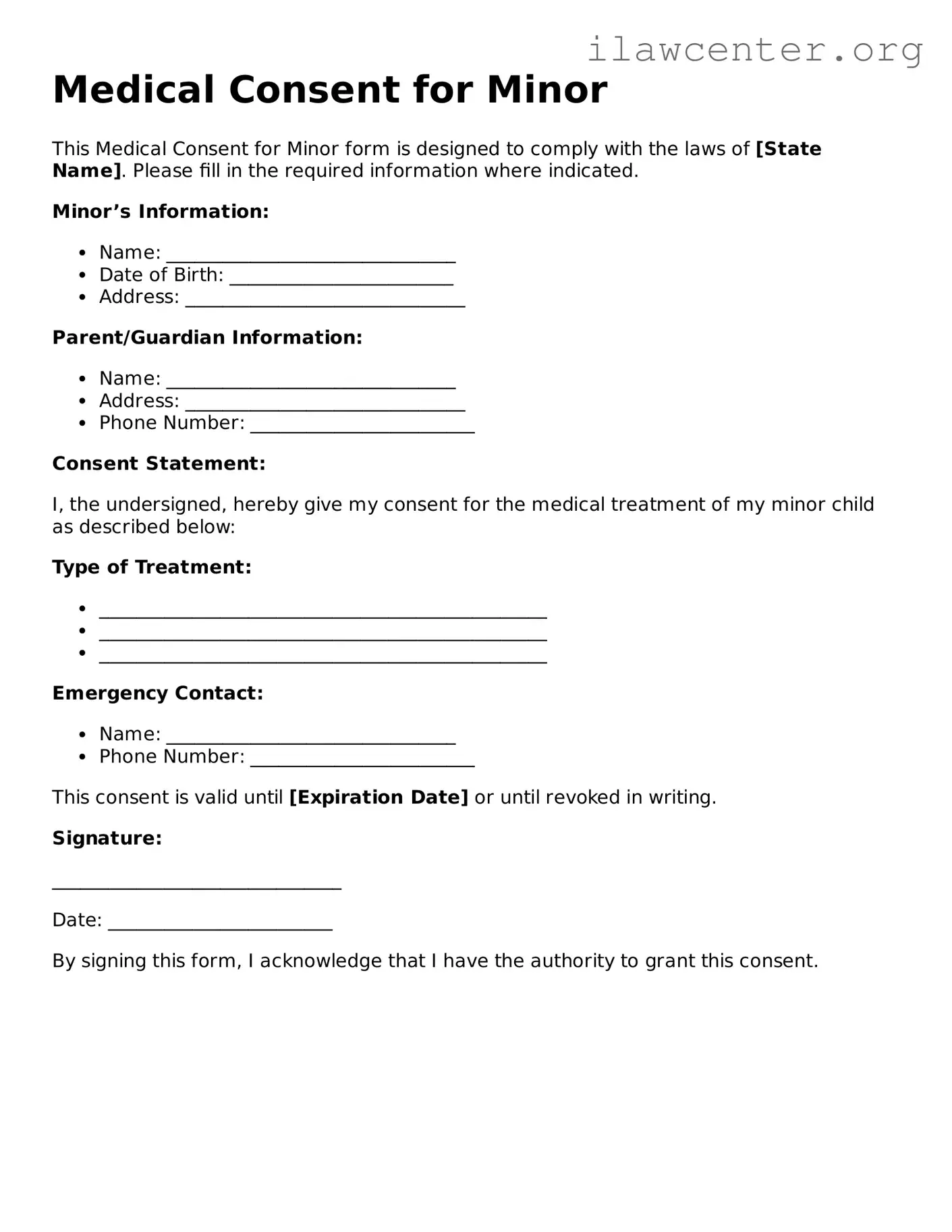
Medical Consent for Minor

This Medical Consent for Minor form is designed to comply with the laws of [State Name]. Please fill in the required information where indicated.

Minor’s Information:

  • Name: _______________________________
  • Date of Birth: ________________________
  • Address: ______________________________

Parent/Guardian Information:

  • Name: _______________________________
  • Address: ______________________________
  • Phone Number: ________________________

Consent Statement:

I, the undersigned, hereby give my consent for the medical treatment of my minor child as described below:

Type of Treatment:

  • ________________________________________________
  • ________________________________________________
  • ________________________________________________

Emergency Contact:

  • Name: _______________________________
  • Phone Number: ________________________

This consent is valid until [Expiration Date] or until revoked in writing.

Signature:

_______________________________

Date: ________________________

By signing this form, I acknowledge that I have the authority to grant this consent.

PDF Form Characteristics

Fact Name Description
Purpose The Medical Consent for Minor form allows a parent or guardian to give permission for medical treatment on behalf of a minor child.
Governing Laws Each state has specific laws governing medical consent for minors. For example, in California, Family Code Section 6910 applies.
Signatories The form must be signed by a parent or legal guardian. In some cases, a designated adult may also sign if authorized.
Duration The consent is typically valid for a specific period, often until the child reaches a certain age or until revoked by the parent or guardian.
Emergency Situations In emergencies, medical professionals may proceed with treatment even if consent is not available, prioritizing the child's health and safety.

Completing the Medical Consent for Minor form is an important step in ensuring that your child's medical needs are met when you are not available. This form allows designated individuals to make medical decisions on behalf of your minor child in case of an emergency or when you are unable to provide consent.

  1. Gather necessary information: Collect your child's full name, date of birth, and any relevant medical history that may be required.
  2. Identify the designated individual: Clearly write the name of the person who will be authorized to make medical decisions for your child.
  3. Provide your contact information: Fill in your name, address, and phone number. This information ensures that you can be reached if necessary.
  4. Specify the duration: Indicate the time frame for which this consent is valid. This could be for a specific event or a longer period.
  5. Sign and date the form: Ensure that you sign the form to validate it. Include the date of signing to provide a clear timeline.
  6. Review the completed form: Double-check all the information for accuracy and completeness before submission.
  7. Distribute copies: Make sure to provide copies of the signed form to the designated individual and keep one for your records.

What is a Medical Consent for Minor form?

The Medical Consent for Minor form is a legal document that allows a parent or guardian to give permission for medical treatment on behalf of a child. This form is often required by healthcare providers before they can administer any medical care to a minor, ensuring that the child receives necessary treatment in a timely manner.

Who needs to sign the Medical Consent for Minor form?

Typically, the parent or legal guardian of the minor must sign the form. If both parents are available, it is advisable for both to provide consent. In situations where a parent is unavailable, a legal guardian or an authorized adult may sign the form, provided they have the necessary legal authority to make medical decisions for the child.

When is a Medical Consent for Minor form necessary?

This form is essential in various situations, such as when a child requires emergency medical treatment, routine check-ups, vaccinations, or any surgical procedures. Healthcare providers often request this form to protect themselves legally and ensure that they have the right to treat the child without delay.

Can a Medical Consent for Minor form be revoked?

Yes, a Medical Consent for Minor form can be revoked. The parent or guardian who signed the form has the right to withdraw consent at any time. It is important to communicate this decision to the healthcare provider in writing to avoid any confusion about the child's medical treatment.

What information is typically included in the Medical Consent for Minor form?

The form usually contains details such as the child's name, date of birth, and medical history. It also requires the parent or guardian's name, contact information, and signature. Additionally, the form may specify the types of medical treatments authorized and any limitations on that consent.

Are there any risks associated with signing a Medical Consent for Minor form?

While signing the form is generally safe, parents and guardians should be aware of what they are consenting to. It is crucial to read the document carefully and ask questions if anything is unclear. By signing, you grant permission for medical professionals to act on your behalf, so understanding the implications is important.

What should I do if I have questions about the Medical Consent for Minor form?

If you have questions or concerns regarding the Medical Consent for Minor form, it is advisable to speak with your healthcare provider or a legal professional. They can provide clarity on the form's contents and help you understand your rights and responsibilities as a parent or guardian.
Common mistakes

Filling out the Medical Consent for Minor form can be a straightforward process, but many individuals make common mistakes that can lead to complications. One frequent error is failing to provide complete information about the child. This includes not listing all relevant medical history or existing conditions. Incomplete information may hinder healthcare providers from making informed decisions.

Another common mistake is neglecting to include emergency contact details. This omission can delay critical communication during a medical emergency. Always ensure that there is a reliable contact person listed who can be reached quickly.

Many parents or guardians also forget to sign and date the form. Without a signature, the consent may not be considered valid. Double-checking for a signature can save time and confusion later on.

In some cases, individuals may not specify the scope of consent clearly. It is essential to outline what medical treatments are permitted. Vague language can lead to misunderstandings between the healthcare provider and the guardian.

Another mistake involves not updating the form when circumstances change. If a child’s medical condition evolves or if there are changes in guardianship, it is crucial to revise the consent form accordingly. Failing to do so can result in complications during treatment.

Some individuals overlook the importance of providing accurate contact information for themselves. If a healthcare provider needs to reach the parent or guardian, having the correct phone number and address is vital for timely communication.

Misunderstanding the duration of the consent is another pitfall. Some forms may require a specific time frame for which the consent is valid. Be sure to read the instructions carefully to avoid granting consent for an unintended duration.

Additionally, not discussing the consent form with the child can be a missed opportunity. Engaging the child in conversations about their health and treatment can help them feel more comfortable and informed about their care.

Finally, failing to keep a copy of the signed form can lead to difficulties later. Always retain a copy for personal records. This ensures that you have access to the information if needed in the future.

Documents used along the form

When it comes to medical care for minors, the Medical Consent for Minor form is essential. However, several other documents often accompany this form to ensure that all legal and medical bases are covered. Below is a list of these important documents, each serving a unique purpose in the healthcare process for children.

  • Authorization for Release of Medical Records: This document allows healthcare providers to share a minor's medical information with other parties, such as specialists or schools. It ensures that parents or guardians have control over who can access their child's medical history.
  • Emergency Contact Information Form: This form collects vital information about who should be contacted in case of an emergency. It typically includes names, phone numbers, and relationships to the minor, ensuring that caregivers can reach someone quickly if needed.
  • Health History Questionnaire: This document gathers comprehensive information about the minor's past medical history, allergies, and current medications. It helps healthcare providers make informed decisions about treatment and care.
  • Immunization Records: This record details the vaccinations a minor has received. It is crucial for schools and daycare facilities, as many require proof of immunization before enrollment.
  • Parental Consent for Specific Treatments: In certain situations, a healthcare provider may require additional consent for specific procedures or treatments. This document outlines the details of the treatment and ensures that parents are fully informed and in agreement.

Understanding these documents can help parents and guardians navigate the complexities of medical care for minors. Having the right forms in place not only streamlines the process but also ensures that the child receives the best possible care in a timely manner.

Similar forms

The Medical Consent for Minor form is an essential document that allows parents or guardians to authorize medical treatment for their children. It shares similarities with several other legal documents that also deal with consent and authorization. Here’s a list of eight documents that are comparable to the Medical Consent for Minor form:

  • Power of Attorney for Healthcare: This document grants someone the authority to make medical decisions on behalf of another person, often used when the individual is unable to make those decisions themselves.
  • Informed Consent Form: Typically used in medical settings, this form ensures that patients understand the risks and benefits of a procedure before agreeing to it, similar to how parents must understand treatment options for their children.
  • Authorization for Release of Medical Records: This document allows parents or guardians to access their child's medical records, ensuring they can make informed decisions about their child's healthcare.
  • Emergency Medical Services (EMS) Consent: This consent form is used in emergency situations to authorize medical personnel to provide immediate care, paralleling the need for quick decision-making for minors.
  • Child Care Authorization Form: This document gives permission for caregivers to make medical decisions for a child when parents are unavailable, similar to the Medical Consent for Minor form in its protective intent.
  • School Health Consent Form: Often required by schools, this form allows school officials to seek medical treatment for a child in case of emergencies, echoing the parental consent aspect.
  • Consent for Treatment of a Minor in a Camp Setting: This document is used by summer camps and similar organizations to obtain permission for medical treatment, aligning closely with the Medical Consent for Minor form.
  • Authorization for Vaccination: This form is specifically for parents to authorize vaccinations for their children, highlighting the importance of consent in healthcare decisions for minors.

Dos and Don'ts

When filling out the Medical Consent for Minor form, it is essential to follow specific guidelines to ensure the process is completed accurately. Below are six important dos and don'ts.

  • Do provide accurate and complete information about the minor's medical history.
  • Do ensure that the form is signed by a parent or legal guardian.
  • Do specify any known allergies or medical conditions.
  • Do keep a copy of the completed form for your records.
  • Don't leave any sections of the form blank unless instructed.
  • Don't use outdated forms; always use the most current version available.

Misconceptions

Understanding the Medical Consent for Minor form is crucial for parents and guardians. However, several misconceptions can lead to confusion. Here are seven common misconceptions:

  1. Only parents can sign the form. Many believe that only biological or adoptive parents can provide consent. In reality, legal guardians or other authorized individuals can also sign.
  2. The form is only needed for emergency situations. Some think the consent form is only necessary during emergencies. However, it is important for routine medical care and treatments as well.
  3. Signing the form gives up all parental rights. There is a misconception that signing the consent form relinquishes parental rights. This is not true; it simply allows medical professionals to provide care.
  4. All medical providers require the same consent form. People often assume that one standard form is accepted everywhere. Different facilities may have their own specific requirements.
  5. Consent is permanent. Many believe that once consent is given, it cannot be revoked. In fact, parents can withdraw consent at any time unless it’s an emergency situation.
  6. Only one form is needed for multiple treatments. Some think a single consent form covers all future treatments. Typically, new consent may be required for different procedures or over time.
  7. Minors cannot receive any treatment without parental consent. While parental consent is generally needed, there are exceptions for certain services, such as mental health care or reproductive health services, where minors may consent independently.

Being aware of these misconceptions can help ensure that minors receive the necessary medical care without unnecessary delays or complications.

Key takeaways

Filling out a Medical Consent for Minor form is an important step for parents and guardians. Here are key takeaways to consider:

  • Ensure that the form is signed by a parent or legal guardian.
  • Provide accurate and complete information about the minor's medical history.
  • Specify the types of medical treatment that the consent covers.
  • Include emergency contact information for quick access.
  • Keep a copy of the signed form for your records.
  • Review and update the form regularly, especially if there are changes in health status.
  • Understand that this consent is typically valid until revoked or until a specified date.
  • Consult with a healthcare provider if you have questions about what the form entails.

Using the Medical Consent for Minor form correctly can help ensure that your child's healthcare needs are met promptly and effectively.