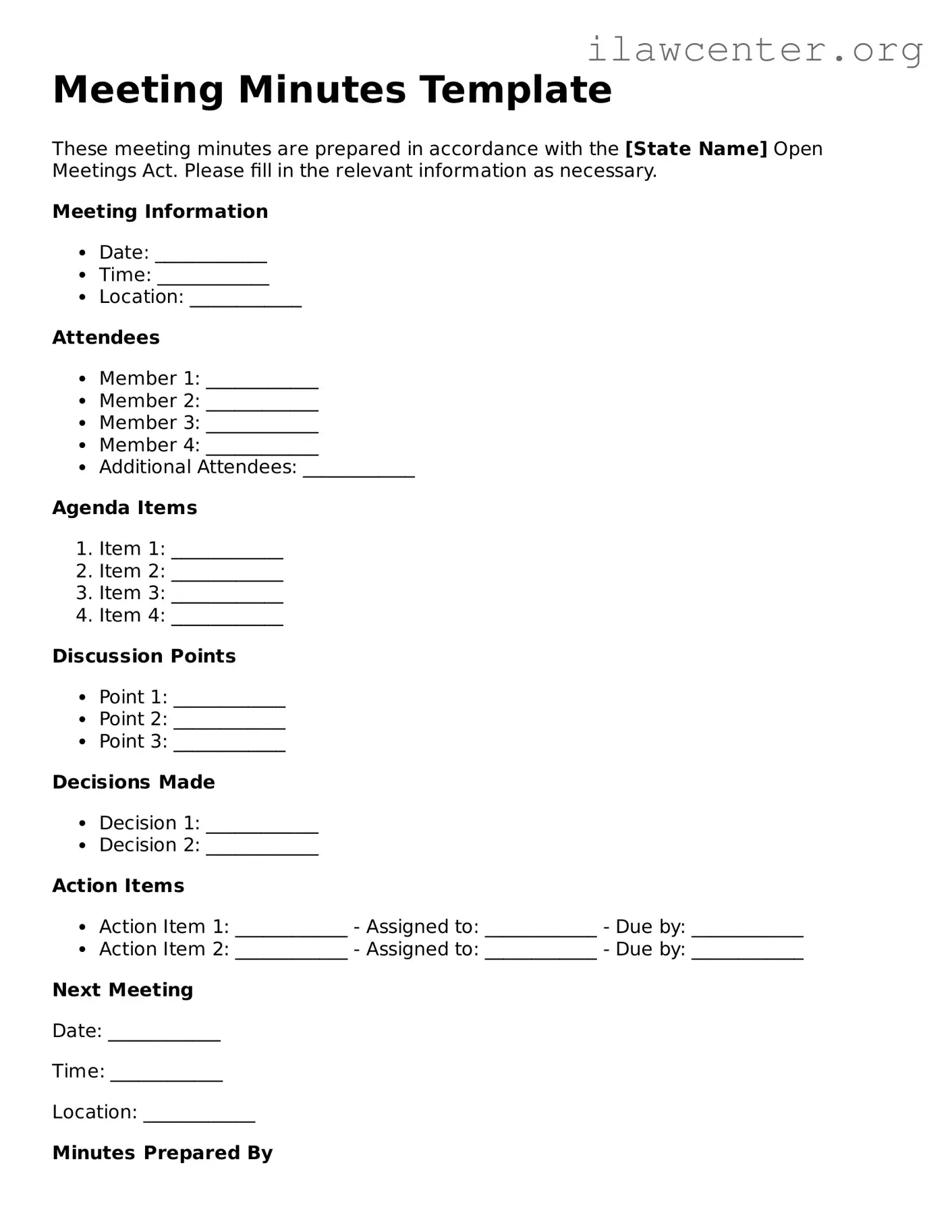
What is the purpose of the Meeting Minutes form?
The Meeting Minutes form serves as an official record of what transpired during a meeting. It captures key details such as the date, time, and location of the meeting, along with the names of attendees and absentees. This document is crucial for providing a summary of discussions, decisions made, and action items assigned. It helps ensure accountability and transparency within an organization.
Who is responsible for filling out the Meeting Minutes form?
Typically, the responsibility of completing the Meeting Minutes form falls to the designated secretary or note-taker of the meeting. This individual should be familiar with the agenda and the participants. However, anyone attending the meeting can take notes and contribute to the final document, ensuring accuracy and completeness.
How detailed should the Meeting Minutes be?
The level of detail in the Meeting Minutes should balance thoroughness with clarity. Key points, decisions, and action items should be documented clearly. Avoid excessive detail that may confuse readers. Instead, focus on summarizing discussions and capturing the essence of the meeting. This approach makes the minutes more accessible to those who were not present.
How should the Meeting Minutes be distributed?
After the Meeting Minutes are finalized, they should be distributed to all attendees and relevant stakeholders. Email is a common method for distribution, but organizations may also use shared document platforms for easy access. Timely distribution is important to keep everyone informed and to ensure that action items are addressed promptly.
What should be done if there are errors in the Meeting Minutes?
If errors are discovered in the Meeting Minutes after distribution, it is important to address them quickly. The person who created the minutes should issue a revised version, clearly noting the corrections. Communication with all recipients is essential to ensure everyone is aware of the updates. This helps maintain the integrity of the meeting record.
How long should Meeting Minutes be retained?
Meeting Minutes should generally be retained for a minimum of three to five years, depending on organizational policies and legal requirements. Retaining these records allows for reference in future discussions and helps maintain a historical account of decisions made. Organizations should consult their specific retention policies for guidance.