Attorney-Verified  Commercial Lease Agreement Document for Michigan

Attorney-Verified Commercial Lease Agreement Document for Michigan

The Michigan Commercial Lease Agreement is a legal document that outlines the terms and conditions between a landlord and a tenant for renting commercial property in Michigan. This form serves as a crucial tool to protect the rights and responsibilities of both parties involved in the lease. To get started on your lease agreement, fill out the form by clicking the button below.

Article Guide

The Michigan Commercial Lease Agreement is a crucial document for anyone involved in renting commercial property within the state. This form outlines the rights and responsibilities of both landlords and tenants, ensuring clarity and legal protection for both parties. Key elements of the agreement include the duration of the lease, rental payment terms, and security deposit requirements. Additionally, it addresses maintenance obligations, permitted uses of the property, and procedures for lease termination. Understanding these aspects is vital for businesses seeking to establish a presence in Michigan’s commercial real estate market. A well-drafted lease can prevent disputes and foster a positive landlord-tenant relationship, making it essential for both sides to review the terms carefully before signing.

Michigan Commercial Lease Agreement Preview

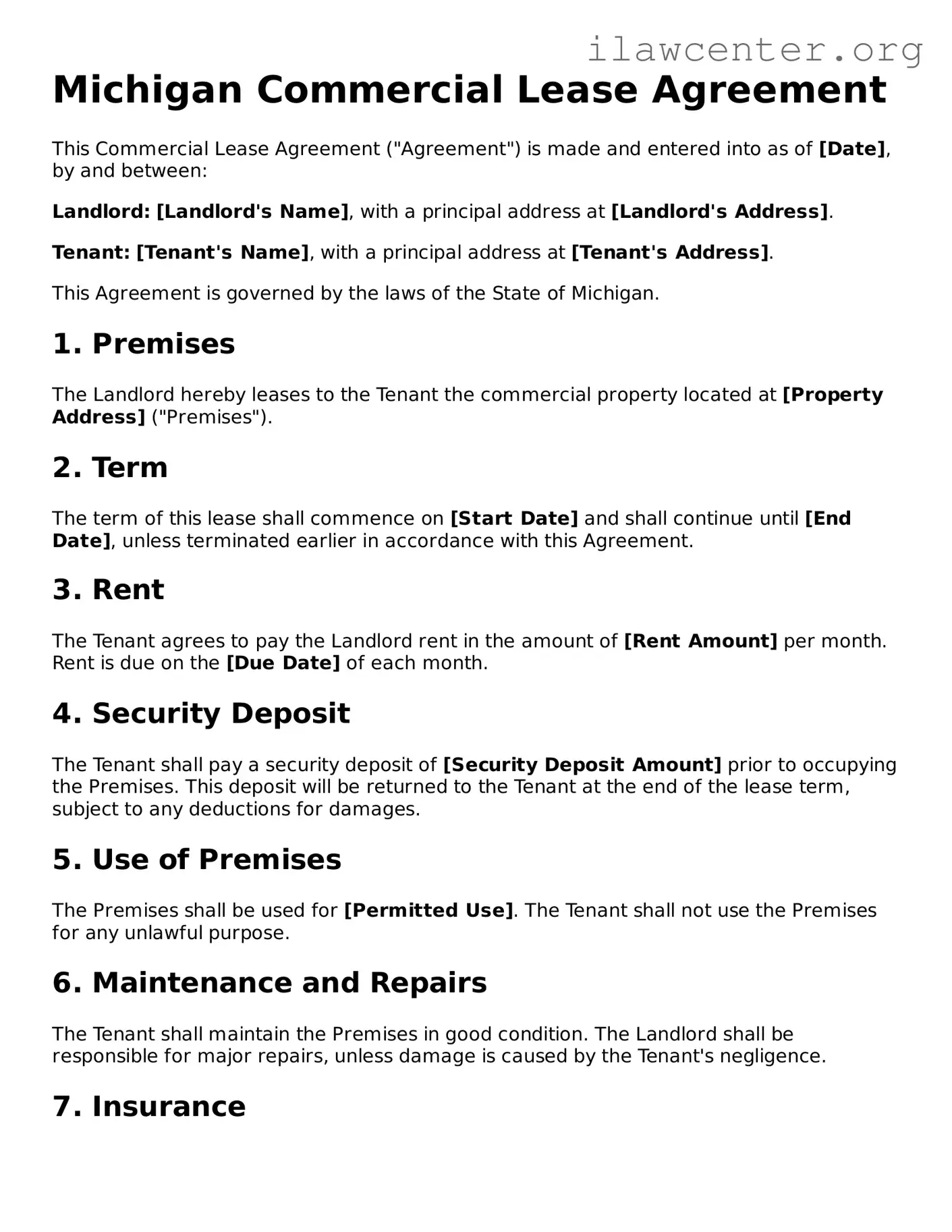
Michigan Commercial Lease Agreement

This Commercial Lease Agreement ("Agreement") is made and entered into as of [Date], by and between:

Landlord: [Landlord's Name], with a principal address at [Landlord's Address].

Tenant: [Tenant's Name], with a principal address at [Tenant's Address].

This Agreement is governed by the laws of the State of Michigan.

1. Premises

The Landlord hereby leases to the Tenant the commercial property located at [Property Address] ("Premises").

2. Term

The term of this lease shall commence on [Start Date] and shall continue until [End Date], unless terminated earlier in accordance with this Agreement.

3. Rent

The Tenant agrees to pay the Landlord rent in the amount of [Rent Amount] per month. Rent is due on the [Due Date] of each month.

4. Security Deposit

The Tenant shall pay a security deposit of [Security Deposit Amount] prior to occupying the Premises. This deposit will be returned to the Tenant at the end of the lease term, subject to any deductions for damages.

5. Use of Premises

The Premises shall be used for [Permitted Use]. The Tenant shall not use the Premises for any unlawful purpose.

6. Maintenance and Repairs

The Tenant shall maintain the Premises in good condition. The Landlord shall be responsible for major repairs, unless damage is caused by the Tenant's negligence.

7. Insurance

The Tenant is required to obtain and maintain insurance for the Premises, including liability coverage. Proof of insurance must be provided to the Landlord.

8. Termination

Either party may terminate this Agreement by providing written notice of [Notice Period] days to the other party.

9. Governing Law

This Agreement shall be governed by and construed in accordance with the laws of the State of Michigan.

10. Entire Agreement

This Agreement constitutes the entire understanding between the parties. Any amendments must be in writing and signed by both parties.

IN WITNESS WHEREOF, the parties have executed this Commercial Lease Agreement as of the date first above written.

Landlord's Signature: ___________________________ Date: ___________

Tenant's Signature: ___________________________ Date: ___________

PDF Form Characteristics

Fact Name Description
Purpose The Michigan Commercial Lease Agreement is designed to outline the terms and conditions under which a property owner (landlord) allows a business to use their property.
Governing Law This agreement is governed by the laws of the State of Michigan, ensuring that any disputes are resolved according to state regulations.
Lease Duration Leases can vary significantly in length, often ranging from one year to several years, depending on the needs of the business and the landlord's preferences.
Security Deposit Typically, landlords require a security deposit, which serves as a financial safeguard against potential damages or unpaid rent.
Maintenance Responsibilities The agreement usually specifies whether the landlord or tenant is responsible for property maintenance, which can affect overall costs and responsibilities.

Instructions on Utilizing Michigan Commercial Lease Agreement

Filling out the Michigan Commercial Lease Agreement form is a crucial step in establishing a rental relationship between a landlord and a tenant. This document outlines the terms and conditions of the lease, ensuring that both parties are aware of their rights and responsibilities. Properly completing the form helps to avoid misunderstandings and provides a clear framework for the lease.

  1. Begin by entering the date at the top of the form. This is the date when the lease agreement is being executed.
  2. Next, fill in the landlord's name and address. Make sure to provide accurate contact information.
  3. Then, enter the tenant's name and address, ensuring that all details are correct.
  4. Specify the property address that is being leased. This should include the street address, city, state, and zip code.
  5. Indicate the lease term. This is the duration of the lease, typically stated in months or years.
  6. Provide the monthly rent amount. Clearly state how much the tenant will pay each month.
  7. Outline the security deposit amount. This is usually a sum held to cover potential damages or unpaid rent.
  8. Detail any additional fees or charges that may apply, such as maintenance or utilities.
  9. Include any specific terms or conditions that both parties agree upon, such as rules regarding subleasing or property modifications.
  10. Both the landlord and tenant should sign and date the agreement at the bottom of the form to make it legally binding.

Important Facts about Michigan Commercial Lease Agreement

What is a Michigan Commercial Lease Agreement?

A Michigan Commercial Lease Agreement is a legally binding contract between a landlord and a tenant for the rental of commercial property. This document outlines the terms and conditions under which the tenant can use the property for business purposes. It includes details like rent amount, lease duration, and responsibilities of both parties.

What key terms should I look for in the agreement?

When reviewing a Michigan Commercial Lease Agreement, pay attention to important terms such as the lease term (length of the lease), rent amount and payment schedule, security deposit requirements, maintenance responsibilities, and any clauses related to termination or renewal. Understanding these terms can help prevent disputes later on.

How is rent typically structured in a commercial lease?

Rent in a commercial lease can be structured in various ways. It may be a fixed monthly amount, a percentage of sales, or a combination of both. Some leases may also include provisions for rent increases over time. Always clarify how and when rent is due to avoid confusion.

Can I negotiate the terms of the lease?

Yes, most commercial lease agreements are negotiable. Landlords may be open to adjusting terms like rent, lease duration, or maintenance responsibilities. It's a good idea to discuss your needs and concerns before signing the agreement to ensure it works for both parties.

What is the typical duration of a commercial lease?

The duration of a commercial lease can vary widely, but they often range from one to five years. Longer leases may be common for established businesses, while startups might prefer shorter terms for flexibility. Consider your business plans when deciding on the lease length.

What happens if I need to terminate the lease early?

If you need to terminate the lease early, review the termination clause in your agreement. Some leases may allow for early termination under specific conditions, often with penalties. It’s essential to understand the implications and any potential costs involved before making a decision.

Are there any zoning laws I should be aware of?

Yes, zoning laws can significantly impact your business operations. These laws dictate what types of businesses can operate in certain areas. Before signing a lease, check with local zoning authorities to ensure your intended use of the property complies with local regulations.

What should I do if I encounter issues with the property?

If you encounter issues with the property, such as maintenance problems or safety concerns, it's important to communicate with your landlord promptly. Most leases require landlords to maintain the property. Document any issues and follow up in writing to ensure they are addressed in a timely manner.

Is it advisable to have a lawyer review the lease?

Yes, having a lawyer review your commercial lease agreement is highly advisable. They can help identify potential issues, clarify terms, and ensure your rights are protected. This step can save you from future headaches and legal complications.
Common mistakes

Filling out a Michigan Commercial Lease Agreement form can be a daunting task, especially for those unfamiliar with legal documents. One common mistake is neglecting to read the entire agreement thoroughly. Many individuals rush through the process, overlooking crucial details that could impact their rights and responsibilities. Taking the time to understand each section ensures that all parties are on the same page.

Another frequent error is failing to provide accurate information. This includes not only names and addresses but also the specifics of the leased property. Inaccuracies can lead to disputes later on, making it essential to double-check all entries before submitting the form.

People often overlook the importance of specifying the lease term. A vague or incomplete term can create confusion regarding the duration of the lease, which may lead to unintended consequences. Clearly stating the start and end dates helps avoid misunderstandings between the landlord and tenant.

Many individuals forget to include provisions for renewal or termination. Without these clauses, the agreement may lack clarity on what happens at the end of the lease term. Including options for renewal or the process for termination can provide valuable guidance for both parties.

Another common mistake involves neglecting to detail the rent payment schedule. Rent amounts, due dates, and acceptable payment methods should be clearly outlined. This clarity can prevent disputes over missed payments or late fees.

Some individuals fail to address maintenance responsibilities in the lease. It's important to specify who is responsible for repairs and maintenance of the property. This helps ensure that both parties understand their obligations, reducing the likelihood of conflict.

Lastly, many overlook the significance of signatures. A lease agreement is not legally binding until it is signed by both parties. Ensuring that all necessary signatures are present is crucial for the enforceability of the agreement.

Documents used along the form

In addition to the Michigan Commercial Lease Agreement, several other forms and documents are often utilized in the leasing process. These documents help clarify terms, protect the interests of both parties, and ensure compliance with local laws. Below is a list of commonly used forms.

  • Letter of Intent: This document outlines the preliminary agreement between the landlord and tenant. It typically includes key terms such as rental rates, lease duration, and any special conditions. While not legally binding, it serves as a foundation for the formal lease agreement.
  • Personal Guaranty: This document may be required by landlords to secure the lease. It holds an individual personally responsible for the lease obligations if the tenant is a business entity. This adds an extra layer of security for the landlord.
  • Lease Addendum: An addendum is an additional document that modifies or adds specific terms to the original lease agreement. This could include changes to maintenance responsibilities, rental adjustments, or other specific provisions agreed upon after the lease is signed.
  • Disclosure Statements: These documents provide important information regarding the property, such as any known defects or hazards. They help ensure transparency and protect both parties from future disputes regarding property conditions.

These forms and documents play a crucial role in the leasing process. They help establish clear expectations and protect the rights of both landlords and tenants in Michigan's commercial leasing landscape.

Similar forms

  • Residential Lease Agreement: Similar to a commercial lease, this document outlines the terms and conditions under which a tenant rents a residential property from a landlord. Both agreements specify the duration of the lease, payment terms, and responsibilities of both parties.

  • Sublease Agreement: This document allows a tenant to rent out their leased space to another party. Like a commercial lease, it details the terms of occupancy, payment, and the responsibilities of the subtenant, ensuring that all parties understand their obligations.

  • Property Management Agreement: This agreement is made between a property owner and a management company. It shares similarities with a commercial lease in that it outlines the responsibilities for maintaining the property, collecting rent, and handling tenant relations, ensuring clarity in management roles.

  • Real Estate Purchase Agreement: While primarily for buying and selling property, this document also includes terms related to the use of the property before the sale is finalized. It mirrors a commercial lease by specifying conditions, obligations, and timelines for both buyer and seller.

  • Loan Agreement: This document outlines the terms under which a lender provides funds to a borrower. Similar to a commercial lease, it details payment schedules, interest rates, and responsibilities, ensuring both parties understand their financial commitments.

Dos and Don'ts

When filling out the Michigan Commercial Lease Agreement form, it is important to follow certain guidelines to ensure accuracy and legality. Below is a list of things you should and shouldn't do:

  • Do read the entire lease agreement carefully before filling it out.
  • Do provide accurate and complete information about the parties involved.
  • Do specify the lease term clearly, including start and end dates.
  • Do outline the rent amount and payment schedule in detail.
  • Don't leave any sections blank; fill in all required fields.
  • Don't ignore the importance of understanding the lease terms before signing.
  • Don't rush through the process; take your time to review each section.
  • Don't forget to keep a copy of the signed agreement for your records.

Misconceptions

Understanding the Michigan Commercial Lease Agreement form is essential for both landlords and tenants. However, several misconceptions can lead to confusion. Here are four common misunderstandings:

  1. All lease terms are negotiable.

    While many terms can be negotiated, some aspects of the lease may be standard and non-negotiable. It's important to discuss these terms with the landlord or a legal advisor to understand what can be changed.

  2. Only the rent amount is important.

    Many people believe that the rent is the only critical factor in a lease. However, other elements such as maintenance responsibilities, lease duration, and renewal options are equally important and can significantly impact the overall agreement.

  3. Commercial leases are the same as residential leases.

    This is a common misconception. Commercial leases often have different rules and regulations compared to residential leases. They may also involve more complex terms and conditions that are specific to business operations.

  4. Once signed, a lease cannot be changed.

    Many believe that a lease is set in stone once signed. In reality, amendments can be made if both parties agree. It's crucial to document any changes in writing to avoid misunderstandings later.

By clarifying these misconceptions, both landlords and tenants can approach the leasing process with greater confidence and understanding.

Key takeaways

When dealing with the Michigan Commercial Lease Agreement form, it’s essential to understand several key points to ensure a smooth process. Here are some important takeaways:

  • Read the Entire Agreement: Before signing, carefully review every section of the lease. Each clause can have significant implications for both the landlord and tenant.
  • Understand Lease Terms: Familiarize yourself with the lease duration, renewal options, and any termination clauses. Knowing these details helps in planning for the future.
  • Identify Responsibilities: Clearly outline who is responsible for maintenance, repairs, and utilities. This can prevent disputes later on.
  • Negotiate Terms: Don’t hesitate to negotiate terms that may not be favorable. This could include rent amounts, payment schedules, and security deposits.
  • Include Specific Use Clauses: Specify the intended use of the property. This ensures that both parties agree on what activities are permitted on the premises.
  • Consult a Professional: If unsure about any aspect of the lease, seek advice from a real estate attorney or a knowledgeable professional. Their expertise can be invaluable.

By keeping these points in mind, both landlords and tenants can navigate the lease process more effectively, leading to a successful rental experience.