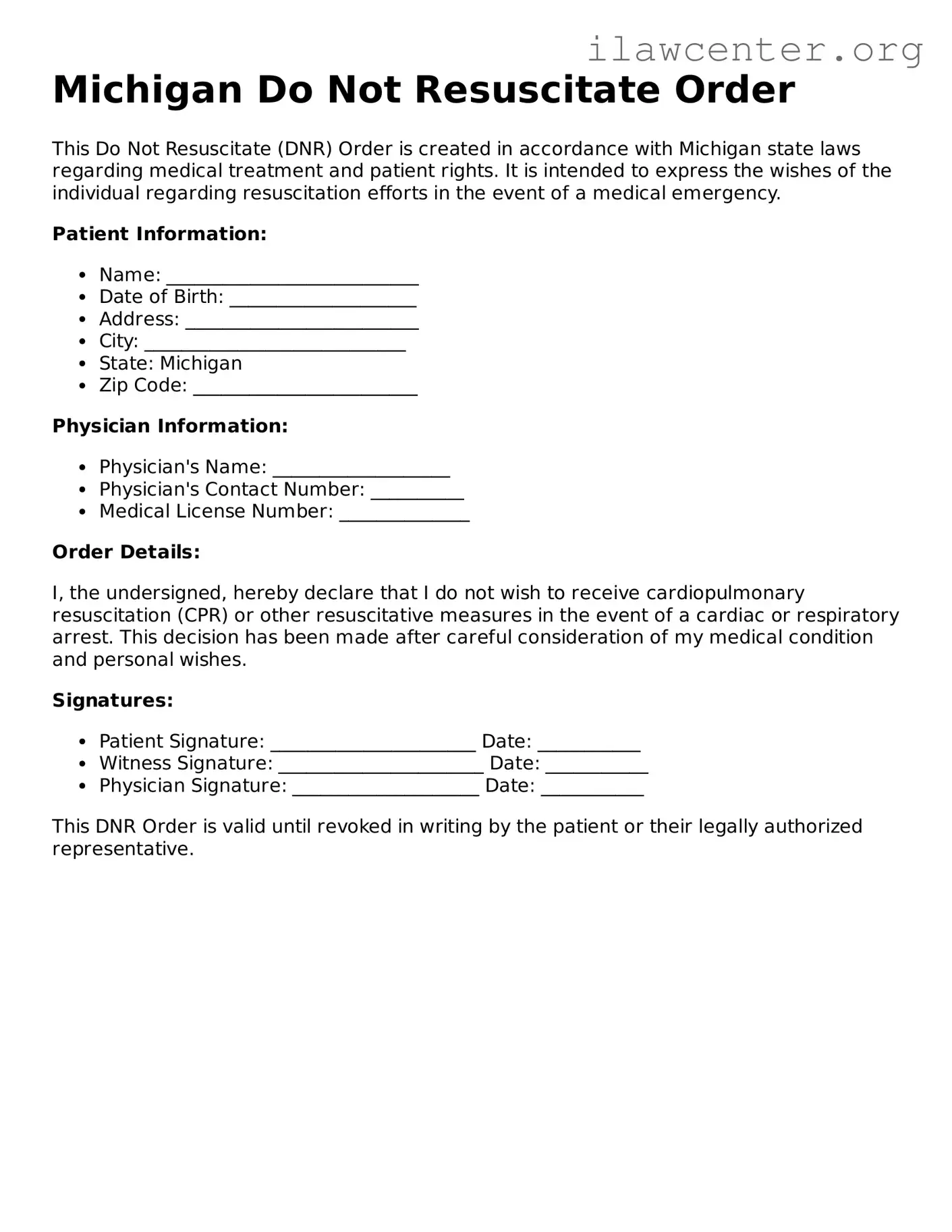
What is a Do Not Resuscitate (DNR) Order in Michigan?
A Do Not Resuscitate Order is a legal document that allows a person to refuse cardiopulmonary resuscitation (CPR) and other life-saving measures in the event of cardiac arrest or respiratory failure. In Michigan, this order is intended for individuals who have a serious medical condition and wish to avoid aggressive medical interventions at the end of life.
Who can request a DNR Order?
Any adult who is capable of making informed medical decisions can request a DNR Order. This includes individuals who have a terminal illness, a chronic condition, or other serious health issues. In cases where the person is unable to make decisions, a legally authorized representative, such as a healthcare proxy or family member, may request the order on their behalf.
How do I obtain a DNR Order in Michigan?
To obtain a DNR Order, you must fill out the official Michigan DNR Order form. This form can be acquired from healthcare providers, hospitals, or online through the Michigan Department of Health and Human Services. After completing the form, it must be signed by both the patient and a physician to be valid.
Is a DNR Order valid in all healthcare settings?
Yes, a properly executed DNR Order is recognized across various healthcare settings in Michigan, including hospitals, nursing homes, and emergency medical services. It is important to keep a copy of the DNR Order accessible, as first responders and medical staff must be able to see it when making decisions about care.
Can I change or revoke my DNR Order?
Yes, you can change or revoke your DNR Order at any time. To do so, you should inform your healthcare provider and any family members or caregivers about your decision. If you wish to create a new DNR Order, ensure that the previous one is destroyed or marked as revoked to avoid confusion.
What happens if I do not have a DNR Order?
If you do not have a DNR Order in place, medical personnel are required to perform resuscitation efforts, such as CPR, if you experience cardiac arrest or respiratory failure. This may include invasive procedures, which some individuals may wish to avoid.
Will my DNR Order be honored if I am traveling outside of Michigan?
While DNR Orders are state-specific, many states recognize DNR Orders from other states, including Michigan. However, it is advisable to check the specific laws of the state you are visiting to ensure your wishes will be honored. Carrying a copy of your DNR Order while traveling is also recommended.
Can family members override a DNR Order?
In general, once a DNR Order is in place and valid, family members cannot override it. However, discussions about end-of-life wishes should be held with family members to ensure everyone understands and respects your decisions. Open communication can help prevent conflicts and confusion in critical situations.
What should I do if I have questions about my DNR Order?
If you have questions or concerns about your DNR Order, it is best to speak with your healthcare provider. They can provide guidance and help you understand the implications of the order. Additionally, legal advisors specializing in healthcare may offer further assistance if needed.