Attorney-Verified  Lady Bird Deed Document for Michigan

Attorney-Verified Lady Bird Deed Document for Michigan

The Michigan Lady Bird Deed form is a legal document that allows property owners to transfer their real estate to beneficiaries while retaining the right to live in and control the property during their lifetime. This unique deed can simplify the transfer process and help avoid probate, ensuring a smoother transition for your loved ones. If you're considering this option, take action now by filling out the form below.

Article Guide

When it comes to estate planning in Michigan, the Lady Bird Deed offers a unique and effective solution for property owners looking to transfer their real estate while retaining certain rights during their lifetime. This type of deed allows individuals to transfer property to their beneficiaries without the need for probate, simplifying the process and reducing potential costs. One of the key features of the Lady Bird Deed is that it allows the original owner to maintain control over the property, including the ability to sell or mortgage it, even after the transfer. This flexibility can be particularly beneficial for those who wish to ensure their loved ones receive their property while still enjoying the benefits of ownership. Additionally, the Lady Bird Deed can help avoid the complications that often arise from traditional wills and trusts, making it an attractive option for many Michigan residents. Understanding the intricacies of this deed, including how it functions and its implications for tax and estate planning, is essential for anyone considering this approach to property transfer.

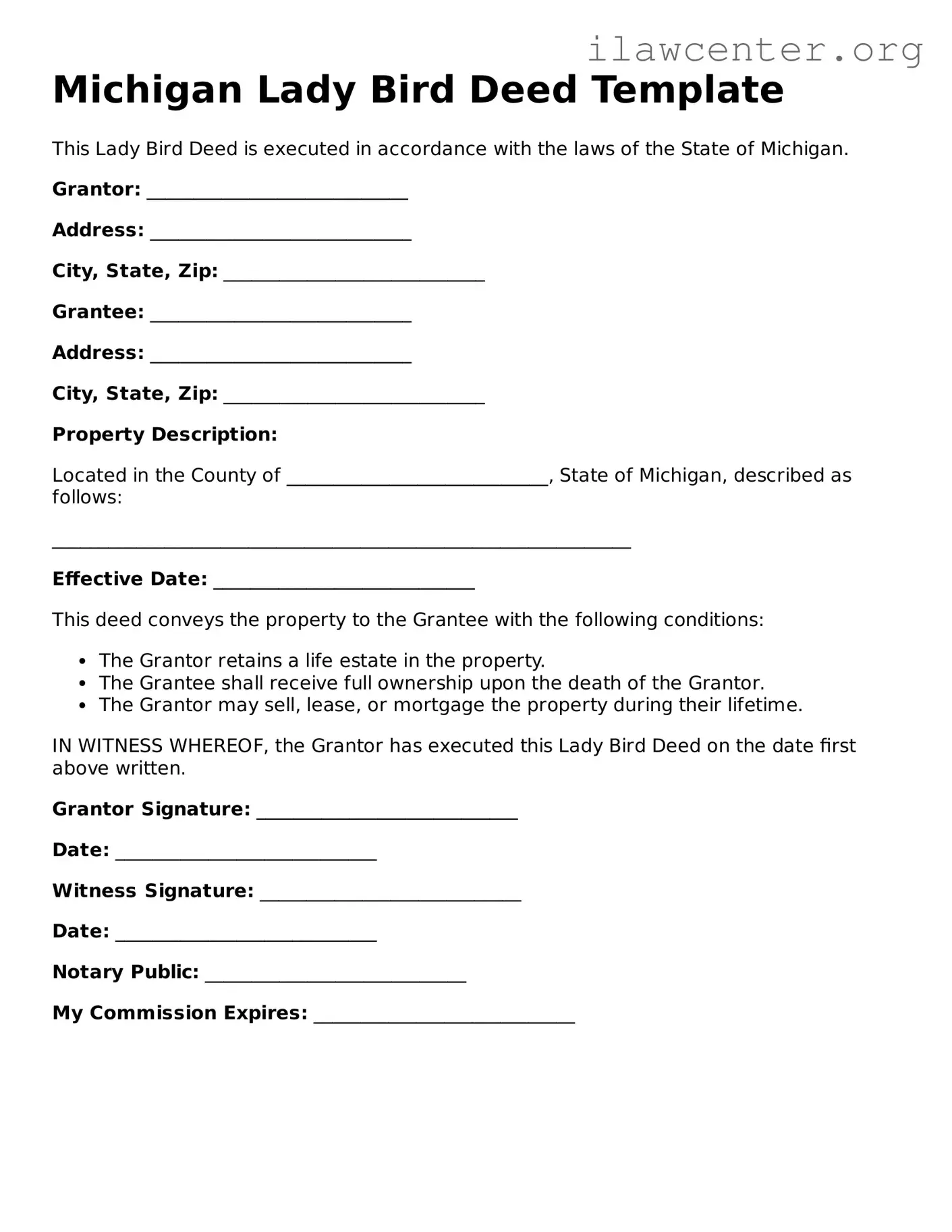
Michigan Lady Bird Deed Preview

Michigan Lady Bird Deed Template

This Lady Bird Deed is executed in accordance with the laws of the State of Michigan.

Grantor: ____________________________

Address: ____________________________

City, State, Zip: ____________________________

Grantee: ____________________________

Address: ____________________________

City, State, Zip: ____________________________

Property Description:

Located in the County of ____________________________, State of Michigan, described as follows:

______________________________________________________________

Effective Date: ____________________________

This deed conveys the property to the Grantee with the following conditions:

  • The Grantor retains a life estate in the property.
  • The Grantee shall receive full ownership upon the death of the Grantor.
  • The Grantor may sell, lease, or mortgage the property during their lifetime.

IN WITNESS WHEREOF, the Grantor has executed this Lady Bird Deed on the date first above written.

Grantor Signature: ____________________________

Date: ____________________________

Witness Signature: ____________________________

Date: ____________________________

Notary Public: ____________________________

My Commission Expires: ____________________________

PDF Form Characteristics

Fact Name Description
What is a Lady Bird Deed? A Lady Bird Deed allows property owners in Michigan to transfer real estate to beneficiaries while retaining the right to use the property during their lifetime.
Governing Law The Lady Bird Deed is governed by Michigan Compiled Laws, specifically MCL 565.25.
Revocability This deed is revocable, meaning the property owner can change or cancel it at any time before death.
Avoiding Probate One of the main benefits is that property transferred via a Lady Bird Deed can avoid probate, simplifying the transfer process for heirs.
Tax Implications Using a Lady Bird Deed generally does not trigger gift taxes, as the transfer is not considered complete until the owner's death.
Property Types It can be used for various types of real estate, including residential homes and vacant land.
Beneficiary Designation Property owners can designate one or more beneficiaries to receive the property after their death.
Right to Sell The property owner retains the right to sell, mortgage, or otherwise manage the property without the beneficiary's consent.
Execution Requirements The deed must be signed and notarized to be valid, ensuring it meets Michigan's legal standards.
Impact on Medicaid In certain situations, a Lady Bird Deed can help protect assets from being counted for Medicaid eligibility.

Instructions on Utilizing Michigan Lady Bird Deed

After obtaining the Michigan Lady Bird Deed form, you will be ready to provide the necessary information. Completing this form accurately is essential for ensuring that your intentions regarding property transfer are clearly stated. Follow these steps to fill out the form correctly.

  1. Begin by entering the date at the top of the form.
  2. Provide the name and address of the property owner. Ensure that the name matches the title on the property deed.
  3. Identify the property being transferred. Include the full legal description of the property, which can usually be found on the current deed.
  4. List the names and addresses of the beneficiaries who will receive the property upon the owner’s passing.
  5. Indicate whether the owner retains the right to sell, lease, or mortgage the property during their lifetime.
  6. Sign the form in the presence of a notary public to validate the document.
  7. Make copies of the completed form for your records.
  8. File the original form with the county register of deeds office where the property is located.

Important Facts about Michigan Lady Bird Deed

What is a Michigan Lady Bird Deed?

A Michigan Lady Bird Deed is a unique estate planning tool that allows property owners to transfer their real estate to beneficiaries while retaining control during their lifetime. This type of deed enables the property owner to live in and manage the property, and upon their death, the property automatically transfers to the designated beneficiaries without going through probate. It’s a simple way to ensure that your property goes to the right people while avoiding the complexities of probate court.

Who can use a Lady Bird Deed in Michigan?

Any property owner in Michigan can use a Lady Bird Deed, provided they are of sound mind and capable of making legal decisions. This deed is particularly useful for individuals who want to ensure a smooth transition of their property to loved ones, such as children or other family members. However, it’s always wise to consult with a legal expert to ensure that this option fits your specific situation and needs.

What are the benefits of using a Lady Bird Deed?

One of the main benefits of a Lady Bird Deed is the avoidance of probate, which can be a lengthy and costly process. Additionally, the property owner retains the right to sell, mortgage, or change the beneficiaries at any time during their life. This flexibility is appealing to many. Furthermore, it can also provide certain tax advantages, as the property may receive a stepped-up basis upon the owner's death, potentially reducing capital gains taxes for the beneficiaries.

How do I create a Lady Bird Deed in Michigan?

Creating a Lady Bird Deed involves drafting the document to meet Michigan’s legal requirements. It must include specific language that clearly states your intention to retain control of the property during your lifetime and outlines the beneficiaries. While templates are available online, it’s highly recommended to work with a legal professional to ensure that the deed is correctly executed and recorded. Once completed, the deed must be signed, notarized, and filed with the county register of deeds to be legally binding.

Common mistakes

Filling out a Lady Bird Deed form in Michigan can seem straightforward, but many people stumble along the way. One common mistake is not clearly identifying the property. When filling out the form, it's crucial to include the correct legal description of the property. This description isn't just the address; it should encompass the parcel number and any other identifiers that make the property unique. Omitting or misrepresenting this information can lead to complications down the line.

Another frequent error is failing to understand the implications of the deed. Some individuals mistakenly believe that a Lady Bird Deed allows them to retain complete control over the property while avoiding probate. While it does provide certain benefits, such as avoiding probate for the property, it’s essential to grasp that the property is still subject to any debts or liens. Understanding these nuances can help avoid unexpected surprises in the future.

Many people also overlook the importance of naming the beneficiaries correctly. It might seem simple, but errors in spelling or using nicknames instead of legal names can create issues. If the names don’t match official identification documents, it could lead to disputes or delays in transferring ownership after the original owner passes away. Always double-check the names and ensure they are accurate and complete.

In addition, some individuals neglect to sign the form in the presence of a notary. A Lady Bird Deed must be notarized to be valid. Without this crucial step, the deed may be considered invalid, which can lead to significant legal challenges. Ensuring that the signing process is done correctly can save a lot of headaches later.

Lastly, failing to record the deed with the county clerk’s office is a mistake that can have serious consequences. Even if the deed is filled out correctly, if it’s not recorded, it won’t be recognized legally. This means that the intended benefits of the Lady Bird Deed, such as avoiding probate, might not be realized. It’s essential to follow through and ensure that the deed is properly filed to protect your interests.

Documents used along the form

The Michigan Lady Bird Deed is a useful tool for transferring property while retaining certain rights. Several other forms and documents often accompany this deed to ensure a smooth process. Below is a list of commonly used documents.

  • Quit Claim Deed: This document transfers ownership of property without guaranteeing that the title is clear. It is often used to convey property between family members or in divorce settlements.
  • Warranty Deed: A warranty deed provides a guarantee that the grantor holds clear title to the property and has the right to transfer it. It protects the grantee from future claims against the property.
  • Power of Attorney: This legal document allows one person to act on behalf of another in legal or financial matters. It may be necessary for managing property affairs if the property owner becomes incapacitated.
  • Affidavit of Heirship: This document establishes the heirs of a deceased property owner. It can help clarify ownership and facilitate the transfer of property without going through probate.
  • Trust Agreement: A trust agreement outlines how property is managed and distributed by a trustee. It can be used in conjunction with a Lady Bird Deed to provide additional estate planning benefits.
  • Notice of Transfer: This form notifies the local tax assessor’s office of a property transfer. It ensures that property tax records are updated accordingly.

These documents serve various purposes in the property transfer process and can help clarify ownership, protect rights, and facilitate estate planning. It is advisable to consult with a professional to determine which documents are necessary for your specific situation.

Similar forms

The Lady Bird Deed is a unique legal document used primarily for estate planning. However, several other documents serve similar purposes in terms of property transfer and estate management. Below is a list of six documents that share similarities with the Lady Bird Deed:

  • Transfer on Death Deed (TODD): Like the Lady Bird Deed, a TODD allows property owners to transfer their real estate to beneficiaries upon their death without going through probate.
  • Life Estate Deed: This document creates a life estate, allowing the property owner to retain use of the property during their lifetime while transferring ownership to others after their death, similar to the Lady Bird Deed's provisions.
  • Revocable Living Trust: A revocable living trust allows individuals to manage their assets during their lifetime and designate beneficiaries for after their death, providing a flexible alternative to the Lady Bird Deed.
  • Joint Tenancy with Right of Survivorship: This form of property ownership allows co-owners to automatically inherit each other's share of the property upon death, paralleling the transfer aspect of the Lady Bird Deed.
  • Beneficiary Deed: Similar to the Lady Bird Deed, a beneficiary deed allows property owners to name beneficiaries who will receive the property upon their death, avoiding the probate process.
  • Quitclaim Deed: While primarily used to transfer interest in a property without warranties, a quitclaim deed can facilitate property transfers among family members, akin to the intentions behind a Lady Bird Deed.

Dos and Don'ts

When filling out the Michigan Lady Bird Deed form, it's important to follow certain guidelines to ensure the document is valid and effective. Here are four things you should and shouldn't do:

  • Do ensure that the property description is accurate and complete.
  • Do include the names of all grantors and grantees clearly.
  • Don't leave any sections of the form blank; all required fields must be filled out.
  • Don't forget to sign the deed in front of a notary public.

Misconceptions

The Michigan Lady Bird Deed is a tool often misunderstood. Below are some common misconceptions about this deed and clarifications for each.

  • It is only for married couples. The Lady Bird Deed can be used by any individual, regardless of marital status, to transfer property while retaining control during their lifetime.
  • It avoids all taxes. While the Lady Bird Deed can help avoid probate, it does not exempt the property from property taxes or capital gains taxes upon sale.
  • It is the same as a traditional quitclaim deed. Unlike a quitclaim deed, a Lady Bird Deed allows the grantor to retain rights to the property during their lifetime, including the right to sell or mortgage it.
  • It automatically transfers ownership upon death. The transfer occurs only after the death of the grantor, and specific conditions must be met for it to be valid.
  • It is only valid in Michigan. While the Lady Bird Deed is specifically recognized in Michigan, similar deeds may exist in other states under different names or legal frameworks.
  • It cannot be revoked. The grantor retains the right to revoke or change the deed at any time during their lifetime, making it a flexible option.
  • It is a complex legal document. The Lady Bird Deed is relatively straightforward and can often be completed without extensive legal knowledge, though consulting a professional is advisable.
  • It does not affect Medicaid eligibility. Transferring property through a Lady Bird Deed can impact Medicaid eligibility, especially if done within five years of applying for benefits.
  • All heirs must agree to the deed. The grantor can create the Lady Bird Deed without needing consent from heirs, as long as they are of sound mind and legal age.

Understanding these misconceptions can help individuals make informed decisions regarding property transfer and estate planning in Michigan.

Key takeaways

The Michigan Lady Bird Deed is a useful estate planning tool that allows property owners to transfer real estate while retaining certain rights. Here are some key takeaways regarding its use:

  • Retained Control: The grantor retains the right to live in and use the property during their lifetime, ensuring they maintain control over their home.
  • Simplified Transfer: Upon the grantor's death, the property automatically transfers to the designated beneficiaries without the need for probate, simplifying the process for heirs.
  • Tax Benefits: The Lady Bird Deed may help avoid gift taxes, as the transfer is not considered a completed gift until the grantor passes away.
  • Flexibility: The grantor can change beneficiaries or revoke the deed at any time during their lifetime, allowing for adaptability in estate planning.
  • Medicaid Protection: In certain situations, the property may not be counted as an asset for Medicaid eligibility, providing potential benefits for long-term care planning.
  • Legal Requirements: To be valid, the deed must be properly executed and recorded with the county register of deeds, ensuring it is recognized legally.

Understanding these aspects can help individuals make informed decisions about their estate planning needs in Michigan.