Attorney-Verified  Land Purchase Agreement Document for Michigan

Attorney-Verified Land Purchase Agreement Document for Michigan

The Michigan Land Purchase Agreement form is a legal document that outlines the terms and conditions under which a buyer agrees to purchase land from a seller. This agreement serves to protect the interests of both parties by clearly defining the responsibilities and obligations involved in the transaction. For those looking to initiate a land purchase in Michigan, filling out this form is an essential first step; click the button below to get started.

Article Guide

The Michigan Land Purchase Agreement form is an essential document in real estate transactions, serving as a binding contract between the buyer and seller of a property. This form outlines critical details such as the purchase price, property description, and payment terms. It also specifies the rights and responsibilities of both parties throughout the transaction process. Key provisions often include contingencies for inspections and financing, ensuring that buyers have the opportunity to conduct due diligence before finalizing the sale. Additionally, the agreement addresses the closing process, including timelines and any necessary disclosures. Understanding the components of this form is vital for anyone involved in buying or selling land in Michigan, as it helps to protect the interests of both parties and facilitates a smoother transaction.

Michigan Land Purchase Agreement Preview

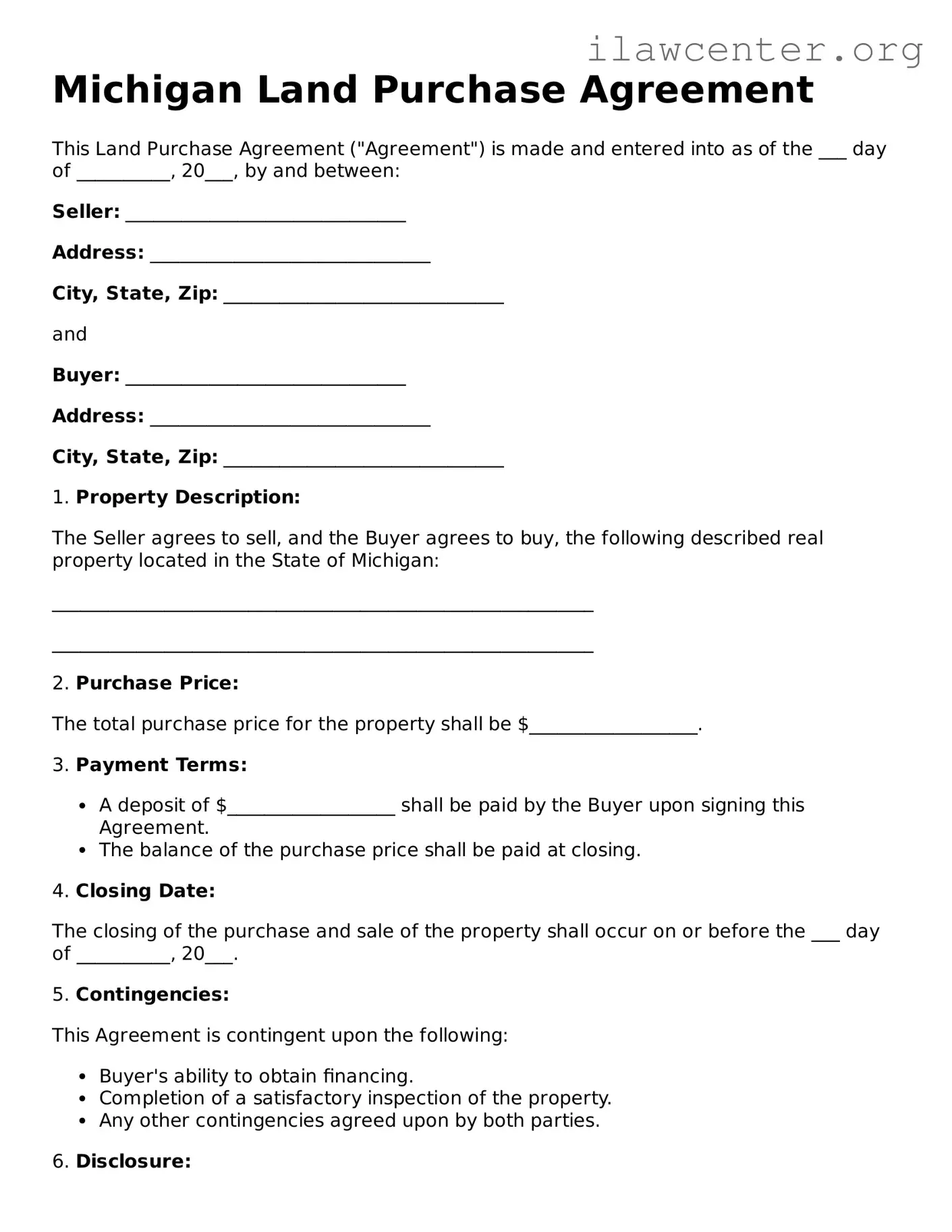
Michigan Land Purchase Agreement

This Land Purchase Agreement ("Agreement") is made and entered into as of the ___ day of __________, 20___, by and between:

Seller: ______________________________

Address: ______________________________

City, State, Zip: ______________________________

and

Buyer: ______________________________

Address: ______________________________

City, State, Zip: ______________________________

1. Property Description:

The Seller agrees to sell, and the Buyer agrees to buy, the following described real property located in the State of Michigan:

__________________________________________________________

__________________________________________________________

2. Purchase Price:

The total purchase price for the property shall be $__________________.

3. Payment Terms:

  • A deposit of $__________________ shall be paid by the Buyer upon signing this Agreement.
  • The balance of the purchase price shall be paid at closing.

4. Closing Date:

The closing of the purchase and sale of the property shall occur on or before the ___ day of __________, 20___.

5. Contingencies:

This Agreement is contingent upon the following:

  • Buyer's ability to obtain financing.
  • Completion of a satisfactory inspection of the property.
  • Any other contingencies agreed upon by both parties.

6. Disclosure:

The Seller shall provide the Buyer with all required disclosures as mandated by Michigan law, including but not limited to:

  • Lead-based paint disclosure (if applicable).
  • Property condition disclosure statement.

7. Governing Law:

This Agreement shall be governed by the laws of the State of Michigan.

8. Signatures:

IN WITNESS WHEREOF, the parties hereto have executed this Land Purchase Agreement as of the day and year first above written.

______________________________

Seller's Signature

______________________________

Buyer's Signature

PDF Form Characteristics

Fact Name Details
Purpose The Michigan Land Purchase Agreement form is used to outline the terms of a real estate transaction between a buyer and a seller.
Governing Law This agreement is governed by the laws of the State of Michigan.
Parties Involved The form requires identification of both the buyer and the seller, including their full names and contact information.
Property Description A detailed description of the property being sold must be included, such as its address and legal description.
Purchase Price The agreement specifies the total purchase price for the property and outlines any deposits or down payments required.
Contingencies Buyers may include contingencies, such as financing or inspection requirements, which must be satisfied for the sale to proceed.
Closing Date The form establishes a closing date, which is the date when the property transfer is finalized.
Signatures Both parties must sign the agreement to make it legally binding.
Disclosure Requirements Sellers are often required to disclose any known defects or issues with the property to the buyer.
Amendments Any changes to the agreement must be documented in writing and signed by both parties to be enforceable.

Instructions on Utilizing Michigan Land Purchase Agreement

Once you have the Michigan Land Purchase Agreement form in hand, it’s time to complete it accurately. This form is essential for formalizing the purchase of real estate in Michigan. Following the steps below will help ensure that you fill it out correctly, paving the way for a smooth transaction.

  1. Begin with the date at the top of the form. Write the date when you are filling out the agreement.
  2. Next, enter the names of the buyer(s) and seller(s). Ensure that you spell each name correctly and include any middle initials.
  3. Provide the property address. This should include the street number, street name, city, and zip code.
  4. Fill in the legal description of the property. This can usually be found on the property deed or tax documents.
  5. Indicate the purchase price of the property. Be clear and precise with the amount.
  6. Outline any deposit amount. Specify how much the buyer will put down as earnest money.
  7. Detail the financing terms. If the buyer is obtaining a loan, include the lender's name and any relevant details about the financing.
  8. Specify the closing date. This is when the sale will be finalized and ownership transferred.
  9. Include any contingencies. These might include inspections, financing, or other conditions that must be met for the sale to proceed.
  10. Finally, both parties should sign and date the agreement at the bottom. Ensure that all signatures are in ink.

Important Facts about Michigan Land Purchase Agreement

What is the Michigan Land Purchase Agreement form?

The Michigan Land Purchase Agreement form is a legal document used when buying or selling real estate in Michigan. It outlines the terms and conditions of the sale, including the purchase price, property description, and any contingencies. This agreement helps protect both the buyer and seller by clearly defining their rights and responsibilities throughout the transaction.

What key elements are included in the agreement?

The agreement typically includes several important elements. These include the names of the buyer and seller, the legal description of the property, the purchase price, payment terms, and any contingencies such as inspections or financing. Additionally, it may outline the closing date and any disclosures required by Michigan law.

How do I fill out the Michigan Land Purchase Agreement form?

To fill out the form, start by entering the names of both parties and the property's legal description. Next, specify the purchase price and payment details. Be sure to include any contingencies that may apply, such as the buyer needing to secure financing or complete a home inspection. Finally, both parties should review the document carefully before signing to ensure all information is accurate.

Is the Michigan Land Purchase Agreement form legally binding?

Yes, once both parties sign the Michigan Land Purchase Agreement, it becomes a legally binding contract. This means that both the buyer and seller are obligated to follow the terms outlined in the agreement. If either party fails to meet their obligations, the other party may have legal recourse to enforce the contract.

Can I modify the Michigan Land Purchase Agreement form?

Yes, modifications can be made to the Michigan Land Purchase Agreement form. However, any changes should be clearly documented and agreed upon by both parties. It's advisable to consult with a real estate professional or attorney to ensure that any modifications comply with Michigan law and do not create confusion or ambiguity in the agreement.

Common mistakes

Filling out the Michigan Land Purchase Agreement form can be a daunting task for many. It’s essential to approach this document with care to avoid common pitfalls. One frequent mistake is failing to provide complete and accurate information about the property. Buyers often overlook details such as the legal description of the land or the correct parcel number. These details are crucial, as they ensure that both parties are clear about which property is being bought or sold.

Another common error is neglecting to include all necessary parties in the agreement. When multiple individuals are involved in the transaction, it’s vital to list everyone’s names correctly. Omitting a co-owner or misidentifying a party can lead to disputes down the line. This oversight can complicate the transaction and potentially result in legal challenges.

Many people also underestimate the importance of understanding the terms outlined in the agreement. Some might rush through the document without fully grasping the implications of certain clauses. For instance, terms regarding contingencies, financing, and closing costs can significantly impact the transaction. Taking the time to read and understand these sections can prevent misunderstandings and ensure a smoother process.

Lastly, failing to sign and date the document correctly is a mistake that can invalidate the agreement. Each party must sign in the designated areas, and dates should be included to mark when the agreement was executed. Without these signatures, the document may not hold up in a legal context, leading to complications that could have been easily avoided.

Documents used along the form

When entering into a land purchase agreement in Michigan, several other forms and documents may be necessary to ensure a smooth transaction. Each document serves a specific purpose, providing clarity and legal protection for both the buyer and the seller. Below is a list of commonly used forms that accompany the Michigan Land Purchase Agreement.

  • Property Disclosure Statement: This document requires the seller to disclose any known issues or defects with the property. It helps buyers make informed decisions by revealing potential problems.
  • Title Commitment: A title commitment outlines the conditions under which a title insurance policy will be issued. It ensures that the buyer receives clear ownership of the property, free from liens or disputes.
  • Deed: The deed is the legal document that transfers ownership of the property from the seller to the buyer. It must be properly executed and recorded to be valid.
  • Closing Statement: This document summarizes the financial aspects of the transaction, including costs, fees, and adjustments. It provides a clear breakdown of what each party owes or will receive at closing.
  • Earnest Money Receipt: This receipt acknowledges the buyer's deposit to show their commitment to the purchase. It outlines the amount and terms regarding the earnest money.
  • Mortgage Documents: If the buyer is financing the purchase, various mortgage documents will be required. These include the loan application, promissory note, and mortgage agreement.
  • Inspection Reports: Buyers often obtain inspection reports to assess the property's condition. These reports can reveal issues that may need addressing before the sale is finalized.
  • Affidavit of Title: This document is a sworn statement by the seller confirming their ownership of the property and that there are no undisclosed liens or claims against it.
  • Land Use Zoning Verification: This form confirms the zoning classification of the property, ensuring that the intended use complies with local regulations.

Understanding these documents can greatly enhance the land purchasing experience in Michigan. Each plays a vital role in protecting the interests of all parties involved and ensuring a legally sound transaction.

Similar forms

The Land Purchase Agreement form shares similarities with several other documents commonly used in real estate transactions. Each document serves a specific purpose but often overlaps in content and intent. Here are eight documents that are similar to the Land Purchase Agreement:

  • Purchase and Sale Agreement: This document outlines the terms and conditions for the sale of a property, similar to a Land Purchase Agreement, but can include additional details about the property’s condition and financing.
  • Lease Agreement: While primarily used for renting, a lease agreement can include terms for purchasing the property at a later date, resembling the conditional nature of some land purchase agreements.
  • Option to Purchase Agreement: This document gives a buyer the right, but not the obligation, to purchase property within a specified time frame, similar to terms that may be included in a Land Purchase Agreement.
  • Real Estate Contract: This broader term encompasses various agreements related to property transactions, including land purchases, and shares similar legal principles.
  • Deed: Once the purchase is finalized, a deed transfers ownership of the property, closely linked to the terms set forth in the Land Purchase Agreement.
  • Title Report: This document provides information about the ownership and any liens on the property, which is essential to confirm before finalizing a land purchase.
  • Closing Statement: This document summarizes the final financial details of the transaction, reflecting terms agreed upon in the Land Purchase Agreement.
  • Disclosure Statement: This document informs the buyer of any known issues with the property, which can impact the decision to proceed with the purchase as outlined in the Land Purchase Agreement.

Dos and Don'ts

When filling out the Michigan Land Purchase Agreement form, it is important to follow certain guidelines to ensure accuracy and compliance. Below are four recommendations for what to do and what to avoid.

  • Do read the entire form carefully before filling it out.
  • Do provide accurate and complete information about the property and parties involved.
  • Don't leave any sections blank unless instructed otherwise.
  • Don't rush through the process; take your time to review all entries for errors.

Misconceptions

Below is a list of common misconceptions regarding the Michigan Land Purchase Agreement form, along with clarifications for each.

  1. All land purchase agreements are the same.

    In reality, land purchase agreements can vary significantly based on state laws, the specifics of the transaction, and the parties involved. The Michigan Land Purchase Agreement is tailored to meet local legal requirements.

  2. The form is only for residential properties.

    This is not accurate. The Michigan Land Purchase Agreement can be used for various types of properties, including commercial and agricultural land.

  3. Once signed, the agreement cannot be changed.

    While changes can be challenging, amendments to the agreement can be made if both parties consent. It is essential to document any changes properly.

  4. Only real estate agents can use this form.

    Individuals can use the Michigan Land Purchase Agreement as well. It is designed for use by buyers and sellers, not just real estate professionals.

  5. The agreement guarantees a successful sale.

    Signing the agreement does not guarantee that the sale will go through. Various factors, such as financing or inspections, can affect the outcome.

  6. All terms are negotiable.

    While many terms can be negotiated, some legal requirements must be adhered to. Understanding which aspects are flexible is crucial.

  7. The agreement does not require legal review.

    It is advisable to have a legal professional review the agreement to ensure that all terms are clear and compliant with state laws.

  8. Only cash transactions can be included.

    The Michigan Land Purchase Agreement can accommodate various payment methods, including financing options and seller financing.

  9. The agreement is not legally binding.

    If properly executed, the agreement is legally binding and enforceable. Both parties are expected to adhere to its terms.

  10. Buyers and sellers must use the same attorney.

    This is a misconception. Each party can choose their own legal representation to ensure their interests are adequately protected.

Key takeaways

When filling out and using the Michigan Land Purchase Agreement form, keep the following key points in mind:

  1. Understand the Parties Involved: Clearly identify the buyer and seller. Include full names and contact information to avoid confusion.
  2. Property Description: Provide a detailed description of the property. This should include the address and any legal descriptions to ensure accuracy.
  3. Purchase Price: Specify the total purchase price and any deposit amount. This helps clarify financial expectations for both parties.
  4. Contingencies: Outline any conditions that must be met before the sale is finalized. This could include inspections or financing requirements.
  5. Signatures: Ensure that both parties sign and date the agreement. This formalizes the contract and makes it legally binding.

Reviewing these points can help ensure a smoother transaction process.