Attorney-Verified  Real Estate Purchase Agreement Document for Michigan

Attorney-Verified Real Estate Purchase Agreement Document for Michigan

The Michigan Real Estate Purchase Agreement is a legal document that outlines the terms and conditions of a real estate transaction between a buyer and a seller. This form serves as a binding contract, detailing essential aspects such as the purchase price, closing date, and any contingencies. Understanding this agreement is crucial for anyone involved in buying or selling property in Michigan.

Ready to get started? Fill out the form by clicking the button below.

Article Guide

In the realm of real estate transactions, the Michigan Real Estate Purchase Agreement form serves as a critical document that outlines the terms and conditions under which a property is bought and sold. This comprehensive agreement details essential components such as the purchase price, financing terms, and the closing date, ensuring that both the buyer and seller have a clear understanding of their obligations. It also addresses contingencies, which may include inspections and financing approvals, providing a safety net for the buyer. Furthermore, the form stipulates the responsibilities of each party regarding property disclosures and repairs, helping to foster transparency throughout the transaction. By incorporating these elements, the Michigan Real Estate Purchase Agreement not only facilitates a smoother transaction process but also protects the interests of all parties involved, making it a fundamental tool in the real estate market.

Michigan Real Estate Purchase Agreement Preview

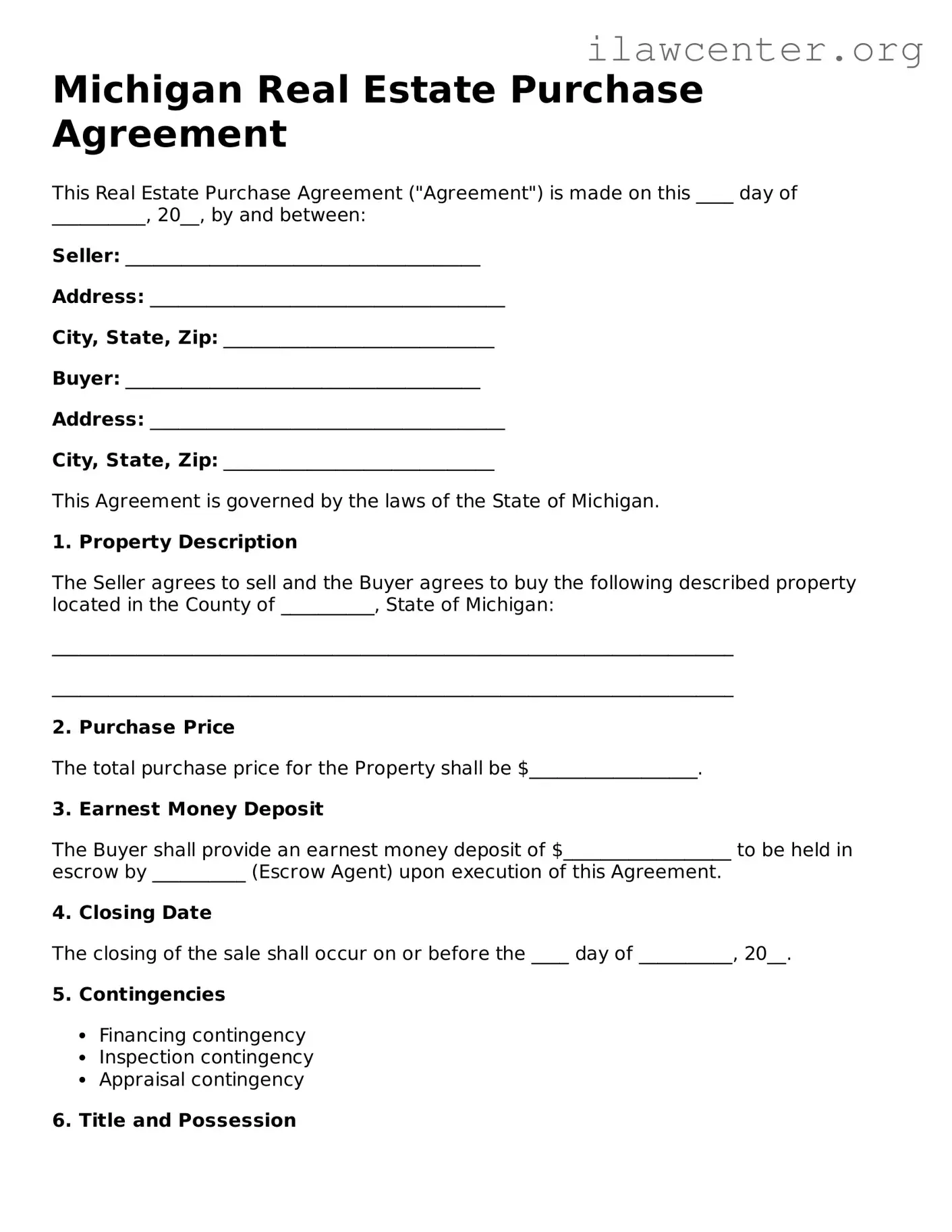
Michigan Real Estate Purchase Agreement

This Real Estate Purchase Agreement ("Agreement") is made on this ____ day of __________, 20__, by and between:

Seller: ______________________________________

Address: ______________________________________

City, State, Zip: _____________________________

Buyer: ______________________________________

Address: ______________________________________

City, State, Zip: _____________________________

This Agreement is governed by the laws of the State of Michigan.

1. Property Description

The Seller agrees to sell and the Buyer agrees to buy the following described property located in the County of __________, State of Michigan:

_________________________________________________________________________

_________________________________________________________________________

2. Purchase Price

The total purchase price for the Property shall be $__________________.

3. Earnest Money Deposit

The Buyer shall provide an earnest money deposit of $__________________ to be held in escrow by __________ (Escrow Agent) upon execution of this Agreement.

4. Closing Date

The closing of the sale shall occur on or before the ____ day of __________, 20__.

5. Contingencies

  • Financing contingency
  • Inspection contingency
  • Appraisal contingency

6. Title and Possession

The Seller shall convey a marketable title to the Buyer at closing. Possession of the Property shall be delivered to the Buyer on the closing date.

7. Governing Law

This Agreement shall be governed by and construed in accordance with the laws of the State of Michigan.

8. Signatures

IN WITNESS WHEREOF, the parties have executed this Agreement as of the date first above written.

Seller's Signature: ___________________________

Date: ___________________________

Buyer's Signature: ___________________________

Date: ___________________________

PDF Form Characteristics

Fact Name Description
Governing Law The Michigan Real Estate Purchase Agreement is governed by the laws of the State of Michigan.
Purpose This form serves as a legally binding contract between a buyer and a seller for the purchase of real estate.
Essential Elements Key elements include the purchase price, property description, and terms of the sale.
Disclosure Requirements Sellers are required to disclose certain information about the property, including known defects.
Contingencies The agreement may include contingencies such as financing, inspections, and appraisal conditions.

Instructions on Utilizing Michigan Real Estate Purchase Agreement

Once you have the Michigan Real Estate Purchase Agreement form in hand, it’s time to provide the necessary details to facilitate the transaction. This form will require specific information about both the buyer and the seller, as well as the property itself. Carefully following the steps below will ensure that all pertinent information is accurately captured.

  1. Identify the Parties: At the top of the form, enter the full names of the buyer(s) and seller(s). Ensure that all names are spelled correctly.
  2. Property Description: Provide a detailed description of the property being sold. This includes the address, parcel number, and any other identifying details.
  3. Purchase Price: Clearly state the agreed-upon purchase price for the property. Be specific and double-check the figures.
  4. Earnest Money: Indicate the amount of earnest money the buyer will provide to demonstrate their commitment. Specify how and when this money will be deposited.
  5. Closing Date: Enter the anticipated closing date for the transaction. This is the date when ownership will officially transfer.
  6. Contingencies: List any contingencies that must be met for the sale to proceed, such as financing or inspections. Be thorough in this section.
  7. Signatures: Ensure that all parties sign and date the agreement. Signatures should be placed in the designated areas, and it’s important that they are all present for the agreement to be valid.

After filling out the form, review it carefully to ensure accuracy. Any discrepancies or missing information could lead to complications down the line. Once confirmed, the document should be exchanged between the parties involved, and each party should retain a copy for their records.

Important Facts about Michigan Real Estate Purchase Agreement

What is a Michigan Real Estate Purchase Agreement?

A Michigan Real Estate Purchase Agreement is a legal document that outlines the terms and conditions for the sale of real estate in Michigan. It serves as a contract between the buyer and the seller, detailing the property, sale price, and any contingencies that must be met before the sale can be finalized.

Who typically uses this agreement?

This agreement is commonly used by individuals or entities involved in real estate transactions in Michigan. Buyers looking to purchase property and sellers wanting to sell their property both utilize this document to ensure that all parties understand their rights and obligations.

What key elements are included in the agreement?

The agreement typically includes the names of the buyer and seller, a description of the property, the purchase price, financing details, contingencies (such as inspections or appraisals), and the closing date. It may also cover any additional terms agreed upon by both parties.

Is the agreement legally binding?

Yes, once both parties sign the Michigan Real Estate Purchase Agreement, it becomes a legally binding contract. This means that both the buyer and seller are obligated to adhere to the terms outlined in the agreement, provided all legal requirements are met.

Can the agreement be modified after signing?

Yes, the agreement can be modified after signing, but both parties must agree to any changes. It is advisable to document any modifications in writing and have both parties sign the amended agreement to ensure clarity and enforceability.

What happens if one party breaches the agreement?

If one party fails to fulfill their obligations under the agreement, it is considered a breach. The non-breaching party may have several options, including seeking damages, enforcing the contract, or terminating the agreement. Legal advice may be necessary to understand the best course of action.

Are there any contingencies commonly included?

Yes, common contingencies include home inspections, financing approval, and appraisal requirements. These contingencies protect the buyer by allowing them to back out of the agreement if certain conditions are not met, ensuring they do not proceed with a purchase that may not be in their best interest.

Do I need a lawyer to create or review this agreement?

While it is not legally required to have a lawyer, it is often recommended to consult with one when creating or reviewing a Michigan Real Estate Purchase Agreement. A lawyer can help ensure that the agreement complies with state laws and protects your interests.

Where can I obtain a Michigan Real Estate Purchase Agreement form?

Michigan Real Estate Purchase Agreement forms can be obtained from various sources, including real estate agents, online legal document providers, or local real estate associations. It is essential to ensure that the form is up-to-date and complies with Michigan laws.

Common mistakes

Filling out the Michigan Real Estate Purchase Agreement form can be a complex process. Many individuals make common mistakes that can lead to confusion or delays in the transaction. Understanding these pitfalls can help ensure a smoother experience.

One frequent mistake is not providing complete information. Buyers and sellers must fill out all relevant sections of the form. Leaving out essential details, such as the property address or the purchase price, can cause issues later in the process. Ensuring that every field is completed accurately is vital.

Another common error is failing to specify the terms of the sale clearly. This includes the closing date and any contingencies, such as inspections or financing. If these terms are vague or missing, it can lead to misunderstandings between the parties involved.

Many individuals overlook the importance of signatures. Both the buyer and seller must sign the agreement for it to be legally binding. Sometimes, one party may forget to sign, which can invalidate the agreement and lead to complications.

Additionally, not reviewing the document thoroughly before submission is a mistake. It is essential to read through the entire agreement to catch any errors or omissions. Taking the time to double-check the information can prevent future disputes.

Misunderstanding the role of earnest money is another common issue. Buyers often forget to include the amount of earnest money or do not understand how it affects the purchase agreement. This deposit demonstrates the buyer's seriousness and can impact negotiations.

People sometimes fail to consult with a real estate professional. While it is possible to fill out the form independently, having an expert review the agreement can help identify potential issues. Real estate agents or attorneys can provide valuable insights and ensure compliance with local laws.

Lastly, not keeping copies of the signed agreement can create challenges. Both parties should retain a copy for their records. This ensures that everyone has access to the same information and can refer back to it if needed.

Documents used along the form

In the process of buying or selling real estate in Michigan, several forms and documents are commonly used alongside the Michigan Real Estate Purchase Agreement. Each of these documents serves a specific purpose and helps ensure that the transaction is clear, fair, and legally binding. Below is a list of these important documents.

  • Seller's Disclosure Statement: This document provides information about the property's condition. Sellers are required to disclose known issues, which helps buyers make informed decisions.
  • Lead-Based Paint Disclosure: Required for homes built before 1978, this form informs buyers of potential lead hazards. It ensures that buyers are aware of the risks associated with lead paint.
  • Property Inspection Report: This report is generated after a professional inspection of the property. It details the condition of various elements of the home and can influence negotiations.
  • Title Commitment: This document outlines the terms under which the title company will issue a title insurance policy. It verifies ownership and identifies any liens or claims against the property.
  • Closing Disclosure: Provided before closing, this form summarizes the final terms of the loan, including the costs associated with the purchase. It ensures transparency in financial obligations.
  • Deed: This legal document transfers ownership of the property from the seller to the buyer. It must be properly executed and recorded to be effective.
  • Affidavit of Title: This sworn statement by the seller confirms their ownership of the property and outlines any liens or encumbrances. It is often required by the title company during the closing process.

Understanding these documents can significantly ease the real estate transaction process. Each form plays a crucial role in protecting the interests of both buyers and sellers, ensuring that everyone involved is informed and safeguarded throughout the process.

Similar forms

  • Lease Agreement: This document outlines the terms under which a landlord allows a tenant to occupy a property. Like the Real Estate Purchase Agreement, it specifies the duration, payment terms, and responsibilities of both parties.
  • Option to Purchase Agreement: This agreement gives a tenant the right to purchase the property at a later date. Similar to a purchase agreement, it includes terms of sale, price, and conditions for exercising the option.
  • Sales Contract: A sales contract is used for the transfer of property ownership. It shares similarities with the Real Estate Purchase Agreement in that it details the purchase price, property description, and contingencies.
  • Joint Venture Agreement: This document outlines the terms of collaboration between parties for a real estate investment. It parallels the purchase agreement by defining roles, contributions, and profit-sharing related to property acquisition.
  • Title Transfer Document: This document facilitates the transfer of property title from seller to buyer. Like the Real Estate Purchase Agreement, it ensures that all necessary information regarding ownership and rights is clearly stated.
  • Escrow Agreement: An escrow agreement involves a neutral third party holding funds until the terms of the sale are met. It is similar to the purchase agreement in that it outlines conditions that must be fulfilled for the transaction to proceed.
  • Property Disclosure Statement: This statement provides information about the property's condition and any known issues. It complements the Real Estate Purchase Agreement by ensuring transparency between buyer and seller.
  • Closing Statement: This document summarizes the financial aspects of the transaction at closing. It is akin to the purchase agreement in that it details costs, fees, and the final settlement between buyer and seller.

Dos and Don'ts

When filling out the Michigan Real Estate Purchase Agreement form, attention to detail is crucial. This document represents a significant commitment, and getting it right can help avoid complications later. Here are some important do's and don'ts to consider:

  • Do read the entire agreement carefully. Understanding each section is essential to ensure that all parties are on the same page.
  • Do provide accurate information. Ensure that names, addresses, and property details are correct to prevent any legal issues.
  • Do consult with a real estate professional. Seeking advice from an experienced agent or attorney can provide valuable insights and guidance.
  • Do keep copies of all documents. Having a record of what was submitted can be beneficial for future reference.
  • Do ask questions if you're unsure. Clarifying any uncertainties can prevent misunderstandings down the road.
  • Don't rush through the form. Taking your time can help ensure that you don’t overlook important details.
  • Don't use vague language. Be specific about terms, conditions, and agreements to avoid confusion.
  • Don't forget to sign and date the document. An unsigned agreement may not be legally binding.
  • Don't ignore deadlines. Timely submission of the agreement is crucial in real estate transactions.
  • Don't hesitate to seek legal advice. If you have concerns or questions, consulting a lawyer can provide peace of mind.

Misconceptions

Many individuals have misunderstandings about the Michigan Real Estate Purchase Agreement form. These misconceptions can lead to confusion during the buying or selling process. Below are four common misconceptions:

  1. All agreements are the same.

    Some believe that all real estate purchase agreements are identical. In reality, each agreement can vary significantly based on the specific terms negotiated between the buyer and seller. Local laws and practices also influence these agreements.

  2. Signing the agreement means the sale is final.

    Another misconception is that signing the purchase agreement finalizes the sale. However, the agreement is typically contingent on various factors, such as inspections, financing, and other conditions that must be met before the sale is completed.

  3. Only the buyer is responsible for the agreement.

    Some individuals think that only the buyer needs to be concerned with the terms of the purchase agreement. In fact, both the buyer and seller have responsibilities outlined in the agreement, and both parties should understand their obligations.

  4. All contingencies are negotiable.

    While many contingencies can be negotiated, not all are. Certain legal requirements and standard practices in Michigan may dictate specific contingencies that must be included in the agreement, which cannot be altered.

Key takeaways

Filling out and using the Michigan Real Estate Purchase Agreement form is a critical step in any real estate transaction. Here are some key takeaways to keep in mind:

  • Ensure that all parties involved are clearly identified. This includes full names and contact information for buyers and sellers.
  • Specify the property address accurately. This helps avoid confusion and ensures that the agreement pertains to the correct property.
  • Include the purchase price and any earnest money deposit details. This shows the seller that the buyer is serious about the offer.
  • Clearly outline any contingencies. Common contingencies include financing, inspections, and appraisal conditions.
  • Set a timeline for closing. This gives both parties a clear understanding of when the transaction will be finalized.
  • Review the section regarding repairs and maintenance. It’s important to agree on who is responsible for repairs before closing.
  • Consider including personal property in the agreement. This can include appliances or fixtures that may be part of the sale.
  • Consult with a real estate professional if needed. They can provide guidance to ensure that the agreement meets all legal requirements.