Fillable Mobile Home Purchase Agreement Document

Fillable Mobile Home Purchase Agreement Document

The Mobile Home Purchase Agreement form is a legal document that outlines the terms and conditions for the sale of a mobile home. This agreement serves to protect both the buyer and seller by clearly stating the obligations and rights of each party involved in the transaction. To ensure a smooth purchase process, it is essential to fill out this form accurately.

Start your mobile home buying journey by filling out the form below.

Article Guide

When embarking on the journey of purchasing a mobile home, having the right documentation is crucial to ensure a smooth transaction. The Mobile Home Purchase Agreement form serves as a vital tool in this process, outlining the essential terms and conditions agreed upon by both the buyer and the seller. This legally binding document typically includes important details such as the purchase price, payment terms, and any contingencies that may apply. Additionally, it often specifies the responsibilities of each party, including any disclosures related to the condition of the mobile home and any warranties provided. By clearly delineating the rights and obligations of both parties, this agreement helps to prevent misunderstandings and disputes down the line. Furthermore, it may include provisions for inspections and financing, providing a comprehensive framework for the sale. Understanding the components of this agreement is key for anyone looking to navigate the complexities of mobile home ownership effectively.

Mobile Home Purchase Agreement Preview

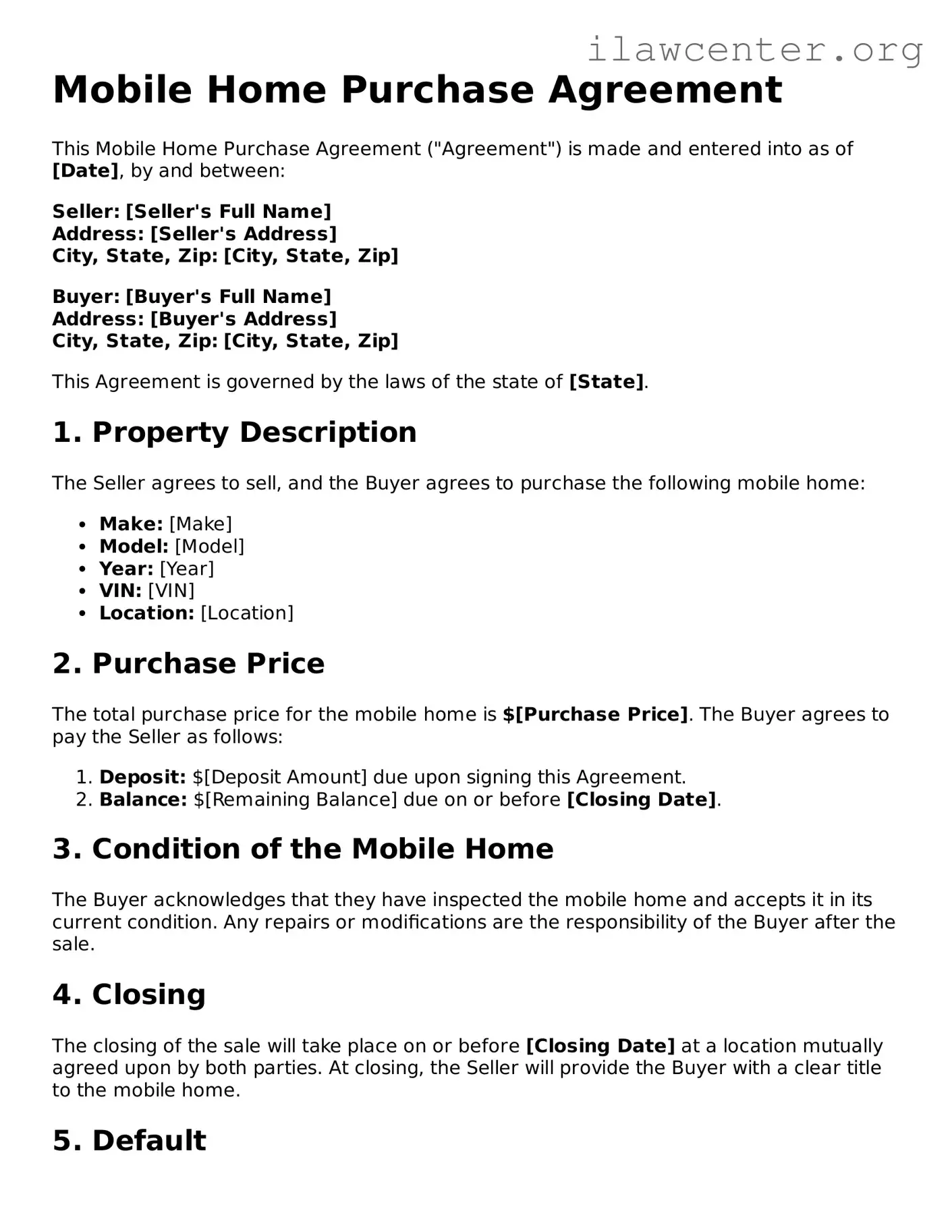
Mobile Home Purchase Agreement

This Mobile Home Purchase Agreement ("Agreement") is made and entered into as of [Date], by and between:

Seller: [Seller's Full Name]
Address: [Seller's Address]
City, State, Zip: [City, State, Zip]

Buyer: [Buyer's Full Name]
Address: [Buyer's Address]
City, State, Zip: [City, State, Zip]

This Agreement is governed by the laws of the state of [State].

1. Property Description

The Seller agrees to sell, and the Buyer agrees to purchase the following mobile home:

  • Make: [Make]
  • Model: [Model]
  • Year: [Year]
  • VIN: [VIN]
  • Location: [Location]

2. Purchase Price

The total purchase price for the mobile home is $[Purchase Price]. The Buyer agrees to pay the Seller as follows:

  1. Deposit: $[Deposit Amount] due upon signing this Agreement.
  2. Balance: $[Remaining Balance] due on or before [Closing Date].

3. Condition of the Mobile Home

The Buyer acknowledges that they have inspected the mobile home and accepts it in its current condition. Any repairs or modifications are the responsibility of the Buyer after the sale.

4. Closing

The closing of the sale will take place on or before [Closing Date] at a location mutually agreed upon by both parties. At closing, the Seller will provide the Buyer with a clear title to the mobile home.

5. Default

If either party fails to perform any obligation under this Agreement, the non-defaulting party may pursue any remedies available under the law.

6. Governing Law

This Agreement shall be governed by and construed in accordance with the laws of the state of [State].

7. Signatures

By signing below, both parties agree to the terms outlined in this Mobile Home Purchase Agreement.

Seller's Signature: ___________________________ Date: _______________

Buyer's Signature: ___________________________ Date: _______________

PDF Form Characteristics

Fact Name Details
Definition A Mobile Home Purchase Agreement is a contract between a buyer and seller for the sale of a mobile home.
Parties Involved The agreement typically includes the buyer, seller, and may involve a lender if financing is involved.
Governing Law The agreement is governed by state laws, which vary by location. For example, in California, the relevant laws include the California Civil Code.
Key Components Essential elements include purchase price, payment terms, and description of the mobile home.
Inspection Clause Buyers often have the right to inspect the mobile home before finalizing the purchase.
Financing Options The agreement may outline financing options, including loans or cash purchases.
Disclosures Sellers are typically required to disclose any known defects or issues with the mobile home.
Signatures Both parties must sign the agreement for it to be legally binding.

Instructions on Utilizing Mobile Home Purchase Agreement

After obtaining the Mobile Home Purchase Agreement form, it's important to fill it out accurately to ensure a smooth transaction. This form will guide you through the necessary details required for the purchase of a mobile home. Follow these steps carefully to complete the form.

  1. Identify the Parties: Start by entering the names and contact information of both the buyer and the seller at the top of the form.
  2. Describe the Mobile Home: Provide specific details about the mobile home, including the make, model, year, and Vehicle Identification Number (VIN).
  3. Purchase Price: Clearly state the total purchase price of the mobile home. Be sure to include any deposits or down payments.
  4. Payment Terms: Outline the payment terms, including the method of payment and any financing arrangements if applicable.
  5. Closing Date: Specify the date when the sale will be finalized and ownership will transfer.
  6. Contingencies: Include any contingencies that must be met before the sale can be completed, such as inspections or financing approval.
  7. Signatures: Ensure that both the buyer and seller sign and date the agreement at the bottom of the form.

Once the form is filled out, review it for accuracy and completeness. Both parties should keep a copy for their records. This step is crucial for ensuring that everyone is on the same page regarding the terms of the sale.

Important Facts about Mobile Home Purchase Agreement

What is a Mobile Home Purchase Agreement?

A Mobile Home Purchase Agreement is a legal document that outlines the terms and conditions of the sale of a mobile home. It serves as a binding contract between the buyer and the seller, detailing the purchase price, payment terms, and any contingencies that may apply. This agreement protects both parties by clearly stating their rights and responsibilities during the transaction.

Why is a Mobile Home Purchase Agreement important?

This agreement is crucial because it provides clarity and security for both the buyer and the seller. It helps prevent misunderstandings by documenting all aspects of the sale. Additionally, having a written agreement can be essential in case disputes arise after the transaction is completed.

What should be included in a Mobile Home Purchase Agreement?

A well-drafted Mobile Home Purchase Agreement typically includes the following elements: the names and contact information of both parties, a detailed description of the mobile home (including its make, model, and VIN), the purchase price, payment terms, any contingencies (such as financing or inspections), and the closing date. It may also outline any warranties or disclosures required by law.

Can I customize the Mobile Home Purchase Agreement?

Yes, you can customize the agreement to fit your specific needs. While there are standard elements that should be included, you can add clauses that reflect any unique conditions of the sale. However, it's advisable to ensure that any modifications comply with state laws and regulations.

Is it necessary to have a lawyer review the Mobile Home Purchase Agreement?

While it's not mandatory to have a lawyer review the agreement, it is highly recommended. A legal professional can help ensure that the document complies with local laws and that your interests are protected. This is especially important if the transaction involves significant amounts of money or complex terms.

What happens if one party breaches the Mobile Home Purchase Agreement?

If one party fails to uphold their end of the agreement, it is considered a breach of contract. The non-breaching party may have several options, including seeking damages, enforcing the terms of the agreement, or potentially terminating the contract. Legal advice can be beneficial in navigating these situations.

How do I ensure the Mobile Home Purchase Agreement is enforceable?

To ensure the agreement is enforceable, it should be in writing and signed by both parties. Make sure all terms are clear and unambiguous. Additionally, it's important to comply with any state-specific requirements, such as notarization or witness signatures, which may enhance the enforceability of the document.

Can a Mobile Home Purchase Agreement be canceled?

Yes, a Mobile Home Purchase Agreement can be canceled, but the process depends on the terms outlined in the agreement itself. Many agreements include specific contingencies that allow for cancellation under certain circumstances, such as failure to secure financing or unsatisfactory inspection results. Always refer to the terms of the agreement for guidance.

What should I do after signing the Mobile Home Purchase Agreement?

After signing, both parties should keep a copy of the agreement for their records. It's also important to follow through on any agreed-upon actions, such as securing financing or scheduling inspections. Communication between the buyer and seller should remain open to address any issues that may arise before the closing date.

Where can I find a Mobile Home Purchase Agreement template?

Templates for Mobile Home Purchase Agreements can be found online through various legal document websites, or you can consult a local real estate attorney for a customized version. It's essential to ensure that any template you use is appropriate for your state and specific situation.
Common mistakes

When filling out the Mobile Home Purchase Agreement form, many individuals overlook critical details that can lead to complications later. One common mistake is failing to provide accurate personal information. Buyers must ensure that their names, addresses, and contact numbers are correctly entered. An error in this section can result in delays in communication and potential legal issues.

Another frequent error involves neglecting to specify the purchase price clearly. Without a precise amount, disputes may arise over what was agreed upon. It is essential to write the price numerically and in words to eliminate any ambiguity. Both the buyer and seller should review this section carefully before signing.

People often forget to include essential terms related to financing. If a buyer is obtaining a loan, the agreement should state the lender’s name and the type of financing being used. This information is crucial for both parties to understand the financial obligations involved in the transaction.

Additionally, many individuals do not pay enough attention to the property description. A vague or incomplete description can lead to misunderstandings about what is being sold. It is vital to include the mobile home’s make, model, year, and any identifying numbers, such as the Vehicle Identification Number (VIN).

Another mistake is neglecting to outline contingencies. Buyers should consider including conditions that must be met for the sale to proceed, such as passing inspections or securing financing. Omitting these contingencies can leave buyers vulnerable if unexpected issues arise.

Signatures are critical in any contract, yet some individuals forget to sign the agreement. Both the buyer and seller must sign and date the form for it to be legally binding. Failing to do so can render the agreement invalid and lead to disputes.

People often overlook the importance of including any additional terms or agreements. If there are specific conditions or agreements made verbally, they should be documented in the form. This ensures that both parties are on the same page and helps prevent future conflicts.

Finally, many individuals fail to keep a copy of the signed agreement. After completing the Mobile Home Purchase Agreement form, it is crucial for both parties to retain a copy for their records. This document serves as proof of the transaction and can be referenced in case of any disputes.

Documents used along the form

When purchasing a mobile home, several documents may accompany the Mobile Home Purchase Agreement. These documents help ensure that the transaction is clear and legally binding. Below is a list of forms that are commonly used in conjunction with the Mobile Home Purchase Agreement.

  • Bill of Sale: This document serves as proof of the transfer of ownership from the seller to the buyer. It includes details about the mobile home, such as its make, model, and Vehicle Identification Number (VIN).
  • Title Transfer Document: This form is essential for officially transferring the title of the mobile home. It typically requires signatures from both the seller and the buyer and may need to be filed with the state’s Department of Motor Vehicles.
  • Financing Agreement: If the buyer is financing the purchase, this document outlines the terms of the loan, including the interest rate, repayment schedule, and any penalties for late payments.
  • Inspection Report: An inspection report provides a detailed assessment of the mobile home’s condition. It can highlight any repairs needed and help the buyer make an informed decision.
  • Disclosure Statement: Sellers are often required to provide a disclosure statement that reveals any known issues with the mobile home, such as structural problems or pest infestations. This protects buyers from unexpected surprises.
  • Lease Agreement (if applicable): If the mobile home is located in a park, a lease agreement may be necessary. This document outlines the terms of renting the lot where the mobile home will sit.
  • Homeowners’ Association (HOA) Documents: If the mobile home is in a community governed by an HOA, the buyer may need to review documents that outline the community rules, fees, and regulations.
  • Warranty Documents: If the mobile home comes with a warranty, these documents detail the coverage and any conditions that apply. They can provide peace of mind to the buyer regarding future repairs.

Each of these documents plays a vital role in the mobile home purchase process. They help clarify the terms of the sale, protect both parties, and ensure that all legal requirements are met. Understanding each document can lead to a smoother transaction and a more informed purchase.

Similar forms

  • Real Estate Purchase Agreement: This document outlines the terms and conditions for buying a residential property. Similar to the Mobile Home Purchase Agreement, it includes details such as the purchase price, financing options, and contingencies. Both agreements serve to protect the interests of the buyer and seller during the transaction.

  • Lease Agreement: A lease agreement governs the rental of a property. While it focuses on rental terms rather than a purchase, both documents establish the rights and responsibilities of the parties involved. They also specify payment terms, duration, and conditions for termination.

  • Bill of Sale: This document transfers ownership of personal property, including mobile homes. Like the Mobile Home Purchase Agreement, it provides proof of the transaction and details about the item being sold, such as its condition and any warranties offered.

  • Financing Agreement: This document outlines the terms of a loan for purchasing a property. Similar to the Mobile Home Purchase Agreement, it includes payment schedules, interest rates, and penalties for late payments. Both agreements are crucial for ensuring that all financial aspects of the transaction are clear and agreed upon.

Dos and Don'ts

When filling out a Mobile Home Purchase Agreement form, it's important to approach the process carefully. Here are some guidelines to consider:

  • Do read the entire form thoroughly before filling it out. Understanding the terms and conditions is crucial.
  • Do provide accurate information. Double-check names, addresses, and any other details to avoid future complications.
  • Do ask questions if you're unsure about any section. Clarifying doubts can prevent misunderstandings later on.
  • Don't rush through the form. Take your time to ensure all information is complete and correct.
  • Don't leave any sections blank unless instructed. Missing information can delay the process.
  • Don't sign the agreement until you fully understand all terms. Signing without comprehension can lead to unwanted obligations.

Misconceptions

When it comes to the Mobile Home Purchase Agreement form, several misconceptions can lead to confusion and potential issues during the buying process. Understanding the truth behind these misconceptions is crucial for a smooth transaction.

  • Misconception 1: The Mobile Home Purchase Agreement is just a simple form.
  • This is not true. While the form may appear straightforward, it contains essential legal language and stipulations that protect both the buyer and seller. Each section serves a specific purpose, ensuring all parties are aware of their rights and responsibilities.

  • Misconception 2: Signing the agreement means the buyer has full ownership immediately.
  • This is misleading. Signing the agreement initiates the purchase process, but full ownership is typically contingent upon completing additional steps, such as financing and title transfer. Buyers should not assume they have immediate rights to the property.

  • Misconception 3: The agreement is the same in every state.
  • This is false. Mobile Home Purchase Agreements can vary significantly from state to state due to differing laws and regulations. Buyers must ensure they are using the correct version for their specific state to avoid legal complications.

  • Misconception 4: Once signed, the terms cannot be changed.
  • This is incorrect. While the agreement is binding once signed, parties can negotiate terms before signing. If circumstances change, amendments can be made, but both parties must agree to these changes and document them properly.

  • Misconception 5: The Mobile Home Purchase Agreement is not necessary if the buyer trusts the seller.
  • This belief can lead to significant problems. Even in trusted transactions, a formal agreement is essential. It provides a clear record of the terms and protects both parties in case of disputes or misunderstandings.

Key takeaways

When filling out and using the Mobile Home Purchase Agreement form, it is crucial to pay attention to several key aspects. These takeaways will help ensure a smooth transaction.

  • Complete Information: Ensure all fields are filled out accurately. Missing information can lead to delays or misunderstandings.
  • Seller and Buyer Details: Clearly identify both the seller and buyer, including their full names and contact information. This establishes clear communication.
  • Property Description: Provide a detailed description of the mobile home, including its location, model, and any unique features. This helps avoid disputes later.
  • Payment Terms: Clearly outline the payment terms, including the total purchase price, deposit amount, and financing details if applicable. Transparency is key.
  • Signatures: Both parties must sign the agreement to make it legally binding. Ensure all signatures are dated to confirm when the agreement was executed.

Following these guidelines will facilitate a more efficient process when purchasing a mobile home. Timely and accurate completion of the agreement is essential for a successful transaction.