Fillable Mortgage Lien Release Document

Fillable Mortgage Lien Release Document

The Mortgage Lien Release form is a legal document that officially removes a mortgage lien from a property once the debt has been fully paid. This form serves to clear the title of the property, ensuring that the homeowner has full ownership free of the mortgage claim. Understanding its importance is crucial for any property owner looking to eliminate outstanding liens; fill out the form by clicking the button below.

Article Guide

The Mortgage Lien Release form is a crucial document in the world of real estate, serving as a formal declaration that a mortgage has been paid off or otherwise satisfied. When a borrower fulfills their obligations under a mortgage agreement, this form provides a clear record that the lender no longer has a claim on the property. It outlines essential details, such as the names of the parties involved, the property description, and the original loan amount. By executing this form, lenders officially relinquish their lien rights, allowing property owners to enjoy full ownership without any encumbrances. This process not only protects the rights of homeowners but also helps maintain accurate public records. Understanding the significance of the Mortgage Lien Release form is vital for anyone navigating the complexities of property ownership and financing.

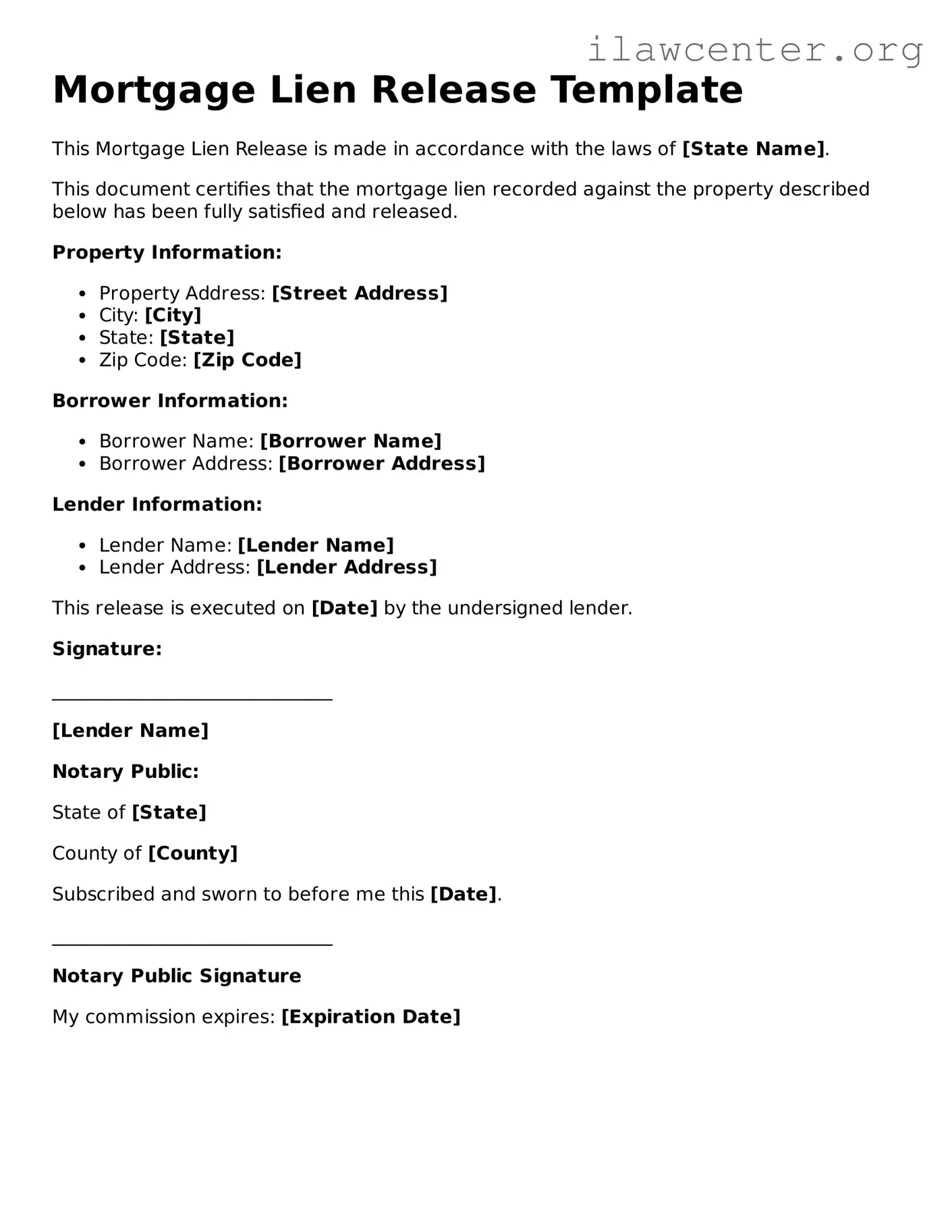
Mortgage Lien Release Preview

Mortgage Lien Release Template

This Mortgage Lien Release is made in accordance with the laws of [State Name].

This document certifies that the mortgage lien recorded against the property described below has been fully satisfied and released.

Property Information:

  • Property Address: [Street Address]
  • City: [City]
  • State: [State]
  • Zip Code: [Zip Code]

Borrower Information:

  • Borrower Name: [Borrower Name]
  • Borrower Address: [Borrower Address]

Lender Information:

  • Lender Name: [Lender Name]
  • Lender Address: [Lender Address]

This release is executed on [Date] by the undersigned lender.

Signature:

______________________________

[Lender Name]

Notary Public:

State of [State]

County of [County]

Subscribed and sworn to before me this [Date].

______________________________

Notary Public Signature

My commission expires: [Expiration Date]

PDF Form Characteristics

Fact Name Description
Purpose A Mortgage Lien Release form is used to officially remove a lien from a property once the mortgage has been paid off.
State-Specific Forms Different states may have specific forms or requirements for releasing a mortgage lien. It's important to check local regulations.
Governing Laws In the U.S., the laws governing mortgage lien releases can vary by state, often found in the state’s real estate or property code.
Filing Process After completing the form, it typically needs to be filed with the county recorder’s office to ensure public record of the lien release.

Instructions on Utilizing Mortgage Lien Release

After gathering all necessary information, you are ready to complete the Mortgage Lien Release form. This document is essential for formally releasing a mortgage lien once the loan has been paid off. Follow the steps below to ensure that the form is filled out correctly.

  1. Begin by entering the date at the top of the form. Make sure to use the current date.
  2. Next, provide the name of the borrower. This should be the individual or entity that took out the mortgage.
  3. Fill in the property address. Include the full address where the property is located, including the city, state, and zip code.
  4. Indicate the loan number. This number is typically found on the mortgage documents and helps identify the specific loan being released.
  5. Enter the lender’s name. This is the financial institution or individual that issued the mortgage.
  6. Provide the lender’s address. Include the complete mailing address for the lender.
  7. Sign and date the form in the designated area. This signature confirms that the mortgage has been satisfied.
  8. Lastly, ensure that any required witnesses or notaries sign the form as needed. Check state requirements for any additional signatures.

Once the form is completed, it should be filed with the appropriate county office to officially record the release of the lien. This step is crucial to ensure that the property records reflect the mortgage has been paid off.

Important Facts about Mortgage Lien Release

What is a Mortgage Lien Release form?

A Mortgage Lien Release form is a legal document that officially removes a mortgage lien from a property once the debt has been paid in full. When a homeowner pays off their mortgage, the lender must acknowledge that the debt is settled. This form serves as proof that the lender no longer has a claim on the property, allowing the homeowner to have clear title and full ownership rights. It is essential for homeowners to obtain this document to avoid any future complications regarding property ownership.

Why is it important to file a Mortgage Lien Release?

Filing a Mortgage Lien Release is crucial for several reasons. First, it protects the homeowner's rights by ensuring that the lender cannot make any future claims against the property. Second, it allows for the transfer or sale of the property without any encumbrances. When a lien is released, it clears the title, making it easier for the homeowner to sell or refinance. Lastly, having this document on file with the county or local government office helps prevent misunderstandings or disputes over property ownership in the future.

How do I obtain a Mortgage Lien Release form?

Homeowners typically receive the Mortgage Lien Release form from their lender once the mortgage is paid off. However, if you do not receive it, you can request it directly from your lender. Make sure to provide any necessary information, such as your loan number and property address. If needed, you can also find templates for the form online, but it is best to use the version provided by your lender to ensure it meets all legal requirements.

What should I do after I receive the Mortgage Lien Release?

After obtaining the Mortgage Lien Release, review the document carefully to ensure all details are correct. Next, file the form with your local county recorder’s office or land registry. This step is vital, as it officially updates the public record and confirms that the lien has been released. Keep a copy of the filed document for your records. This will serve as proof of the release in case any issues arise in the future regarding property ownership.

Common mistakes

Completing the Mortgage Lien Release form is a critical step in the process of releasing a lien on a property. However, many individuals make common mistakes that can delay the process or lead to further complications. Understanding these errors can help ensure a smoother experience.

One frequent mistake is not providing accurate property information. The form requires specific details about the property, including the address and legal description. Omitting or misrepresenting this information can result in the release being invalidated.

Another common error involves failing to sign the document correctly. All required signatures must be present. In some cases, individuals may forget to sign, or they might use an incorrect name. This oversight can prevent the form from being processed.

People often neglect to include the date of the release. This date is essential as it indicates when the lien is officially released. Without it, there may be confusion about the effective date, which can complicate matters for future transactions.

Additionally, not providing a clear indication of the lender's information is another mistake. The form should clearly state the lender’s name and contact information. Failing to do so can lead to delays in processing the release.

Some individuals mistakenly assume that notarization is optional. In many jurisdictions, notarizing the Mortgage Lien Release form is a requirement. Skipping this step can render the document invalid.

Another error involves incomplete payment information. If the mortgage has been paid off, it is crucial to include proof of payment. Lenders may require documentation to confirm that the mortgage has been satisfied.

People sometimes overlook the submission process. After completing the form, it must be filed with the appropriate county office. Failing to submit the form correctly can result in continued liability under the lien.

Finally, not keeping copies of the submitted documents is a mistake that can lead to complications in the future. Retaining copies ensures that there is a record of the lien release, which can be important for property transactions down the line.

Documents used along the form

A Mortgage Lien Release form is essential for clearing the title of a property once a mortgage has been paid off. However, several other documents are often associated with this process to ensure that all legal and financial obligations are properly addressed. Below is a list of five additional forms and documents that may be used in conjunction with a Mortgage Lien Release.

  • Mortgage Satisfaction Document: This document confirms that the borrower has fulfilled all payment obligations under the mortgage agreement. It serves as proof that the lender has released their claim on the property.
  • Deed of Trust: This legal document secures a loan by transferring the property title to a trustee until the loan is repaid. It outlines the terms of the loan and the rights of all parties involved.
  • Title Insurance Policy: This policy protects the buyer and lender from potential defects in the title, such as liens or claims against the property. It is often required during the closing process.
  • Loan Payoff Statement: This statement details the remaining balance owed on the mortgage, including any interest or fees. It is crucial for confirming the exact amount required to satisfy the mortgage.
  • Affidavit of Forgiveness: In some cases, this document may be used to formally declare that the lender forgives any remaining debt after a settlement. It can help clarify the borrower’s financial obligations.

Understanding these documents can help homeowners navigate the complexities of mortgage release and ensure a smooth transition in property ownership. Each form plays a vital role in protecting the rights of all parties involved and facilitating the legal process.

Similar forms

  • Deed of Trust: This document secures a loan by placing a lien on the property. Like the Mortgage Lien Release, it involves the transfer of an interest in real property as collateral for a loan.
  • Mortgage Agreement: This is the initial document that outlines the terms of the loan secured by the property. It serves a similar purpose to the Mortgage Lien Release, as it details the obligations of the borrower and lender.
  • Loan Payoff Statement: This document provides the total amount needed to pay off a loan. It is similar to the Mortgage Lien Release in that it indicates the completion of a financial obligation.
  • Quitclaim Deed: This document transfers any interest in a property from one party to another. Like the Mortgage Lien Release, it can signify the end of a financial interest in a property.
  • Title Insurance Policy: This document protects against losses from defects in title. It relates to the Mortgage Lien Release as both deal with the ownership rights of a property.
  • Subordination Agreement: This document changes the priority of liens on a property. Similar to the Mortgage Lien Release, it involves the management of interests in real estate.
  • Affidavit of Title: This document affirms the ownership of a property and the absence of liens. It is akin to the Mortgage Lien Release, as both confirm the status of ownership.
  • Property Settlement Statement: This document outlines the financial aspects of a real estate transaction. It relates to the Mortgage Lien Release by detailing the financial obligations that are being settled.
  • Release of Judgment Lien: This document removes a lien placed due to a court judgment. It is similar to the Mortgage Lien Release in that it formally acknowledges the satisfaction of a lien.
  • Notice of Default: This document informs a borrower of a default on their loan. It connects to the Mortgage Lien Release by indicating the potential for a lien to be released once obligations are met.

Dos and Don'ts

When filling out a Mortgage Lien Release form, it’s essential to approach the task with care. Here are some important dos and don'ts to keep in mind:

  • Do ensure that all information is accurate and complete. Double-check names, addresses, and loan details.
  • Do sign the form in the presence of a notary public if required. This adds a layer of authenticity to your document.
  • Do keep a copy of the completed form for your records. This can be useful for future reference.
  • Don't rush through the form. Take your time to understand each section before filling it out.
  • Don't forget to submit the form to the appropriate authority. Ensure it reaches the correct office to avoid delays.

By following these guidelines, you can help ensure a smooth process when releasing a mortgage lien.

Misconceptions

Many people have misunderstandings about the Mortgage Lien Release form. Here are some common misconceptions:

  1. It’s only needed if you sell your home. Many believe that a Mortgage Lien Release is only necessary when selling a property. However, it is also required when the mortgage is paid off, regardless of whether the home is sold.
  2. Once the mortgage is paid, the lender automatically files the release. Some think that once they pay off their mortgage, the lender will automatically handle the lien release. In reality, homeowners must often request the release from their lender.
  3. The form is the same in every state. People may assume that the Mortgage Lien Release form is uniform across the country. Each state has its own requirements and forms, so it’s important to use the correct one for your location.
  4. It’s not necessary if you refinance. There is a belief that refinancing eliminates the need for a lien release. However, if you refinance, the original mortgage must still be released to clear the title.
  5. It doesn’t affect your credit score. Some think that a Mortgage Lien Release has no impact on their credit. In fact, having the lien released can positively affect your credit score by showing that you have paid off your debt.
  6. Only the lender can file the release. Many believe that only the lender has the authority to file the lien release. Homeowners can also file it themselves, but they must ensure all requirements are met.
  7. The release is a simple process. While some may think that obtaining a lien release is straightforward, it can be complicated. It often requires careful attention to detail and adherence to specific guidelines.

Understanding these misconceptions can help you navigate the process more effectively. If you have questions, it’s always a good idea to seek guidance from a professional.

Key takeaways

Filling out and using the Mortgage Lien Release form is an important step in the process of clearing a mortgage lien from a property. Here are some key takeaways to keep in mind:

  • Understand the purpose: The Mortgage Lien Release form serves to officially remove a lien from your property once the mortgage has been paid off.
  • Gather necessary information: Before starting, collect all relevant details such as the mortgage account number, property address, and the lender’s information.
  • Complete the form accurately: Fill out the form carefully, ensuring that all information is correct to avoid delays in processing.
  • Obtain signatures: Both the borrower and the lender must sign the form. This step is crucial for the release to be valid.
  • File with the appropriate office: After completing the form, submit it to the county recorder’s office where the property is located.
  • Keep copies: Always retain copies of the completed form and any correspondence for your records. This documentation can be important in the future.
  • Check for confirmation: After filing, confirm that the lien has been officially released by checking public records.